Response to the Competitiveness Compass and the Autumn Package 2025

The Competitiveness Compass and the draft Joint Employment Report 2025 – What’s in it for Europe’s Roma?

The Autumn Package kick-starting the European Semester 2025 was released by the European Commission in two batches, on 24 November and on 18 December 2024. While the latter batch included the usual draft Joint Employment Report, none contained the Annual Sustainable Growth Survey. This is the first ever since the establishment of the European Semester in 2011. There was only a brief accompanying communication of two and a half pages. Instead, the European Commission put forward a new document, entitled the Competitiveness Compass, on 29 January 2025. 

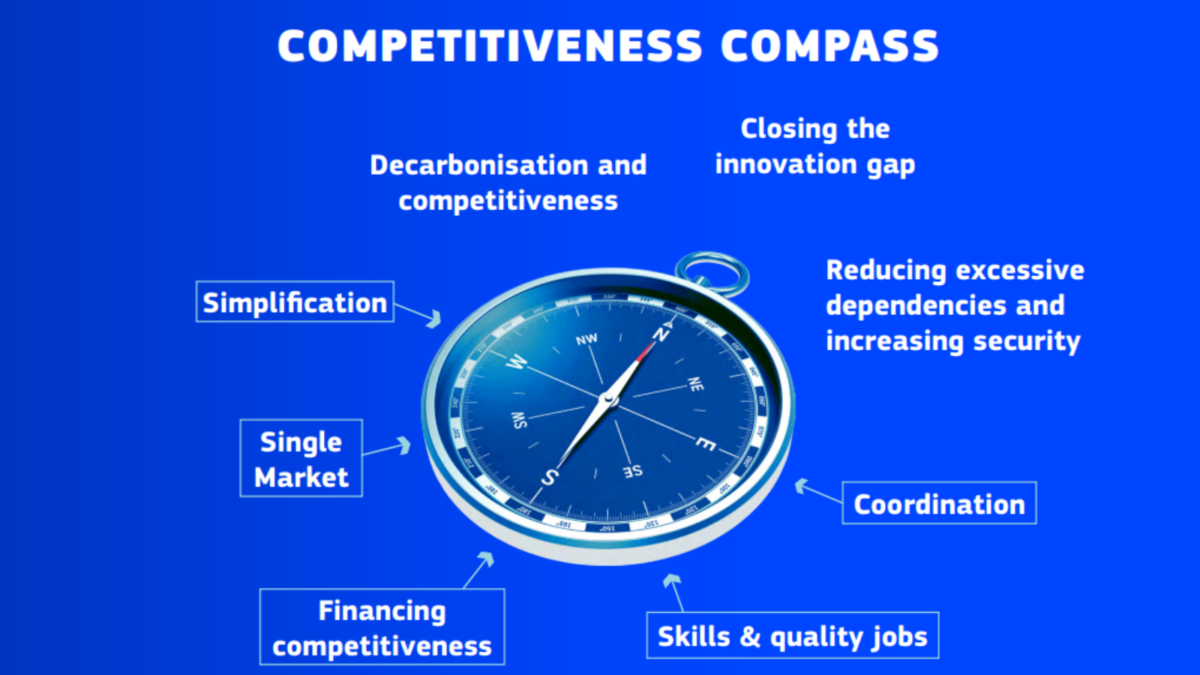
The Competitiveness Compass is a programmatic framing document aimed to “guide the work in the coming five years” and listing “priority actions to reignite economic dynamism in Europe.” This approach means that most – if not all – other policy areas, including social and environmental policies, are subsumed to competitiveness goals. The vision seems to seek competitiveness at any price since it outlines no red lines or areas to be spared in this quest. The lack of attention to social issues is a significant step back even from the previous Annual Sustainable and Growth Surveys (itself primarily an economic document), and the narrative of the Competitiveness Compass leaves little doubt as to the low priority assigned by this Commission to equality and inclusion. 

There was also no place for Roma, ethnic minorities, racism, or discrimination anywhere in the Competitiveness Compass. This is another missed opportunity compared to the Annual Sustainable Growth Survey where, more often than not, the Roma were mentioned, or at the very least there was a commitment to the Union of Equality – also absent from the current document. The Compass includes one sentence about taking pride in Europe’s anti-discrimination laws, a sentiment that many human rights organisations would like to question. Vulnerable groups are only mentioned once in the entire text.  

The document features a small section on social fairness, which prioritises skills and jobs. Moreover, social aspects are viewed exclusively as an enabler of competitiveness rather than a goal in themselves. The European Pillar of Social Rights (Social Pillar) is mentioned once from the perspective of its role in shaping a competitive Europe. There is some positive language on quality jobs, adequate wages, inclusive labour markets and the welfare state, as well as references to welcome initiatives like the EU Job Quality Roadmap, the Affordable Housing Plan, and the EU Affordable Energy Action Plan – but no wording on the EU’s upcoming first Anti-Poverty Strategy. However, the overall approach is one of instrumentalising social policies for economic gains, where people are seen as bargaining chips in a race of global business interests.

The Competitiveness Compass also announces some very worrisome structural changes to EU processes and funds, such as aligning the new MFF with competitiveness objectives, raising great concerns that vital social funding will be cut or redirected. A new and streamlined European Semester is meant to focus on reforms and investments for competitiveness, but once again the worry is that social monitoring through the Semester might disappear or at least be significantly downsized.

We are very pleased to see Europe’s Roma acknowledged multiple times in the Joint Employment Report concerning issues such as their heightened risk of experiencing poverty and social exclusion (including that of children), early school leaving, and difficult access to services and the labour market. Additionally, strong links are made to the EU Strategic Framework on Roma Equality, Inclusion, and Participation as part of the Union of Equality. Very disappointingly, though, there is no mention of antigypsyism or racism and only four references to discrimination.

The references to civil dialogue are rather poor, as the Competitiveness Compass does not mention civil society, while social partners are mentioned three times. The accompanying communication of the second batch of documents of the Autumn Package includes one explicit reference to civil society about increasing ownership of the Country Reports. Finally, the Joint Employment Report fares much better, with multiple references to the role of civil society organisations in delivering impactful and inclusive policies.  

ERGO Network will continue to advocate for a stronger focus on Roma rights and inclusion in the framework for these processes and for better synergies between the European Semester and the EU Roma Strategic Framework for Equality, Inclusion, and Participation, the EU Anti-Racism Action Plan, and the Union of Equality.

For more information on ERGO Network’s work on the European Semester, please contact Senior Policy Adviser Amana Ferro – a.ferro@staging.ergonetwork.org
Small Grants for Big Change: ERGO Network Supports Member Research Projects

Small Grants for Big Change: ERGO Network Supports Member Research Projects

In 2024, ERGO Network supported three research projects as part of our Annual Work Programme, Roma Equality, Inclusion and Participation 2024, funded by the Citizens, Equality, Rights and Values Programme (CERV) of the European Commission. These projects, implemented between May and November 2024, aimed to empower Roma civil society to address local challenges through evidence-based research.

Research Highlights

1. Integro Association, Bulgaria
Project Title: Child Poverty in the Roma Community—A Taboo Topic for Institutions and Society
This research explored the realities of child poverty in Roma communities by interviewing 10 families across five regions. Key areas examined include education, healthcare, and social inclusion. The findings aim to advocate for stronger implementation of the European Child Guarantee and better support for marginalised Roma families.

  • Target Audience: General public, Roma stakeholders, institutions, Ministry of Labor and Social Policy
  • Grant Amount: €4,000
  • Duration: 6 months

📄 Read the research summary with challenges and recommendations

2. Sastipen – Roma Center for Health Policies, Romania
Project Title: Assessing the Capacity of Roma Health Mediators in Romania to Recognize and Understand the Dynamics of Discrimination
This study highlighted the challenges Roma Health Mediators face, including institutional racism and lack of support. With over 65% of Roma beneficiaries reporting discrimination in healthcare, the research calls for urgent measures to empower mediators and tackle systemic barriers.

  • Target Audience: General public, Roma stakeholders, health institutions, Ministry of Health, Ministry of Social Work, Ministry of Youth, Family, and Equal Opportunities
  • Grant Amount: €4,000
  • Duration: 6 months

📄 Read the research summary with challenges and recommendations

3. Nevo Parudimos, Romania
Project Title: The Impact on Roma Inclusion of Applying the CLLD Principles in Romania
This project examined how principles of Community-Led Local Development (CLLD) enhance Roma inclusion. It found that CLLD’s participatory approach fosters tailored development and cohesion, recommending Roma-specific strategies and targeted policies for long-term impact.

  • Target Audience: Roma and pro-Roma CSOs, Ministry of Funds, national, regional, and local institutions
  • Grant Amount: €4,000
  • Duration: 6 months

📄 Read the research summary with challenges and recommendations

These small grants have enabled our members – Roma civil society organisations – to shine a light on critical issues affecting these communities. Furthermore, by turning research into advocacy, these projects may pave the way for greater equality, inclusion, and participation.

EQUIP Re-granting to ERGO Network members 2025

Roma equality, inclusion and participation (EQUIP) 2025: Re-granting to ERGO Network members

This year, the ERGO Network can grant its members in three categories. These grants are part of the ERGO Network’s financial support to third parties through its Annual Work Programme ‘Roma Equality, Inclusion and Participation 2025’, funded by the Citizens, Equality, Rights and Values Programme (CERV) of the European Commission.

RESEARCH:

Call for applications for small-scale research projects: To support local and national Roma civil society in gathering evidence of challenges Roma faces locally through research activities.

Three projects with budgets up to 4,000 €

NATIONAL COALITIONS: 

To support local and national Roma civil society in gathering evidence of challenges Roma face locally through research activities and strengthening the networks.

Six projects with budgets up to 5,000€

CAPACITY-BUILDING, CAMPAIGNING, ADVOCACY (Large grants): 

Call for applications for capacity-building, campaigning, and advocacy projects.

Nine projects with budgets up to 10,000€

Eligibility criteria: 

– Be a member (full or associate) of the ERGO Network
–Not be a partner in the EU Values project “Roma CSOs promoting EU Values” (ROVA)
– Be established as a Member State of the European Union
– Be a legal entity, a non-profit organisation
– Respect EU values as laid down in Art.2 of the Treaty on European Union and the EU Charter of Fundamental Rights.
– Not be a sub-contractor of ERGO Network
– Adhere to ERGO Network’s safeguarding policy, have their safeguarding policy or agree to start developing a safeguarding policy.

All ERGO Network full member and associate member organisations can apply to more than one of the calls.

The deadline for applications is 15 March at 23:59 CET.

The selection will be made by a team of ERGO Network Secretariat, board members, and one external evaluator.

The implementation period is foreseen for May to November 2025.

If you have any further questions about this application, drop us an email at info@staging.ergonetwork.org.

Roma access to quality, affordable, and inclusive essential and social services

Roma access to quality, affordable, and inclusive essential and social services

Access to essential and social services is a fundamental component and pre-requisite for lifting people out of poverty, combatting material deprivation, and raising work intensity. Europe’s Roma face multiple obstacles in benefitting from good quality, affordable essential and social services despite being among the key groups most needing this support to unlock equal opportunities for themselves and their families. 

There are some key opportunities to capitalise on this subject in the next mandate of the European Commission, chiefly the new Action Plan of the European Pillar of Social Rights and associated initiatives. Revising the Multi-Annual Financial Framework is another opportunity to review support for quality, affordable, accessible, and inclusive service provision. The Mission Letter to Executive Vice-President Roxana Mînzatu lists a call for her to “lead the work on the first-ever EU Anti-Poverty Strategy, aimed at helping people to access the essential protections and services they need and addressing the root causes of poverty.” (our underlining).

The work has already begun, with the European Commission releasing a comprehensive and long-awaited report on access to services on 18 June 2023. The report aims to support the delivery of Principle 20 of the European Pillar of Social Rights, which refers to access to essential services such as water, sanitation, energy, banking services, and digital communications. Consultations with civil society are also taking place, and oral and written feedback is being submitted. 

This policy paper aims to review the aforementioned European Commission report from a Roma inclusion perspective, as well as to formulate policy recommendations that concern access to both essential and social services for one of Europe’s most vulnerable communities. It is also part of ERGO Network’s advocacy in the framework of our efforts to ensure that the upcoming EU Anti-Poverty Strategy does not leave the Roma behind. We have consistently advocated for more and better access to services, including digital services, for the Roma as a fundamental pre-requisite to thrive, achieve equality, and participate in society and the labour market.

Last but not least, we hope to see full synergies between the Union of Equality and its composing strategies, including the EU Strategic Framework for Roma Equality, Inclusion, and Participation, and key mainstream processes such as the European Semester and the initiatives it monitors.

=> Read the policy paper here!

For ERGO Network’s engagement with access to social and essential services, please contact Senior Policy Adviser Amana Ferro: a.ferro@staging.ergonetwork.org

Human Rights Day – A call for transitional & reparative justice for Roma

Human Rights Day – A call for transitional & reparative justice for Roma

Written by: Stelina Dungaj, ERGO Network 

Human Rights Day, celebrated annually on December 10th, serves a reminder of our shared commitment to upholding freedom, security, peace and justice, rights which are, unfortunately, unattainable for many, including the Roma community – the largest minority group in Europe. Roma communities have long endured discrimination, marginalisation, and exclusion.

For centuries, they have fought against systemic racism and forced assimilation, with the scars of historical injustices still visible today. This day serves as an opportunity to reflect on the struggles of the Roma and the importance of addressing both past wrongs and ongoing inequalities.

The historical injustices faced by Roma, including forced sterilisation, the Roma Genocide, and the systemic discrimination they faced during the Holocaust, continue to have a profound impact on their lives. This legacy of oppression has left deep wounds that are perpetuated by modern-day antigypsyism—a pervasive form of racism that still shapes the experiences of Roma across Europe. 

Today, Roma NGOs and advocates call for transitional justice—a process that acknowledges past wrongs and helps to heal the trauma caused by centuries of systemic racism, in an effort to seek reparations, recognition of historical injustices, and the dismantling of the structural barriers that continue to hinder their social and economic inclusion.

The need for transitional justice is not only about rectifying the past; it is about addressing present-day discrimination that continues to affect Roma communities. Many Roma continue to face obstacles in accessing education, healthcare, housing, and employment, and are disproportionately affected by poverty and social exclusion. These ongoing injustices are deeply linked to the systemic racism that traces back to centuries of antigypsyism, which remain entrenched in various societal structures.

To effectively address the multifaceted issues faced by Roma communities, particularly the specific forms of racism they endure, a comprehensive and proactive approach is required. One critical step to address historical injustices is through education. This includes the integration of Roma history, culture and language into school curricula at all levels of education.

This would help foster empathy, understanding and respect for the Roma people, thus breaking the cycle of discrimination that perpetuates exclusion. Educating the broader population about the historical and contemporary struggles of the Roma is a crucial step toward building a more inclusive society.  

Additionally, empowering Roma individuals to take leadership roles in various sectors is essential for ensuring that their voices heard, and concerns are addressed. By ensuring Roma representation in all leadership positions, in government, education or inter-governmental organisations, it would bring invaluable perspectives of the lived experiences of the communities, necessary to create more informed and culturally sensitive policies. Furthermore, such representation serves as a powerful symbol of equality and empowerment, showing that Roma can thrive in leadership roles and that their contributions are vital to the growth and success of society.  

However, Roma inclusion requires more than just representation; it requires the active dismantling of the structures of racism and exclusion that have persisted for centuries. Antigypsyism is a complex and deeply entrenched form of racism that operates both institutionally and socially, creating barriers to Roma’s full participation in society. This form of racism does not only manifest in individual prejudices but is also embedded in societal systems, from the police force to education and employment.

Combating antigypsyism requires a comprehensive and proactive approach that addresses both the historical and contemporary dimensions of this issue. Transitional justice for Roma must involve more than symbolic recognition; it requires concrete measures to address the ongoing impacts of historical trauma. This includes not only educational reforms and leadership opportunities but also reparative justice initiatives that directly address the social and economic inequalities Roma face.

Roma communities need support in overcoming the barriers to full participation in society—barriers that stem from the discrimination and violence of the past but are sustained by the pervasive stereotypes and systemic racism that continue today. 

For this reason, on December 10th, 2024, ERGO Network has officially launched the European Working Group on Antigypsyism and Transitional Justice for Roma. This event has brought together policymakers, experts, and Roma leaders from across Europe to discuss critical issues facing Roma communities and to advance the cause of transitional justice.

The aim of the Working Group is to provide a platform for political advocacy and strategic development, focusing on creating frameworks for transitional justice mechanisms at both national and EU levels. Through this collective action, the Working Group seeks to transform the way Roma communities are treated, advocating for a future where their rights, dignity, and history are fully recognised and respected. 

The importance of this initiative was underscored by the Council of Europe Commissioner for Human Rights, Michael O’Flaherty, who expressed strong support for the Working Group during his speech on Human Rights Day. He highlighted the persistent and widespread human rights abuses faced by Roma communities and emphasised the need to confront the past while addressing ongoing injustices.

Stressing that antigypsyism remains pervasive today, O’Flaherty called attention to the collective responsibility of non-Roma communities in perpetuating prejudices and urged for localised, country-specific approaches to transitional justice. He commended the Working Group’s mission and focus on justice and redress, calling for sustained efforts to uphold the dignity and rights of Roma people. 

Thus, for the Roma community, this day it is not only a moment to reflect on the past but also a call for action – a moment to acknowledge the enduring impact of historical injustices and the pervasive influence of antigypsyism. The fight for Roma justice is a fight for human rights and equality.

It is a call to break the cycles of exclusion, discrimination, and violence that have persisted for centuries. The struggle for Roma inclusion must be an integral part of the broader fight for human rights everywhere. Addressing the challenges faced by Roma communities requires a multifaceted approach that combines historical recognition, inclusive education, systemic reform, and empowerment.

Only by working together—governments, civil society, international organisations, and Roma themselves—can we create a world where no one is left behind, and human rights are truly universal. Today, let us commit to ensuring that the fight for justice and equality for Roma becomes a central part of the broader movement for human rights and social justice around the world. 


Click here to see the video message from Michael O’ Flaherty, Commissioner for Human Rights of the Council of Europe for the Launch of the European Working Group on Antigypsyism and Transitional Justice for Roma

`
Ana Rozanova – Page 4 – ERGO Network

By continuing to use the site, you agree to the use of cookies. more information

The cookie settings on this website are set to "allow cookies" to give you the best browsing experience possible. If you continue to use this website without changing your cookie settings or you click "Accept" below then you are consenting to this.

Close