Report on Roma access to quality and inclusive education

ERGO Network launches its research report on Roma access to quality and inclusive education

The European Roma Grassroots Organisations (ERGO) Network held its annual Policy Conference on 20 November, entitled “Implementing the EU Roma Strategic Framework. Roma access to quality and inclusive education.”

From a very young age, Roma children are unable to access the same learning opportunities as their peers. Poverty and discrimination lead to significantly lower attendance and completion rates for the Roma throughout the lifecycle. Pervasive antigypsyism, civil and institutional, results in segregated educational facilities and the misplacement of Roma children in special needs establishments. In the absence of sufficient and accessible second-chance schools and training opportunities, lifelong learning and upskilling are further impeded, and the Roma find themselves trapped in a constant state of poverty and low skills.The EU Roma Strategic Framework for Equality, Inclusion, and Participation 2020 – 2030includes, as one of its four sectoral objectives, “Increase effective equal access to quality inclusive mainstream education” by 2030, whilethe Council Recommendation on Roma Equality, Inclusion and Participation features a comprehensive section calling on Member States to “ensure that all Roma have effective equal access to and are able to participate in all forms and stages of education, from early childhood education and childcare to tertiary education, including second chance education, adult education, and lifelong learning”. Access to education, training, and lifelong learning is also covered by the European Pillar of Social Rights (Social Pillar), chiefly in its Principle 1, while quality education is Goal 4 of the UN Sustainable Development Goals (SDGs).

During 2025, ERGO Network conducted in-depth national case studies in six countries (Bulgaria, the Czech Republic, Hungary, Romania, Slovakia, and Spain), looking at the realities of Roma education, training, and lifelong learning, as well as at the key barriers the Roma face when trying to access quality and inclusive learning opportunities in these countries. Additional benchmarking evidence was provided by our members in Ireland and Sweden. The main findings and recommendations were brought together in an EU synthesis report, launched in the framework of the event mentioned above.

Key messages of the synthesis report:

1. In all six countries, the Roma continue to face persistently low educational attainment and learning outcomes throughout the lifecycle

  • Comprehensive investment in Roma education is urgently needed, ensuring wrap-around support policies from early childhood to adult learning, combined with adequate, predictable funding, and disaggregated monitoring and indicators by ethnicity.

2. Financial and non-financial barriers to education continue to drive dropout and high NEET rates among Roma learners

  • Governments should provide adequate income support and access to services to learners and their families, while tackling the shortage of good-quality, culturally competent educational establishments located where the Roma live. 

3. Support for Roma learners and their families remains inconsistent, while educational mediators are underutilised

  • Establish stable, state-funded systems of Roma educational mediators and assistants, ensuring proper accreditation, fair pay, and coordination with teachers and social services, alongside providing bilingual, after-school, and parental outreach programmes.

4. Antigypsyism and segregation remain pervasive, while Roma language and culture are invisible in curricula

  • School segregation must be eradicated, alongside strong enforcement of anti-discrimination laws in education, mandatory anti-bias and intercultural training for all education staff, and the integration of Roma language, history, and culture in schools. 

5. Educational disadvantage lasts a lifetime, locking the Roma out of lifelong learning, quality employment, and social mobility

  • Supportive lifelong learning opportunities are needed through well-designed second-chance schools and relevant skills training that account for the needs of adult learners, such as childcare, income, and transport, as well as different starting points.

6. Roma communities and their civil society organisations must be involved to co-create sustainable ways forward.

  • Policy makers and all educational actors must closely cooperate with Roma stakeholders and their civil society representatives to ensure evidence-based solutions, support disaggregated data collection, foster a common understanding, and bridge cultural gaps.

With this research, we aim to kick-start a debate with policy makers on how to improve the availability, accessibility, quality, and inclusiveness of education, training, and lifelong learning Europe’s Roma.

For more information about ERGO Network’s work on Roma access to quality and inclusive education, please contact Senior Policy Adviser Amana Ferro.
One in four children in the EU is at risk of poverty or social exclusion.

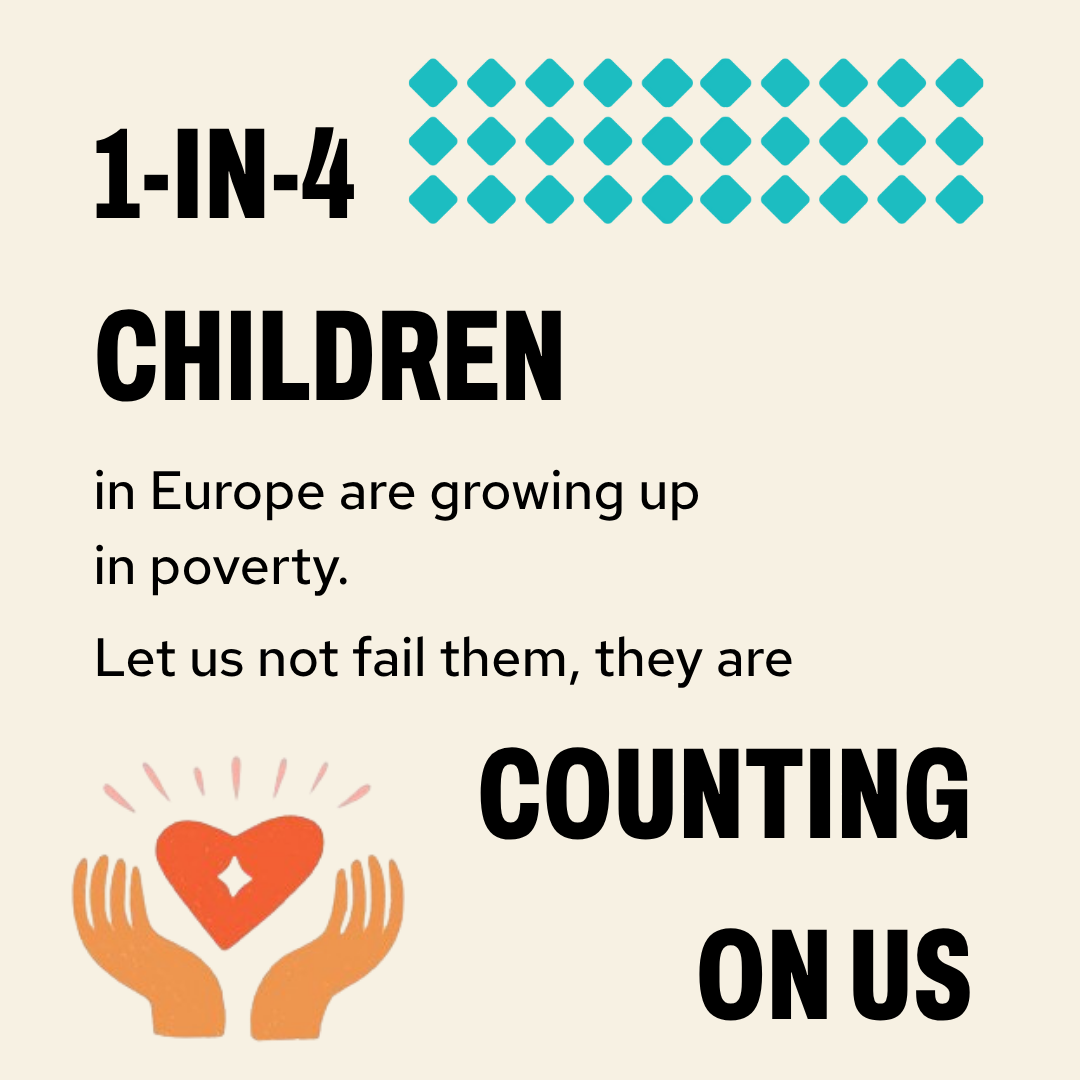
One in four children in the EU is at risk of poverty or social exclusion.

This reality affects over 20 million children across Europe and represents a serious social emergency and a threat to the EU’s long-term cohesion, prosperity, and democracy.

As the European Union enters a new political cycle and prepares the next Multiannual Financial Framework (MFF), civil society urges leaders to take necessary actions. Children must be placed at the core of Europe’s future agenda. 

Together with leading child rights and social justice organisations, we have issued a joint letter to EU leaders, calling on them to:

  • Reinforce the European Child Guarantee
  • Integrate child poverty into a stronger EU Social Agenda
  • Secure robust, long-term investment in the next MFF

Child poverty is widespread and systematic failure, affecting children in every EU Member State. While the context may differ across countries, the outcome is universally unjust. Their rights are not being fully respected, protected, and fulfilled.

As highlighted in the Draghi Report on EU competitiveness, Europe’s ability to compete globally must go hand in hand with equity and inclusion. A resilient and competitive Europe protects and empowers its children.

Investing in children is not just a moral responsibility. It is a strategic necessity. If the EU fails to act now, the costs—social, economic, and political — will be immeasurable and irreversible.

What does it say about the European Union when one of the most developed regions in the world cannot guarantee a life of dignity and opportunity to all its children? What future are we shaping if entire generations are left behind?

Childhood poverty violates rights. It restricts potential. It weakens democracy. Therefore, we need to protect children and invest in their futures. 

ERGO Network opinion on Multiannual Financial Framework for Roma

ERGO Network opinion on Multiannual Financial Framework for Roma

Significant shifts are underway as the EU prepares its next long-term budget (2028–2034). Global crises, digital change, and new leadership are shaping priorities, and the European Commission’s recently published Roadmap focuses heavily on competitiveness and efficiency.

However, one crucial issue is missing: Roma inclusion.

Over 6 million Roma live in the EU—80% at risk of poverty, fewer than half in paid work, and 1 in 4 facing daily discrimination. The proposed budget risks cutting or merging key social programs, threatening the fragile progress made so far.

Roma inclusion must be built into the next multiannual financial framework (MFF) from the start to meet the EU’s 2030 goals and uphold the European Pillar of Social Rights.

ERGO Network has outlined clear recommendations to ensure this happens:

  • Keep rights-based rules: Tie EU funds to real action, including national Roma inclusion strategies.
  • Protect social funding: Maintain the EU’s Cohesion Policy, which supports education, housing, and health for vulnerable groups.
  • Keep ESF+ independent: The European Social Fund+ must remain a dedicated tool for fighting poverty and inequality.
  • Enforce EU values: Countries should not violate basic rights – through racism, discrimination, or abuse.
  • Support civil society: Roma-led organisations need resources to advocate and build inclusion from the ground up.

The next EU budget is a test of values. A competitive Europe must also be a fair one, and the MFF must deliver on both.

Response to the Competitiveness Compass and the Autumn Package 2025

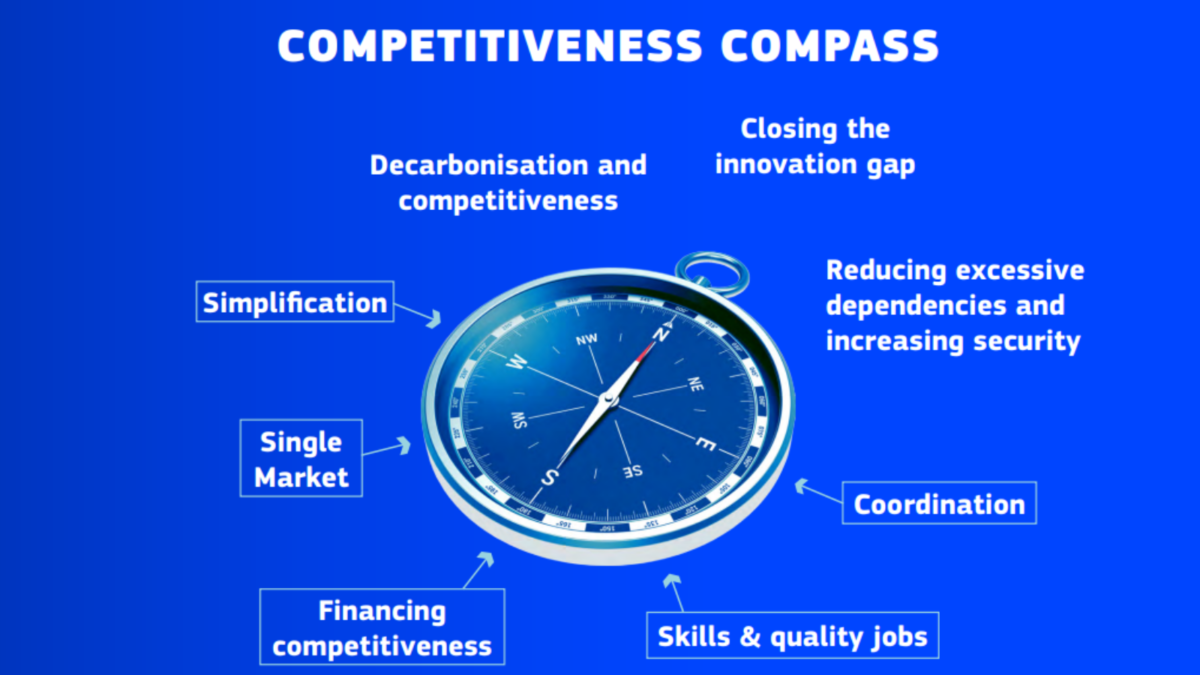
The Competitiveness Compass and the draft Joint Employment Report 2025 – What’s in it for Europe’s Roma?

The Autumn Package kick-starting the European Semester 2025 was released by the European Commission in two batches, on 24 November and on 18 December 2024. While the latter batch included the usual draft Joint Employment Report, none contained the Annual Sustainable Growth Survey. This is the first ever since the establishment of the European Semester in 2011. There was only a brief accompanying communication of two and a half pages. Instead, the European Commission put forward a new document, entitled the Competitiveness Compass, on 29 January 2025. 

The Competitiveness Compass is a programmatic framing document aimed to “guide the work in the coming five years” and listing “priority actions to reignite economic dynamism in Europe.” This approach means that most – if not all – other policy areas, including social and environmental policies, are subsumed to competitiveness goals. The vision seems to seek competitiveness at any price since it outlines no red lines or areas to be spared in this quest. The lack of attention to social issues is a significant step back even from the previous Annual Sustainable and Growth Surveys (itself primarily an economic document), and the narrative of the Competitiveness Compass leaves little doubt as to the low priority assigned by this Commission to equality and inclusion

There was also no place for Roma, ethnic minorities, racism, or discrimination anywhere in the Competitiveness Compass. This is another missed opportunity compared to the Annual Sustainable Growth Survey where, more often than not, the Roma were mentioned, or at the very least there was a commitment to the Union of Equality – also absent from the current document. The Compass includes one sentence about taking pride in Europe’s anti-discrimination laws, a sentiment that many human rights organisations would like to question. Vulnerable groups are only mentioned once in the entire text.  

The document features a small section on social fairness, which prioritises skills and jobs. Moreover, social aspects are viewed exclusively as an enabler of competitiveness rather than a goal in themselves. The European Pillar of Social Rights (Social Pillar) is mentioned once from the perspective of its role in shaping a competitive Europe. There is some positive language on quality jobs, adequate wages, inclusive labour markets and the welfare state, as well as references to welcome initiatives like the EU Job Quality Roadmap, the Affordable Housing Plan, and the EU Affordable Energy Action Plan – but no wording on the EU’s upcoming first Anti-Poverty Strategy. However, the overall approach is one of instrumentalising social policies for economic gains, where people are seen as bargaining chips in a race of global business interests.

The Competitiveness Compass also announces some very worrisome structural changes to EU processes and funds, such as aligning the new MFF with competitiveness objectives, raising great concerns that vital social funding will be cut or redirected. A new and streamlined European Semester is meant to focus on reforms and investments for competitiveness, but once again the worry is that social monitoring through the Semester might disappear or at least be significantly downsized.

We are very pleased to see Europe’s Roma acknowledged multiple times in the Joint Employment Report concerning issues such as their heightened risk of experiencing poverty and social exclusion (including that of children), early school leaving, and difficult access to services and the labour market. Additionally, strong links are made to the EU Strategic Framework on Roma Equality, Inclusion, and Participation as part of the Union of Equality. Very disappointingly, though, there is no mention of antigypsyism or racism and only four references to discrimination.

The references to civil dialogue are rather poor, as the Competitiveness Compass does not mention civil society, while social partners are mentioned three times. The accompanying communication of the second batch of documents of the Autumn Package includes one explicit reference to civil society about increasing ownership of the Country Reports. Finally, the Joint Employment Report fares much better, with multiple references to the role of civil society organisations in delivering impactful and inclusive policies.  

ERGO Network will continue to advocate for a stronger focus on Roma rights and inclusion in the framework for these processes and for better synergies between the European Semester and the EU Roma Strategic Framework for Equality, Inclusion, and Participation, the EU Anti-Racism Action Plan, and the Union of Equality.

For more information on ERGO Network’s work on the European Semester, please contact Senior Policy Adviser Amana Ferro – a.ferro@staging.ergonetwork.org

Roma access to quality, affordable, and inclusive essential and social services

Roma access to quality, affordable, and inclusive essential and social services

Access to essential and social services is a fundamental component and pre-requisite for lifting people out of poverty, combatting material deprivation, and raising work intensity. Europe’s Roma face multiple obstacles in benefitting from good quality, affordable essential and social services despite being among the key groups most needing this support to unlock equal opportunities for themselves and their families. 

There are some key opportunities to capitalise on this subject in the next mandate of the European Commission, chiefly the new Action Plan of the European Pillar of Social Rights and associated initiatives. Revising the Multi-Annual Financial Framework is another opportunity to review support for quality, affordable, accessible, and inclusive service provision. The Mission Letter to Executive Vice-President Roxana Mînzatu lists a call for her to “lead the work on the first-ever EU Anti-Poverty Strategy, aimed at helping people to access the essential protections and services they need and addressing the root causes of poverty.” (our underlining).

The work has already begun, with the European Commission releasing a comprehensive and long-awaited report on access to services on 18 June 2023. The report aims to support the delivery of Principle 20 of the European Pillar of Social Rights, which refers to access to essential services such as water, sanitation, energy, banking services, and digital communications. Consultations with civil society are also taking place, and oral and written feedback is being submitted. 

This policy paper aims to review the aforementioned European Commission report from a Roma inclusion perspective, as well as to formulate policy recommendations that concern access to both essential and social services for one of Europe’s most vulnerable communities. It is also part of ERGO Network’s advocacy in the framework of our efforts to ensure that the upcoming EU Anti-Poverty Strategy does not leave the Roma behind. We have consistently advocated for more and better access to services, including digital services, for the Roma as a fundamental pre-requisite to thrive, achieve equality, and participate in society and the labour market.

Last but not least, we hope to see full synergies between the Union of Equality and its composing strategies, including the EU Strategic Framework for Roma Equality, Inclusion, and Participation, and key mainstream processes such as the European Semester and the initiatives it monitors.

=> Read the policy paper here!

For ERGO Network’s engagement with access to social and essential services, please contact Senior Policy Adviser Amana Ferro: a.ferro@staging.ergonetwork.org

`
Publications – ERGO Network

By continuing to use the site, you agree to the use of cookies. more information

The cookie settings on this website are set to "allow cookies" to give you the best browsing experience possible. If you continue to use this website without changing your cookie settings or you click "Accept" below then you are consenting to this.

Close