Statement on “Šutar Law” in Slovenia

Urgent EU response needed to rising anti-Roma sentiment in Slovenia: Escalating antigypsyism in Slovenia following the Novo Mesto incident

by Stelina Dungaj

ERGO Network expresses deep alarm over the escalating antigypsyism and collective blaming of Roma communities in Slovenia in the aftermath of the recent tragic incident in Novo Mesto. While we fully recognise the gravity of the crime and the importance of justice for the victim and his family, the current public discourse and political responses risk undermining fundamental rights and social cohesion in Slovenia.

What is the “Šutar Law” and the recent developments

On 25 October 2025, a Slovenian citizen, Mr Aleš Šutar, was fatally assaulted outside a nightclub in Novo Mesto. The alleged perpetrator, reportedly from the Roma community, was arrested and remains under investigation.

However, instead of focusing on individual accountability, public reaction quickly turned into mass protests, antigypsyist rhetoric, and calls for punitive measures against the entire community.

Over ten thousand people gathered in demonstrations that, in many cases, carried openly discriminatory and stigmatising messages targeting Roma residents. The situation has escalated politically, with the resignation of Slovenia’s Minister of Justice and Minister of the Interior, the mobilisation of auxiliary police, and calls for increased surveillance of Roma settlements.

These developments have triggered a dangerous shift in public discourse, in which Roma people are increasingly portrayed as a security threat rather than as equal citizens deserving of rights and protection.

In this tense climate, the Slovenian Parliament adopted a new security legislation package, widely referred to as the “Šutar Law,” that significantly expands police powers. The law allows warrantless entry into designated “high-risk” areas, increases surveillance capacities, and has been heavily criticised by Roma rights organisations, legal experts, and human rights groups who warn that it enables ethnic profiling and collective punishment. Adopted in the immediate aftermath of the Novo Mesto incident, the law risks institutionalising discriminatory practices under the guise of public security.

Our Concerns

ERGO Network is concerned that:

  • Collective blame and racialised narratives are dominating national discourse, reinforcing historic prejudice and social division.
  • Media and political framing have amplified stigmatisation rather than fostering responsible, fact-based reporting.
  • Institutional responses, including proposed increases in police powers, risk legitimising discrimination and deepening the marginalisation of Roma communities.
  • Roma partners and activists in Slovenia are reporting heightened fear, harassment, and social exclusion in their local environments.
    The adoption of the “Šutar Law,” with its provisions for warrantless entry and expanded surveillance, further exacerbates these risks by enabling disproportionate policing practices that may be applied in ethnically discriminatory ways.
  • This is not an isolated national issue but rather a European human rights crisis. When one Member State normalises antigypsyism, it sets a precedent that endangers all European Roma communities and erodes EU credibility on fundamental rights.

We urgently call on:

1. The European Commission

  • To publicly condemn antigypsyism and collective punishment narratives emerging from Slovenia.
  • To engage immediately with Slovenian authorities through the Commissioners for Justice, Equality, and Enlargement, ensuring that all national measures comply with EU law, the Charter of Fundamental Rights, and the EU Roma Strategic Framework.
  • To monitor and report on the situation, assessing whether national actions risk breaching EU non-discrimination and equality principles.

2. The Slovenian Government

  • To reaffirm its commitment to minority protection and human rights, it ensures that law enforcement acts proportionately and without ethnic bias.
  • To promote responsible public communication from political leaders that avoids stigmatisation.
  • To support Roma organisations and local mediators working on community cohesion and trust-building.

3. Media and Civil Society

  • To adopt ethical reporting standards and avoid sensationalist or collective language when covering cases involving Roma individuals.
  • To counter hate speech and misinformation, promote balanced and human rights–based narratives.
  • To stand in solidarity with Roma communities, amplifying their voices and ensuring their protection.

The recent developments in Slovenia, including the adoption of the “Šutar Law,” make clear that the situation has moved beyond spontaneous public outrage and entered the realm of institutionalised discrimination as the law risks embedding ethnic profiling into state practice and normalising the treatment of Roma communities as a security threat. Such measures not only endanger fundamental rights but also deepen social divisions and create conditions for long-term marginalisation.

This moment demands decisive action from both national authorities and EU institutions. Without a firm response, Slovenia risks setting a dangerous precedent for the erosion of minority rights across Europe. The escalation of antigypsyism and the implementation of discriminatory security policies must be urgently addressed to uphold the principles of equality, justice, and human dignity enshrined in the European project. Europe must demonstrate, unequivocally, that collective punishment and ethnic scapegoating have no place within its borders.

Report on Roma access to quality and inclusive education

ERGO Network launches its research report on Roma access to quality and inclusive education

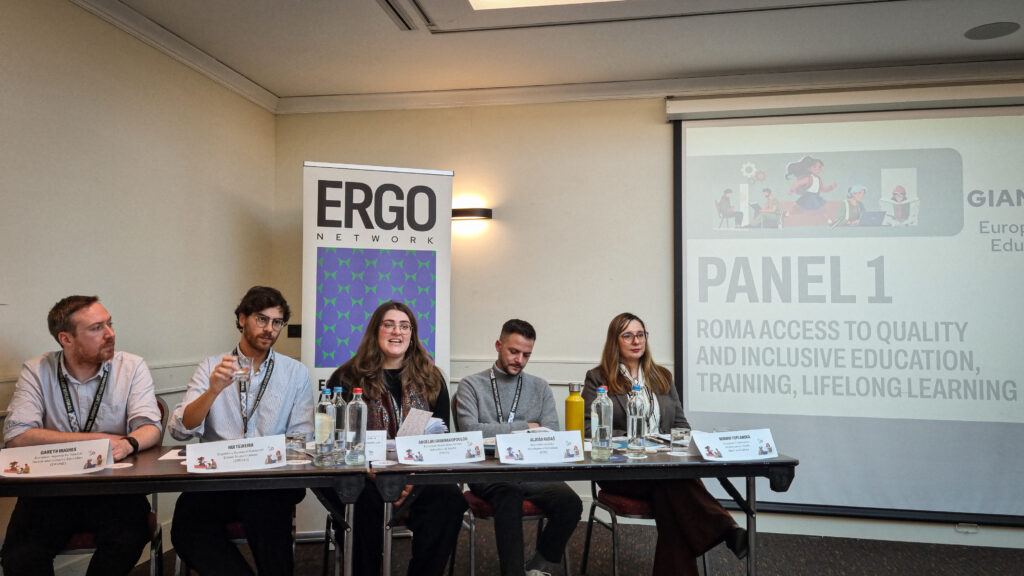
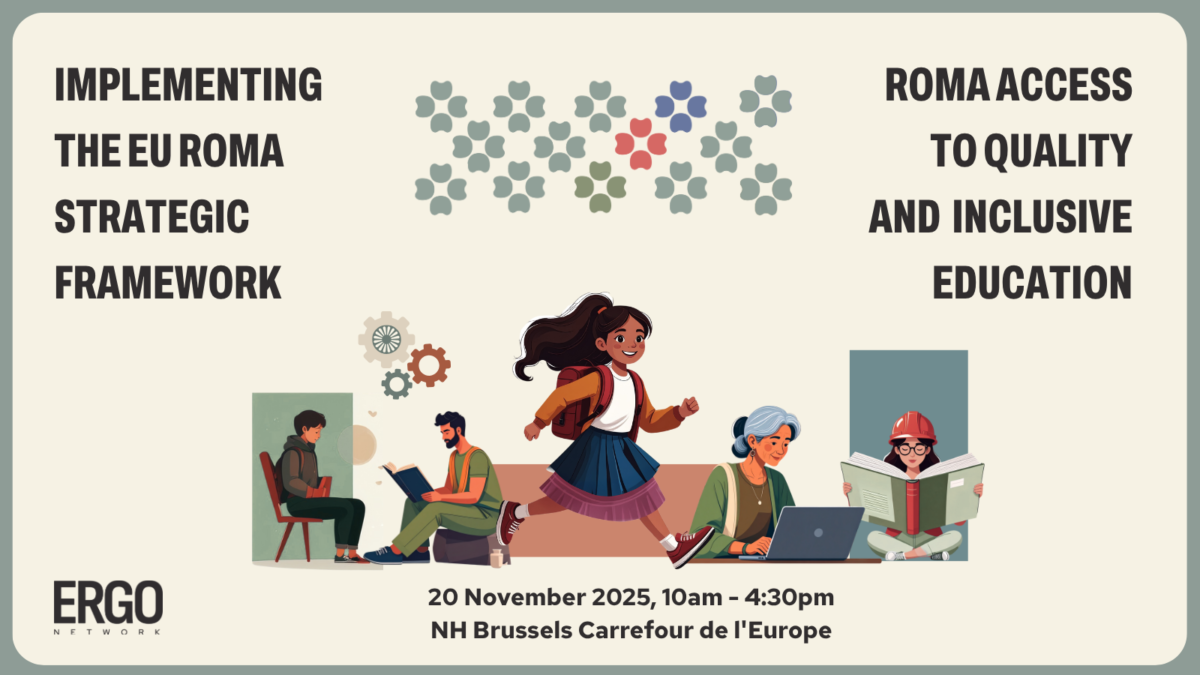
The European Roma Grassroots Organisations (ERGO) Network held its annual Policy Conference on 20 November, entitled “Implementing the EU Roma Strategic Framework. Roma access to quality and inclusive education.”

From a very young age, Roma children are unable to access the same learning opportunities as their peers. Poverty and discrimination lead to significantly lower attendance and completion rates for the Roma throughout the lifecycle. Pervasive antigypsyism, civil and institutional, results in segregated educational facilities and the misplacement of Roma children in special needs establishments. In the absence of sufficient and accessible second-chance schools and training opportunities, lifelong learning and upskilling are further impeded, and the Roma find themselves trapped in a constant state of poverty and low skills.The EU Roma Strategic Framework for Equality, Inclusion, and Participation 2020 – 2030includes, as one of its four sectoral objectives, “Increase effective equal access to quality inclusive mainstream education” by 2030, whilethe Council Recommendation on Roma Equality, Inclusion and Participation features a comprehensive section calling on Member States to “ensure that all Roma have effective equal access to and are able to participate in all forms and stages of education, from early childhood education and childcare to tertiary education, including second chance education, adult education, and lifelong learning”. Access to education, training, and lifelong learning is also covered by the European Pillar of Social Rights (Social Pillar), chiefly in its Principle 1, while quality education is Goal 4 of the UN Sustainable Development Goals (SDGs).

During 2025, ERGO Network conducted in-depth national case studies in six countries (Bulgaria, the Czech Republic, Hungary, Romania, Slovakia, and Spain), looking at the realities of Roma education, training, and lifelong learning, as well as at the key barriers the Roma face when trying to access quality and inclusive learning opportunities in these countries. Additional benchmarking evidence was provided by our members in Ireland and Sweden. The main findings and recommendations were brought together in an EU synthesis report, launched in the framework of the event mentioned above.

Key messages of the synthesis report:

1. In all six countries, the Roma continue to face persistently low educational attainment and learning outcomes throughout the lifecycle

  • Comprehensive investment in Roma education is urgently needed, ensuring wrap-around support policies from early childhood to adult learning, combined with adequate, predictable funding, and disaggregated monitoring and indicators by ethnicity.

2. Financial and non-financial barriers to education continue to drive dropout and high NEET rates among Roma learners

  • Governments should provide adequate income support and access to services to learners and their families, while tackling the shortage of good-quality, culturally competent educational establishments located where the Roma live. 

3. Support for Roma learners and their families remains inconsistent, while educational mediators are underutilised

  • Establish stable, state-funded systems of Roma educational mediators and assistants, ensuring proper accreditation, fair pay, and coordination with teachers and social services, alongside providing bilingual, after-school, and parental outreach programmes.

4. Antigypsyism and segregation remain pervasive, while Roma language and culture are invisible in curricula

  • School segregation must be eradicated, alongside strong enforcement of anti-discrimination laws in education, mandatory anti-bias and intercultural training for all education staff, and the integration of Roma language, history, and culture in schools. 

5. Educational disadvantage lasts a lifetime, locking the Roma out of lifelong learning, quality employment, and social mobility

  • Supportive lifelong learning opportunities are needed through well-designed second-chance schools and relevant skills training that account for the needs of adult learners, such as childcare, income, and transport, as well as different starting points.

6. Roma communities and their civil society organisations must be involved to co-create sustainable ways forward.

  • Policy makers and all educational actors must closely cooperate with Roma stakeholders and their civil society representatives to ensure evidence-based solutions, support disaggregated data collection, foster a common understanding, and bridge cultural gaps.

With this research, we aim to kick-start a debate with policy makers on how to improve the availability, accessibility, quality, and inclusiveness of education, training, and lifelong learning Europe’s Roma.

For more information about ERGO Network’s work on Roma access to quality and inclusive education, please contact Senior Policy Adviser Amana Ferro.

ERGO Network Annual Policy Conference 2025


Implementing the EU Roma Strategic Framework
Roma access to quality and inclusive education

IMPLEMENTING THE EU ROMA STRATEGIC FRAMEWORK. ROMA ACCESS TO QUALITY AND INCLUSIVE EDUCATION

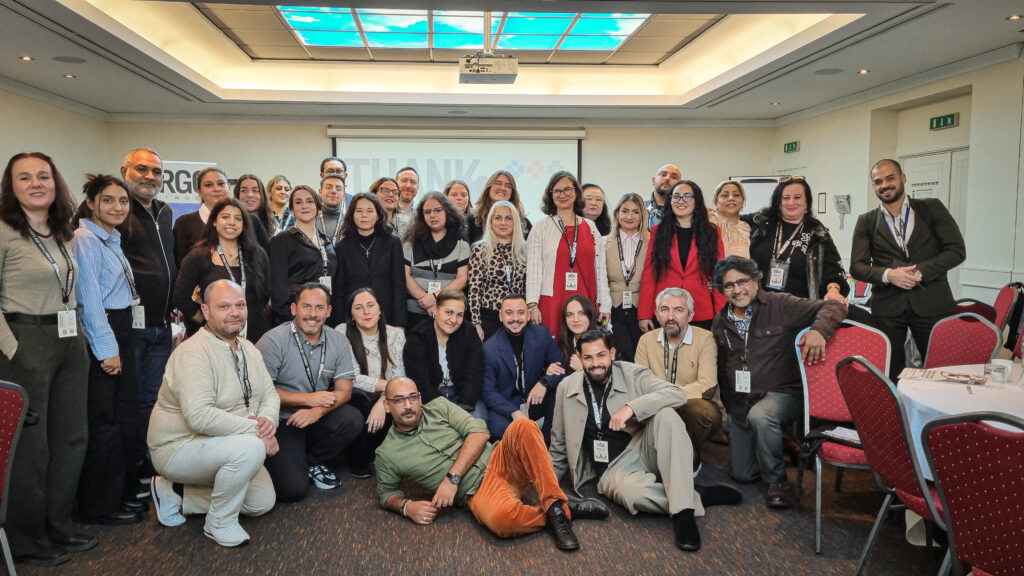
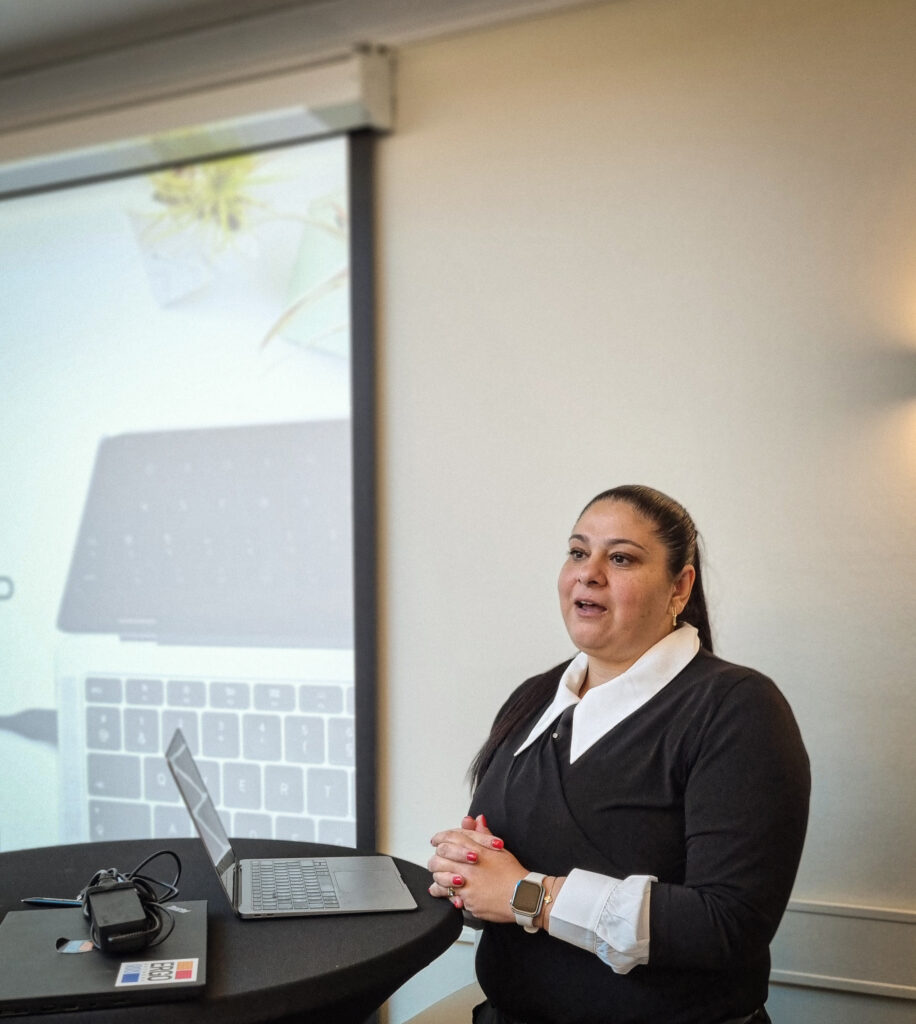
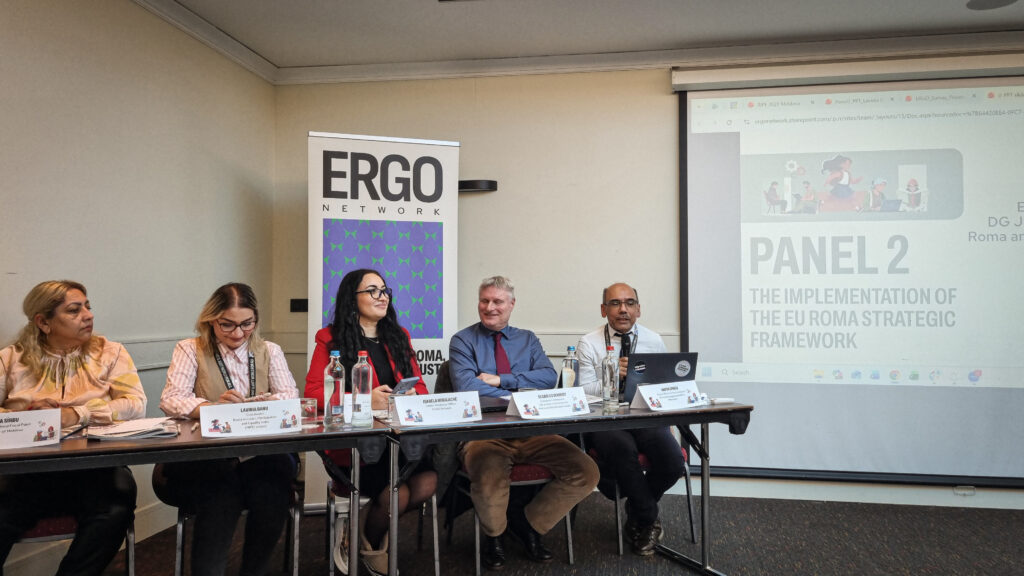
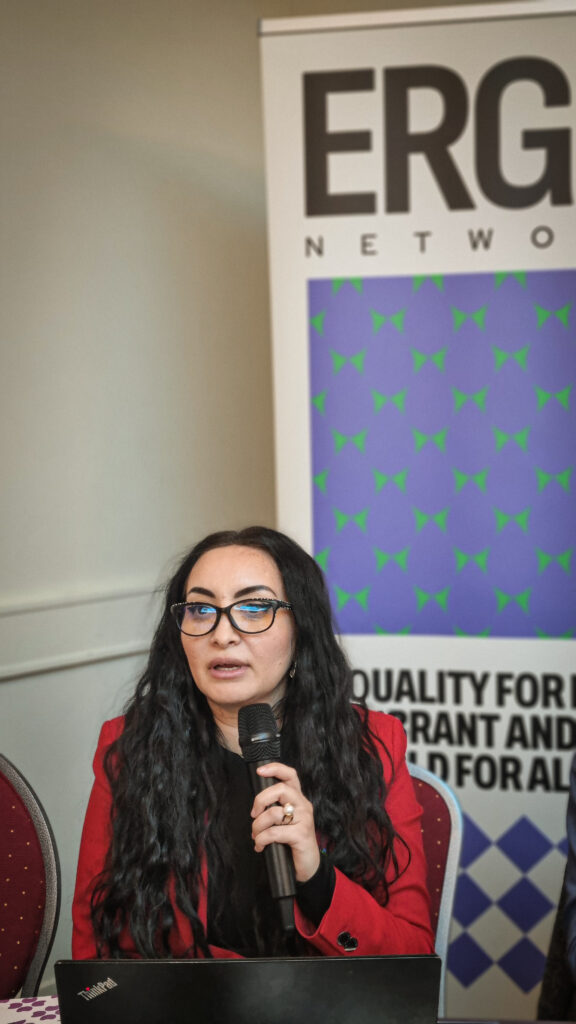
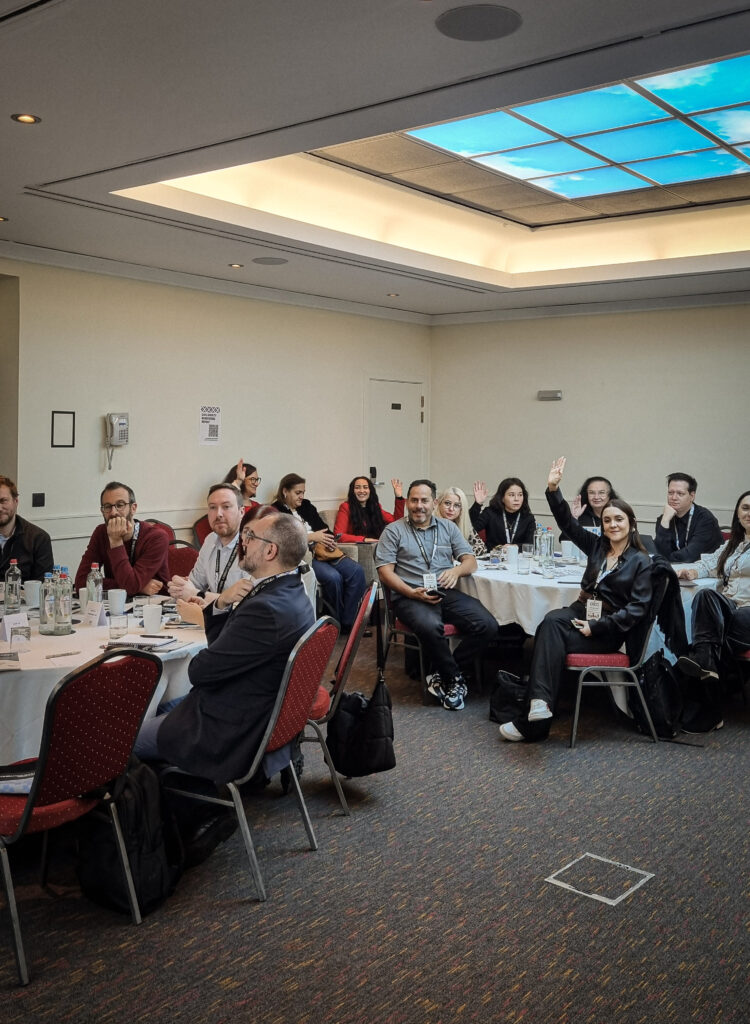
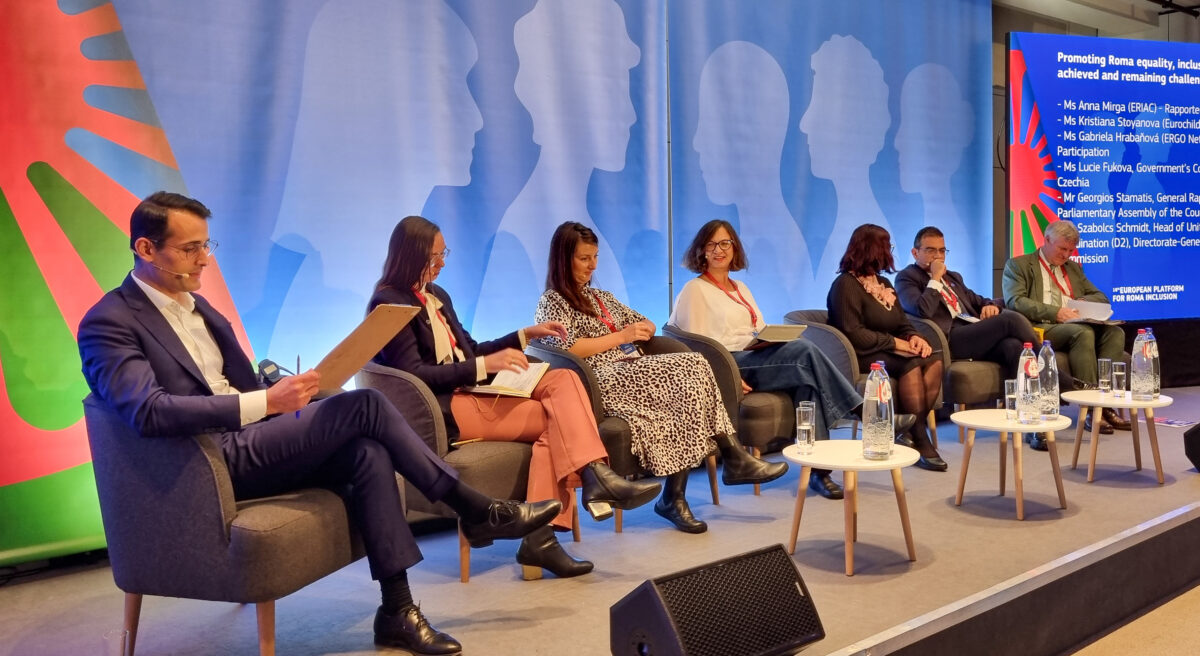
This past 20 November, ERGO Network organised its annual Policy Conference in Brussels, dedicated to exploring how to improve Roma access to quality and inclusive education, training, and lifelong learning, as well as to taking stock of the implementation of the EU and National Roma Frameworks and of Council of Europe standards on Roma inclusion.

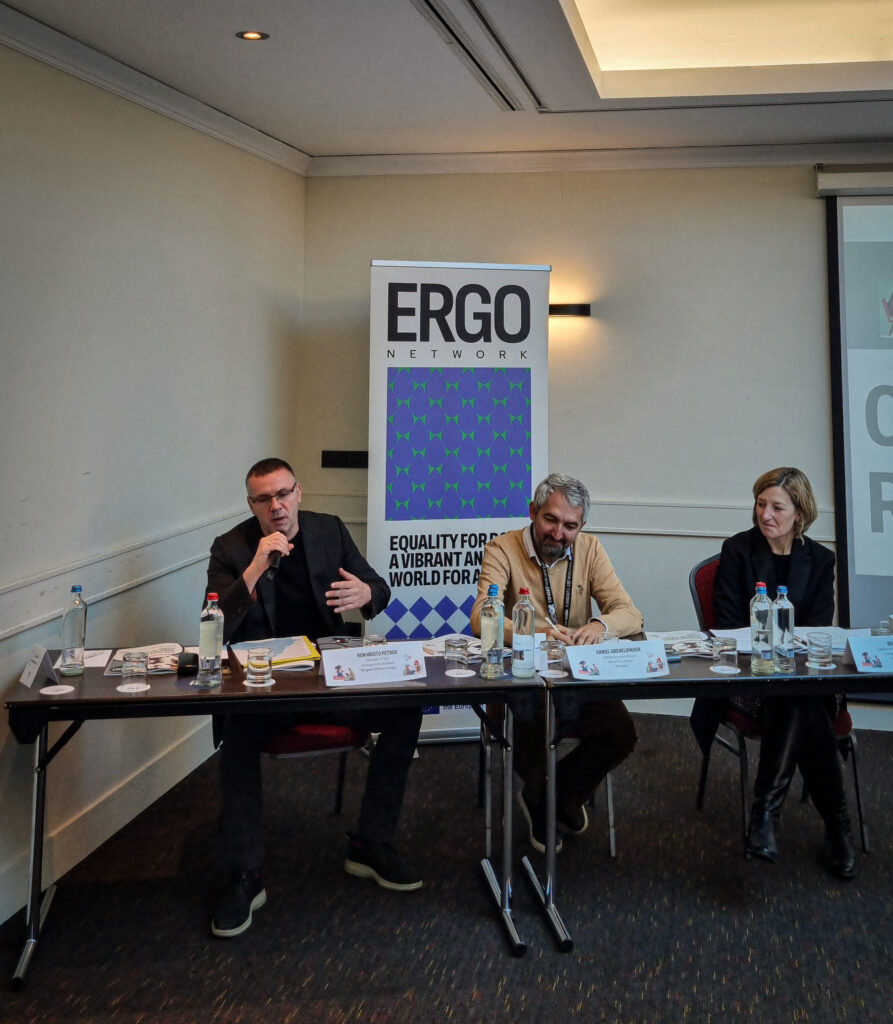
The Opening session featured welcome words by Daniel Grebeldinger of the ERGO Network Board, framing remarks by Eva Schultz from the cabinet of European Commission Executive Vice-President Roxana Mînzatu, and introductory reflections from Hon Hristo Petrov, Member of the European Parliament from Bulgaria, part of Renew Europe.  

From a very young age, Roma children are unable to access the same learning opportunities as their peers. Poverty and discrimination lead to significantly lower attendance and completion rates for the Roma throughout the lifecycle. Pervasive antigypsyism, civil and institutional, results in segregated educational facilities and the misplacement of Roma children in special needs establishments. In the absence of sufficient and accessible second-chance schools and training opportunities, lifelong learning and upskilling are further impeded, and the Roma find themselves trapped in a constant state of poverty and low skills. Increasing effective equal access to quality and inclusive mainstream education is an objective of the EU Roma Strategic Framework, is extensively covered by the European Pillar of Social Rights, and is Goal 4 of the UN Sustainable Development Goals (SDGs).

The event launched ERGO Network’s research report on “Roma access to quality and inclusive education”, based on six national case studies carried out in Bulgaria, the Czech Republic, Hungary, Romania, Slovakia, and Spain. Additional benchmarking evidence was provided by ERGO Network members in Ireland and Sweden. The main findings and recommendations aim to kick-start a dialogue with key decision-makers and stakeholders to identify positive solutions to support better educational outcomes for Roma learners throughout the lifecycle and to inform the delivery of the EU Roma Strategic Framework, the European Pillar of Social Rights, and other relevant policy initiatives.

The Key Messages of the report are:

  • The Roma continue to face persistently low educational attainment and learning outcomes throughout the lifecycle
  • Financial and non-financial barriers to education continue to drive dropout and high NEET rates among Roma learners
  • Support for Roma learners and their families remains inconsistent, while educational mediators are underutilised
  • Antigypsyism and segregation remain pervasive, while Roma language and culture are invisible in curricula
  • Educational disadvantage lasts a lifetime, locking the Roma out of lifelong learning, quality employment, and social mobility
  • Roma communities and their civil society organisations must be involved to co-create sustainable ways forward

With the adoption of the EU Roma Strategic Framework up to 2030, governments in EU Member States and Western Balkan countries developed National Roma Strategic Frameworks in 4 thematic areas and 3 horizontal strategic objectives, including education, employment, health, housing, fighting antigypsyism, combating poverty, and promoting Roma participation. To ensure effective implementation of the ensuing National Frameworks, a robust, ongoing monitoring of the entire policy process should be maintained.

The afternoon of the event looked at the implementation of the EU Roma Strategic Framework on Equality, Inclusion, and Participation, in the context of the European Commission’s upcoming 2026 progress report on the National Roma Strategic Frameworks. The session also reflected on the implementation of Council of Europe standards and policy instruments for the protection of Roma and Travellers, highlighting achievements, challenges, and complementarities with EU-level processes. Covering both EU Member States and enlargement countries, it will present findings from ERGO Network’s 2025 data collection exercise, alongside perspectives from the EU institutions, the Council of Europe, and civil society.

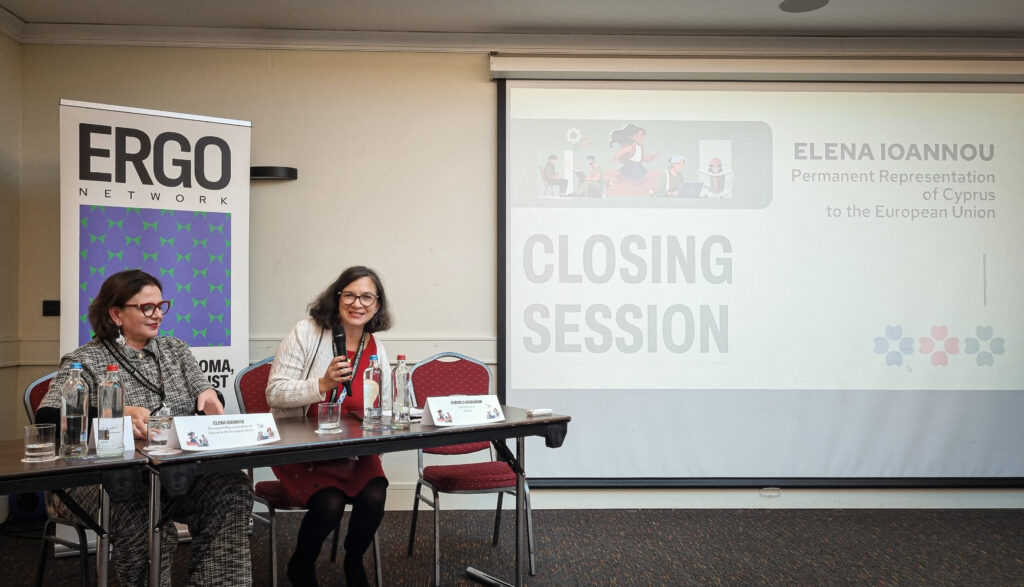
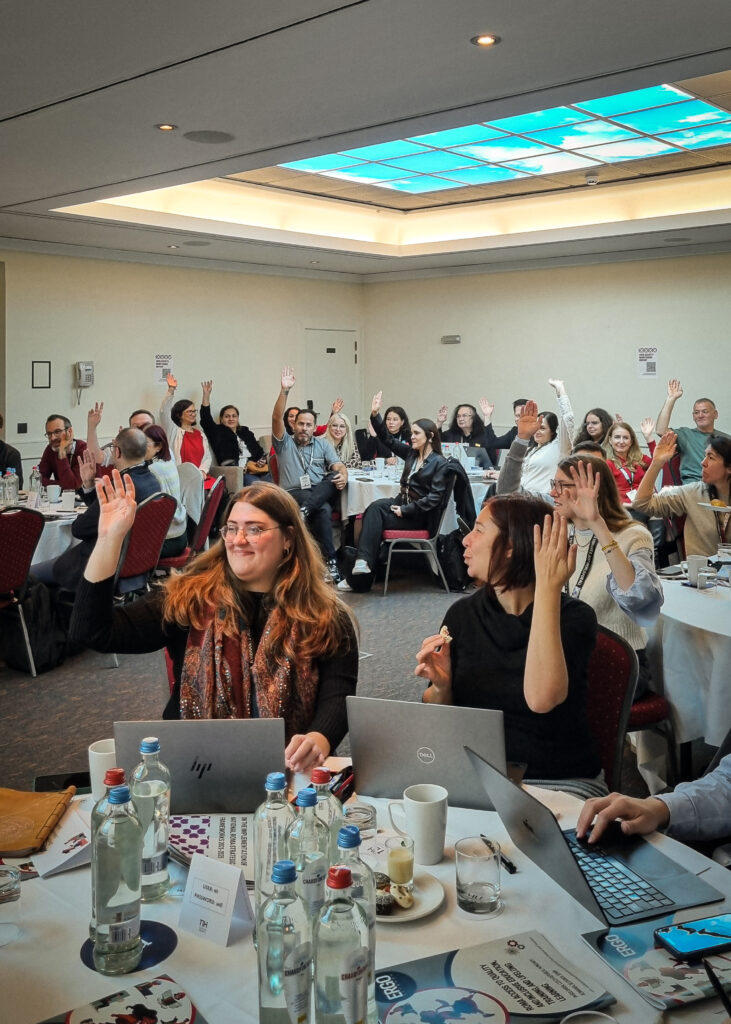
Closing remarks were provided by Elena Ioannou, Employment and Social Affairs Attaché with the Permanent Representation of the Republic of Cyprus to the European Union, while Hon Nela Riehl, Member of the European Parliament from Germany and part of Greens / EFA, provided a video message. The event was closed by Gabriela Hrabaňová, ERGO Network Director. The conference was very well attended, with over 50 participants on site and nearly 200 views online, and it brought together ERGO Network national members from the grassroots level in many European countries, as well as European civil society organisations, policy-makers from the EU and national levels, diplomatic representatives, education practitioners, and other stakeholders.

If you attended this event or watched the recording, don’t forget to let us know what you thought about it by filling in this brief Evaluation Form (project reference: 101194404; event title: ERGO Network Policy Conference).

See more:

– Agenda of the event

– Report on Roma access to quality and inclusive education

– Report on the Implementation of National Roma Strategic Frameworks

– Full recording of the conference: Part 1 (am) | Part 2 (pm)

– Photo album

– Conference Report (coming soon)

For more information about this event, please don’t hesitate to contact us: info@staging.ergonetwork.org

#ERGOConference2025

This conference is kindly supported by the European Union Programme for Citizens, Equality, Rights and Values (CERV)  and by the German Federal Foreign Office. 

Roma Platform 2025

Roma Platform 2025: Europe still talks recognition, but we demand Resources

At the 18th European Platform for Roma Inclusion in Brussels, our message from ERGO Network and the Roma civil society was clear: Recognition of antigypsyism is a progress, but it will mean little without resources, accountability and real political participation.

Rights, not charity

Speaking on the high-level panel, former MEP and current ERGO Network Chair Soraya Post welcomed how far Europe has come. For decades, Roma issues were framed as welfare or charity; today, at least on paper, they are recognised as fundamental rights.

“Roma inclusion is no longer treated as an act of charity — it is recognised as a matter of fundamental rights and political responsibility,” she told the audience. But she warned that “recognition without resources will not change people’s daily lives. The rights we have recognised must now be delivered — in schools, in health care, in jobs, and in every part of everyday life.”

Her call was clear: Roma participation in decision-making must become genuine, antigypsyism must be confronted and enforced against, and the next EU budget must include binding resources for Roma equality.

Invited to the end of dinner

Others echoed the frustration. Petre Florin Manole, Minister of Family, Youth and Equal Opportunities of Romania, insisted that cohesion funds must be protected, otherwise “Roma are invited to the end of the dinner, not to eat, but to clean up the mess.

Meanwhile, the EU Fundamental Rights Agency presented its most comprehensive survey yet: more than 10,000 Roma respondents across 1,000 locations, laying bare ongoing discrimination, poverty and exclusion. And Hristo Petrov, MEP, offered a challenge of his own: “True equality is when Roma are not confined only to Roma inclusion issues, but can be present in any other field, so we have the Roma perspective on them.”

Participation as democracy’s test

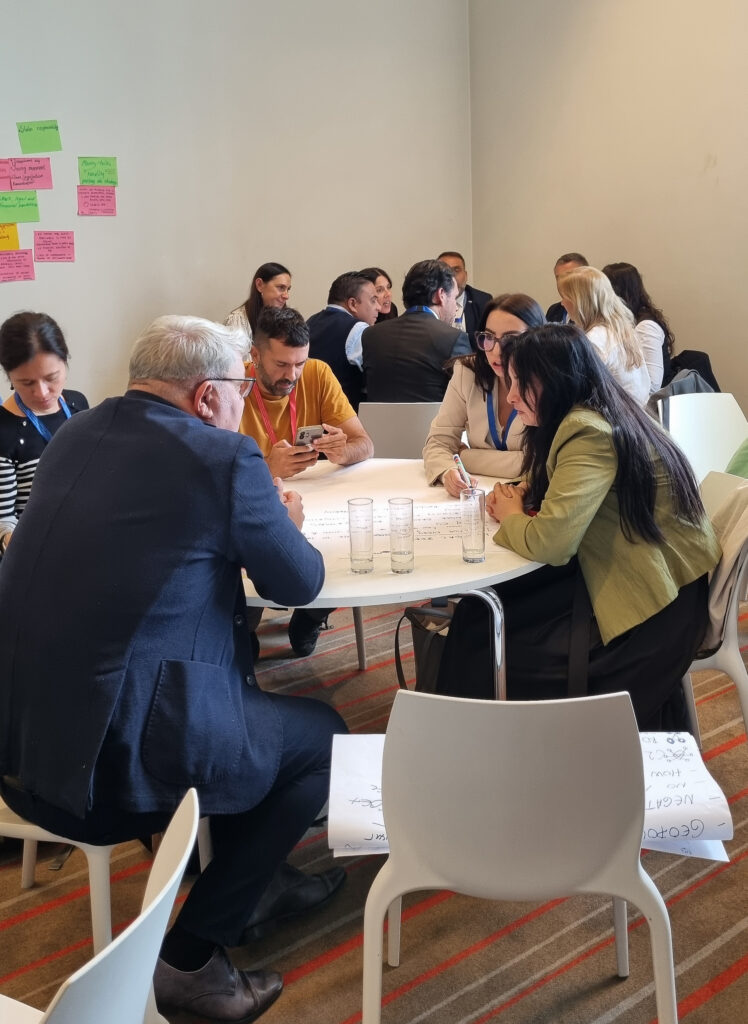
ERGO Network co-facilitated a workshop on participation, moderated by our Director Gabriela Hrabaňová. The discussion underscored a growing sense that consultation alone is not enough. Advisory bodies without power, under-representation of Roma women and youth, and a lack of trust between institutions and communities keep participation symbolic rather than real.

Yet there were bright spots we have to build on for them to actually make a difference: Roma Political Schools and youth mentoring schemes, minority councils with decision-making power, and alliances with non-Roma organisations that lend weight and credibility.

The workshop set out four urgent priorities: to institutionalise Roma participation in real seats of power; to invest in leadership and trust-building; to bridge international commitments with local realities; and to make participation safe, inclusive and accountable.

For all the speeches and strategies, we left the Platform with a familiar feeling: National governments and EU institutions know the right words, but action lags behind. Recognition of antigypsyism is a milestone, but milestones alone do not change lives.

As Soraya Post concluded, the test is simple: “Roma communities have heard promises for generations. Now is the moment to prove that equality is not only written in EU and national documents — it is lived in everyday life.”

CALL FOR EXPERTS ON ANTIGYPSYISM IN ITALY

CALL FOR EXPERTS – AWARENESS RAISING & GOOD PRACTICE COLLECTION ON ANTIGYPSYISM IN ITALY

Deadline for applications: 3 July 2025

Contract period: 8 July – 31 August 2025

Total Budget: €1,800

Working language: English

ERGO Network is seeking one or two experts to support an awareness-raising initiative focused on strengthening the understanding and recognition of antigypsyism across different policy fields, particularly within civil society. This assignment will document good practices from Italy in addressing antigypsyism at the national level.

Expected Deliverables

  • One concise factsheet (3 pages) showcasing national good practices from Italy

    The factsheet should:
  • Clearly describe the context, the challenge of antigypsyism, and the policy field addressed
  • Present a promising practice or initiative (civil society or governmental)
  • Include key success factors, stakeholder roles, and relevance for broader EU contexts
  • Be accessible and usable for advocacy and awareness work among civil society

Timeline and Milestones

  • Structure/template of the factsheet due: 14 July 2025
  • First draft of the factsheet due: 31 July 2025
  • Final version of the factsheet due: 31 August 2025

Consultancy Terms

  • Fee: €1,800 (inclusive of all costs and taxes)
  • Timeline: All work must be completed by 31 August 2025
  • Work mode: Remote, with coordination via online check-ins

Expert Profile

  • Proven expertise in Roma inclusion, human rights, or anti-discrimination policy
  • Good understanding of antigypsyism and relevant policy fields (e.g. education, housing, employment, justice)
  • Strong knowledge of the national context in Italy
  • Experience working with or alongside civil society organisations
  • Excellent written communication skills in English

How to Apply

Please send your application to i.mihalache@staging.ergonetwork.org with the subject line:
“Call for Experts – Awareness Raising & Good Practice Collection on Antigypsyism in Italy”.

Your application should include:

  1. CV (or CVs, if applying as a team)
  2. A short cover letter (max. 1 page) outlining your experience and motivation
  3. A sample of relevant work (e.g. publication, factsheet, briefing)

For any questions or clarifications, feel free to contact us at i.mihalache@staging.ergonetwork.org

We look forward to receiving your application!!

This image has an empty alt attribute; its file name is image.jpeg

`
Ana Rozanova – ERGO Network

By continuing to use the site, you agree to the use of cookies. more information

The cookie settings on this website are set to "allow cookies" to give you the best browsing experience possible. If you continue to use this website without changing your cookie settings or you click "Accept" below then you are consenting to this.

Close