CALL FOR EXPERTS – AWARENESS RAISING & GOOD PRACTICE COLLECTION ON ANTIGYPSYISM IN CZECHIA
Deadline for applications: 3 July 2025
Contract period: 8 July – 31 August 2025
Total Budget: €1,800
Working language: English
ERGO Network is seeking one or two experts to support an awareness-raising initiative aimed at strengthening the understanding and recognition of antigypsyism across various policy fields, particularly within civil society. This assignment will document good practices from Czechia in addressing antigypsyism at the national level.
Expected Deliverables
One concise factsheet (3 pages) showcasing national good practices from Czechia
The factsheet should:
Clearly describe the context, the challenge of antigypsyism, and the policy field addressed
Present a promising practice or initiative (civil society or governmental)
Include key success factors, stakeholder roles, and relevance for broader EU contexts
Be accessible and usable for advocacy and awareness work among civil society
Timeline and Milestones
Structure/template of the factsheet due: 14 July 2025
First draft of the factsheet due: 31 July 2025
Final version of the factsheet due: 31 August 2025
Consultancy Terms
Fee: €1,800 (inclusive of all costs and taxes)
Timeline: All work must be completed by 31 August 2025
Work mode: Remote, with coordination via online check-ins
Expert Profile
Proven expertise in Roma inclusion, human rights, or anti-discrimination policy
Good understanding of antigypsyism and relevant policy fields (e.g. education, housing, employment, justice)
Strong knowledge of the national context in Czechia
Experience working with or alongside civil society organisations
Excellent written communication skills in English
How to Apply
Please send your application to i.mihalache@staging.ergonetwork.org with the subject line: “Call for Experts – Awareness Raising & Good Practice Collection on Antigypsyism in Czechia”
Your application should include:
CV (or CVs, if applying as a team)
A short cover letter (max. 1 page) outlining your experience and motivation
A sample of relevant work (e.g. publication, factsheet, briefing)
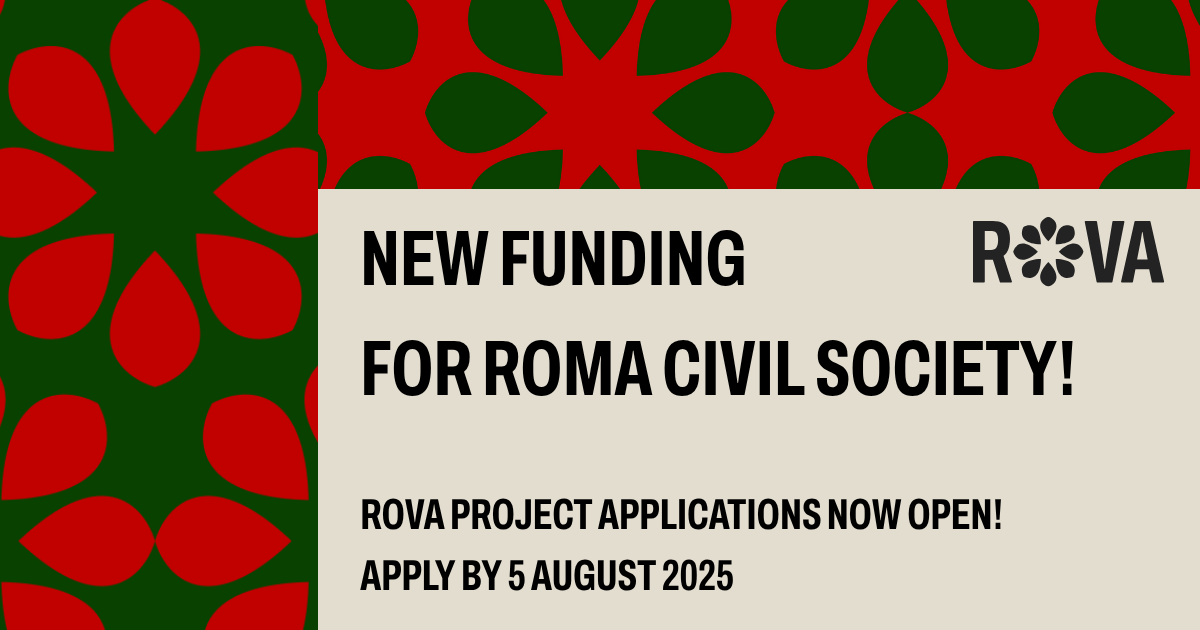
Are you a Roma or pro-Roma organisation in an EU Member State working to fight antigypsyism, promote equality, and uphold EU values? The ROVA project is here to support your mission.
ROVA – Roma Civil Society Organisations Promoting EU Values – is a new initiative led by ERGO Network and partners to empower grassroots Roma civil society across the European Union.
Mission of ROVA
We aim to empower Roma-led and pro-Roma CSOs to drive positive change, safeguard fundamental rights, promote equality, and strengthen civic participation across the EU.
What we do
ROVA will support:
120 local Roma and pro-Roma civil society organisations
15 national Roma coalitions
…in Spain, Hungary, Romania, Bulgaria, Czechia, Slovakia, and other EU Member States.
Organisations will receive both financial support and a tailored capacity-building programme to help them:
Advance access to fundamental rights
Promote equality and anti-discrimination
Encourage civic engagement and democratic participation
Raise awareness of the human rights situation of Roma
Improve monitoring of national Roma strategies
Foster dialogue between Roma communities and authorities
Why this matters
The ROVA project is grounded in the core values of the European Union, as enshrined in Article 2 of the Lisbon Treaty and the EU Charter of Fundamental Rights:
Human dignity – inviolable and must be respected and protected Democracy – based on political rights and representation for all Freedom – of thought, movement, expression, religion and assembly Equality – equal rights before the law Human rights – including the right to privacy and freedom from discrimination
By supporting grassroots efforts rooted in these principles, ROVA strengthens Roma civil society as a pillar of European democracy.
Available funding
Three types of project grants are now open:
Up to €30,000 for Roma/pro-Roma NGOs in Hungary, Romania, Bulgaria, Spain, Czechia, or Slovakia (2nd round: €25,000)
Up to €20,000 for Roma/pro-Roma NGOs in other EU Member States
Up to €15,000 for national Roma coalitions (one round only)
Deadline: 5 August 2025
📝 NGOs: submit a concept note 📜 Coalitions: submit a full proposal 📬 Applications must be submitted online – email submissions will not be accepted
Funded by the European Union, with co-funding provided by the EVZ Foundation. Views and opinions expressed are, however, those of the authors only and do not necessarily reflect those of the European Union, the European Commission, or the EVZ Foundation. Neither the European Union nor the granting authority nor the EVZ Foundation can be held responsible for them.
This call for applications is published within the framework of the ROVA project. The ROVA project is implemented by ERGO Network and five of its member organisations (Autonomia Foundation – Hungary, FAGIC – Spain, Integro Association – Bulgaria, Nevo Parudimos – Romania, Romanonet – Czechia) between January 2025 and December 2027.
ERGO Network opinion on Multiannual Financial Framework for Roma
Significant shifts are underway as the EU prepares its next long-term budget (2028–2034). Global crises, digital change, and new leadership are shaping priorities, and the European Commission’s recently published Roadmap focuses heavily on competitiveness and efficiency.
However, one crucial issue is missing: Roma inclusion.
Over 6 million Roma live in the EU—80% at risk of poverty, fewer than half in paid work, and 1 in 4 facing daily discrimination. The proposed budget risks cutting or merging key social programs, threatening the fragile progress made so far.
Roma inclusion must be built into the next multiannual financial framework (MFF) from the start to meet the EU’s 2030 goals and uphold the European Pillar of Social Rights.
ERGO Network has outlined clear recommendations to ensure this happens:
Keep rights-based rules: Tie EU funds to real action, including national Roma inclusion strategies.
Protect social funding: Maintain the EU’s Cohesion Policy, which supports education, housing, and health for vulnerable groups.
Keep ESF+ independent: The European Social Fund+ must remain a dedicated tool for fighting poverty and inequality.
Enforce EU values: Countries should not violate basic rights – through racism, discrimination, or abuse.
Support civil society: Roma-led organisations need resources to advocate and build inclusion from the ground up.
Roma Week 2025: Progress on Roma rights can not be left to chance
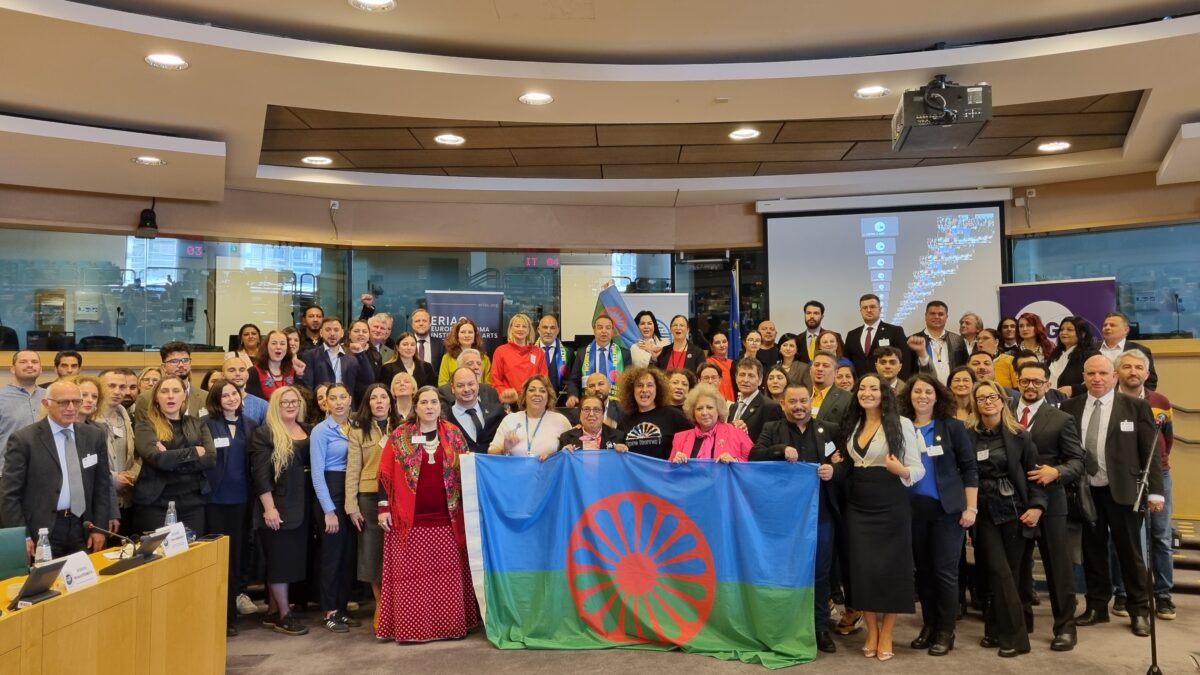
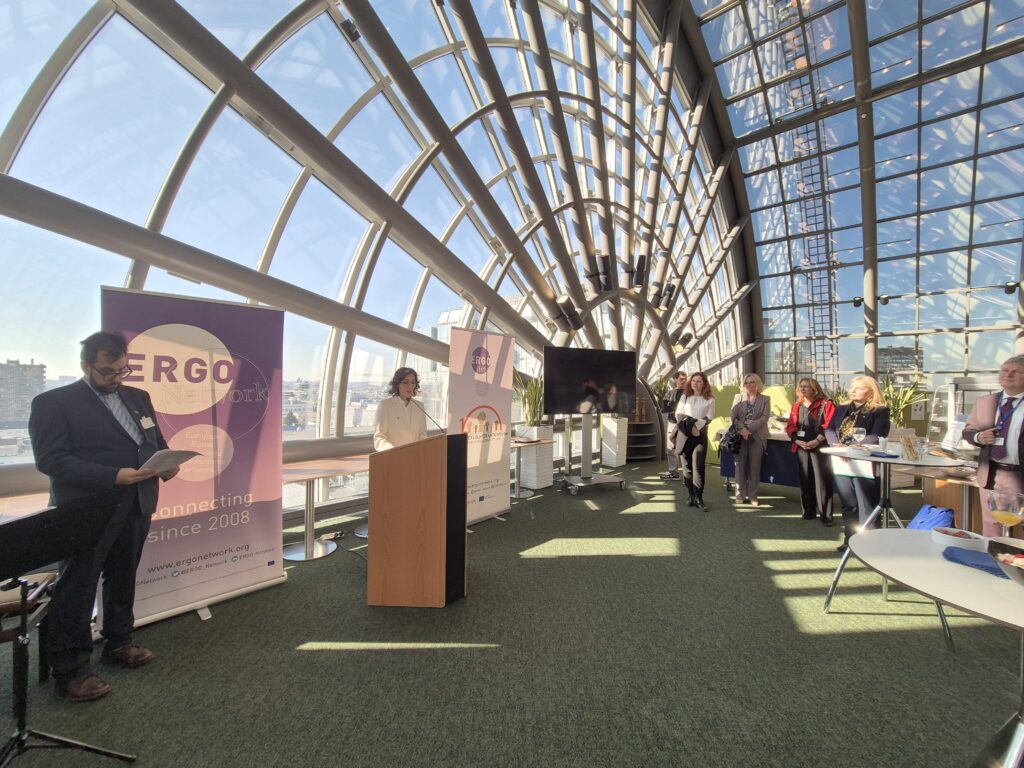
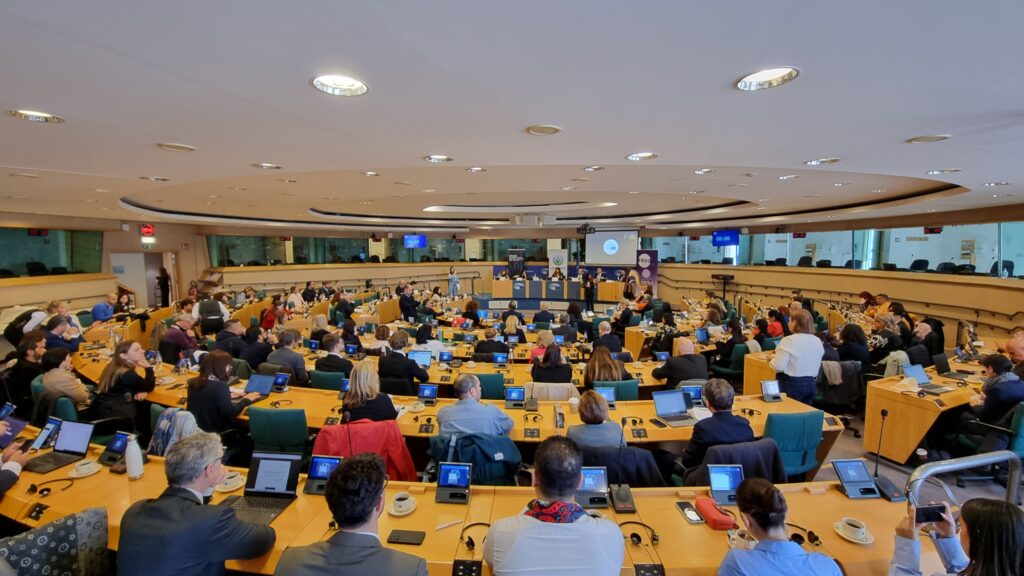
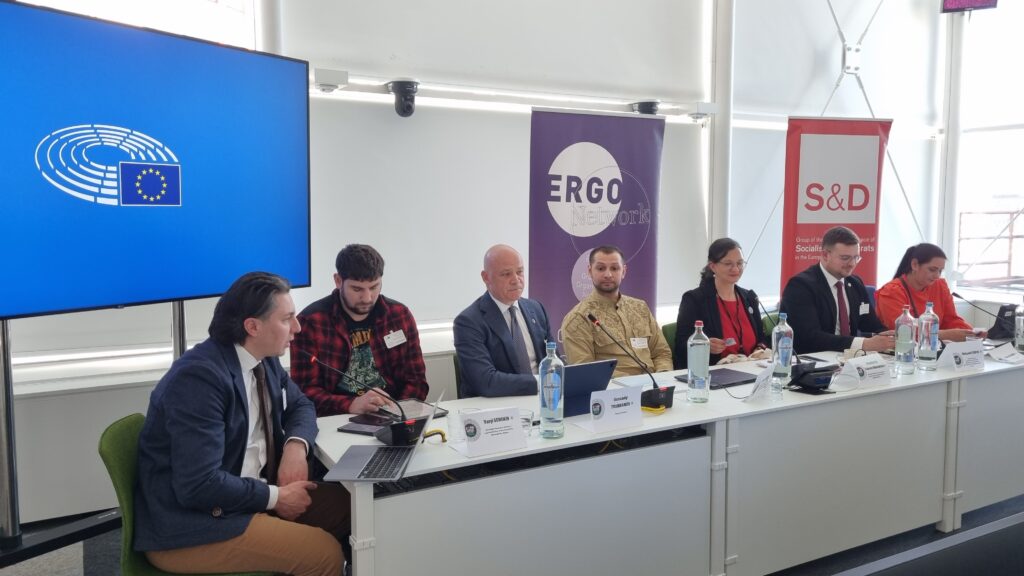
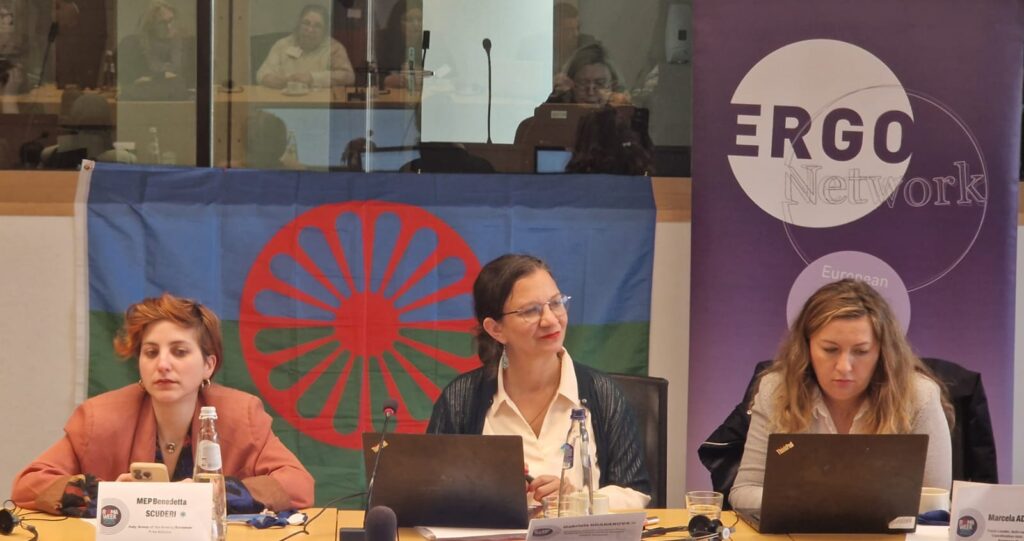
From 7–10 April 2025, Roma Week returned to Brussels with a clear focus: to push for real change in the lives of Roma people across Europe. Organised by ERGO Network together with Members of the European Parliament, civil society, and other key partners, this year’s edition brought together Roma leaders, experts, EU officials, and activists to speak up about what needs to happen next—especially when it comes to fighting antigypsyism, tackling inequality, and making sure Roma voices are heard where decisions are made.
Held to coincide with International Roma Day, the week’s events aimed to remind EU leaders that commitments alone aren’t enough. It’s time to invest in inclusion, confront antigypsyism, and create real space for Roma people in policymaking, especially women and youth. With sessions hosted inside the European Parliament and across Brussels, participants looked at everything from digital inclusion and Roma history in schools to intersectional discrimination and the need for justice.
What happened during Roma Week 2025?
This year’s Roma Week covered various pressing issues—from inclusion in education and employment to the rise of antigypsyism across Europe. The week opened with a reception with Commissioner for Equality, Preparedness and Crisis Management Hadja Lahbib, and was hosted by the MEP Krzysztof Smiszek.
At the heart of many discussions was one key message: fighting antigypsyism isn’t just about tackling hate—it’s about securing equal access to housing, jobs, education, and public services. In a panel hosted by the European Commission, experts emphasised the need to build stronger safeguards into EU funding, especially with new legislative frameworks like the Racial Equality Directive under review.
According to Bjørn Berge, Deputy Secretary General of the Council of Europe, “We, the non-Roma people, have to stop and fight discrimination, prejudice against Roma. We also need to support the Roma politically so that they have a voice in political parties, processes, and parliaments. To be the decision-makers.”
The high-level event on Roma history and culture in school curricula, part of the Jekhipe Project, was hosted by Nicolae Ștefănuță, Vice-President, European Parliament and brought together the speakers from the European Commission, Council of Europe, national Ministries and international Roma and pro-Roma organisations. The event promoted the sustainable inclusion of Roma heritage in national education systems by examining lessons learned, showcasing best practices, and discussing policy commitments. The Roma leaders called out the lack of trust in public institutions, pointing to how structural discrimination is still allowed to persist across many Member States.
The Roma Civil Monitoring event highlighted how the findings of the national reports reveal a troubling picture: antigypsyism remains widespread, and national Roma inclusion strategies are failing to deliver. Civil society warned that these strategies risk becoming little more than paper promises without proper oversight and funding tied to anti-discrimination measures.
Roma youth organisations also urged EU leaders to include more young Roma in political decision-making. Mihai Oancea, President of ternYpe, emphasised the potential Roma youth hold. “Roma youth are not just survivors of online hate speech. We are creators, innovators, and leaders. We have the capacity to shape the digital world, just as we have done in every other space we have entered.”
However, this new step is not easy to take without considering and correcting past injustices. The event on achieving transitional justice for Roma brought experts and MEPs together to explore ways to move forward while acknowledging the past.
A powerful event also brought together EU institutions and representatives of Ukrainian Roma and non-Roma authorities. Starting with messages from our member organisation in Ukraine, Chiricli, and other civil society and activist voices, the event continued with giving the floor to the Mayor of Odesa and finally with a touching personal account of a Roma soldier fighting for the safety of Ukraine.
Another vulnerable moment was the film screening, organised by our member from Poland Fundacja Jaw Dikh, London Metropolitan University and ERGO Network. The film THAT BOY: A Conversation About Hate and Healing documented a conversation between two Polish migrants now living in the UK. Toby, a Polish Roma, fled to Britain in the 1990s as an asylum seeker escaping anti-Roma violence from neo-Nazi skinheads. Mirek, a former neo-Nazi, moved to the UK after the EU enlargement and has since undergone a radical transformation, now sharing testimonies about his past as a born-again Christian.
The story of Toby and Mirek offered a powerful lesson on the long-lasting effects of hate and the potential for transformation, reconciliation, and justice. It was followed by a discussion essential for understanding how Europe’s past informs its present and future challenges in combating far-right extremism and antigypsyism.
The following day gave more space to discuss Intersectional Discrimination and Racism Against Racialised Minorities and Roma women’s voices, focusing on political participation and empowerment. Activists, national government, European institution representatives, and MEPs debated how to increase understanding of racialised minorities and women’s experience in politics and analysed the factors that have already enabled some to overcome barriers and enter politics.
Roma Week 2025 finished on a festive note with the EU Award for Roma Integration in the Western Balkans and Türkiye, organised by the European Union and our member Roma Active Albania. The award highlighted the incredible work and dedication of people and organisations that are active changemakers, and you can learn more about it here.
Throughout the week, civil society demanded stronger participation in EU-level structures, including monitoring and implementing the EU Roma Strategic Framework. Speakers stressed that Roma people must be at the centre of decisions that affect their lives—not just consulted after the fact.
The message we send with the Roma Week 2025 is this: progress on Roma rights can not be left to chance. Across the sessions, Roma voices called for urgent political will, stronger safeguards in the EU’s funding and legislation, and fair representation in all spheres of life. The gap between promises and reality is still wide, but the knowledge, solutions, and voices to close it are already here.
Now, it’s up to policymakers to follow through—not just with words, but with actions.
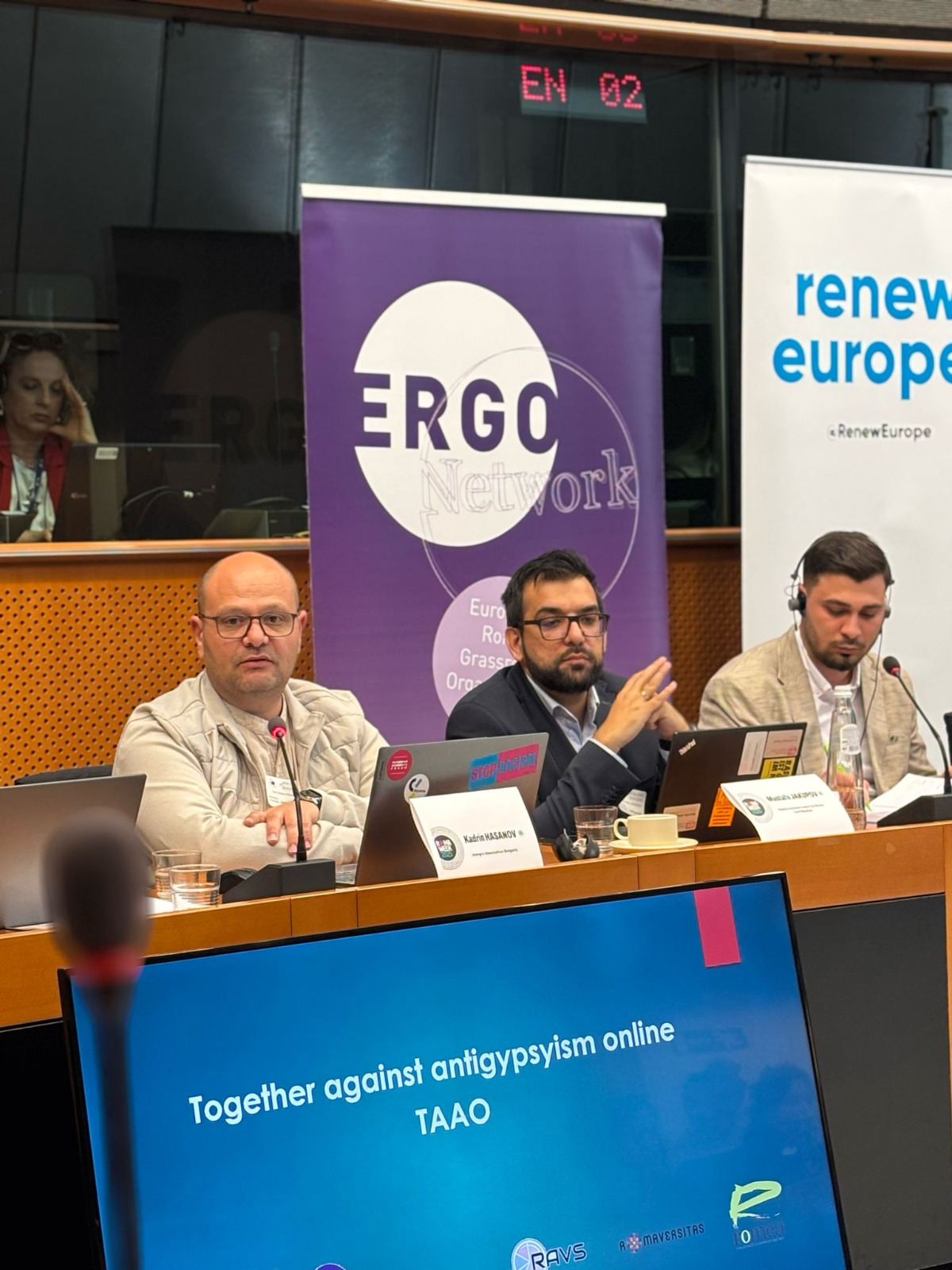
New Partnership for Digital Inclusion: TAOO Project Gains Momentum During EU Roma Week
Brussels, April 2025 — The Together Against Antigypsyism Online (TAOO) project made waves at this year’s EU Roma Week, emerging as a key initiative in the fight against digital exclusion and online hate speech targeting youth. Held at the European Parliament, the event brought together Members of the European Parliament (MEPs), civil society actors, and youth leaders to discuss pressing issues facing Roma communities in the digital age.
At the heart of the “Digital Futures: Bridging the Divide for Roma Youth” panel, Kadrin Hasanov of Bulgaria’s Integro Association shared insights from the ground. Presenting case studies from Bulgaria, Hasanov outlined how Roma communities grapple with limited access to digital tools, literacy challenges, and discriminatory algorithms. “Without equitable and safe digital environments, Roma youth remain excluded from education, employment, and democratic participation,” he said.
The event drew strong political attention and was organised in collaboration with the ERGO Network and the ternYpe International Roma Youth Network. MEPs Hristo Petrov (Renew Europe, Bulgaria) and Nikos Papandreou (S&D, Greece) co-hosted it and expressed support for long-term solutions to online antigypsyism, signalling potential cooperation between EU institutions and TAOO partners.
Roma Week 2025—one of the EU’s largest annual events on Roma inclusion—served as a powerful platform for the TAOO project. Co-hosted by the European Parliament, European Commission, and civil society groups, the week-long program spotlighted issues from antigypsyism to political representation.
Looking ahead, TAOO partners plan to deepen collaboration with digital rights watchdogs such as Lie Detectors, EDRi, and Equinox.
“This is just the beginning,” said Gabriela Hrabanova of ERGO Network. “We’re building a bridge between Roma communities and EU institutions—one that leads to lasting change.”