Report on Roma access to quality and inclusive education

ERGO Network launches its research report on Roma access to quality and inclusive education

The European Roma Grassroots Organisations (ERGO) Network held its annual Policy Conference on 20 November, entitled “Implementing the EU Roma Strategic Framework. Roma access to quality and inclusive education.”

From a very young age, Roma children are unable to access the same learning opportunities as their peers. Poverty and discrimination lead to significantly lower attendance and completion rates for the Roma throughout the lifecycle. Pervasive antigypsyism, civil and institutional, results in segregated educational facilities and the misplacement of Roma children in special needs establishments. In the absence of sufficient and accessible second-chance schools and training opportunities, lifelong learning and upskilling are further impeded, and the Roma find themselves trapped in a constant state of poverty and low skills.The EU Roma Strategic Framework for Equality, Inclusion, and Participation 2020 – 2030includes, as one of its four sectoral objectives, “Increase effective equal access to quality inclusive mainstream education” by 2030, whilethe Council Recommendation on Roma Equality, Inclusion and Participation features a comprehensive section calling on Member States to “ensure that all Roma have effective equal access to and are able to participate in all forms and stages of education, from early childhood education and childcare to tertiary education, including second chance education, adult education, and lifelong learning”. Access to education, training, and lifelong learning is also covered by the European Pillar of Social Rights (Social Pillar), chiefly in its Principle 1, while quality education is Goal 4 of the UN Sustainable Development Goals (SDGs).

During 2025, ERGO Network conducted in-depth national case studies in six countries (Bulgaria, the Czech Republic, Hungary, Romania, Slovakia, and Spain), looking at the realities of Roma education, training, and lifelong learning, as well as at the key barriers the Roma face when trying to access quality and inclusive learning opportunities in these countries. Additional benchmarking evidence was provided by our members in Ireland and Sweden. The main findings and recommendations were brought together in an EU synthesis report, launched in the framework of the event mentioned above.

Key messages of the synthesis report:

1. In all six countries, the Roma continue to face persistently low educational attainment and learning outcomes throughout the lifecycle

  • Comprehensive investment in Roma education is urgently needed, ensuring wrap-around support policies from early childhood to adult learning, combined with adequate, predictable funding, and disaggregated monitoring and indicators by ethnicity.

2. Financial and non-financial barriers to education continue to drive dropout and high NEET rates among Roma learners

  • Governments should provide adequate income support and access to services to learners and their families, while tackling the shortage of good-quality, culturally competent educational establishments located where the Roma live. 

3. Support for Roma learners and their families remains inconsistent, while educational mediators are underutilised

  • Establish stable, state-funded systems of Roma educational mediators and assistants, ensuring proper accreditation, fair pay, and coordination with teachers and social services, alongside providing bilingual, after-school, and parental outreach programmes.

4. Antigypsyism and segregation remain pervasive, while Roma language and culture are invisible in curricula

  • School segregation must be eradicated, alongside strong enforcement of anti-discrimination laws in education, mandatory anti-bias and intercultural training for all education staff, and the integration of Roma language, history, and culture in schools. 

5. Educational disadvantage lasts a lifetime, locking the Roma out of lifelong learning, quality employment, and social mobility

  • Supportive lifelong learning opportunities are needed through well-designed second-chance schools and relevant skills training that account for the needs of adult learners, such as childcare, income, and transport, as well as different starting points.

6. Roma communities and their civil society organisations must be involved to co-create sustainable ways forward.

  • Policy makers and all educational actors must closely cooperate with Roma stakeholders and their civil society representatives to ensure evidence-based solutions, support disaggregated data collection, foster a common understanding, and bridge cultural gaps.

With this research, we aim to kick-start a debate with policy makers on how to improve the availability, accessibility, quality, and inclusiveness of education, training, and lifelong learning Europe’s Roma.

For more information about ERGO Network’s work on Roma access to quality and inclusive education, please contact Senior Policy Adviser Amana Ferro.
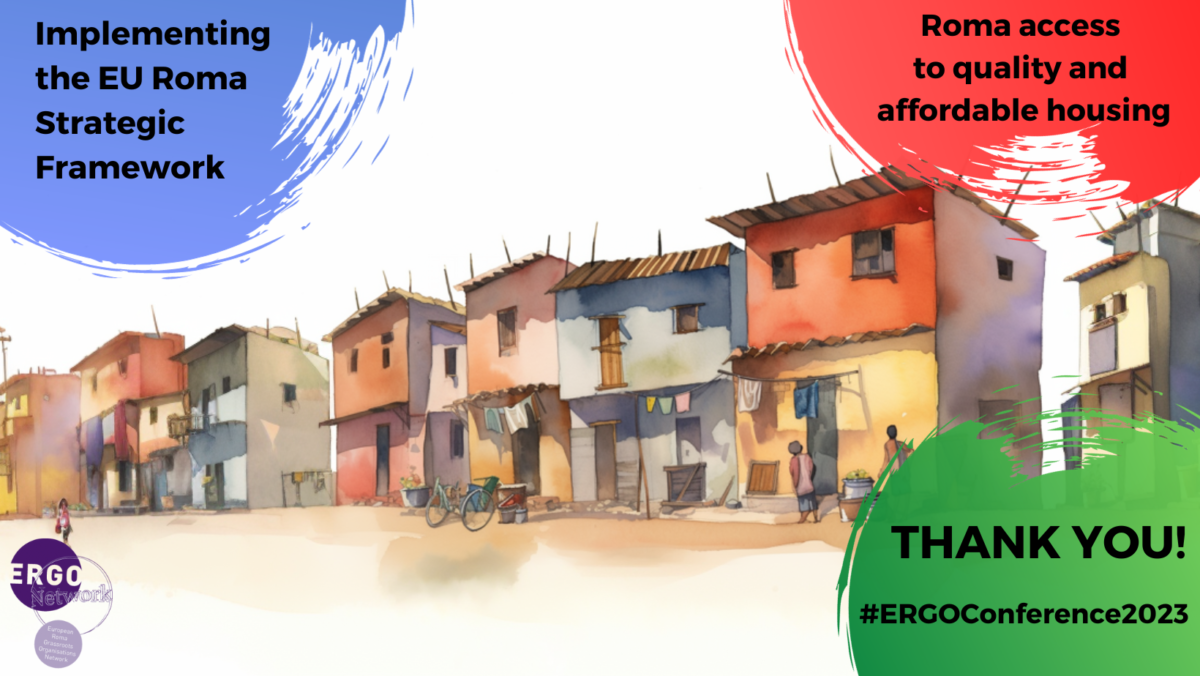
ERGO Network Annual Policy Conference 2023

IMPLEMENTING THE EU ROMA STRATEGIC FRAMEWORK. ROMA ACCESS TO QUALITY AND AFFORDABLE HOUSING

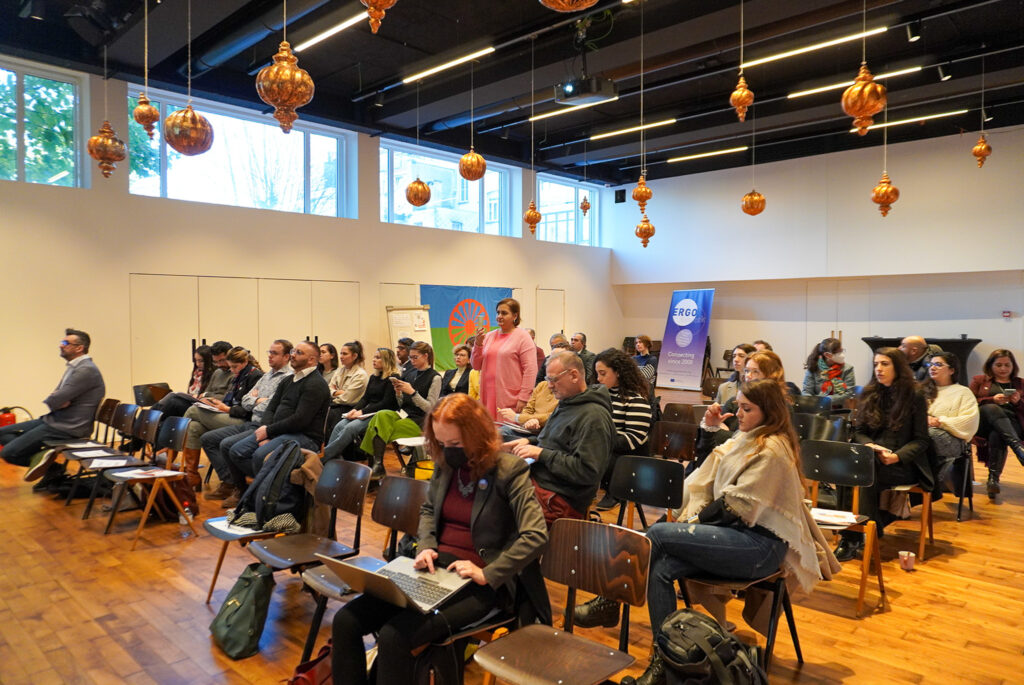
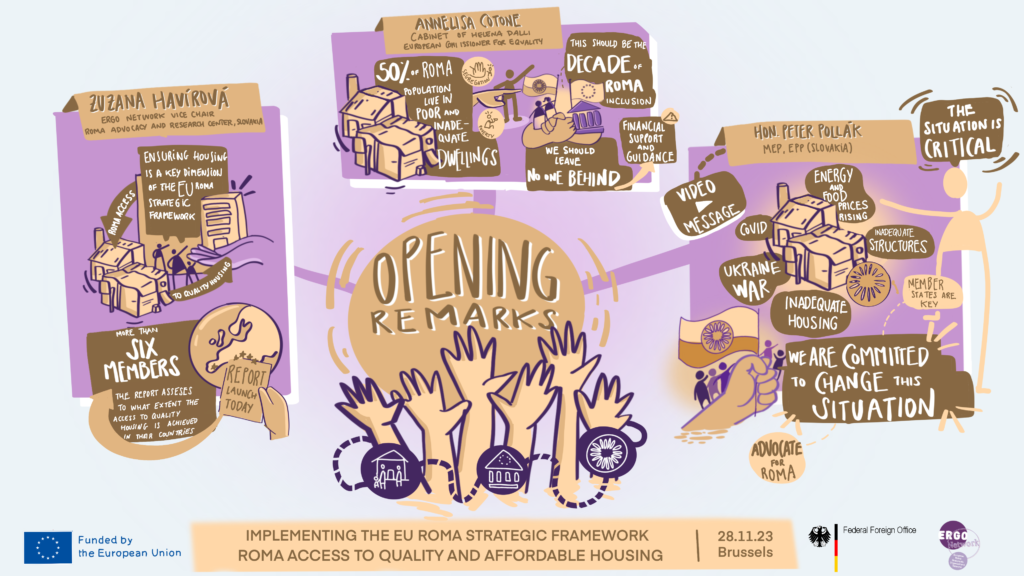
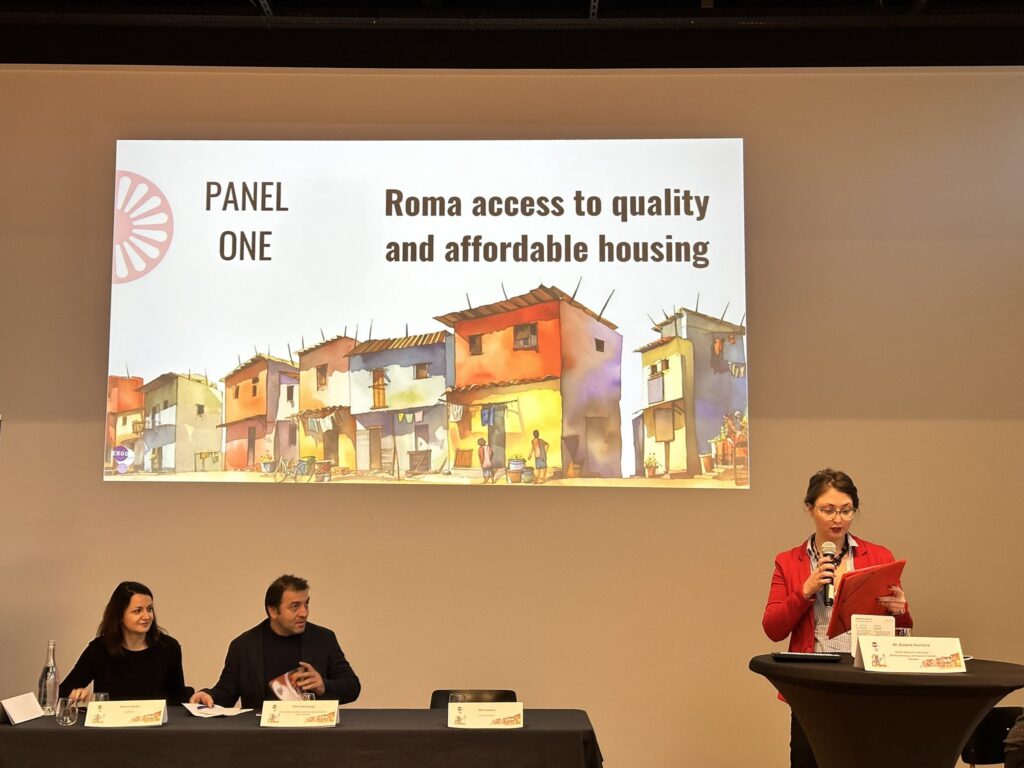
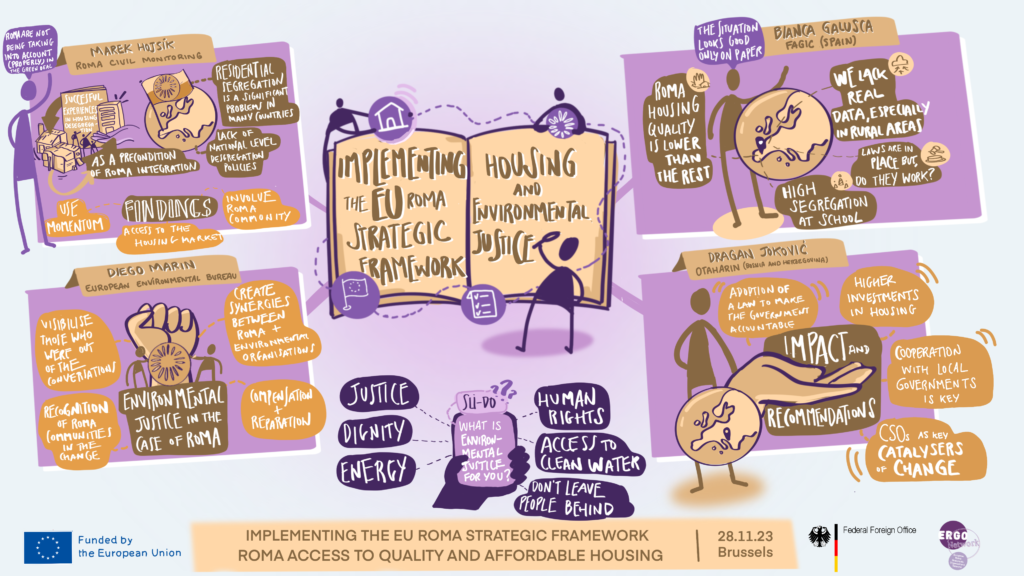
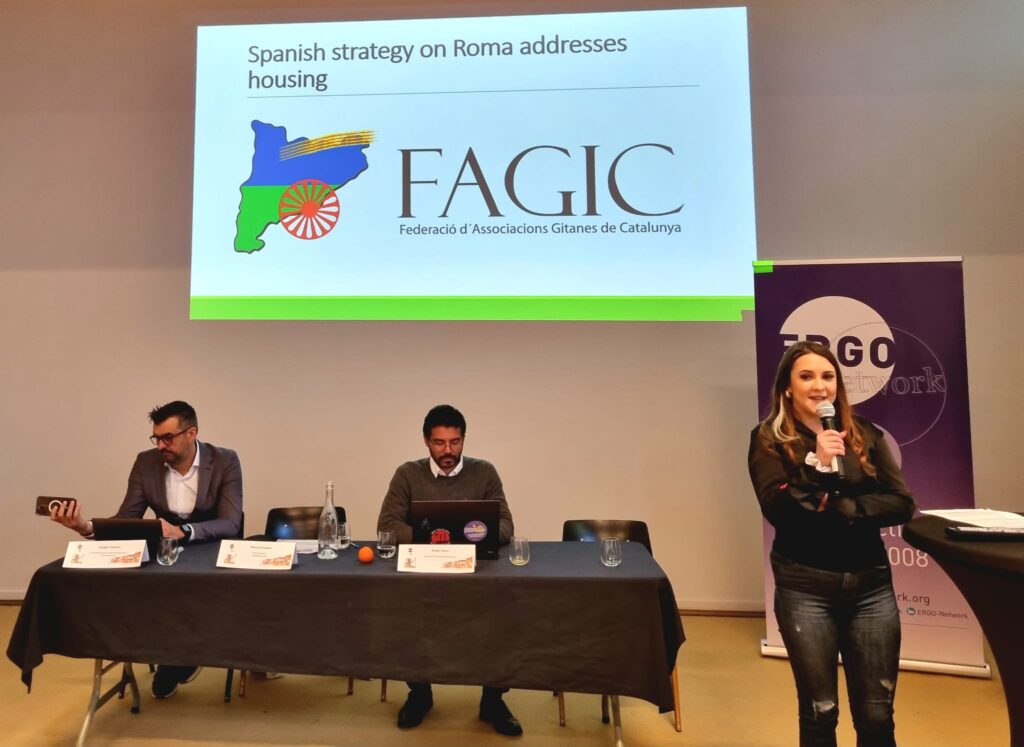
This past 28 November 2023, ERGO Network organised its annual Policy Conference in Brussels, dedicated to exploring how to improve Roma access to adequate, affordable, quality, and inclusive housing, as well as to taking stock of the implementation of the EU and National Roma Frameworks, with a particular focus on housing and environmental justice.

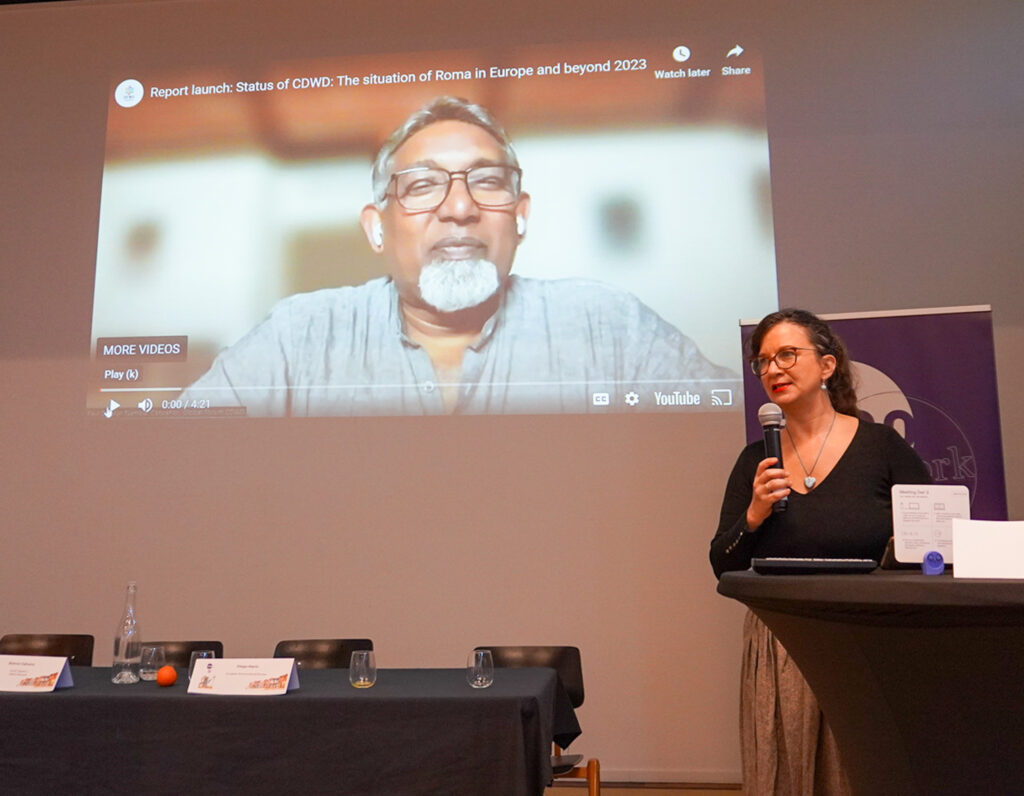
The conference featured keynote interventions from Annelisa Cotone, coordinator for Roma inclusion in the cabinet of European Commissioner for Equality Helena Dalli, Hon. Peter Pollák MEP (Slovakia, EPP), as well as Paul Divakar Namala, from the Global Forum of Communities Discriminated on Work and Descent.  

Many Roma still live in informal settlements and segregated neighbourhoods, in inadequate dwellings and disastrous living conditions, with severe environmental consequences. Unable to meet ever-rising housing costs or to prove legal ownership of their home, they endure forced evictions, homelessness, and antigypsyism from local authorities, landlords, and neighbours. Ensuring access to housing and adequate services is an objective of the EU Roma Strategic Framework, while it is also extensively covered by the European Pillar of Social Rights (Social Pillar), the compass for Europe’s recovery, and supported by Goals 6, 7, 11, 13 and 15 of the Sustainable Development Goals of the United Nations.

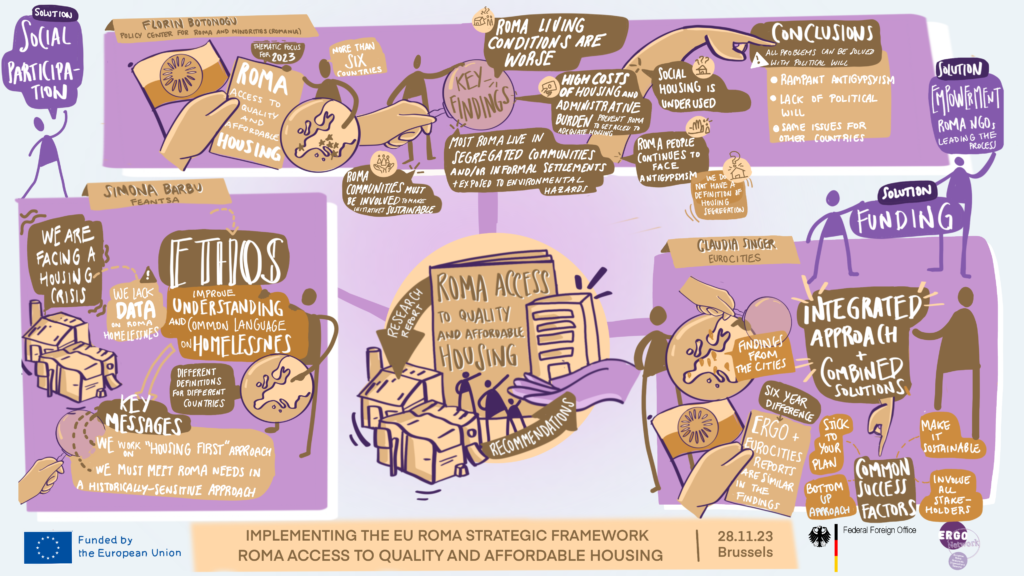
The event launched ERGO Network’s research report on “Roma access to quality and affordable housing”, based on six national case studies carried out in Bulgaria, the Czech Republic, Hungary, Romania, Slovakia, and Spain. Additional benchmarking evidence was provided by ERGO Network members in Albania, Bosnia and Herzegovina, Ireland, Kosovo, North Macedonia, and Türkiye. The main findings and recommendations aim to kick-start a dialogue with key decision-makers and stakeholders and aim to identify positive solutions to support better housing inclusion for Roma and inform the delivery of the EU Roma Strategic Framework and the Social Pillar, as well as other relevant policy initiatives.

The Key Messages of the report are:

  1. Roma living conditions are significantly worse than those of the majority, while most Roma experience de facto homelessness.
  2. Most Roma live in segregated communities and/or informal settlements, many exposed to environmental hazards.
  3. High costs of housing and overcomplex administrative procedures further reduce Roma access to housing.
  4. The Roma continue to face antigypsyism and forced evictions.
  5. Social housing holds great potential for Roma housing but is currently under-utilised.
  6. Roma communities and their civil society organisations must be involved to co-create sustainable ways forward.

With the adoption of the EU Roma Strategic Framework up to 2030, governments were asked to develop national Roma strategic frameworks both in EU Member States and Western Balkan countries. In addition, civil society in EU Member States received funding from the European Commission to monitor these national strategic frameworks’ elaboration and adoption process. To ensure an effective implementation of the national frameworks, robust and continued monitoring of the entire policy process should be ensured.

The second part of the event assessed the state of play of the National Roma Frameworks in the EU and Enlargement countries and their alignment with the EU Roma Strategic Framework on Equality, Inclusion, and Participation. It linked Council Recommendation, with a keen focus on the areas of housing and environmental justice, also looking at follow-up steps to ensure that implementation does not overlook these important aspects.

The conference was very well attended with over 75 on-site and online participants, and it brought together ERGO Network national members from the grassroots level in many European countries, other national practitioners, European civil society organisations, policy-makers from the EU and national levels, and other stakeholders.

If you attended this event or watched the recording, don’t forget to let us know what you think about it by filling out this brief Evaluation Form (project reference: 101104354; event title: ERGO Network Annual Policy Conference).

See more:

Visuals provided by Ale Listens and Draws

For more information about this event, please don’t hesitate to contact us: info@staging.ergonetwork.org

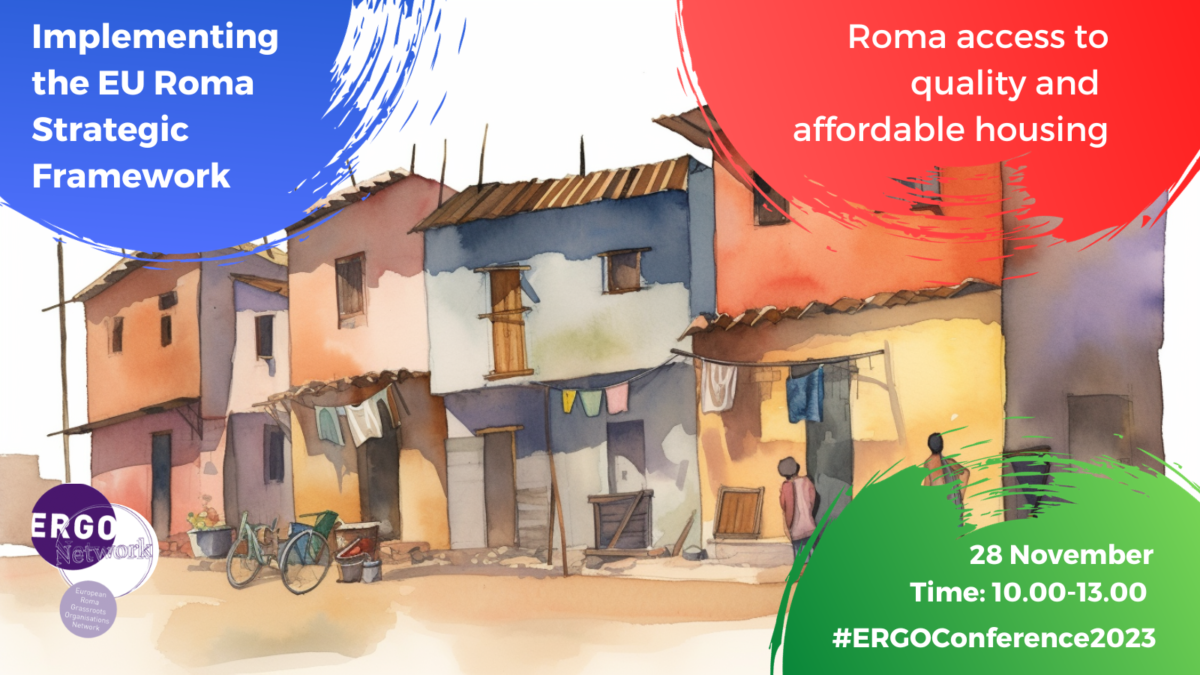
Register now for ERGO Network’s Annual Policy Conference!

Register now for ERGO Network’s Annual Policy Conference!

At a time when Europe is facing multiple crises such as the aftermath of the Covid-19 pandemic, the ongoing war in Ukraine, and the ever-rising cost of living, many Roma find themselves experiencing worsening poverty and exclusion, dire living conditions, and widespread antigypsyism.

The event will serve to launch ERGO Network’s research report on “Roma access to quality and affordable housing”, based on six national case studies carried out in Bulgaria, the Czech Republic, Hungary, Romania, Slovakia, and Spain, with additional benchmarking evidence from Albania, Bosnia and Herzegovina, Ireland, Kosovo, North Macedonia, and Türkiye.

The conference will also provide insights into the status of implementation of the National Roma Frameworks both in the EU and enlargement countries, their alignment with the EU Roma Strategic Framework on Equality, Inclusion, and Participation and linked Council Recommendation, with a particular focus on housing and environmental justice.

The event will bring together ERGO Network members from the grassroots level, EU policy-makers from across the institutional spectrum, as well as other relevant EU and national stakeholders.

  • Check out the draft agenda here.
  • Register here by 25th November.

We’re looking forward to counting you among the participants, so that together we can build positive, sustainable, evidence-based policy solutions that work!

#ERGOConference2023

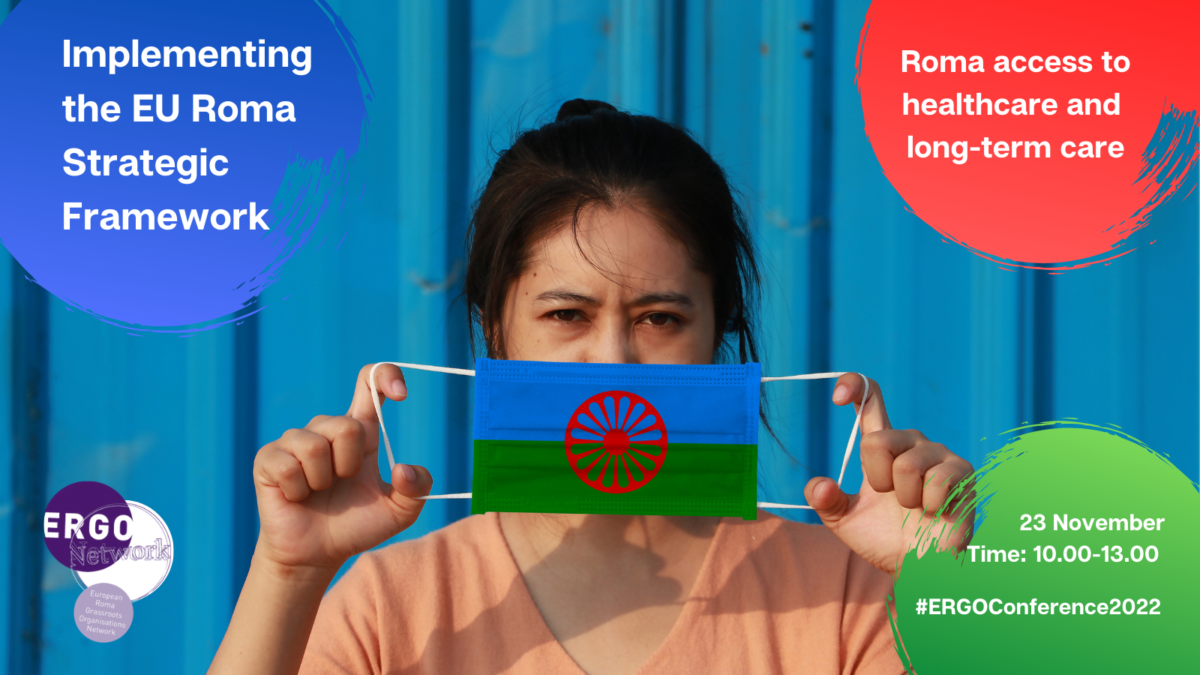
ERGO Network Annual Policy Conference 2022

IMPLEMENTING THE EU ROMA STRATEGIC FRAMEWORK. ROMA ACCESS TO HEALTHCARE AND LONG-TERM CARE

This past 23 November, ERGO Network organised its Annual Policy Conference, for the first time in person since 2019 but also fully streamed online for remote participants. This year’s event was dedicated to exploring how to improve Roma access to adequate, affordable, and inclusive healthcare and long-term care services, as well as to taking stock of the implementation of the EU and National Roma Frameworks.

A significant health inequality gap exists between the Roma and the majority population, across every area of physical and mental health and wellbeing, including rates of suicide, disability, life expectancy, and infant mortality. The Covid-19 pandemic laid bare and worsened a pre-existing dire situation. Ensuring access to healthcare and long-term care is a key topic under the European Pillar of Social Rights, the compass for Europe’s recovery, while it is also supported by Goal 3 of the Sustainable Development Goals of the United Nations. It is high time the European Union and national governments delivered.

First panel – Susanna Ulinski, Philippe Seidel, Marine Uldry, Kumar Vishwanathan, Tomas de Jong, Camille Butin

The first part of the event served to launch ERGO Network’s research report on “Roma access to healthcare and long-term care”, based on six national case studies carried out in Bulgaria, the Czech Republic, Hungary, Romania, Slovakia, and Spain. The main findings and recommendations fed into a dialogue with key decision-makers and stakeholders, aimed at identifying positive solutions to support better health inclusion for Roma and inform the delivery on the EU Roma Strategic Framework and the Social Pillar, as well as on initiatives such as the European Care Strategy.

The Key Messages of the report are:

  1. In all 6 countries, social determinants greatly influence a poor Roma state of health.
  2. High costs of healthcare and long-term care and gaps in health insurance coverage are significant deterrents for the Roma to seek care.
  3. Limited healthcare and long-term care infrastructure and staff shortages are prevalent in rural and remote Roma communities.
  4. Roma health mediators play a key positive role which deserves better support.
  5. The Roma continue to face widespread antigypsyism in healthcare and long-term care.
  6. Roma communities and their civil society organisations must be involved in a bid to build trust and improve take-up.

With the adoption of the EU Roma Strategic Framework up to 2030, governments were asked to develop national Roma strategic frameworks both in EU Member States and Western Balkan countries. In addition, civil society in EU Member States received funding from the European Commission to engage in monitoring the elaboration and adoption process of these national frameworks. In order to ensure their effective implementation, a robust and continued monitoring of the entire policy process should be ensured.

Second panel – Zuzana Havirova, Sia Sararu, Adriatik Hasantari, Abriel Schieffelers

The second part of the event assessed the state of play of the newly adopted national Roma strategic frameworks in both the EU and enlargement countries and their alignment with the EU Roma Strategic Framework on Equality, Inclusion, and Participation and linked Council Recommendation, as well as of the Roma involvement in the drafting process. In addition, it discussed the follow-up steps in the implementation of the national Roma stratetic frameworks at EU and national levels.

The event ended with concluding remarks from the Czech Presidency of the European Union on the importance of dedicating more policy attention to access to healthcare, particularly for vulnerable groups such as the Roma, which should be seen in conjunction with the overall delivery on the EU Roma Framework and its objectives on housing, employment, education, and poverty, while closely associating Roma communities and their representatives to these efforts.

The conference was very well attended with over 70 on site and online participants, and it brought together ERGO Network national members from the grassroots level in many European countries, as well as other national practitioners, European civil society organisations, policy-makers from the EU and national levels, and other stakeholders.

If you attended this event, or watched the recording, don’t forget to let us know what you thought about it by filling in this brief Evaluation Form (project reference: 101051359; event title: ERGO Network Annual Policy Conference). Thank you!

See more:

Graphic facilitation provided by Ale Listens and Draws.

For more information about this event, please don’t hesitate to contact us: info@staging.ergonetwork.org

ERGO Network Annual Policy Conference 2022

ERGO Network Annual Policy Conference: Implementing the EU Roma Strategic Framework

Roma access to healthcare and long-term care

23 November, 10h – 13h, Mundo B Conference Room

Join us for our Annual Policy Conference 2022!

At a time where Europe is facing multiple crises such as the ongoing pandemic, the war in Ukraine, and the spike in inflation and energy prices, many Roma find themselves facing worsening poverty and exclusion, dire living conditions, and widespread antigypsyism.

The event will serve to launch ERGO Network’s research report on “Roma access to adequate healthcare and long-term care”, based on six national case studies carried out in Bulgaria, the Czech Republic, Hungary, Romania, Slovakia, and Spain. A significant health inequality gap exists between the Roma and the majority population, across every area of physical and mental health and wellbeing, including rates of suicide, disability, life expectancy, and infant mortality.

The conference will also assess the stay of play of the newly adopted National Roma Frameworks and their alignment with the EU Roma Strategic Framework on Equality, Inclusion, and Participation and linked Council Recommendation, as well as Roma involvement in the drafting process and next steps for implementation. A robust and continued monitoring of the entire policy process should be ensured in both EU Member States and Enlargement countries.

The conference will bring together ERGO Network members from the grassroots level, EU policy-makers from across the institutional spectrum, as well as other relevant EU and national stakeholders. If you attend in person, please feel free to wear a mask. The event will be followed by a networking lunch outside the conference room. If you attend online, you will still need to register below.

We’re looking forward to counting you among the participants, so that together we can build positive, sustainable, evidence-based policy solutions that work!

#ERGOConference2022

This conference is kindly supported by the European Union Programme for Citizens, Equality, Rights and Values (CERV) and by the German Federal Foreign Office.
`
annual policy conference – ERGO Network

By continuing to use the site, you agree to the use of cookies. more information

The cookie settings on this website are set to "allow cookies" to give you the best browsing experience possible. If you continue to use this website without changing your cookie settings or you click "Accept" below then you are consenting to this.

Close