International Roma Day: 8 April 2023

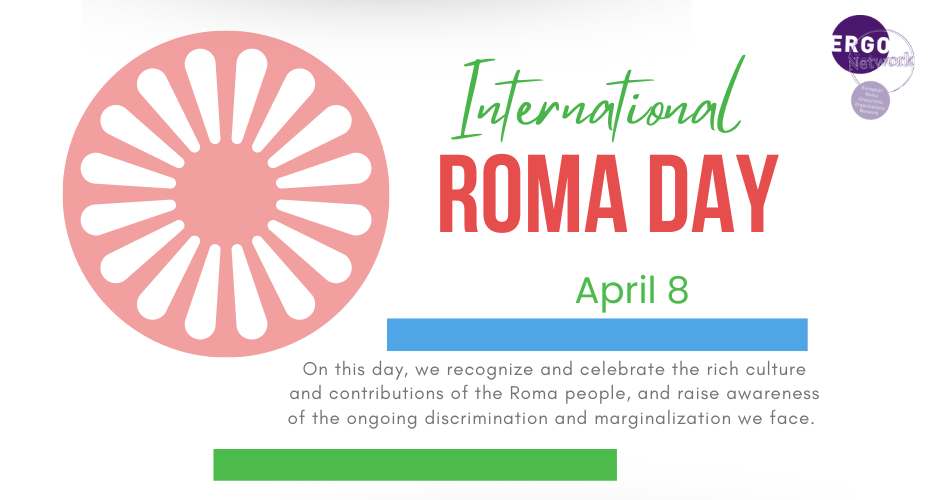
International Roma Day

International Roma Day is celebrated annually on April 8th – a turning point for Roma communities around the world, when activists moved their struggle to the international arena with the first World Romani Congress held near London. The First Congress promoted the Roma symbols used as tools for unification and political mobilization, such as the umbrella term ‘Roma’, the Roma flag, the slogan Opre Roma! (Roma Arise!), our anthem (Djelem Djelem), and the International Day (8 April).

On this day, we recognize and celebrate the rich culture and contributions of the Roma people, and raise awareness of the ongoing discrimination and marginalization we face. While on the EU level progress has been made in recent years towards achieving greater equality and inclusion for Roma communities, there is still much work to be done until this progress reaches Roma communities.

In a few weeks, policymakers, experts, activists and organisations concerned with persistent antigypsyism will be gathering in Brussels for the 2023 Roma Week, hosted by the European Parliament and the European Commission and organised in partnership with Roma and pro-Roma civil society.

In the framework of the Roma Week 2023, there will be a series of events focusing on how history affects the current situation of Roma in Europe and what are the prospects for the future. The events aim to build on the work done during previous Roma Weeks and on the broader work on Roma equality, inclusion and participation. It calls on the Commission and the Member States to strengthen the active engagement and meaningful participation of Roma – especially Roma women, young people, and other underrepresented groups – in the development, implementation and monitoring of public policies and projects aimed towards them at the European, national, regional and local levels, so they can be actively involved in shaping their future and contribute to changing perceptions in European societies.

Over the past several years, there has been growing recognition of the need to invest in programmes and initiatives that promote greater equality, inclusion, and participation for Roma communities. The European Union has been at the forefront of these efforts, providing funding for a wide range of projects aimed at improving the lives of Roma people throughout Europe.

Despite these efforts, however, progress has been slow, and many Roma communities continue to face significant barriers to equality, inclusion and participation. One of the key challenges is ensuring that funding is used effectively and efficiently to achieve meaningful results. To address this challenge, there is a need for greater collaboration between Roma communities, civil society organisations, and government agencies to ensure that resources are directed to where they are needed most. One of the events of the Roma Week will focus specifically on maximising the use of funding for Roma equality, inclusion and participation.

We have a long and rich history in Europe, but this history has been marked by centuries of discrimination, persecution, and violence. From the Roma Holocaust during World War II to the ongoing forced evictions and discrimination faced by Roma communities throughout Europe, the Roma have been subject to some of the worst atrocities in European history.

Despite this history, there has been a notable lack of recognition and acknowledgement of our experiences, and efforts to achieve justice and redress for past wrongs have been slow and incomplete. To address this, there is a growing movement to promote greater awareness and understanding of our history and experiences and to ensure that justice is served for past wrongs. During the Roma Week, we invite you to follow the Final Conference of the Chachipen project, focusing on the history, memory, and justice for Roma in Europe.

The Roma Week doesn’t limit itself to the EU policies, but takes a broader approach, including the situation of the Roma communities in the Western Balkans and Turkey, as well as the situation of Ukrainian Roma refugees in Europe and Roma in Ukraine. Other events will also highlight the situation of Roma women, youth and children, as some of the most vulnerable and marginalized groups within Roma communities, facing multiple forms of discrimination.

The importance of Roma participation in EU, national and local policies cannot be overstated, particularly given the significant challenges faced by Roma communities in Europe today, and we see it as the key step to achieve a future free from antigypsyism for the coming generations of Roma. We continue to face significant barriers to equality, inclusion, and participation, denial of our history and our contributions to society. And the common thread for the struggles we are facing institutional and structural racism – the focus of many Roma Week events this year.

Institutional racism refers to the ways in which racially-based discriminatory attitudes are embedded within the policies, practices, and procedures of institutions, including governments, schools, healthcare systems, and other organisations. Structural racism refers to the ways in which these attitudes are woven into the very fabric of society, through systems of power and privilege that provide advantages to some groups while marginalizing others.

Both institutional and structural racism are major obstacles to the full participation of Roma communities in European society, and they can have far-reaching consequences for Roma people in terms of access to education, healthcare, housing, employment, and other basic rights and services.

To address institutional and structural racism, there is a need for greater engagement and participation of Roma communities in the development and implementation of EU policies and initiatives. This includes efforts to build trust and understanding between Roma communities and policymakers and to ensure that Roma voices are heard, and their perspectives are taken into account in the development of policies and initiatives that affect their lives.

It also requires a recognition of the ways in which racism operates within institutions and structures and a commitment to addressing these challenges through targeted initiatives and programs that promote greater equality and inclusion for Roma communities.

We hope that the Roma Week will be one step forward towards the recognition of and dialogue on these matters and another brick for building a more inclusive and equitable Europe for all.

Read more about the Roma Week 2023, check the event’s agenda, objectives and participants here.
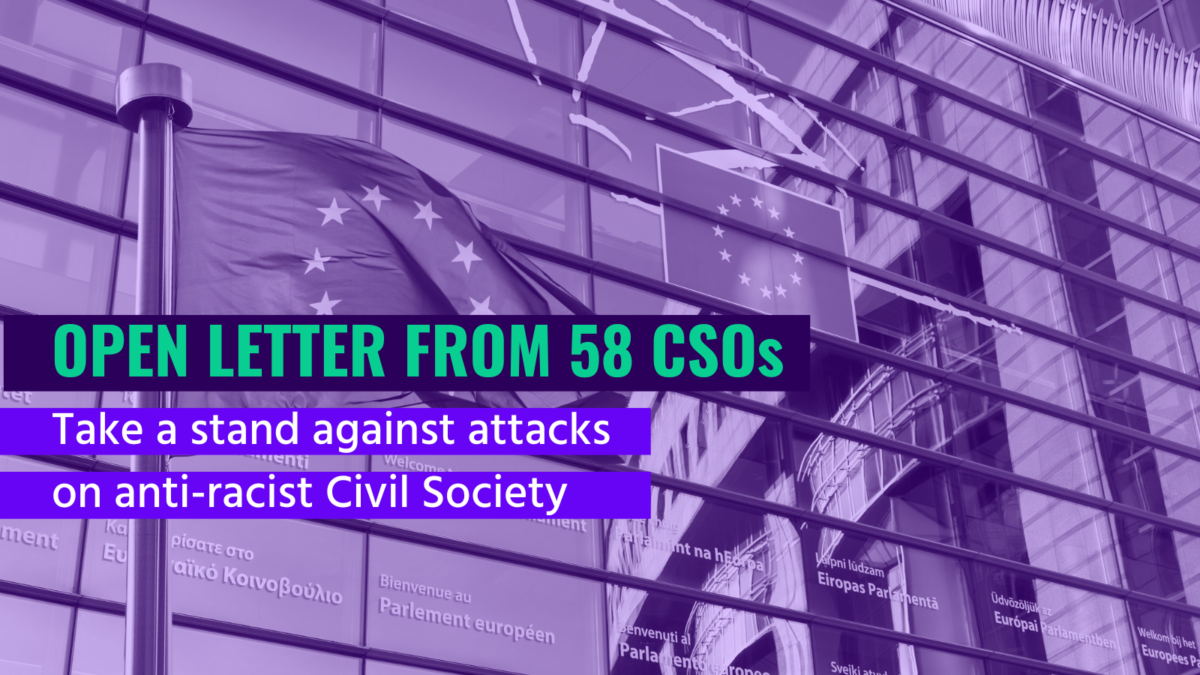
Open letter from 58 CSOs to EC and EP Presidents

OPEN LETTER TO EC PRESIDENT VON DER LEYEN AND EP PRESIDENT METSOLA FROM European Network Against Racism and Other CSOs

Brussels, 16 March 2023

To the attention of:
Madam Von Der Leyen, President of the European Commission
Madam Roberta Metsola, President of the European Parliament

Dear Madam Presidents,

As the second edition of the Anti-Racism Week is approaching, we are writing to you to inform you of the consistent and persistent defamatory attacks on civil society organisations fighting racism across the EU. In particular, we would like to draw your attention to the statement by François Xavier-Bellamy, an MEP representing France (video link) that includes many misstatements about the EU Anti-Racism and Diversity Week (2023) and the European Network Against Racism, labelling the organisation as ‘radical’. ENAR is the only pan-European anti-racism network that combines advocacy for racial equality and facilitating cooperation among civil society anti-racism actors in Europe.

The video from François Xavier-Bellamy MEP appears to be filmed in the European Parliament, which is detrimental to the reputation of the European Parliament. We are aware that Rule 10 on MEPs conduct says “The conduct of Members shall be characterised by mutual respect and shall be based on the values and principles laid down in the Treaties, and particularly in the Charter of Fundamental Rights. Members shall respect Parliament’s dignity and shall not harm its reputation”.

The EU Anti-Racism and Diversity Week 2023 is organised by Members of the European Parliament from five different political groups in partnership with European Network Against Racism (ENAR AISBL) and other institutions and organisations. As a longtime partner of the European Commission and the European Parliament in organising events around the International Day for the Elimination of Racial Discrimination (21 of March), we aim that the event convenes a European discussion to counter racism, mainstream racial equality and evaluate the ongoing European anti-discrimination agenda in line with European values.

It is deeply concerning that every time we discuss racism and discrimination against all groups, there is a cohort of individuals, including now an MEP, that attempts to undermine the work of civil society and the European Commission and the European Parliament by making incorrect and irrelevant links to radical extremism. We are very concerned that this has become a pattern of practice at EU events on racism, youth and democracy, which go without meaningful accountability or adequate response to protect those affected by it and protect the EU spaces in their diversity. We are also concerned that this is a tactic that is used to redirect the needed attention to addressing structural and institutional racism and maintaining zero sum arguments for political gain.

We point the attention to the European Parliament resolution of 8 March 2022 on the shrinking space for civil society in Europe, which takes note of the effect of such practices on shrinking the civic space and threats to human rights defenders in Europe, and the continued scapegoating of organisations working for equality, including racial equality.

We expect that the European Commission and the European Parliament will continue to provide ambitious leadership in the fight against racism, defamation and scapegoating civil society by taking the following measures:

  • Publicly denounce MEPs for using Parliamentary premises to defame and slander civil society organisations. As Members of the European Parliament will soon enter the election campaign 2024, standards on ethics practices in the European Parliament must be maintained. Current MEPs and those running for the new parliamentary term should express the highest commitment to promote a better culture of inclusivity in the European institutions.
  • Provide assurances that no MEP will show hate or indulge in defamation during the discussions at Anti-Racism and Diversity Week. Following the Bulgarian MEP Angel Dzhambazki’s fascist salute during a rule-of-law debate in Strasbourg in 2022, we are fearful that MEPs will undermine the discussions in Anti-Racism Week in Europe’s house of democracy. The EC and EP can lead by example by ensuring that the civil society spaces they provide are free from harassment, intimidation and stigmatisation, which requires timely and effective follow-up action.
  • Participate in Anti-Racism and Diversity Week following the invitation sent to open the session. Anti-Racism Week is envisioned to be a shared platform for institutions, civil society organisations, anti-racist actors, activists to come together and lead on solution-based discussions on the systemic gaps that are necessary to address structural and specific forms of racism in their visible and invisible impacts.

We are living in a time of considerable rising hatred, and we are proud that we have developed an inclusive agenda for this week. These attacks show that our activities are even more necessary. It is critical that EU institutions take action to counter the poison stirring in many of our European democracies and show citizens of the Union that there is no place in Europe or our parliament for racism or neo-fascism.

We express our gratitude for your attention to this matter and extend our warmest regards to you.

Yours sincerely,

Ojeaku Nwabuzo
ENAR Director (Policy, Advocacy and Network Development)
European Network Against Racism

Signatories

  1. #DiasporaVote!
  2. Advancing Together
  3. Africa Centre Ireland
  4. Agora Association
  5. Alliance Citoyenne
  6. Àltera APS
  7. Anti-Racist Forum (ARF)
  8. Apna Haq
  9. ASOCIACIÓN NACIONAL PRESENCIA GITANA
  10. Association for Integration and Migration
  11. Association for Monitoring Equal Rights (Eşit Haklar İçin İzleme Derneği)
  12. Associazione Ayiti Chery
  13. Associazione La Rosa Roja International – A.RO.RO.
  14. Associazione Oltre il Pregiudiìzio – OilP
  15. CCIE
  16. Centre for Equality Advancement
  17. Coexister France
  18. Coordinamento Diaspore In Sardegna – Co.D.I.Sard
  19. Czech Helsinki Committee
  20. DARE network – Democracy and Human Rights Education in Europe
  21. Dokustelle Antimuslimischer Rassismus und Islamfeindlichkeit
  22. ENORB — European Network On Religion and Belief
  23. ENWAD
  24. European Association of Lawyers for Democracy and World Human Rights (ELDH)
  25. European Forum of Muslim Women, EFOMW
  26. European Sex Workers’ Rights Alliance (ESWA)
  27. Europia
  28. Friends of the Earth Europe
  29. Generation for Change CY
  30. Giolli cooperativa sociale
  31. Greek Council for Refugees (GCR)
  32. Greek Forum of Migrants
  33. IDPAD Coalition UK
  34. Instituto de Asuntos Culturales, España
  35. Irish Network Against Racism
  36. Ivorian Community of Greece
  37. Kif Kif
  38. Lallab
  39. LE CRAN
  40. Lëtz Rise Up
  41. Lifelong Learning Platform
  42. Lithuanian Centre for Human Rights
  43. Migrant Tales
  44. Migrant Women Assocition Malta
  45. Muslim Association for Human Rights (AMDEH)
  46. Newwomenconnectors
  47. NICRE
  48. Nosotras Onlus
  49. Open Republic Association against Anti-Semitism and Xenophobia – OTWARTA RZECZPOSPOLITA
  50. PICUM
  51. Protection International
  52. SOS Malta
  53. Stichting Ocan
  54. Subjective Values Foundation
  55. The Ligali Organisation / IDPAD (Hackney)
  56. VOIS Cyprus
  57. Waterford Integration Services, Ireland
  58. Zavod KROG/Institute CIRCLE

Download the statement

ERGO Network’s Right Expert takes part in UN Commission on the Status of Women

Over the last five days, Roma women activists Simona Torotcoi (Romania) and Dafina Savic (Canada) took part in the sixty-seventh session of the Commission on the Status of Women which takes place from the 5 to 17 of March 2023. The session considers the priority theme of “Innovation and technological change, and education in the digital age for achieving gender equality and the empowerment of all women and girls“.

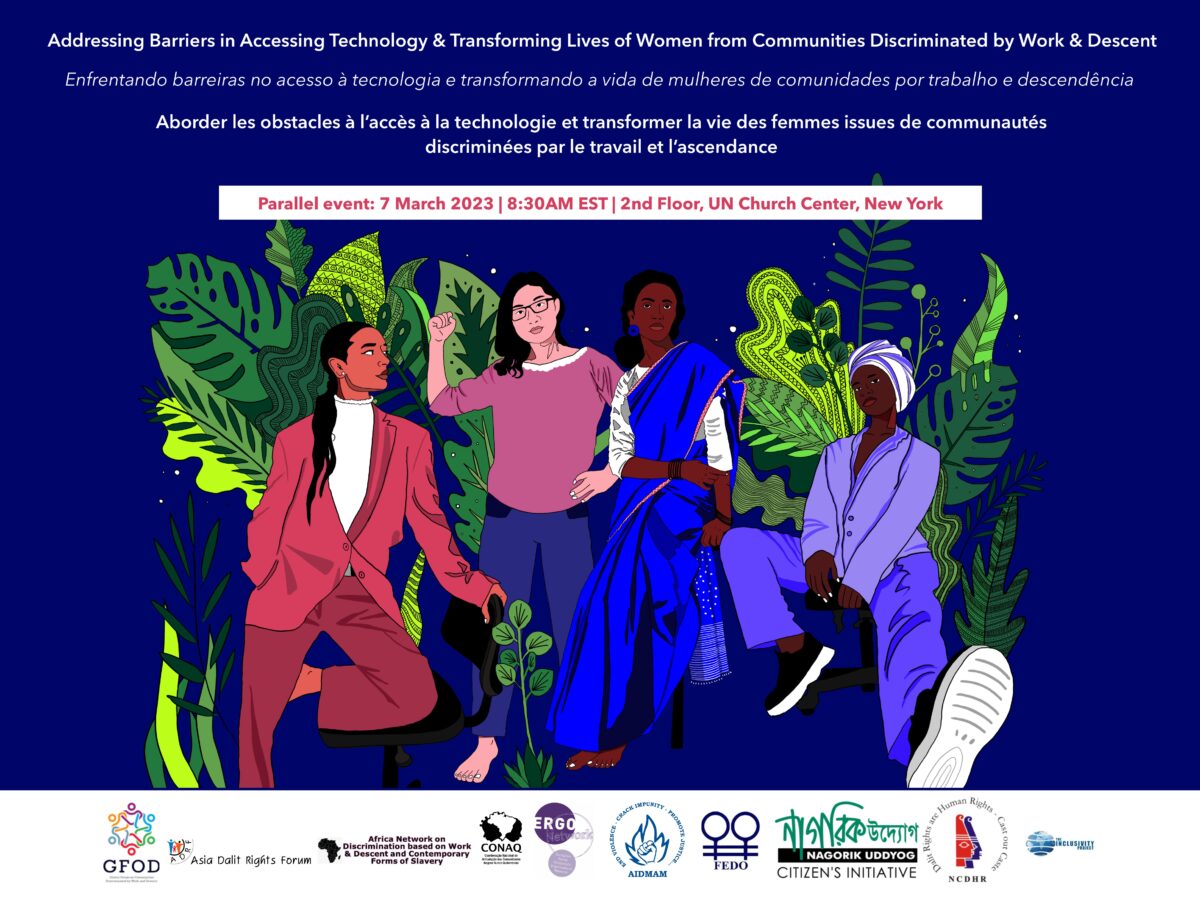
CSW 67 NGO Forum Side Event on CDWD women

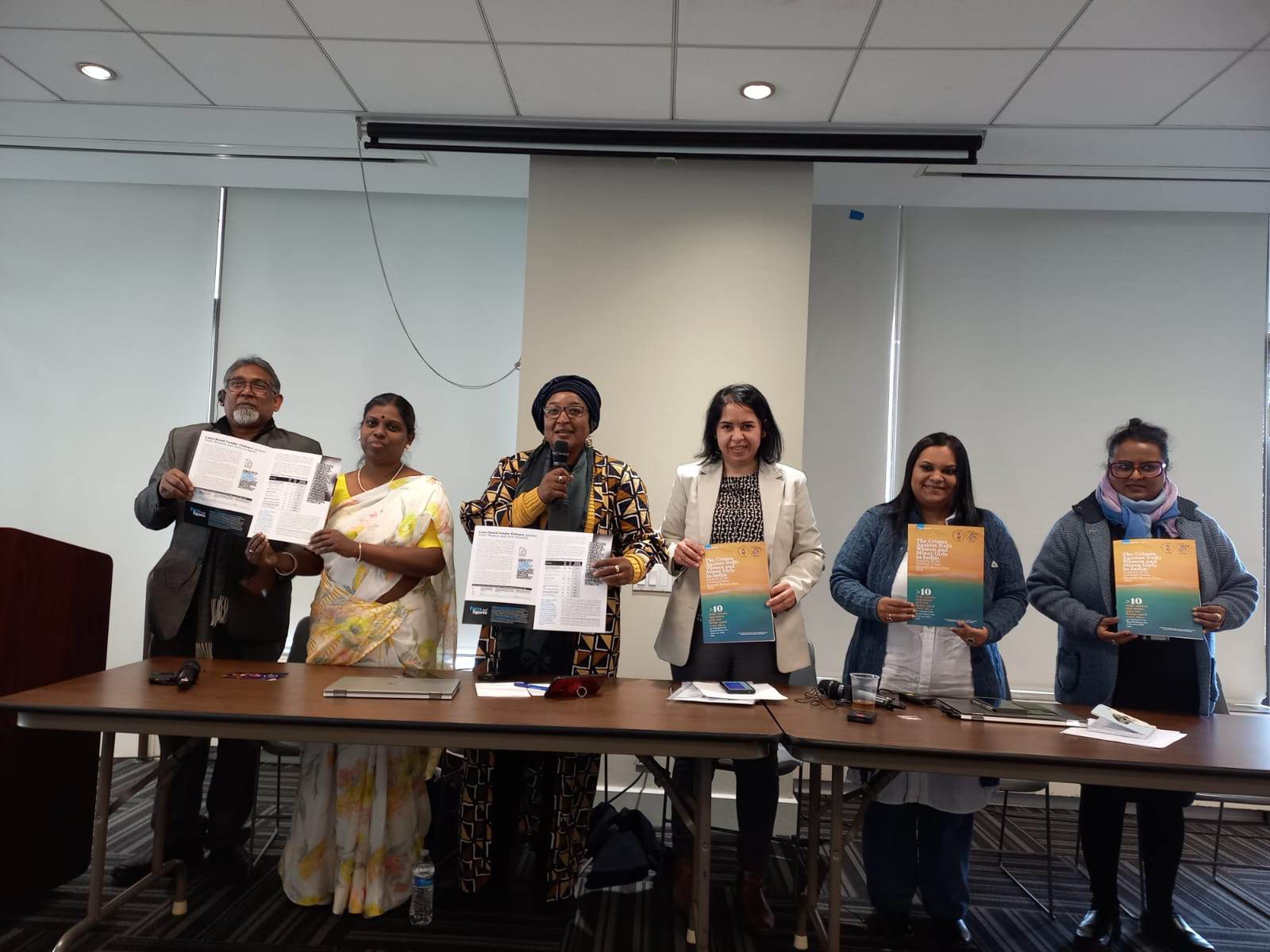
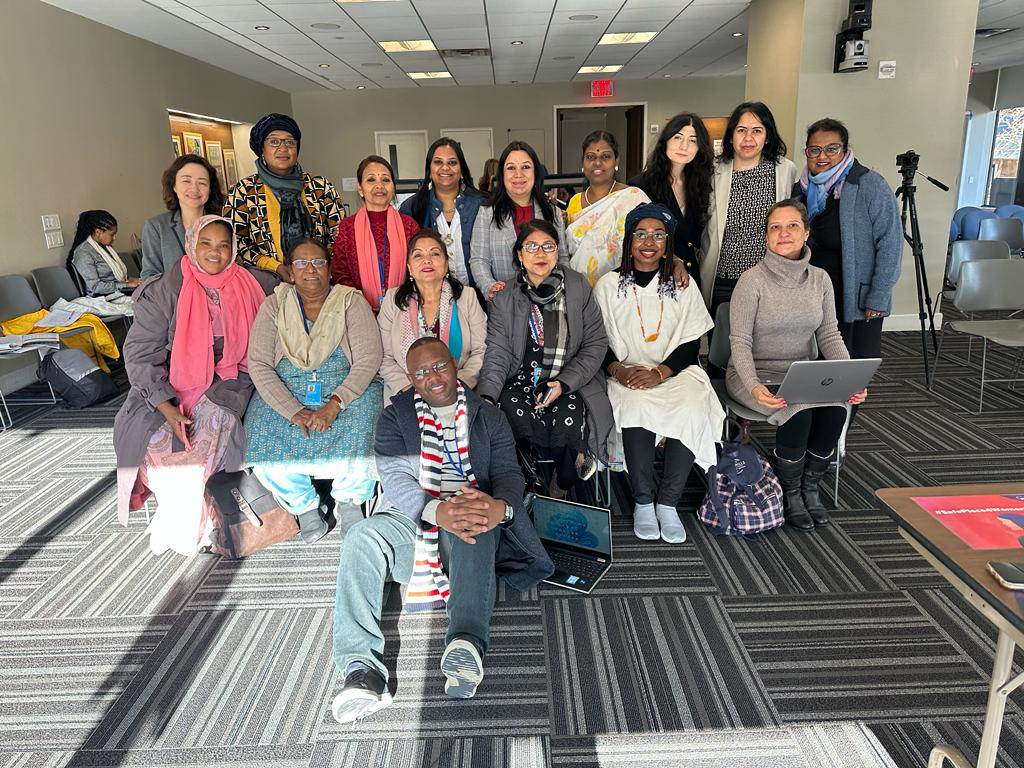
As part of the Global Forum of Communities Discriminated on Work and Descent (GFOD), ERGO Network contributed to the organization of a parallel event during the 67th session of the Commission on the Status of Women (CSW) titled “Addressing Barriers in Accessing Technology & Transforming Women’s Lives from Communities Discriminated by Work & Descent.”

The event examined the role of structural inequities and disparities as uniquely experienced by women and girls of CDWD about technology, innovation, and education in the digital age. It highlighted the imperative to foster resilience and achieve technological transformation for CDWD women and girls.

The main discussion points of the event highlighted the challenges faced by CDWD women, identified gaps in their access to technology and innovation, and explored how innovation and technological change, as well as education in the digital age, can be improved and extended to effectively prevent and promote CDWD women’s rights.

Dafina Savic, who is the founder of Canadian organisation Romanipe,  raised the issue that Roma women face significant barriers to education and healthcare, which can exacerbate their marginalization. A 2019 report by the Council of Europe found that only 15% of Roma women in Europe have completed upper-secondary education, compared to 51% of non-Roma women. Roma women are also more likely to experience maternal and infant mortality and other health disparities than non-Roma populations.

Women of marginalized communities face numerous barriers to entering the workforce, including discrimination, lack of access to education and training, and gender-based violence. According to the International Labour Organization, globally, women earn 23% less than men.

According to Dafina, Roma women in Europe face significant barriers to accessing healthcare, including discrimination, language barriers, and segregation in hospitals. Overall, technology has the potential to break down barriers to equity and empower women in a range of ways. However, for technology to be truly equitable, it is important to ensure that it is accessible to all women, regardless of their socioeconomic status, education level, or geographic location. This requires investment in infrastructure, connectivity, and digital literacy programs, as well as policies and initiatives that promote inclusivity and equity in the technology sector.

She finally recommended bringing the dialogue between member states and civil society organisations from the official setting of sessions like this one to more informal channels such as social media.

Simona Torotcoi, who is a Roma expert within the CDWD framework of Rights Experts, set up together with the ERGO Network spoke on the existing digital divide between the rest of society and the Roma communities. While our lives become more and more dependent on efficiently using ICT tools the lack of access for Roma women and girls living in poverty to quality training and education in the ICT field is concerning.

As the main barrier in accessing technology, Simona identified the intersectional discrimination as well as the poor housing situation.

Simona emphasized that digitalisation could act as an equalizer because it empowers women and girls to denounce injustices, discrimination, domestic violence and abuse among many other issues. According to her, the right to access technology will help CDWC women to overcome the compounding barriers and difficulties posed by gender, economic poverty, caste, occupational discrimination, social exclusion, and underdevelopment.

More about CWDC women

Communities Discriminated on Work and Descent (CDWD) are regarded as the most vulnerable groups in terms of social, economic, and political development. In CDWD, women and girls experience compounded oppression because of overlapping social constructs of work and descent, caste, class, and gender. CDWD women and girls primarily live in rural areas, where poverty measures and a reduction in education budgets directly and significantly impact their survival.

In industries such as agriculture, plantations, brickwork, and sanitation, many rural CDWD women and girls are forced to work in exploitative and violent conditions. CDWD women are highly present in patriarchal communities and exposed to mainstream discrimination and abuse. They have a voice, yet they lack political representation and public participation and are sidelined and downsized by mainstream women’s organizations.

A call for action within the CSW

CWDC women urge the Commission on the Status of Women to recognise issues of women from Communities Discriminated on Work and Descent (CDWD) and adopt an intersectional approach in all programmes and policies both within the United Nations (UN) and government policies and to establish a working group to examine the status and current gaps in protection for women from communities discriminated on work and descent in terms of normative standards as well as lived realities.

In addition, CWDC women urge UN mechanisms to adhere to key human rights standards and adopt a Declaration for the rights of CDWD, highlighting the intersecting marginalisation faced by women and ensuring it consistently reflects in national laws, policies and practices, and in the programmes and activities of the UN through thematic research, awareness-raising and capacity-building.

Welcome to our new Administrative Assistant

Welcome to our new team member

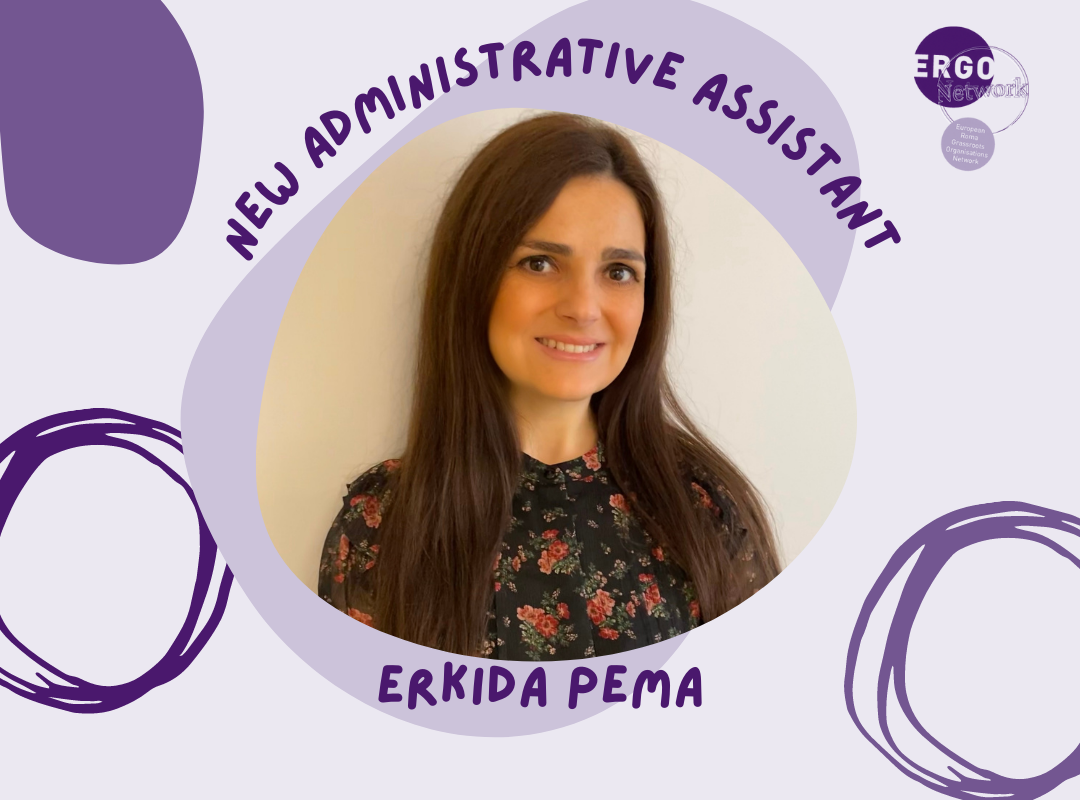
The ERGO Network secretariat is growing! We welcome a new team member: Erkida Pema joined the secretariat as an Administrative Assistant.

Within the ERGO Secretariat Erkida has the following responsibilities:

  • Event management: Liaising with event participants, booking venues and flights, preparing material and documentation, taking minutes and other tasks related to event logistics;
  • Contracting and finances: Supporting other team members in administrative procedures of contracting and sub-granting to our members, experts and external partners, supporting other team members in preparing invoices, dealing with reimbursements to participants, collecting financial evidence from members; working closely with the financial manager to preparing and filing financial documents.
  • Office management: Liaising with the Mundo B management and team about any issues regarding our office space, ordering office materials etc.
  • Other administrative tasks: Assisting the Director with other tasks.

Read more about her in her own words:

“I had the possibility to know ERGO Network, while I was doing a five-month professional training as Management Assistant by Brussels Formation. This training was beneficial to me to acquire skills in event organization, HR management, internal/external communication and project management methodology.

I appreciate the fact that ERGO gave me all the necessary time so I could finish my training and after this join, it’s team directly in February 2023, in the position of Administrative Assistant.

I would say that my career path is quite dynamic. I hold a Master’s Degree in EU Business Law from the University of Tirana, Faculty of Law, in Albania. I obtained the equivalence of my studies in Belgium from Naric Vlandeeren.

I come to ERGO with more than three years of experience as Administrative Assistant in various companies and departments managing different projects. I am passionate about European Institutions, languages and international non-profit organizations.

I love to spend my free time travelling and exploring new places all around the world with my husband and our two adorable boys.

I am always eager to learn and enjoy overcoming challenges!“

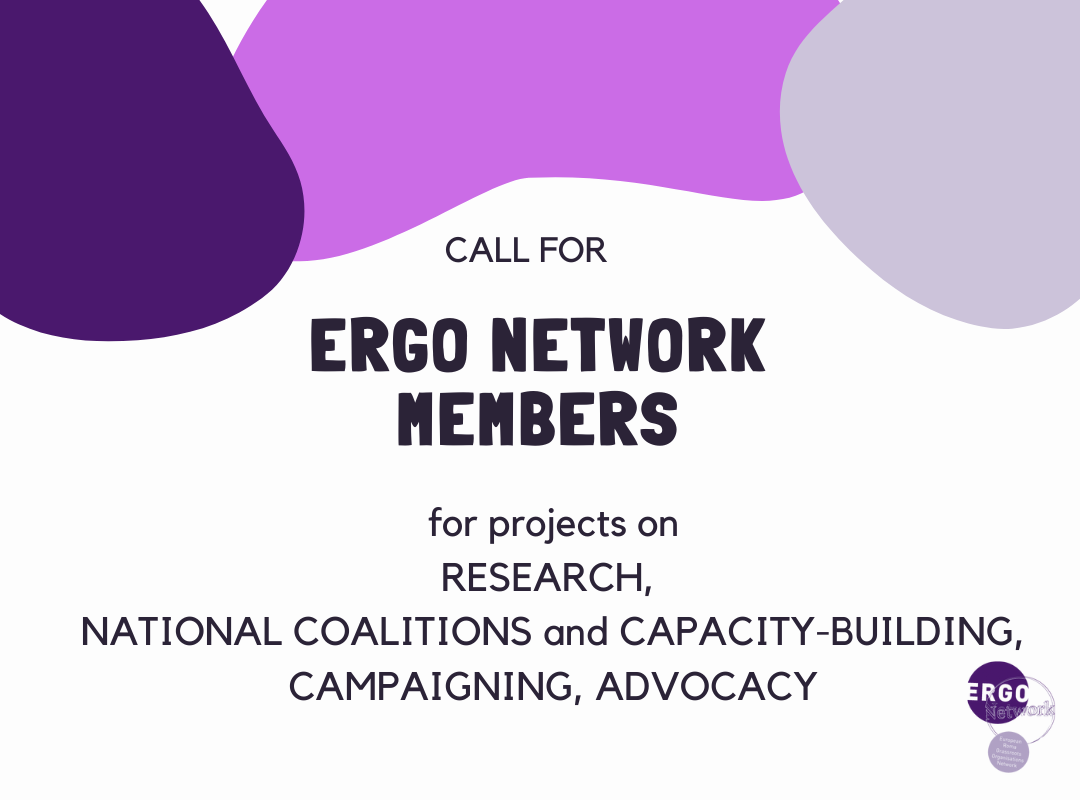
Call to ERGO Network Members for Applications for Re-Granting

Roma equality, inclusion and participation (EQUIP) 2023: Re-granting to ERGO Network members

This year ERGO Network has the possibility to give grants to its members in 3 categories. These grants are part of ERGO Network’s financial support to third parties through its Annual Work Programme ‘Roma Equality, Inclusion and Participation 2023 funded by the Citizens, Equality, Rights and Values Programme (CERV) of the European Commission.

RESEARCH:

Call for applications for small-scale research projects: To support local and national Roma civil society in gathering evidence of challenges faced by Roma on a local level through research activities

4 projects with budgets up to 3,000 €

NATIONAL COALITIONS: 

To support local and national Roma civil society in gathering evidence of challenges faced by Roma on a local level through research activities and strengthening the networks

6 projects with budgets up to 5,000€

CAPACITY-BUILDING, CAMPAIGNING, ADVOCACY: 

Call for applications for capacity-building, campaigning, and advocacy projects

9 projects with budgets up to 10,000€

(4 of them with a focus on supporting Ukrainian Roma refugees)

Eligibility criteria: 

– Be a member (full or associate) of the ERGO Network
– Be established in a Member State of the European Union
– Be a legal entity, a non-profit organization
– Respect EU values as laid down in Art.2 of the Treaty on European Union and the EU Charter of Fundamental Rights.
– Not be a sub-contractor of ERGO Network
– Adhere to ERGO Network’s safeguarding policy, have their own safeguarding policy or agree to start developing a safeguarding policy.

All ERGO Network full member and associate member organisations can apply to more than one of the calls.

The deadline for applications is 30th April 23:59 CET.

The selection will be done by a team of ERGO Network secretariat and board members and one external evaluator.

The implementation period is foreseen for May to November 2023.

This project is funded by the European Union.

`
General – Page 17 – ERGO Network

By continuing to use the site, you agree to the use of cookies. more information

The cookie settings on this website are set to "allow cookies" to give you the best browsing experience possible. If you continue to use this website without changing your cookie settings or you click "Accept" below then you are consenting to this.

Close