ERGO Network is working with our member Zero Discrimination Association to support Roma victims of the earthquake
Two earthquakes of 7.7 and 7.6 magnitude hit Türkiye and Syria on 6 February 2023. With an epicentre in Kahramanmaraş, the earthquake caused catastrophic scale of mass destruction in 10 provinces in Türkiye including Hatay, Adıyaman, Malatya, Şanlıurfa, Adana, Gaziantep and Diyarbakır.
In this deadliest earthquake of the century, more than 42 thousand 310 people lost their lives, 80.000 people were injured and over 2 million were internally displaced. Many of the survivors are fleeing the region to other cities as soon as they can bury their loved ones. Numbers are predicted to increase.
Roma, Dom, and Abdal Communities cannot access help
The affected provinces are home to numerous vulnerable groups including the Roma communities (Doms and Abdals). As a result of social exclusion, they cannot access aid mechanisms efficiently.
There is no official census for Roma in Turkey, so the exact number of affected Roma communities in the disaster area cannot be detected. Based on the reports of Roma grassroots organizations in our working neighbourhoods, 50.000-60.000 Roma are estimated to be affected in Hatay, Gaziantep and Şanlıurfa. Moreover, there are approximately 300.000 Roma people all around the 10 affected provinces.
How can you help?
ERGO Network Member Organisation Zero Discrimination Association in Turkey is in constant communication with their network members there and tries to help them access some help.
Since the earthquake’s first day, the network has delivered food, tents and fuel to the regions of Gaziantep, Şanlıurfa, Hatay and Adana.
1. Food and water
2. Tents
3. Heating systems for the tents, pocket warmers
4. Medicine
5. Female sanitary pad
6. Blankets, sleeping bags
7. Winter Clothes (Boots, coats, gloves, hats and socks)
8. Synthetic underwear (baby/child)
9. Powerbank for phones
10. Diapers and baby food
The ERGO Network and its members will collect and coordinate disaster relief and our member Zero Discrimination Association will be implementing the aid in the region.
Today marks 365 days – one year – since the full-scale war that Russia started against Ukraine.
A year ago today ERGO Network strongly condemned this war. We expressed our full solidarity and our support to Ukraine, and in particular to our member organisation in Ukraine – Roma Women Fund “Chiricli”.
With the help of our Ukrainian colleagues, we advocated and fundraised for the Roma people who stayed in Ukraine and faced danger, displacement, and economic and physical hardships. Through our networks in Moldova, Poland, Slovakia, the Czech Republic, Romania and Hungary we supported the arriving Ukrainian Roma refugees and did our best to make their forced move easier.
Through our network and our members, we were fortunate to be able to contribute to the fight for freedom, democracy and human rights. We were even more fortunate to be able to support the Roma people.
Throughout this year we have seen that the war did not eradicate antigypsyism. If anything, it worsened the already hard situation of many Ukrainian Roma both in Ukraine and in Europe.
Today, one year later, we stand strong in our commitment to work and support our people as long as it takes for Ukraine to win the war. We will also continue to fight antigypsyism, which is never justified: neither in the peacetimes nor during the war.
In his speech today, marking the one year since the beginning of the war, the President of Ukraine Volodymyr Zelenskyy said:
“We became one family. We no longer have strangers here. Ukrainians today are all our own. Ukrainians hosted Ukrainians, opened their homes and their hearts for those who needed to flee the war.”
We want to believe that those many Roma soldiers on the frontlines defending their country, those Roma men and women protecting their cities and villages, doing their part in helping their communities and their neighbours, those Roma mothers who had to flee the country to save their children – the future of Ukraine and every Ukrainian Roma citizen making the small but significant daily steps to advance the victory; We want to believe that these Ukrainians will be recognised as a part of the big family, and their contribution in the victory remembered and cherished.
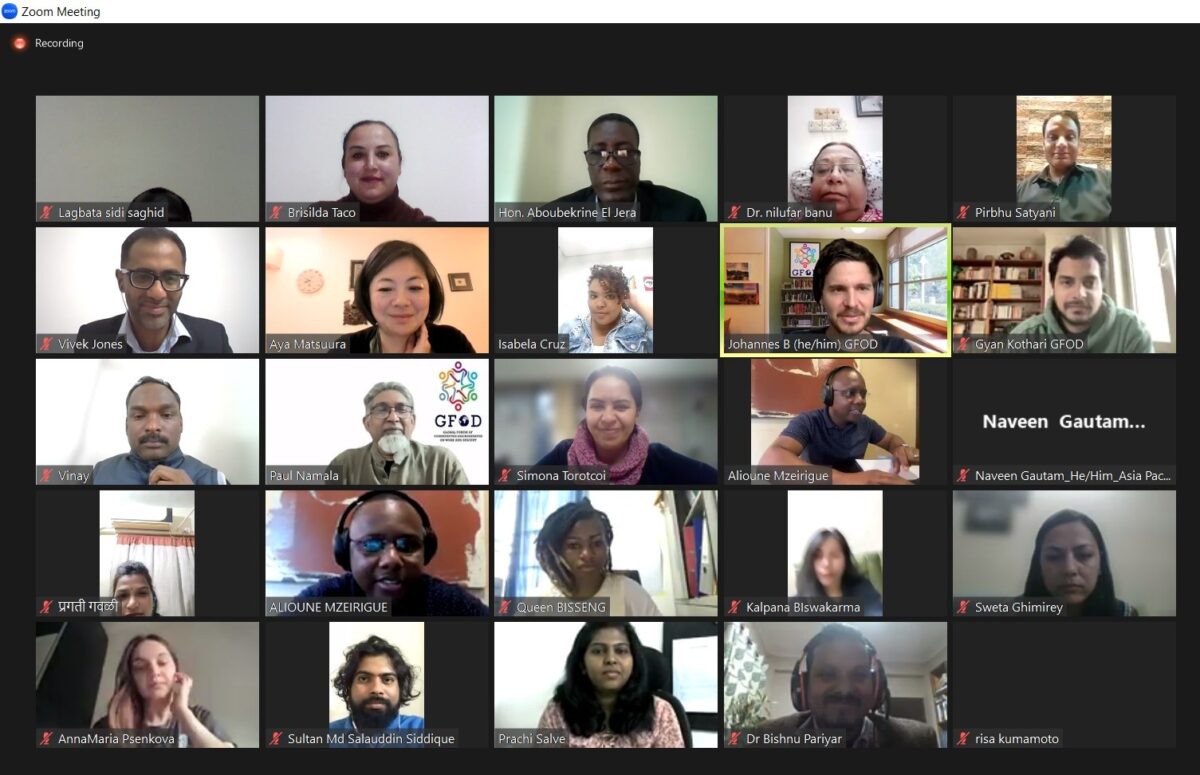
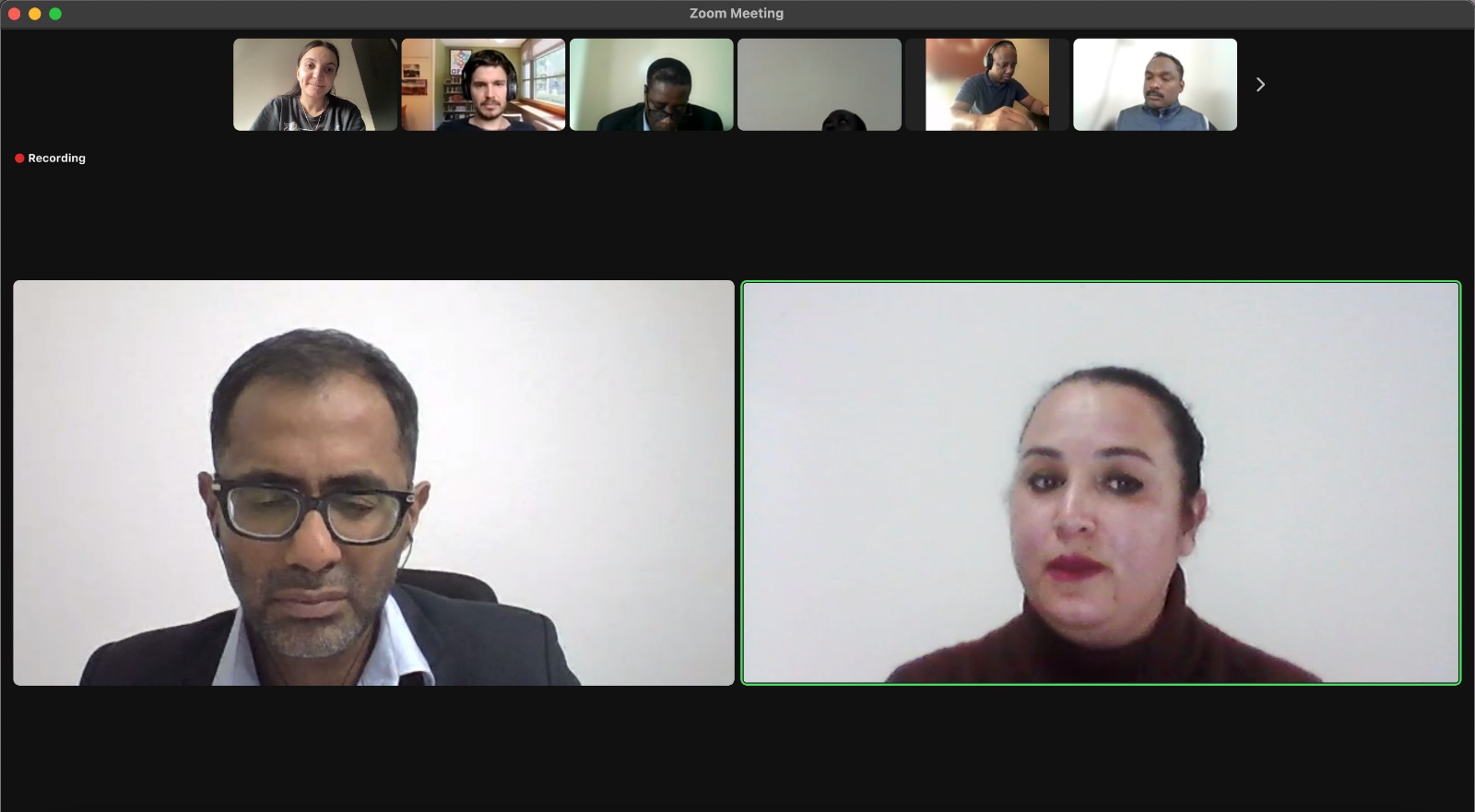
GFoD and ERGO Network Roma rights experts take part in the UN Commission for Social Development session
The 61st United Nations Commission for Social Development session took place on 6-15 February. The priority theme this year was “Creating full and productive employment and decent work for all as a way of overcoming inequalities to accelerate the recovery from the COVID-19 pandemic and the full implementation of the 2030 Agenda for Sustainable Development”.
The Roma rights expert Brisilda Taco draw attention to the recent data of the European Union Agency for Fundamental Rights on Roma employment in the EU during the side event “Overcoming the barriers of full and productive employment focusing on social hierarchical discriminatory practices based on work and descent” organized by the Inclusivity Project and Global Forum of Communities Discriminated on Work and Descent (GFoD).
Her main points raised in the presentation were the following:
58% of Roma aged 20 to 64 were not in paid work in 2021
56% of the surveyed Roma aged 16–24 were NEET in 2021
discrimination experiences in employment doubled on average between 2016 and 2021, with very third of Roma older than 16 experiencing discrimination due to being Roma when looking for work in the last 12 months
Brisilda also emphasized the challenges Roma throughout the EU and Western Balkans encounter in accessing decent jobs including:
Lack of vocational training
Skills mismatch and over education
Lack of professional capacities and appropriate education
No information on employment programs
Discrimination at work
Lack of urban transport in/to some Roma settlements
Underpaid jobs exacerbating inequalities
Exploitation by employers
To know more, you can read the full presentation here.
Monitoring Mission on the situation of Ukrainian Roma refugees in Moldova
On 30-31 January Ukraine coordinator Dejan Markovic and Communication and Campaigns officer Ana Rozanova from the ERGO Network Secretariat together with our partners and associate members from Foundation Jaw Dikh in Poland went on a monitoring mission to Moldova. We were hosted by our local partner Roma Women Platform ROMNI and aimed to better understand the country’s situation regarding the Roma refugees from Ukraine: the national policies, the living conditions of refugees, the support they get from the state, the registration process, and other important factors.
According to unofficial sources, there are currently 5000 Roma refugees from Ukraine in Moldova and an additional 2000 in the region of Transnistria, making it one of the key countries for our monitoring and humanitarian support. A significant number of refugees in the country are not registered, limiting them in the services they receive and their families’ mobility. Because of these and other factors, we have chosen Moldova as the destination for this second monitoring mission of our one-year-long project supported by the European Programme for Integration and Migration (EPIM).
Roma Women Platform “Romni”
Our partner in Roma Women Platform “Romni” is supporting the arriving Roma refugees from Ukraine since the beginning of the war in February 2022. Despite the small size of the organisation, they have efficiently organised the work and were able to provide humanitarian aid thanks to partnerships with not only ERGO Network, but also the UN agencies, Oxfam, MADRE grants and other donors.
They have carried out the first basic monitoring of the locations of refugees (often unregistered), their demographics and the main needs they face, putting together detailed lists of humanitarian aid needs for the donors to maximise the clearly insufficient support for the number of people in need.
(left to right) Elena Sirbu, Elzbieta Mirga-Wojtowicz and Dejan Markovic
Information flyers in Romani for the Roma refugees are provided by Roma Women Platform ROMNI
“Romni” has also been a part of the informal Roma civil society coalition which pushed for establishing a position in the government crisis response group (presently the Crisis Centre for Refugees under the Ministry of Interior) who would be advocating specifically for the Roma refugees. As the director of “Romni” Elena Sirbu is an established journalist, her organisation was active in communicating the issues refugees face both on national and international level and also runs several media projects, raising awareness among the arriving refugees themselves through leaflets and a Youtube channel in 5 main dialects of Romanes.
Visiting Ukrainian Roma refugees
We started our mission by visiting the Roma Refugees Center “Testimiţeanu 6” in Chișinău. This centre was established in March 2022 and is currently hosting approximately 115 people, the majority of them Roma from the Odesa region. Although the living conditions have improved in comparison to the first centre for Ukrainian refugees set up in the “Manej” athletics centre of Chișinău, it still lacks showers (currently only one is functional), and the rooms are crowded, with often 6-8 or more people in one room.
We had a chance to speak with several families living in the centre about their main problems – unfortunately, many. While all the inhabitants of the centre spoke of their gratitude to be able to stay in a safe country and be provided with meals and a roof above their heads, several issues could be improved.
Currently there are around 115 refugees staying in the centre
Room in the centre. Half of the family sleeps on the floor as there is not enough beds and room for them in the centre.
The meals provided in the centre by the catering company are one-dish-fits-all: often it is not suitable for very young children or older people staying in the centre. When the meal contains pork, it also cannot be eaten by the Muslim inhabitants of the centre (mostly of Azerbaijani origin). The children of the centre have a chance to go to school, but the school is located relatively far away, only accessible by two consequent means of transport, which is lengthy and costly. The medicine provided to the inhabitants is only the most basic one, covering urgent needs, but does not include the medicine for less acute but still very pressing health problems.
Food provided by the catering company
We followed this by visiting several Roma families from Ukraine who stay in private accommodations. While this housing option gives families more privacy and likely more opportunities to feel better integrated into the country, it is also very expensive. As both rent and charges for heating, water, and electricity went up this winter, and at the same time the monthly subsistence payments granted by the UN agency were delayed for two months, many families from private accommodation had to leave it and return to the centres or are fearing that soon they will have to.
Meeting national stakeholders
On the second day of our visit, we met with Marin Alla from the Crisis Centre for Refugees under the Ministry of Interior of Moldova, who is the only Roma representative in the centre and is a strong ally of the refugees, trying to both understand their situation in depth and to push for solutions which would improve it.
A new form of temporary protection will be available for all Ukrainian refugees in Moldova from the beginning of March. This form would ensure more comprehensive protection and improved conditions for accessing medical and other services. This type of registration will also enable the schools in Moldova to cooperate with the schools in Ukraine and to receive the necessary data for the pupils to progress from the currently provided “auditioning” form of schooling to a full form of school education, which would be acknowledged in both Ukraine and Moldova.
However, this type of temporary protection would still not include any financial support to the refugees from the state and will additionally restrict their mobility. As we have learnt a day before, many refugees would still travel to Odesa to visit their homes and extended family, and to receive medical consultations from their doctors. The journey by regular bus takes only 3 hours.
The new temporary protection – the way it is currently formulated in the final draft form – only allows a refugee to leave Moldova for up to a total of 35 days per year. After this limit has been reached, the protection status is removed and cannot be applied for again. Therefore, this would limit the Odesa region’s refugees from visiting their homes as often as they would like.
Another national partner we met was Nicolae Rădiţa, Adviser for Human Rights and Interethnic Relations to the Prime Minister. In addition to the state policies concerning Ukrainian Roma refugees, we also discussed the current National Roma Programme 2022-2025, coordinated by the Agency for Interethnic Relations, and the needs of the local Roma population of Moldova. This is a country where until recently ERGO Network was not actively involved, but due to the newly established partnership, we hope to keep a closer eye on the situation.
We believe that we have left the country with a better understanding of the situation, which we knew mostly from reports before. A crucial role in this understanding was played by the fact that we met national partners, representatives of civil society, and importantly also many refugees themselves. We discussed the issues from different angles and with different actors involved, and we hope that we can now continue our work in Moldova with better-targeted and more in-depth measures.
Conclusions and Recommendations
We have seen that there are several main issues contributing to the generally problematic situation of the Ukrainian Roma refugees in Moldova.
While the state provides the refugees with a lack of financial support the state puts the refugees in a situation where they often lack money for covering their basic needs, such as food, medicine and transport to school for the children. The situation is even more precarious for the refugees who do not stay in the centres either by choice, but more often because of the circumstances: the payments they receive are so unstable that they ensure monthly payments for their rented accommodation.
ERGO Network would encourage the state authorities and national and international donors to better coordinate the financial help for refugees, to ensure they have access to the needed services and have a decent standard of living.
The state is preparing a registration for temporary protection, but the CSOs doubt whether this policy will make the life of particularly Ukrainian Roma refugees easier or put an extra burden on them. ERGO Networks welcomes the position of Marin Alla as responsible specifically for the Roma refugees and would encourage the authorities to keep this position for the full duration of the crisis, as well as to take into account his suggestion when it comes to drafting policies concerning the refugees.
We would further encourage the authorities to ensure that the refugees – even those lacking either literacy skills or technology or both – are able to register for temporary protection. The CSOs can assist them with this task, but for this, they would need to be supported by the state.
Antigypsyism also penetrates all the areas of refugee treatment, making the daily life of the already-vulnerable Roma refugee community even more complicated, and has to be first acknowledged, before it can be tackled on structural level.
A report will be prepared, which will provide ERGO Network and the partners with the necessary data to strengthen our advocacy and cooperation with possible allies. A similar mission has already taken place in the Czech Republic and others will also take place in the coming weeks in Hungary, Poland, and Slovakia.
The ERGO Network Secretariat team is growing and we welcome a new member of our Team – Martina Horváthová as the Network and Programme Coordinator.
Martina will focus on maintaining and strengthening the ERGO Network, building the capacity of ERGO Network members and empowering Roma youth and activists.
Here is more about Martina in her own words:
Living near Prague, the capital of the Czech Republic, I joined the ERGO Network team in January 2023. Since 2002 I have been active in the empowerment of Roma, especially Roma women and Roma youth, as programme manager in an NGO. Last four years I worked as a desk officer in the Czech National Agency for the Erasmus+ programme. I am happy to say that I succeeded to attract more organisations working with youngsters with fewer opportunities including Roma youth to apply for Erasmus+ grants.
For five years I was member of the Governmental Council for Roma Minority Affairs proposing, in cooperation with others, solutions on Roma integration to the government from the position on active Roma citizen. During this time several big changes and important steps in terms of the fight against antigypsyism and for the Roma integration were undertaken.
Besides the Roma issues, my professional life is also connected very tightly to topics ad adult education, support of participation, inclusion, gender equality, and NGOs management and fundraising.
For me the best way how to relax is cooking and baking. Time to time I love to travel and explore landmarks and contemporary life of different (not only) European cities. I am always ready to see good theatre piece and living close to Prague is ideal for such cultural enjoyment.
I often go to the forest countryside and forests anyway, love picking mushrooms (as almost all Czech people). I love to look at and touch the sea. At home I take care, together with my parents and brothers, of a cat. And I also take care of boyfriend and time to time of his son.