Opinion piece by RAVS: Antigypsyism Definition

When incompetence leads to bad decisions

Opinion piece by ERGO Member Zuzana Havirova from Roma Advocacy and Research Center (RAVS), Slovakia.

[Disclaimer: The opinions expressed within the content are solely the author’s and might not reflect the opinions of the website or its affiliates.]

In October 2022, the National Council of the Slovak Republic adopted the IHRA’s definition of antigypsyism. The IHRA definition states: „Antigypsyism/anti-Roma discrimination is a manifestation of individual expressions and acts as well as institutional policies and practices of marginalization, exclusion, physical violence, devaluation of Roma cultures and lifestyles, and hate speech directed at Roma as well as other individuals and groups perceived, stigmatized, or persecuted during the Nazi era, and still today, as “Gypsies.” This leads to the treatment of Roma as an alleged alien group and associates them with a series of pejorative stereotypes and distorted images that represent a specific form of racism.“

The reference to lifestyle is probably related to Travellers and Gens du voyage, but in the context of Roma living in excluded localities in Slovakia, such content is dangerous and stereotypical. We often encounter statements that Roma who live in marginalized communities live this way because it is their lifestyle, and it is also said that living from day to day is their lifestyle. It is also pointed out that education is not a priority for Roma from poor localities because their lifestyle is to live on welfare. All of these statements are made by people who are prejudiced and, in essence, racist. Roma living in marginalised communities have not chosen their life and it is not their lifestyle.

On the contrary, it is also because of this marginalisation that they experience discrimination and face structural racism on a daily basis. I understand that the IHRA has tried to include several groups of Roma living in Europe in its definition, but it should have taken into account the fact that in some countries the interpretation of their definition may lead to an even greater marginalisation of Roma or even the legitimisation of discrimination against Roma in the context of the lifestyle that is mentioned in their definition. In fact, the definition does not explain what lifestyle means.

In the Concept of Combating Radicalisation and Extremism until 2024, which was approved in 2021 by the Slovak Government, there is a definition of antigypsyism, which states that: „Antigypsyism is defined as a type of racist classification of Roma, who are stigmatized as “gypsies” through it, in order to construct a false justification and legitimization for the dehumanization of Roma, their discrimination, exploitation and the possibility of perpetrating violence against them.

Anti-Gypsyism/anti-Roma racism creates non-existent, misleading and negative descriptions, qualities and characteristics (the so-called “profile”) of the “gypsy“, the basis of which:

  1. a supposedly “common form” of physical appearance;
  2. are homogenizing and generalizing social, mental and character “traits” (antisociality, criminality, high birth rate, lack of hygiene, poverty, superstition, primitiveness, tribal kinship, crookedness, nomadism, music in the blood, promiscuity, etc.);
  3. the essentialization of this “common form” of physical appearance and the above social, mental, and character “traits” for the entire Roma ethnic group.

Anti-gypsyism/anti-Roma racism is therefore not based on real life and negative personal experiences, is not a consequence of Roma life, but uses historical forms of discrimination, prejudice, and stereotypes, and considers the “common form” of physical appearance and the above social, mental, and character “traits” as “essential” (i.e., “innate”) in every Roma. This means that even if some of the above “descriptions”, “qualities” and “characteristics” could be applied to a member of the majority (e.g. criminality + low hygiene + poverty), the social situation of that member of the majority would not be understood as an “essential” (“innate”) characteristic of him/her, as is the case for Roma in antigypsyism/anti-Roma racism.

For this reason, antigypsyism/anti-Roma racism is a type of racist categorisation claiming that Roma collectively share a ‘distinct racial essence’ that is not influenced by any form of socialisation, upbringing and education, nor by any social, societal and financial measures. Anti-gypsyism/anti-Roma racism ascribes to the Roma an irreversible “biological (racial) destiny” from which there is no escape, while at the same time asserting that the Roma are, precisely because of these “essential (innate) characteristics”, unable to integrate into society.

The definition also includes examples of expressions of antigypsyism based on the IHRA’s working definition of antigypsyism:

  1. distortion and denial of the persecution of the Roma or the genocide of the Roma,
  2. glorification of the genocide of the Roma,
  3. incitement, perpetration and justification of violence against Roma communities, their property and individuals,
  1. forced and coercive sterilization, as well as other forms of severe physical or psychological treatment of Roma,
  1. feeding and endorsing discriminatory stereotypes about and against Roma,
  2. blaming Roma, using hate speech, for real or perceived social, political, cultural, economic or health problems,
  1. stereotyping Roma as perpetrators of crime,
  2. the use of the word ‘gypsy’ as a slur,
  3. endorsing and promoting exclusive anti-Roma mechanisms based on racial discrimination, such as the exclusion of Roma children from mainstream schools or institutional practices and policies leading to the segregation of Roma communities,
  1. adopting policies without a legal basis or setting conditions that allow arbitrary or discriminatory displacement of Roma communities and individuals,
  1. holding individuals collectively responsible for real or perceived actions of Roma communities,
  2. dissemination of hate speech targeting Roma communities in any form, including on the internet and social networks.

The resolution adopted by the National Council of the Slovak Republic recommends the Government of the Slovak Republic to carry out an analysis of the legal order of the Slovak Republic and, if necessary, to prepare legislative proposals for relevant legislation so that the above definition is respected in the activities and decision-making of the public authorities of the Slovak Republic.

Unfortunately, the proponents of this proposal in the Slovak Parliament do not have sufficient knowledge on this topic and therefore they have presented a definition without prior discourse with the scientific community. If they had made a professional discussion on this proposal, they would have found that in Slovakia there is already an approved definition of antigypsyism from 2021, which, among other things, includes examples of antigypsyism from the definition developed by the IHRA. They could thus bring to the Slovak Parliament a definition of antigypsyism that is more precise, more concise and has a greater meaningful value in the conditions of the Slovak Republic.

Such actions cause confusion in professional terminology and bring unnecessary contradictions into the field of combating antigypsyism, which can lead to confusion about what antigypsyism actually means.

Briefing on Discrimination and Social Exclusion of Roma with Disabilities

BRIEFING ON DISCRIMINATION AND SOCIAL EXCLUSION OF ROMA WITH DISABILITIES

This briefing is prepared jointly by the European Disability Forum and ERGO Network

Studies from 2016 show that at least 15% of Roma people have a disability, amounting to over 1.6 million people between the European Union, the Western Balkans and Turkey. The available data highlights a high prevalence of disabilities among Roma communities, also due to the health inequality gap and poorer health condition of the Roma population. However, the information on Roma with disabilities is very limited.

To gain a better understanding of the discrimination and social exclusion that Roma with disabilities face in Europe, together with the European Disability Forum, we have conducted a research study based on the data collected by the EU Agency on Fundamental Rights (FRA) and our own research. The outcomes and analysis are published in a joint EDF-ERGO Network briefing on discrimination and social exclusion of Roma with disabilities.

The briefing highlights a comparatively high risk of intersectional and multiple discrimination for Roma with disabilities, with the disability marginalisation adding to the systemic racial discrimination and antigypsyism that keeps them at the margins of society. Discrimination affects their access to basic services such as inclusive education, healthcare and long-term care, their integration into the job market and, in turn, their overall socio-economic condition.

Findings

Available data clearly show that Roma with disabilities encounter more obstacles than the average to complete quality education, 81% of them dropping out of education early. Early school abandonment and inequalities in educational outcomes are partly encouraged by the bullying and harassment that young Roma people with disabilities endure in school settings and that, according to the FRA, affect 27% of them, as well as by a general trend to falsely diagnose Roma children with developmental and learning disabilities, leading them to be placed in segregated schools with reduced curricula.

As a result of the low average educational attainment, young Roma with disabilities encounter numerous issues entering the labour market. Within the age bracket 16-24, 63% of Roma with disabilities is neither in education, employment or training – with the percentage raising to 84% for the people of the same age with high support needs. The situation is further worsened by discrimination during job search and on the workplace: many respondents claimed to have felt discriminated against when looking for a job, largely because of being Roma.

The limited access to education, lower access to employment, and unequal access to social protection make so that Roma with disabilities stand an exponentially higher chance of living below the poverty line: 82% of persons with disabilities with moderate support needs, and 90% with high support needs, are at risk of poverty. The marginalisation of Roma with disabilities also reflects on their access to the housing market: inability to pay rent and anti-Roma discrimination when looking for housing are part of the reason why 55% of Roma with disabilities experience housing deprivation and 75% live in overcrowded housing.

The Roma experience an overall poorer state of health than the majority of the population, with a higher prevalence of chronic illnesses and a lower life expectancy. Deterring them from accessing healthcare and long-term care are not only the high cost of treatments and the lack of information, but also discriminatory attitudes informed by antigypsyism.

The ethnic discrimination intensifies for those with some form of disability: 18% of Roma with disabilities with moderate support needs and 17% of Roma with disabilities with high support needs felt discriminated against in accessing healthcare, compared to 12% of Roma without disabilities. It is also important to note that the inaccessibility of healthcare system and healthcare services create another discriminatory barrier for Roma with disabilities.

Read the full Briefing here

Conclusions

While some of the issues highlighted in our briefing could be addressed by separate Roma and disability policies, the current legal framework adopted by the EU does not offer a comprehensive protection for people facing intersectional and multiple discrimination, e.g. on grounds of ethnic discrimination and disability. Because of this, Roma with disabilities are left with limited protection of their rights and limited legal remedies to respond to their marginalisation.

We therefore, together with European Disability Forum, recommend the EU and Member States to adopt targeted actions, in particular:

  • Increase the visibility of Roma with disabilities and address policy gaps at the European and national levels
  • Adopt a comprehensive EU equality law to prohibit intersectional and multiple forms of discrimination
  • Collect equality disaggregated data on people living in institutions in the EU;
  • Invest in housing first initiatives and targeted outreach measures to improve access to healthcare and long-term care services for Roma with disabilities;
  • Involve Roma with disabilities and their representative organisations in designing, implementing and monitoring policies that affect them.

For more information about ERGO Network’s work on Roma health and related fields, please contact Senior Policy Officer Isabela Mihalache and our Senior Policy Adviser Amana Ferro.

Monitoring Mission on the situation of Ukrainian Roma refugees in the Czech Republic

Monitoring Mission on the situation of Ukrainian Roma refugees in the Czech Republic

On 26 October ERGO Network Secretariat together with our partners and members from Jaw Dikh Poland and Roma Women Platform ROMNI from Moldova held the first monitoring mission to investigate the situation of Ukrainian Roma refugees in the Czech Republic. This is the first mission of our one-year-long project supported by the European Programme for Integration and Migration (EPIM).

The organisations met with the Czech organisation Romodrom, which is active in the field of Roma refugee support since the onset of the war, currently working with more than 1500 people from Ukraine in the Czech Republic as well as also providing social services to the Roma in Western Ukraine.


The partners have discussed the work of Romodrom and other recipient countries. The partners from Jaw Dikh and ROMNI shared the practices from their work with mediators and service provision as well as advocacy and lobbying.

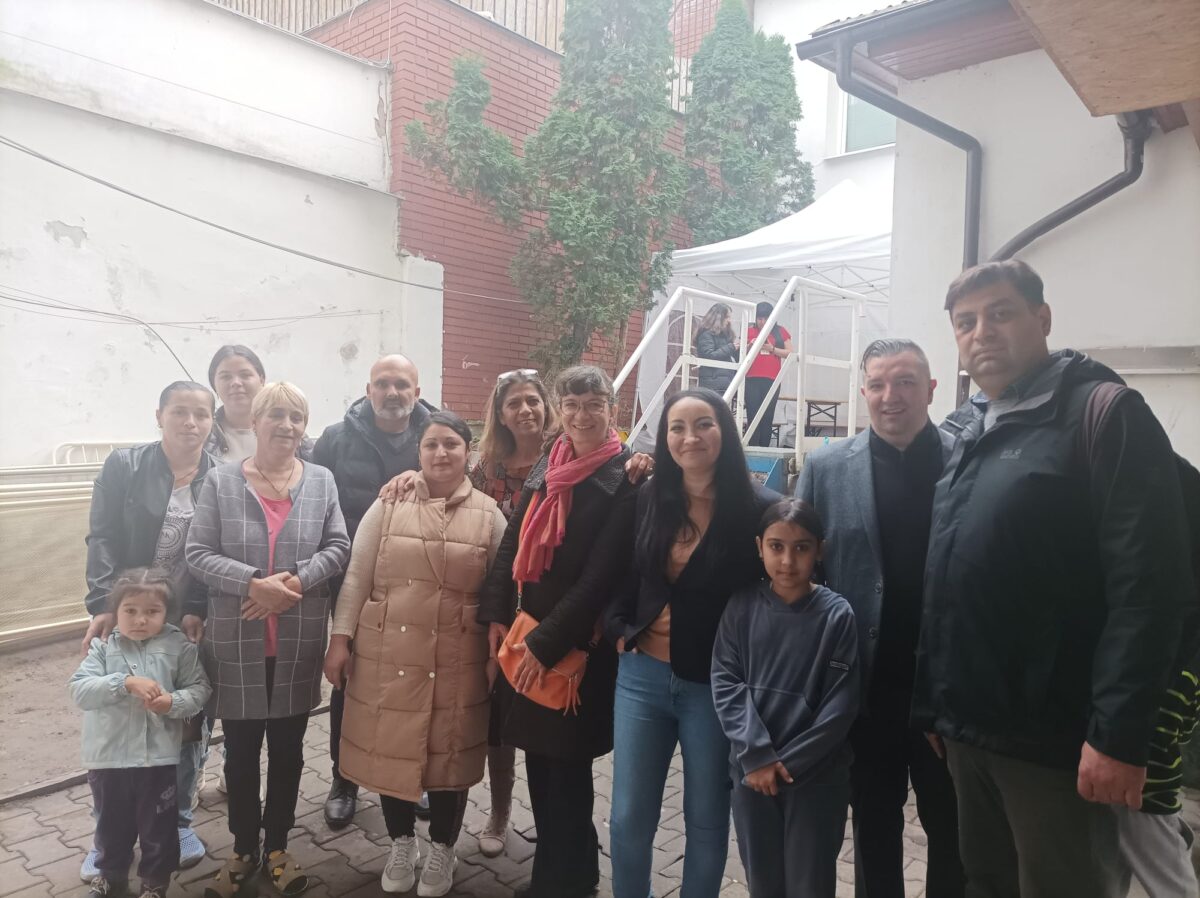
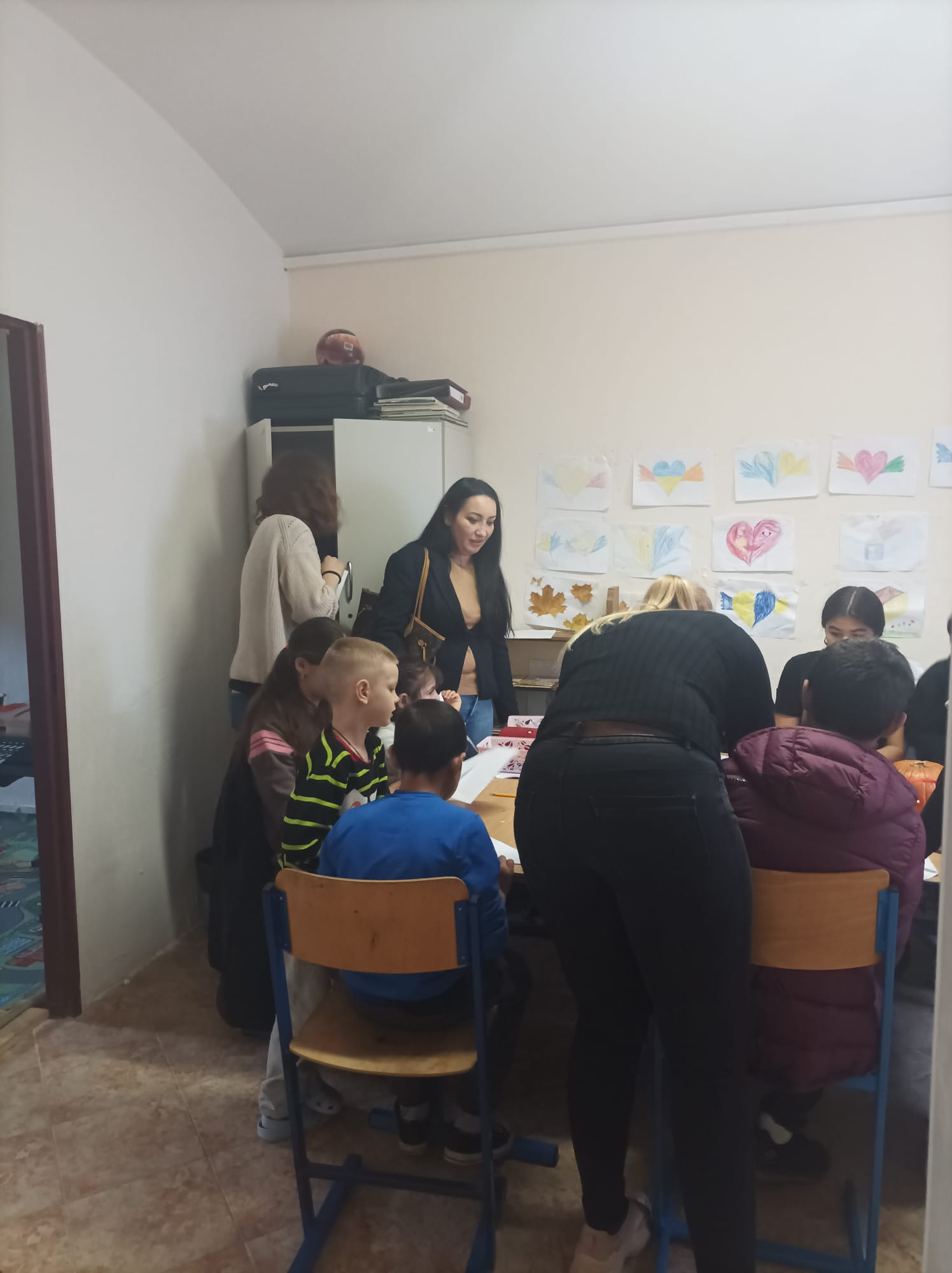
The meeting was followed by a visit to a refugee centre in Prague 5, where 90 people are accommodated, most of them Roma from Western Ukraine. Several organisations are contributing to the smooth functioning of the centre: Romodrom by covering the rent and taking care of the logistics, RomPraha provides social services, our members from Slovo 21 are offering cooking facilities and other classes, UNICEF runs after-school classes for children to help them adapt to the new environment.

A report will be prepared after more information is collected, which will provide ERGO Network and the partners with the necessary data to strengthen our advocacy and cooperation with possible allies. Similar visits will also take place in the coming months to Moldova, Poland, Romania and possibly Ukraine.

New European Solidarity Corps volunteer in ERGO Network

Welcome, Annamária!

The ERGO Network Secretariat team is growing! Last week our new European Solidarity Corps volunteer Annamária Pšenková from Slovakia joined us in Brussels.

She will stay one year with us to learn more about how we work and support all our work areas.

Here is more about Annamária in her own words:

My name is Annamária Pšenková. I am from a small country which is situated in the middle of Europe called Slovakia. I am 23 years old. I finished my bachelor’s studies in political sciences in May and I decided to take a gap year. 

Firstly I would like to introduce my interests within the academic sphere. My undergraduate studies at BISLA gave me the opportunity to explore various fields of politics, economics, international relations, philosophy and most importantly human rights.

While studying all these fields, my primary interest was rooted in focusing on peace and conflict resolution within different social conflicts either on national or international dimensions. During my studies, I  notably centralized my papers on dealing with injustice and breaches of human rights. The course – Peace and conflict resolution, in which I have been enrolled taught me how cultural and collective trauma from past traumatic experiences is created.

Furthermore, the most significant and relevant part of that course was that it has given me sufficient knowledge about various means to reconcile the past and bring the conflict between two different parties into mutual understanding.

While analysing numerous genocides as the Armenian genocide, the Rwandan genocide, the Holocaust, the Romani Genocide, Congolese genocide, I have developed the ability to understand the impacts of political decisions (my main concern was the implementation of the policy of securitization), moreover, it led me to realize the importance of reconciliation process of such horrendous atrocities within our society. Lastly, my BA thesis focused on the whole process of the creation of cultural trauma and how collective trauma from past traumatic experiences can be effectively misused for current political goals. 

In my personal life, I’ve been dancing since I was a child. I started with the Latino style but slowly and gradually I was changing the dancing styles. Mainly I am focused on afro, dancehall, fusion and street Latino right now.  I have three brothers, who are the most important men in my life, so leaving them was a bit harder for me. I do love books a lot, mainly those philosophical ones now – I am captivated by Plato’s ideas the most. I am an outgoing person, I love to party a lot or just spend time with friends in bars with beers. 

Joint Statement on EU Anti-Racism Action Plan Anniversary

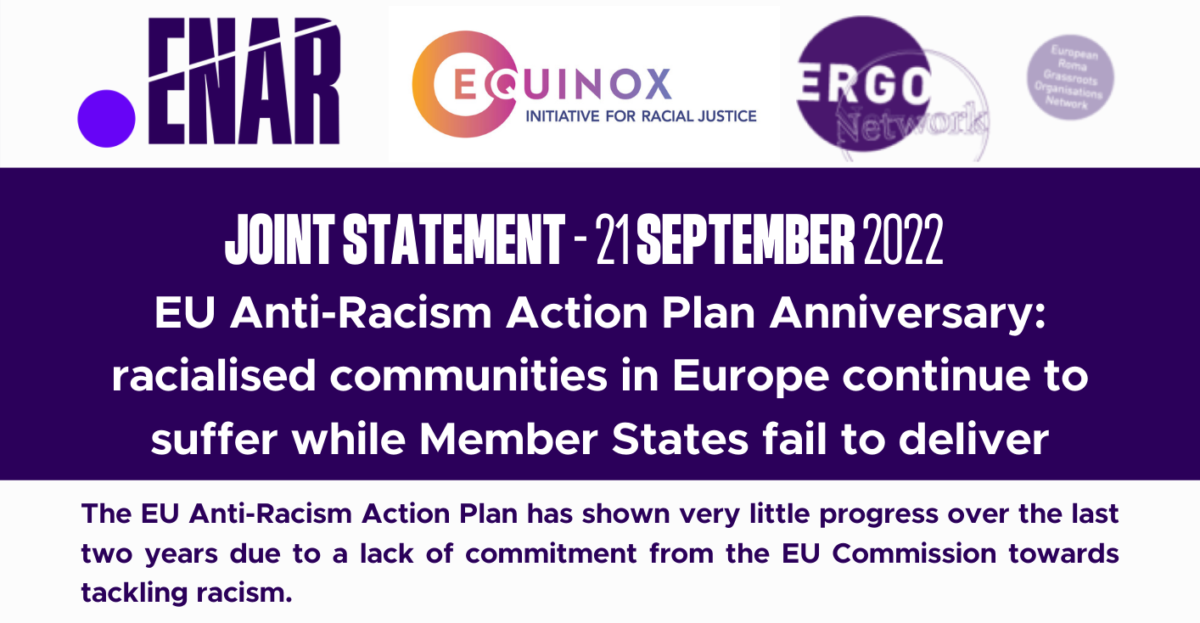
On September 16 2020, European Commission President, Ursula von der Leyen delivered a speech with the pledge of effectively addressing racism in Europe. Through the EU Anti-Racism Action Plan (EU ARAP), the European Commission signaled its intention to seriously combat racism through a series of proposed measures. However, the negligible amount of progress made over the last two years reveals a lack of commitment and transparency leaving racialised communities far from the anti-racist Union von der Leyen promised.

Among the EU ARAP’s most ambitious objectives is the implementation of national action plans against racism (NAPAR) in all Member States. Unfortunately, the information shared by the Commission on the NAPAR implementation process has been scarce, while national development processes have not always been very transparent nor inclusive. As a result, civil society organisations have not been able to actively engage with the drafting process or support the implementation at the national level, yet have noted gaps between local, national, and EU entities including missing instructions and lack of communication across government levels (local, regional, etc.). Although these issues are problematic, it is the far-right ideologies spreading throughout the continent that are a larger threat to the NAPARs.

Recently, the French government renewed its attacks against a civil society organisation advocating against anti-Muslim hatred, citing a divergence in conceptions of diversity as its justification. In Sweden, 214 Swedish Democrat candidates who stood in the last election could be linked to right-wing extremism. In Italy, a politician with the far-right League sparked outrage after implying that the party would rid the streets of Roma people if it wins general elections later this month.

“There are many countries across the EU bloc with issues of institutional racism. Whether we speak about France, Sweden, or Italy, far-right ideology is rising and racism is being normalised to a whole new level. The EU Institutions must recognise this threat and act, or any initiative for racial equality will be dead in the water,” said ENAR Director (Policy, Advocacy, and Network Development), Ojeaku Nwabuzo.

The trend of rising far-right threats in Europe is only increasing, leaving racialised communities vulnerable to violence. In August, Alika Ogorchukwu, a black man, was beaten to death by a white Italian man in broad daylight. Despite the circumstances of the vicious attack, the police have refused to consider a racial motive to the crime. Meanwhile, the conflict in Ukraine has revealed another facet of European institutional racism in the double standards applied towards fleeing refugees.

“With the Russian war against Ukraine, Europe witnessed impressive solidarity towards the Ukrainian refugees. Unfortunately, ethnic minority groups such as the Roma Ukrainian refugees have been experiencing a lot of racism and rejection in the neighboring countries, in their efforts to secure a safe place for them and their families to date”, said Gabriela Hrabanova, Director of the ERGO Network.

“Racism is killing racialised people and it is only going to get worse. Without firm commitments, the hope for a true Union of Equality remains an empty promise. The European Commission must step up its efforts to remind Member States of our shared values, and deliver on the EU ARAP and NAPARs. The safety of racialised communities depends on their resolve,” concluded Ojeaku Nwabuzo.


Joint statement issued by:

  • The European Network Against Racism
  • Equinox Initiative for Racial Justice
  • ERGO Network

For more information or to arrange an interview, contact:  

Mobile: +32 (0)2 229 35 70 – Email: info@enar-eu.org – Web: www.enar–eu.org

Notes to editors:

  • The European Network Against Racism (ENAR aisbl) stands against racism and discrimination and advocates equality and solidarity for all in Europe. We connect local and national anti-racist NGOs throughout Europe and voice the concerns of ethnic and religious minorities in European and national policy debates.
  • On September 20 2021, ENAR and 40 civil society organisations across Europe shared recommendations last year for the EU Commission to prioritise over the period of 2021-2022. Available here.
`
General – Page 19 – ERGO Network

By continuing to use the site, you agree to the use of cookies. more information

The cookie settings on this website are set to "allow cookies" to give you the best browsing experience possible. If you continue to use this website without changing your cookie settings or you click "Accept" below then you are consenting to this.

Close