20 years of the Action Plan: OSCE New Status report launch

20 years of the Action Plan: Looking ahead for the next five years for the OSCE Status Report launch

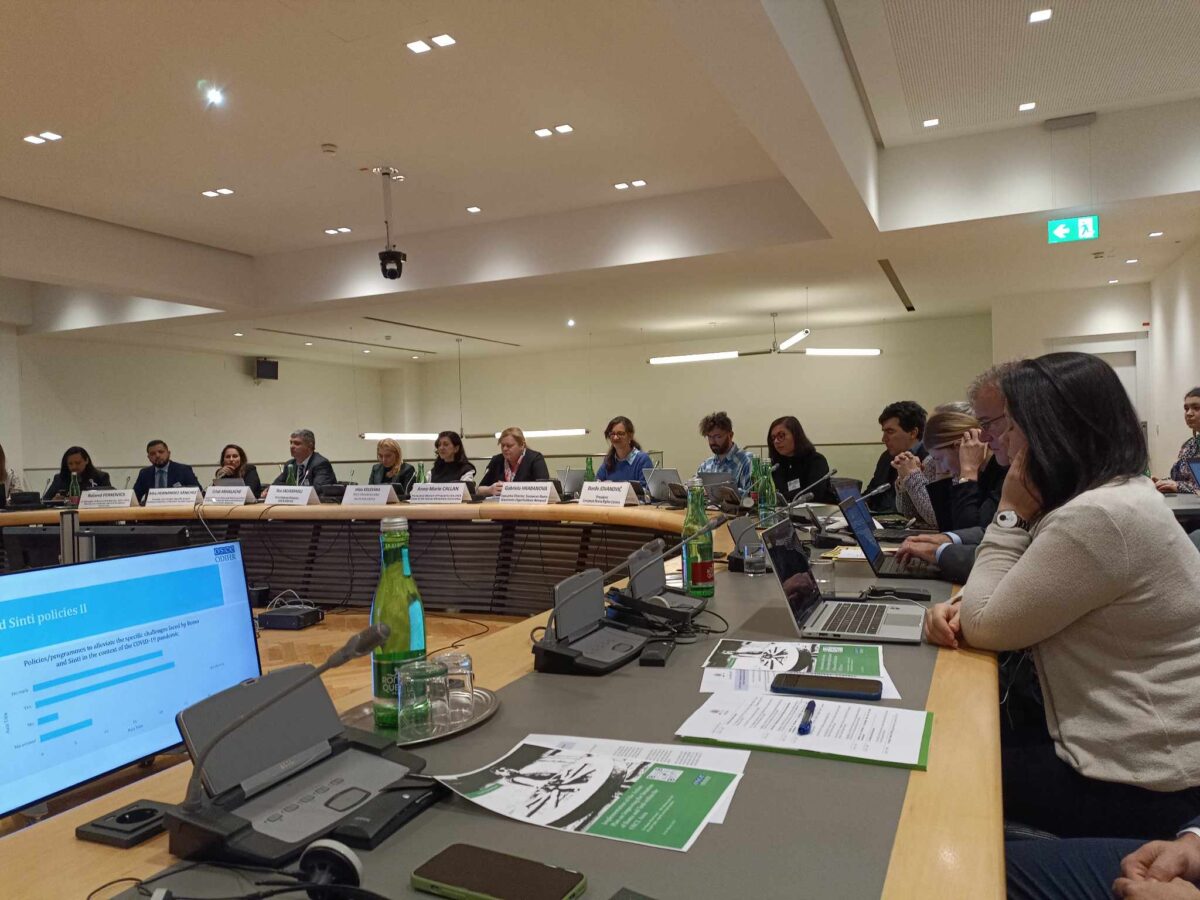
On 8 December 2023, ERGO Network Director Gabriela Hrabaňová addressed the OSCE ODIHR Launching event for the Fourth Status Report on the “Implementation of the Action Plan for Improving the Situation of Roma and Sinti within the OSCE Area.” It has also been 20 years since the introduction of the Action Plan for Roma and Sinti.

“Since the countries of the OSCE committed to ensuring positive change for the Roma and Sinti across the region over 20 years ago, real progress has been made,” said ODIHR First Deputy Director Tea Jaliashvili. “But deep disparities between the lives of the Roma and the general population remain in a number of places, and anti-Roma racism and discrimination are still a fundamental challenge. We must continue working to improve their situation and increase Roma participation in public and political life.”

Gabriela Hrabaňová agreed, that the 2003 Action Plan is still a relevant policy blueprint, guiding participating States on countering racism and discrimination against Roma, ensuring equitable access and opportunities for Roma and Sinti individuals in health care, employment, housing and education, and outlining the need to promote increased participation of Roma in public life and to provide support during crisis and post-crisis scenarios.
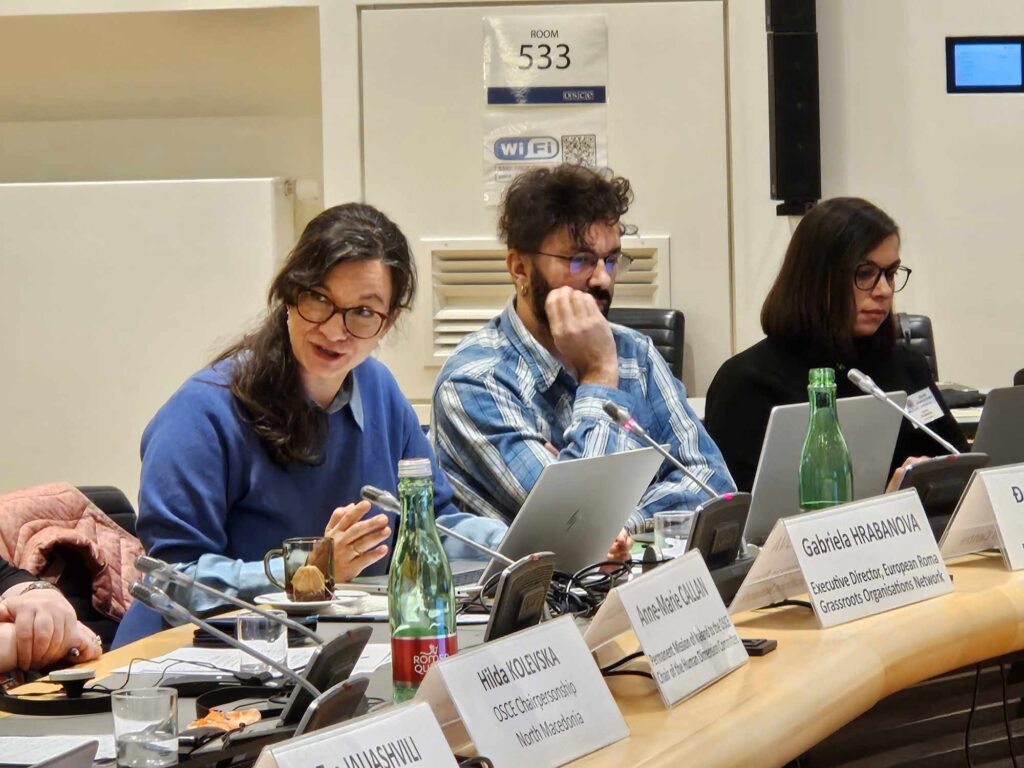
Regarding the participation of Roma in policy processes, the Status Report points out the same concerns of the Roma civil monitoring and ERGO Network’s assessment related to consultation processes for the adoptions of the national Roma strategic frameworks in 2021-2022 – where there was insufficient consultation and very few participatory and inclusive mechanisms for civil society participation at national level.

Notably, the report says that the further empowerment of Roma and the creation of effective mechanisms for meaningful participation in all policies that impact them is the next step towards positive change.

Action is needed. Gabriela called for more investment in the Roma capacities and ensuring that the Roma are part of all the policies concerning our future – across all participating states, including those countries where the crises strike the most. For the future of Ukraine, it is of utmost importance that minorities, including Roma and Sinti, are part of rebuilding the country.

She has also reminded about promoting Gender and Youth Perspectives, specifically integrating gender and youth perspectives into policy discussions and design to address the unique challenges and opportunities faced by Roma women and youth.

In the area of combating racism and discrimination, ERGO Network notices an increase in antigypsyism and intolerance against Roma across the OSCE Participating States, fuelled by ongoing political and economic instability in the region and a sense of impunity promoted in the media. Even though the 2021 FRA survey on Roma shows a positive development in tackling hate-motivated harassment and violence, there are no real improvements when it comes to tackling discrimination. According to FRA, awareness of the existence of human rights institutions has also improved among Roma. However, the proportion of Roma victims reporting discrimination did not increase.

There is almost no progress in education, with over 70 % of young Roma still leaving school early. Educational enrolment and attainment have not changed, while segregation and discrimination in education have worsened since 2016.

On average, 80 % of Roma in the survey countries were at risk of poverty in 2021. Many Roma households improved their material and housing situation, although overcrowding remains high, with one in five not having access to tap water inside their house.

Employment prospects have improved in some countries, and over 60% of Roma are now in paid work. In others, employment rates remain low, especially for young people and women. Some countries could achieve the EU targets for employment by 2030, but more efforts are needed to tackle youth and Roma women’s employment.

The OSCE participating states have committed to improving the situation of Roma communities through various declarations, action plans, and agreements. The OSCE could strengthen its efforts by ensuring these commitments are effectively implemented at the national level.

We must address all aspects comprehensively so societies can create a more inclusive environment that allows Roma individuals to actively participate in public and political life, contributing to more diverse and representative decision-making processes.

The political representation of the Roma population varies across different European countries. Mainstream political parties in some countries may include Roma candidates on their party lists or actively seek Roma support. These candidates may represent mainstream parties’ policies and work towards improving the situation of the Roma community at the European level. Some were also put on the candidates lists already.

Recommendations:

But more needs to be done to improve the participation of Roma in public and political life.

Education and awareness: Ensuring access to quality education for Roma children and adults. Combat discrimination in educational settings and promote programs that empower Roma individuals to engage actively in public and political life.

Capacity Building: Provide training programs and workshops focused on leadership skills, advocacy, political participation, and civic engagement tailored specifically for Roma individuals. These programs should empower Roma to participate actively in public and political spheres.

Representation in Political Institutions: Encourage and support the presentation of Roma individuals in political parties, governmental bodies, and local councils. Promote inclusive policies, encouraging political parties to include Roma candidates on their electoral lists.

Support for Civil Society Organisations: Provide resources, funding, and technical support to Roma-led civil society organisations that work towards improving political participation and representation of Roma communities.

Fostering Inclusive Political Dialogue: Create platforms for open and inclusive dialogue between Roma communities and policymakers. Ensure Roma voices are heard and respected in political discussions and decision-making processes.

Addressing Discrimination and Stereotypes: Combat discrimination, prejudices, and stereotypes against Roma communities through awareness campaigns, education, and legal measures. Promote a more positive and accurate portrayal of Roma in society and the media.

Access to Information and Resources: Ensure Roma individuals access relevant information about their rights, electoral processes, and available resources to engage effectively in public and political life.

Promotion of Gender Equality: Address gender disparities within Roma communities by promoting the participation of Roma women in public and political life. Create opportunities and platforms to encourage and support Roma women’s involvement in decision-making processes.

Policy Reforms and Implementation: Advocate for reforms addressing Roma communities’ socio-economic challenges. Ensure the effective implementation of existing policies to promote their inclusion and participation in public and political life.

International Collaboration and Exchange: OSACE must foster collaboration among governments, international organisations, civil society, and academia to exchange best practices and strategies for enhancing Roma participation in public and political life.


You can see the Fourth Status Report: Implementation of the Action Plan on Improving the Situation of Roma and Sinti within the OSCE Area here.
ERGO Network Annual Policy Conference 2023

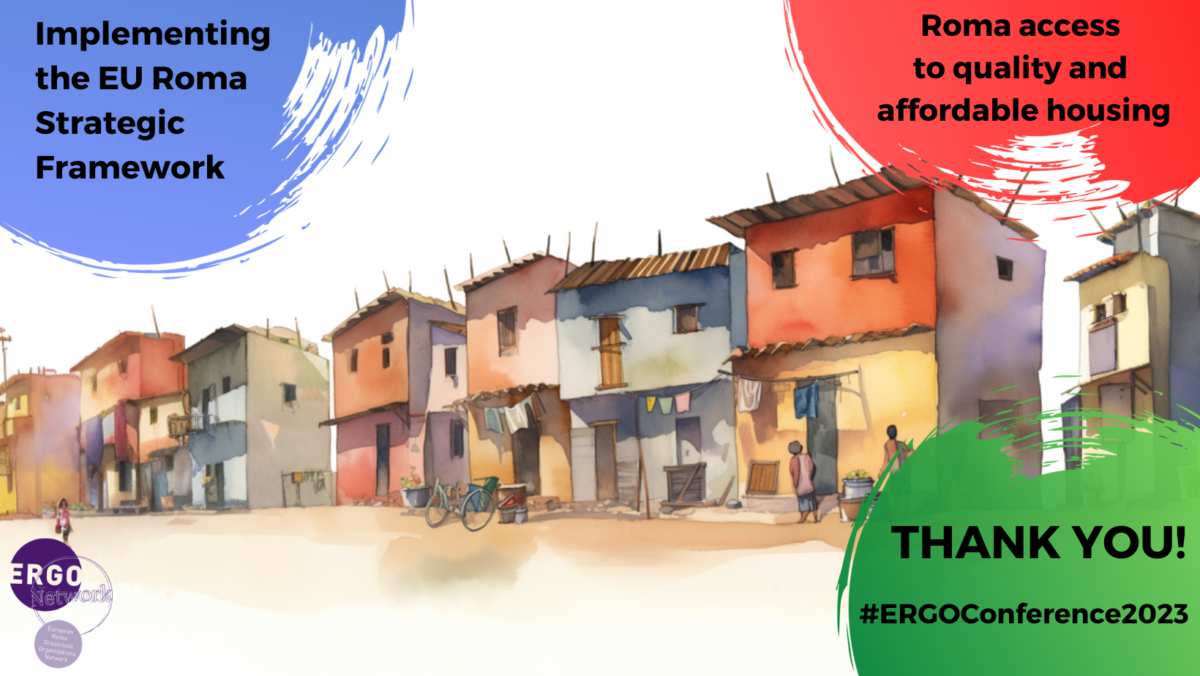
IMPLEMENTING THE EU ROMA STRATEGIC FRAMEWORK. ROMA ACCESS TO QUALITY AND AFFORDABLE HOUSING

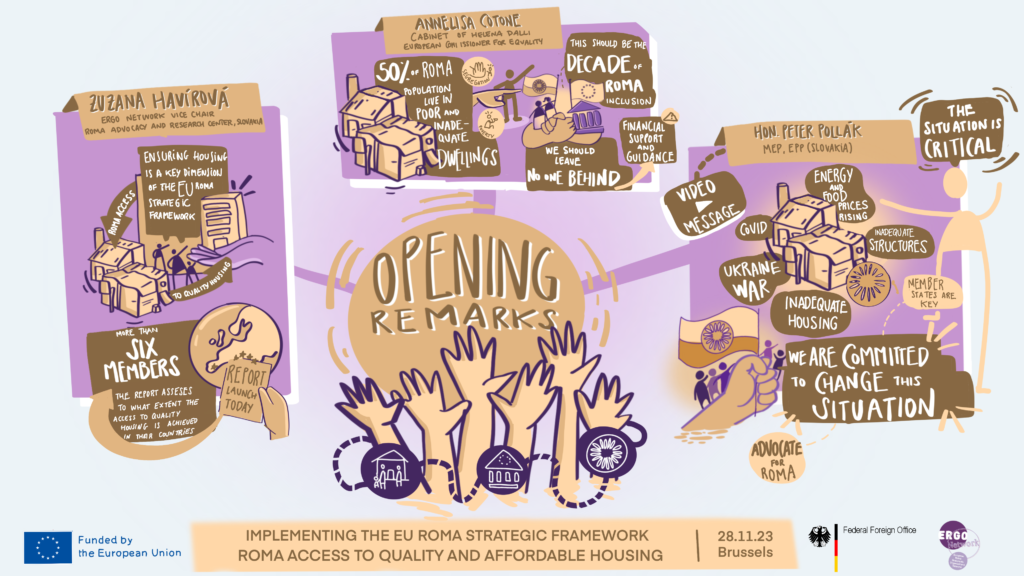
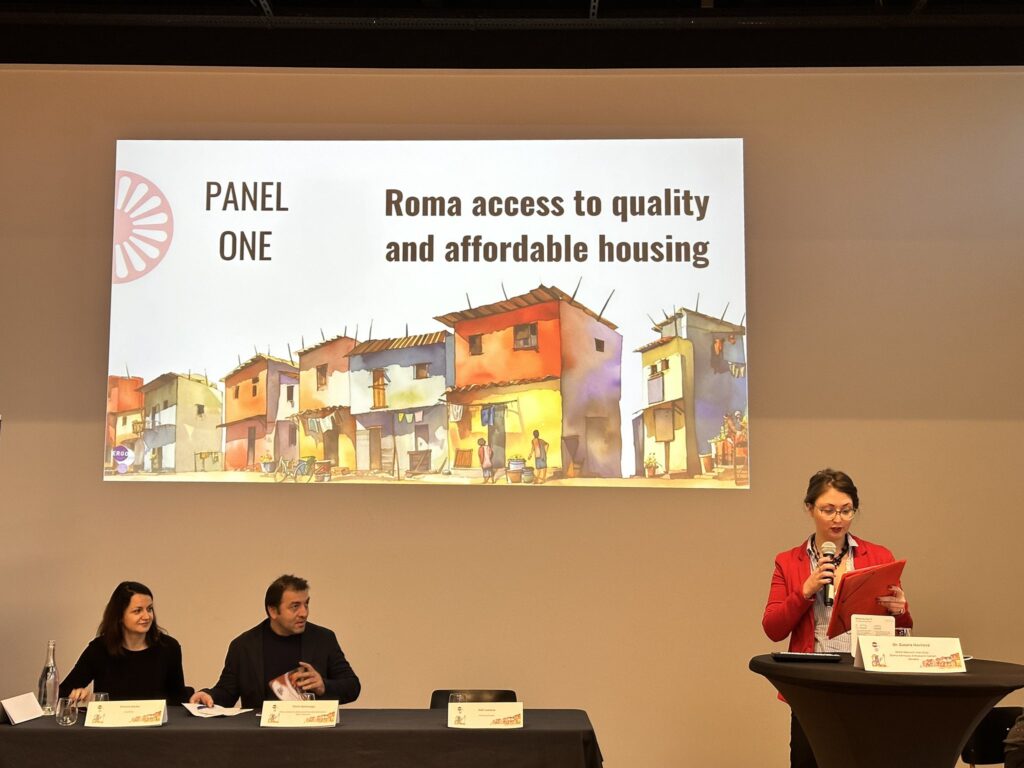
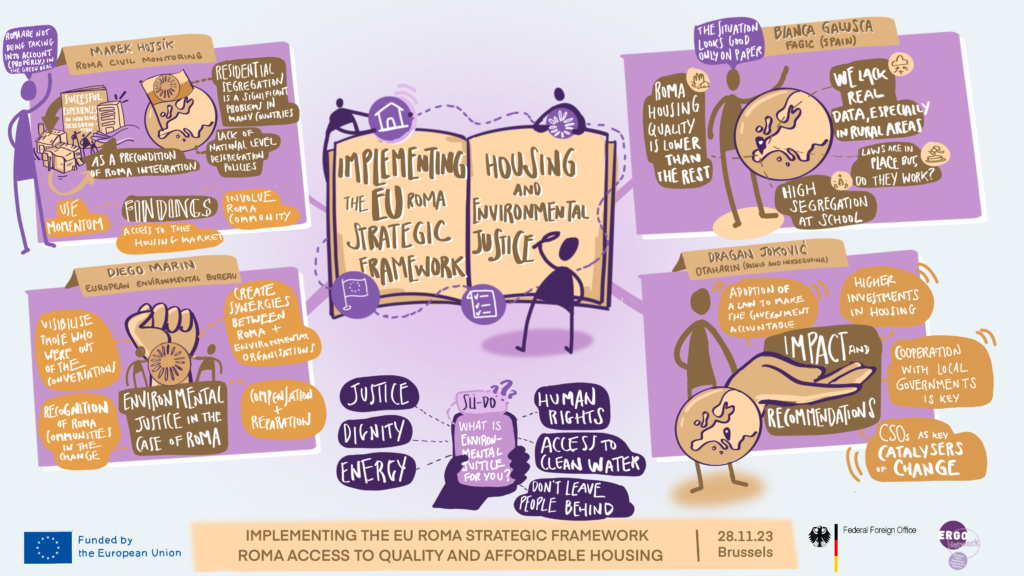
This past 28 November 2023, ERGO Network organised its annual Policy Conference in Brussels, dedicated to exploring how to improve Roma access to adequate, affordable, quality, and inclusive housing, as well as to taking stock of the implementation of the EU and National Roma Frameworks, with a particular focus on housing and environmental justice.

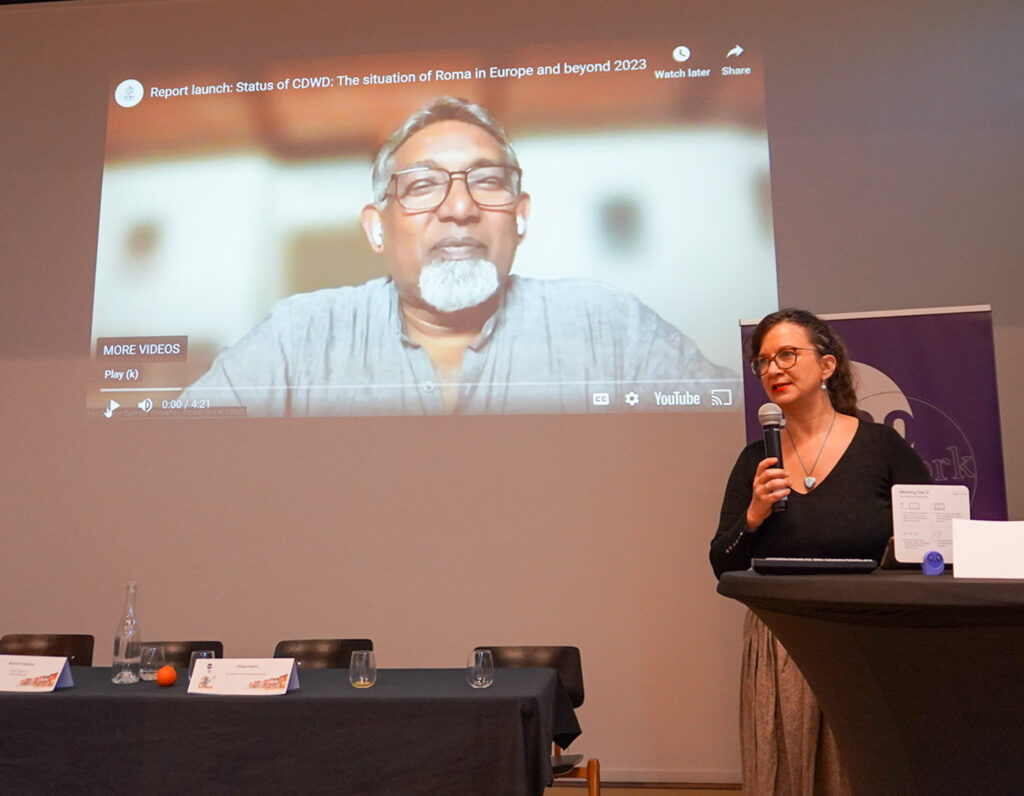
The conference featured keynote interventions from Annelisa Cotone, coordinator for Roma inclusion in the cabinet of European Commissioner for Equality Helena Dalli, Hon. Peter Pollák MEP (Slovakia, EPP), as well as Paul Divakar Namala, from the Global Forum of Communities Discriminated on Work and Descent.  

Many Roma still live in informal settlements and segregated neighbourhoods, in inadequate dwellings and disastrous living conditions, with severe environmental consequences. Unable to meet ever-rising housing costs or to prove legal ownership of their home, they endure forced evictions, homelessness, and antigypsyism from local authorities, landlords, and neighbours. Ensuring access to housing and adequate services is an objective of the EU Roma Strategic Framework, while it is also extensively covered by the European Pillar of Social Rights (Social Pillar), the compass for Europe’s recovery, and supported by Goals 6, 7, 11, 13 and 15 of the Sustainable Development Goals of the United Nations.

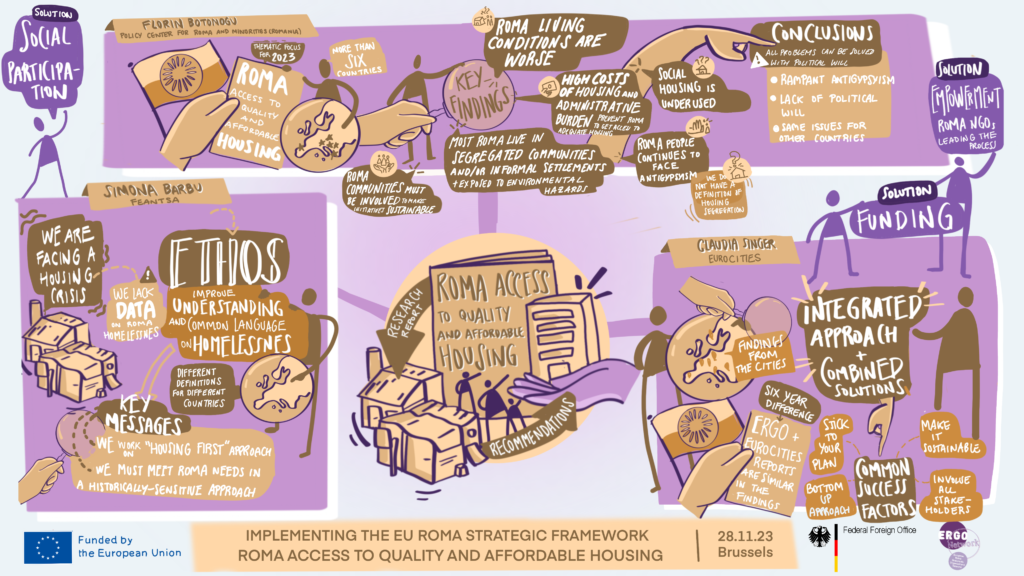
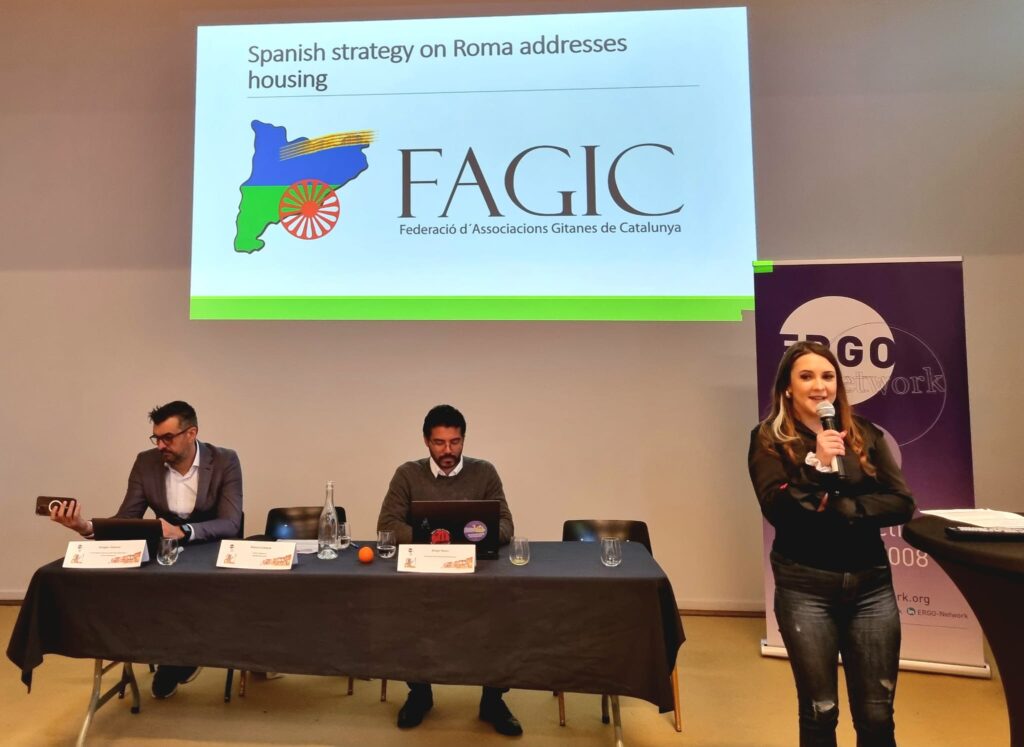
The event launched ERGO Network’s research report on “Roma access to quality and affordable housing”, based on six national case studies carried out in Bulgaria, the Czech Republic, Hungary, Romania, Slovakia, and Spain. Additional benchmarking evidence was provided by ERGO Network members in Albania, Bosnia and Herzegovina, Ireland, Kosovo, North Macedonia, and Türkiye. The main findings and recommendations aim to kick-start a dialogue with key decision-makers and stakeholders and aim to identify positive solutions to support better housing inclusion for Roma and inform the delivery of the EU Roma Strategic Framework and the Social Pillar, as well as other relevant policy initiatives.

The Key Messages of the report are:

  1. Roma living conditions are significantly worse than those of the majority, while most Roma experience de facto homelessness.
  2. Most Roma live in segregated communities and/or informal settlements, many exposed to environmental hazards.
  3. High costs of housing and overcomplex administrative procedures further reduce Roma access to housing.
  4. The Roma continue to face antigypsyism and forced evictions.
  5. Social housing holds great potential for Roma housing but is currently under-utilised.
  6. Roma communities and their civil society organisations must be involved to co-create sustainable ways forward.

With the adoption of the EU Roma Strategic Framework up to 2030, governments were asked to develop national Roma strategic frameworks both in EU Member States and Western Balkan countries. In addition, civil society in EU Member States received funding from the European Commission to monitor these national strategic frameworks’ elaboration and adoption process. To ensure an effective implementation of the national frameworks, robust and continued monitoring of the entire policy process should be ensured.

The second part of the event assessed the state of play of the National Roma Frameworks in the EU and Enlargement countries and their alignment with the EU Roma Strategic Framework on Equality, Inclusion, and Participation. It linked Council Recommendation, with a keen focus on the areas of housing and environmental justice, also looking at follow-up steps to ensure that implementation does not overlook these important aspects.

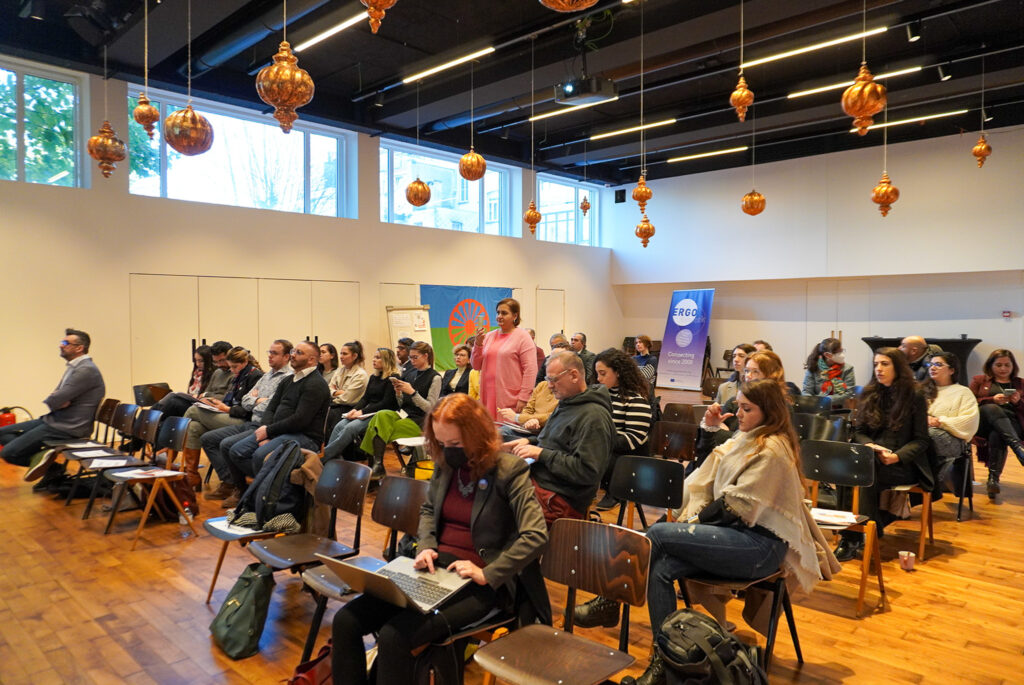
The conference was very well attended with over 75 on-site and online participants, and it brought together ERGO Network national members from the grassroots level in many European countries, other national practitioners, European civil society organisations, policy-makers from the EU and national levels, and other stakeholders.

If you attended this event or watched the recording, don’t forget to let us know what you think about it by filling out this brief Evaluation Form (project reference: 101104354; event title: ERGO Network Annual Policy Conference).

See more:

Visuals provided by Ale Listens and Draws

For more information about this event, please don’t hesitate to contact us: info@staging.ergonetwork.org

Research report on Roma access to quality and affordable housing

ERGO Network launches its research report on Roma access to quality and affordable housing

The European Roma Grassroots Organisations (ERGO) Network held its annual Policy Conference on 28 November, entitled “Implementing the EU Roma Strategic Framework. Roma access to quality and affordable housing.” Many Roma still live in informal settlements and segregated neighbourhoods, in inadequate dwellings and disastrous living conditions, with severe environmental consequences. Unable to meet ever-rising housing costs or to prove legal ownership of their home, they endure forced evictions, homelessness, and antigypsyism from local authorities, landlords, and neighbours.

The EU Roma Strategic Framework for Equality, Inclusion, and Participation 2020 – 2030 includes as one of its four sectoral objectives “Increase effective equal access to adequate desegregated housing and essential services”, while the Council Recommendation on Roma Equality, Inclusion and Participation features a comprehensive section on “Access to adequate desegregated housing and essential services”, calling on Member States to “ensure equal treatment of Roma people in access to adequate desegregated housing and essential services.” Ensuring access to housing and adequate services and providing support to the homeless are also extensively covered by the European Pillar of Social Rights (Social Pillar), the compass for Europe’s recovery, while it is also supported by Goals 6, 7, 11, 13 and 15 of the Sustainable Development Goals of the United Nations.

During 2023, ERGO Network conducted in-depth national case studies in six countries (Bulgaria, the Czech Republic, Hungary, Romania, Slovakia, and Spain), looking at the realities of Roma housing and living conditions, as well as at the key barriers the Roma face when trying to access quality and affordable housing in these countries. Additional benchmarking evidence was provided by our members in Albania, Bosnia and Herzegovina, Ireland, Kosovo, North Macedonia, and Türkiye. The main findings and recommendations were brought together in an EU synthesis report, launched in the framework of the above-mentioned event.

Key messages of the report:

  1. Roma living conditions are significantly worse than those of the majority, while most Roma experience de facto homelessness.

Urgent and significant investment is needed to improve the structural condition of the dwellings that most Roma inhabit, including their connection to utilities, in order to render them compliant with the United Nations definition of adequate housing.

  1. Most Roma live in segregated communities and / or informal settlements, many exposed to environmental hazards.

Countries need to develop comprehensive desegregation plans with clear targets and indicators, which should also tackle the legalisation of irregular housing situations and the environmental consequences stemming from the use of unsuitable locations.

  1. High costs of housing and overcomplex administrative procedures further reduce Roma access to housing.

Roma housing and energy poverty must be addressed through improving access to income and better regulation of the housing and utilities market; bureaucratic procedures should be simplified, including decoupling access to services from ID papers and a fixed address.

  1. The Roma continue to face antigypsyism and forced evictions.

Anti-bias training must be compulsory for all housing actors, including local authorities, coupled with strong anti-discrimination legislation and mechanisms; evictions should be a last resort and must entail due notice and the provision of decent alternative housing.

  1. Social housing holds great potential for Roma housing, but is currently under-utilised.

The social housing stock needs to be expanded and improved, while its allocation should follow a rights-based, housing-first approach, reducing conditionality and unaffordability and ensuring that vulnerable groups such as the Roma are prioritised.

  1. Roma communities and their civil society organisations must be involved, in order to co-create sustainable ways forward.

Policymakers and all housing actors must cooperate closely with Roma stakeholders and their civil society representatives to ensure evidence-based solutions, support disaggregated data collection, foster common understanding, and bridge cultural gaps.

With this research, we aim to kick-start a debate with policymakers on improving the availability, accessibility, affordability, quality, and inclusiveness of housing for Europe’s Roma.

For more information about ERGO Network’s work on Roma access to quality and affordable housing, please contact Senior Policy Adviser Amana Ferro.

Romani Language and Culture workshop for Civil Society

Register for the Romani Language and Culture workshop for Civil Society

We are delighted to invite you for a unique Romani Language and Culture workshop tailored for civil society organisations working with Roma communities or those genuinely curious about this minority and our language.

Event Details:

📅 Date: 6 December 2023

🕒 Time: 9.30-12.00

📍 Location: Mundo Matonge, Fairtrade Room

Workshop Highlights:

The Romani Language and Culture workshop provides a neutral space for attendees to gain a profound understanding of the controversies stemming from centuries of misinformation about Romani people. Through this experience, participants will delve into the intricacies of Romani culture, exploring the development of caste and group identities among Romani speakers. These identities are expressed through internal variants using Romani terms and external variants attributed by outsiders, often related to the word ‘Gypsy.’

During the workshop, participants will unravel the origins, meanings, and implications of these expressions in the daily lives of Romani speakers across various regions. The sessions will also shed light on the undocumented Romani customary law.

Key Workshop Components:

  • Romani language and its dialects
  • Culturally important rules and language formulas for engaging with the Romani community
  • Unscripted Roma customary law
  • Compelling stories from Juice Vamosi, a Romani language consultant with over 33 years of experience

Why Attend:

  • 📚 Better understanding of Roma and their various groups.
  • 🌍 Explore the history of Roma through language.
  • 🤲 Insight into Romani perceptions of life through Romani Law – Pachiv.
  • 🌏 Understand interlinkages between Romani language and history.
  • 👀 Gain a clear perception of how outsiders view Romani speakers.
  • 🤝 Overview of the common cultural heritage shared by Romani speakers.

We believe your participation in this workshop will foster mutual understanding and cultural appreciation.

The amount of places for this workshop is very limited. To secure your spot, please kindly fill in this registration form below and we will get back to you.

We look forward to your presence at this enlightening workshop.

Code of Ethics for the Portrayal of Minorities in the Media

Code of Ethics for the Portrayal of Minorities in the Media: A Success Story from Slovakia

We celebrate the remarkable achievements of our member organisation, the Roma Advocacy and Research Centre (RARC) in Slovakia. RARC, in collaboration with the civic association eduRoma, has introduced a groundbreaking initiative – the “Code of Ethics for the Portrayal of Minorities in the Media” – which has the potential to serve as a model for other European countries.

The Code of Minority Portrayal, developed in response to media outlets that have too often portrayed minorities insensitively, was the result of a collaborative effort during the Minority Journalism Academy, held on October 11 and 12, 2023. The Roma Advocacy and Research Centre spearheaded this initiative as part of the National Roma Coalition project.

Zuzana Havírová, the chair of the organisation, which addresses issues such as combating antigypsyism, emphasised the pivotal role of the media in shaping public perceptions. She stated, “The media plays an irreplaceable role in our society, and it turns out that it is extremely important how they reach out to the public. We often come across stories that are unjust towards minority communities, such as the Roma or LGBTI+ people. Sometimes, the media may not even know that their stories may harm a minority, so we agreed that it is necessary to have basic principles for portraying minorities in the media. This document is open for discussion, and we hope to expand it with further suggestions. It can make us more respectful and tolerant of each other.”

The Minority Journalism Academy, an educational venture by the online magazine Romano Forum, published by the civic association eduRoma, is at the heart of this transformative movement. Vlado Rafael of eduRoma explained: “The Minority Journalism Academy aims to provide journalists, bloggers, journalism students, columnists, and those who shape national public discourse basic information about the position of different minorities living in Slovakia. One of our primary goals is to improve the overall perception of minorities in our country. As a result of the first year of our academy, we have produced a draft code of ethics for portraying minorities in the Slovak media. We intend to engage with journalists to refine and expand this code, hoping media outlets will gradually adopt and adhere to its principles.”

In the forthcoming period, methodological material will be developed to explain each aspect of the Code in greater detail. This initiative aspires to see the code embraced by as many media outlets as possible. This initiative aims to gradually develop a code that will be adopted by as many media as possible, so that the media’s portrayal of minorities is fair, sensitive and objective at the same time.

ERGO Network is proud to have dedicated members like RARC, who are actively contributing to the cause of promoting ethical and inclusive media portrayals of minorities. We hope to witness more such success stories within our member countries, furthering our mission to foster understanding, respect, and equality for all.

`
Ana Rozanova – Page 14 – ERGO Network

By continuing to use the site, you agree to the use of cookies. more information

The cookie settings on this website are set to "allow cookies" to give you the best browsing experience possible. If you continue to use this website without changing your cookie settings or you click "Accept" below then you are consenting to this.

Close