Promoting Inclusivity: Roma and Non-Roma Youth Leading Social Change
On December 7, 2023, from 10:00 AM to 1:00 PM, we welcome you to join us at Mundo Matonge, located at Rue d’Edimbourg 26, in the Conference Room. The occasion is the “Inclusive Vibes: Roma and non-Roma Youth Promoting Social Change,” whereby you will have an opportunity to explore how together we can make a social change. Specifically, the event is to present and discuss a dynamic and innovative methodology of a Roma NGO aimed at empowering young Roma and transforming non-Roma youth’s perceptions towards the Roma community.
Inclusive Vibes will embark on a journey of social transformation. During the event, you will hear success stories from local communities, meet community change-makers, and discuss possible replication of such a methodology within other geographical and social constellations.
This initiative is known as the Erasmus + project ‘Roma Youth Bring Change, was co-implemented ` and coordinated by the Autonomia Foundation (Hungary) and RROMA (North Macedonia), both organizations are members of the ERGO Network.
The event has three core objectives:
Showcasing Successful Solutions: We aim to present the project’s accomplishments and innovative approaches that have evolved through gamification and community campaigns. We intend to inspire others by demonstrating effective strategies for addressing social issues through engaging methods.
Building Collaborative Networks: Through interactive discussions, we aim to facilitate connections and partnerships that can lay the groundwork for future initiatives dedicated to social change and inclusivity.
Empowering Youth as Change Agents: By sharing the joyful and practical approaches employed in the project, we hope to motivate and equip young individuals with the knowledge and tools they need to become proactive change agents in promoting inclusivity and social change.
ERGO Network Sends Anti-Racism Manifesto to Political Parties Ahead of European Parliament Elections 2024:
We Call on European Political Parties to Pledge Support and Combat Discrimination
ERGO Network has taken a proactive stance in the lead-up to the pre-European Parliament elections 2024, signalling its commitment to fighting discrimination, racism, and the marginalization of racialized minorities in Europe, particularly the Roma community. In an effort to engage with political groups and garner their support for this crucial cause, we released a political Manifesto, consisting of 10 key demands.
Supported by its members and partner organisations, ERGO Network’s Manifesto seeks to address the pressing issue of racial discrimination and exclusion. We are actively inviting European political parties to endorse the Manifesto and thereby demonstrate their unwavering commitment to combating racism.
By doing so, these parties pledge to prioritise the fight against racism in their campaign agendas and subsequent activities following the European Parliament elections. ERGO expects that this commitment will be carried forward not only within the parties themselves but also in their collaboration with EU institutions and national governments.
ERGO Network’s Manifesto stands as a powerful call to action, urging political parties to take a more prominent role in mainstreaming the fight against racism and discrimination across Europe. By signing this Manifesto, parties acknowledge the urgent need to address these issues and work collaboratively to bring about positive change.
While ERGO Network extends its invitation to all European political parties, the Manifesto was sent to the Alliance of Liberals and Democrats for Europe (ALDE) Party, the European Green Party (European Greens), The European People’s Party Group (EPP Group) and the Party of European Socialists (PES).
This initiative is a testament to our dedication to improving the lives of marginalised communities, particularly the Roma, and it underscores the importance of addressing racism and discrimination on a political level. As the European Parliament elections draw near, our Manifesto sets a significant precedent, pushing for a more inclusive and anti-racist Europe.
For further information and inquiries please contact ERGO Network’s Senior Advocacy Officer Isabela Mihalache at i.mihalache@staging.ergonetwork.org.
Register now for ERGO Network’s Annual Policy Conference!
At a time when Europe is facing multiple crises such as the aftermath of the Covid-19 pandemic, the ongoing war in Ukraine, and the ever-rising cost of living, many Roma find themselves experiencing worsening poverty and exclusion, dire living conditions, and widespread antigypsyism.
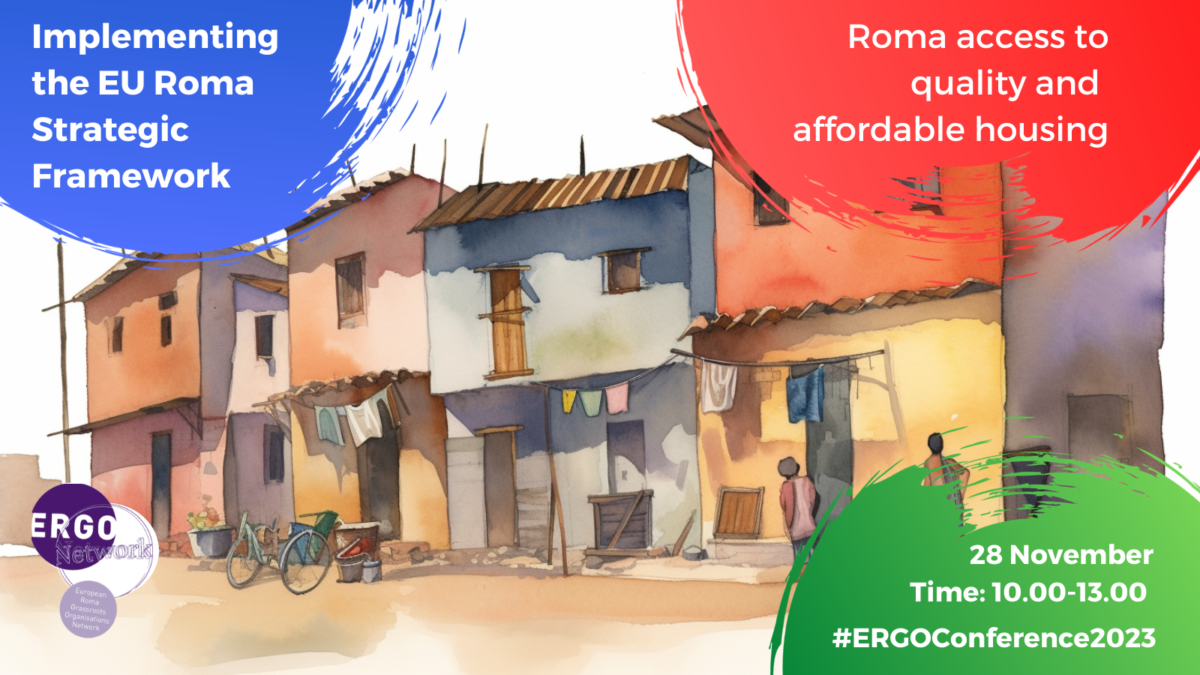
The event will serve to launch ERGO Network’s research report on “Roma access to quality and affordable housing”, based on six national case studies carried out in Bulgaria, the Czech Republic, Hungary, Romania, Slovakia, and Spain, with additional benchmarking evidence from Albania, Bosnia and Herzegovina, Ireland, Kosovo, North Macedonia, and Türkiye.
The conference will also provide insights into the status of implementation of the National Roma Frameworks both in the EU and enlargement countries, their alignment with the EU Roma Strategic Framework on Equality, Inclusion, and Participation and linked Council Recommendation, with a particular focus on housing and environmental justice.
The event will bring together ERGO Network members from the grassroots level, EU policy-makers from across the institutional spectrum, as well as other relevant EU and national stakeholders.
We’re looking forward to counting you among the participants, so that together we can build positive, sustainable, evidence-based policy solutions that work!
Discrimination based on work and descent is any distinction, exclusion, restriction, or preference based on inherited status such as caste, including present or ancestral occupation, family, community or social origin, name, birthplace, place of residence, dialect and accent that has the purpose or effect of nullifying or impairing the recognition, enjoyment, or exercise, on an equal footing, of human rights and fundamental freedoms in the political, economic, social, cultural, or any other field of public life. This type of discrimination is typically associated with the notion of purity and pollution and practices of untouchability, and is deeply rooted in societies and cultures where this discrimination is practised” (Draft Principles and Guidelines for the Effective Elimination of Discrimination based on Work and Descent, Human Rights Council 11th Session, 18 May 2009)
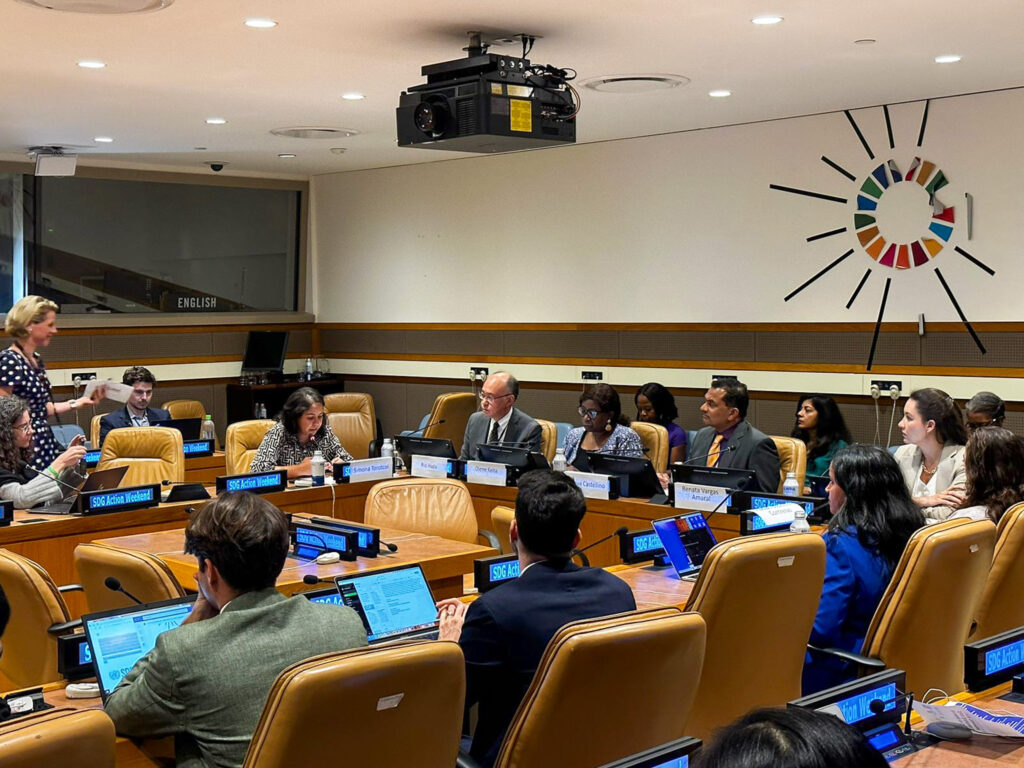
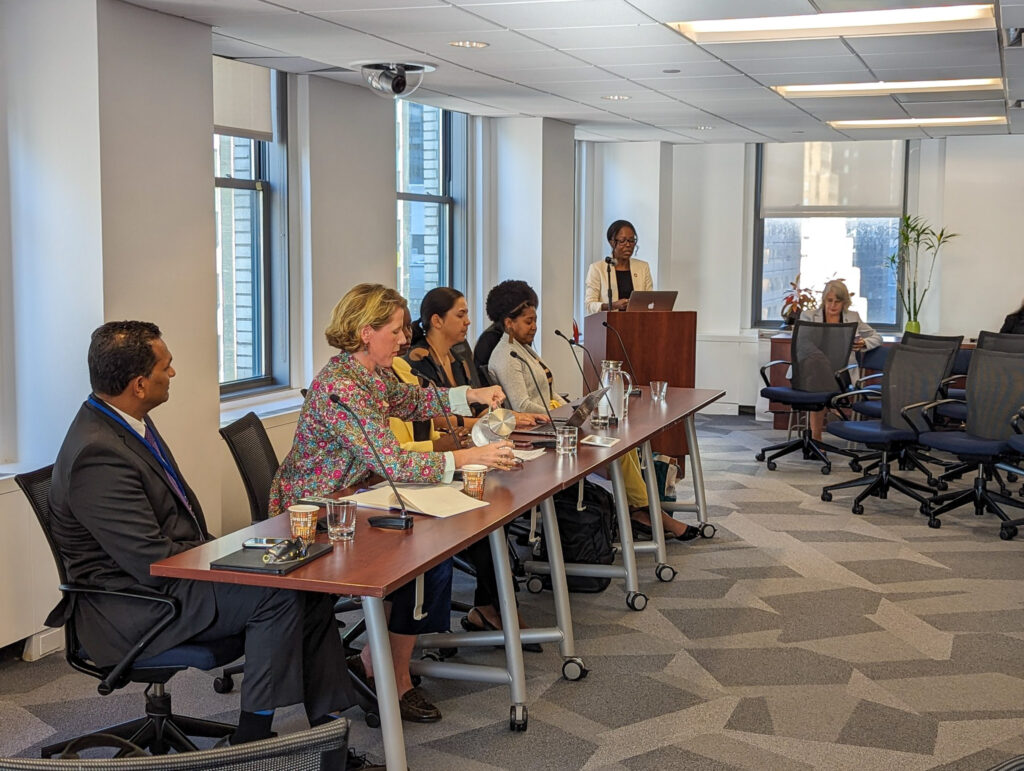
The SDG Action Weekend provided opportunities for stakeholders, UN entities, and Member States to convene at the United Nations Headquarters and make specific commitments to drive SDG transformation from now until 2030. On September 16, speaking at “Breaking Down the Barriers to Leave No One Behind” GFoD delegate Beena Pallical emphasized the importance of the UN and member states embracing the SDGs, particularly addressing communities discriminated against based on work and descent, including Dalits, Roma, and other marginalised groups.
During the “From the SDG Summit to the Summit of the Future: Building the UN We Need” session, Paul Divakar, the convener of GFoD, stressed the significance of combating discrimination and exclusion of communities such as the Roma in Europe, Haratins in Africa, Quilambola in Brazil, Buraku in Japan, and other marginalised communities.
She addressed the critical issue of the lack of disaggregated data for Roma and other Communities Discriminated on Work and Descent, which affects the implementation and reporting of SDGs and ongoing policy work within the European Union related to Roma communities.
Disaggregated data is essential for understanding inequalities and evaluating progress in Roma inclusion policies. It empowers decision-makers, holds civil society accountable, and enables communities to advocate for changes in policies directly affecting them. Simona stressed the importance of engaging Roma communities in data collection, analysis, and usage, moving beyond formal consultations.
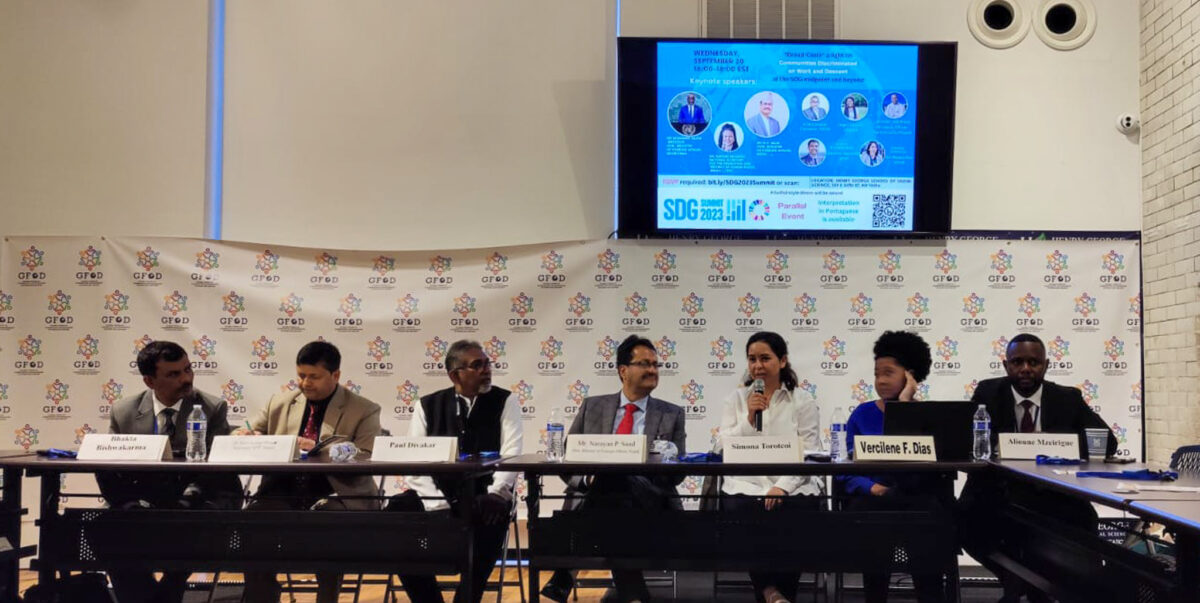
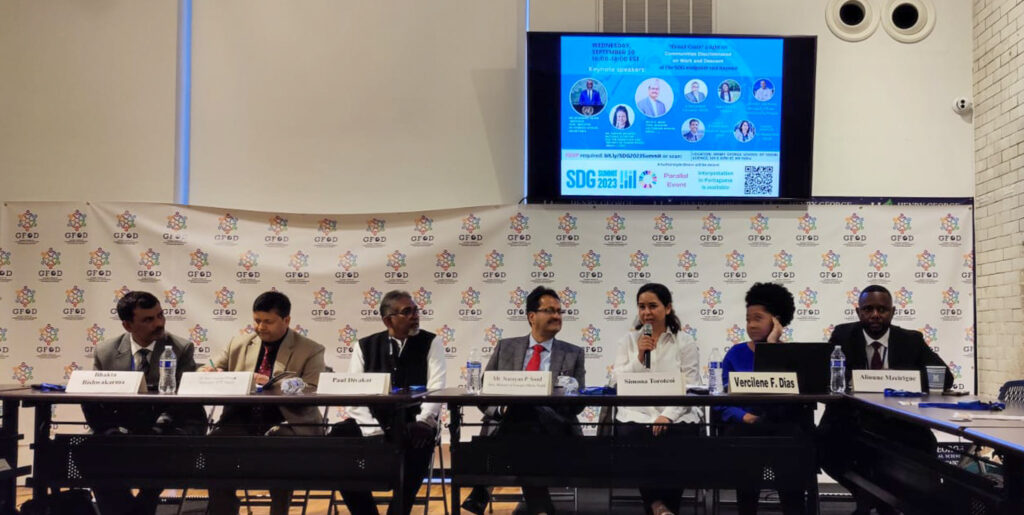
On the 20th of September, GFoD organised a side event titled “Broad-Caste” A light on Communities Discriminated on Work and Descent at the SDG midpoint & beyond. It brought together key governmental representatives, such as the Honourable Minister of Foreign Affairs of Nepal Mr N. P Saud, who pointed out the fact that the SDGs do not mention discrimination based on work and descent and this poses significant challenges to achieving the SDGs agenda: “The world cannot move towards peaceful and inclusive societies and achieve the 2030 Agenda without addressing the root causes of discrimination which more than 270 million people”.
The Minister emphasized that this discrimination affects more than 270 million people globally, extending beyond specific geographical areas and impacting communities like Haratine in the Sahel, Forgeron in West Africa, Roma in Europe, Burakumin in Japan, Dalits in South Asia, Quilambolo and Palenque in South America, and others.
To address these shortcomings and rectify the omission of Communities Discriminated on Work and Descent (CDWD) in key UN frameworks, the Minister expressed full support for GFoD’s efforts to work toward a UN Resolution addressing the discrimination faced by these communities. Nepal also expressed readiness to collaborate with concerned stakeholders.
The following day, GFoD co-organised another side event in partnership with UNDP, UNFPA, UNWomen, and Minority Rights International, titled “Anti-racism in UN Programming” (recorded). This event focused on what UN agencies can and should do to combat racism and include minorities in their policies and programs. Simona discussed the intersectional discrimination and oppression experienced by women from Communities Discriminated on Work and Descent (CDWD), stemming from overlapping social constructs of ability, age, work, caste, class, and gender.
She urged the UN and its agencies to recognise the challenges faced by women from CDWD communities and adopt an intersectional approach in all programmes and policies, both within the United Nations and in their external programs. Simona also proposed establishing a working group to examine the normative standards and lived realities related to the protection of women from CDWS.
Including Roma voices in European Youth Policies: An evaluation of inclusion efforts
The Roma community is one of Europe’s most disadvantaged and excluded groups. They often face ongoing social exclusion and discrimination and have limited access to opportunities. This survey will examine how well young Roma people are included in European youth policies, and how well they participate in these policies and are represented. Our objective is to understand which areas need improvement and to suggest strategies to increase the participation of Roma youth in shaping and benefiting from youth policies throughout Europe.
Clearly pinpointing the gaps in awareness and understanding, this survey will help us see what could be stopping these policies from working well and Roma youngsters from taking part in them. It will check how well these measures are working to tackle the special challenges that Roma youth face and how much their ideas and perspectives are considered when shaping national youth initiatives.
The results of the survey will give important advice to policymakers to make sure that Roma youth are more included, get more involved, and help make society fairer and more together in the European Union and in our own countries.
European Policies Overview:
1. European Youth Strategy: The European Youth Strategy sets out the framework for EU youth policies and initiatives. It aims to provide young people with better opportunities for education, training, and employment, as well as to support their active participation in democratic processes. The strategy focuses on promoting social inclusion, health, well-being, and intercultural understanding among young people.
2. Erasmus+ Programme: Erasmus+ is one of the EU’s flagship programs that supports education, training, youth, and sport. Under the youth component, Erasmus+ offers opportunities for young people to participate in mobility projects, youth exchanges, volunteering activities, and youth worker training. The program aims to enhance the skills, employability, and intercultural awareness of young people.
3. European Solidarity Corps: The European Solidarity Corps provides young people with opportunities to volunteer or work on projects that benefit communities and people across Europe. It offers volunteering placements, traineeships, and job opportunities for young people to contribute to addressing societal challenges while developing valuable skills and experiences.
4. Youth Employment Initiative (YEI): The Youth Employment Initiative aims to address youth unemployment in regions with high levels of youth joblessness. It provides funding for measures and projects that support young people in finding employment, training, or education opportunities.
5. Youth Guarantee: The Youth Guarantee is a commitment by EU member states to ensure that all young people under the age of 25 years receive a good-quality offer of employment, continued education, an apprenticeship, or a traineeship within four months of becoming unemployed or leaving formal education.
6. European Youth Week: Organized by the European Commission, the European Youth Week is a biennial event that brings together young people and policymakers to discuss youth-related issues, share experiences, and engage in various activities and workshops.
7. Structured Dialogue with Young People: Structured Dialogue is a process that allows young people to engage with policymakers on topics that matter to them. It involves consultations and discussions with young people, youth organizations, and decision-makers to shape youth policies and initiatives.