Annual Sustainable Growth Survey 2023: What’s in it for Europe’s Roma?

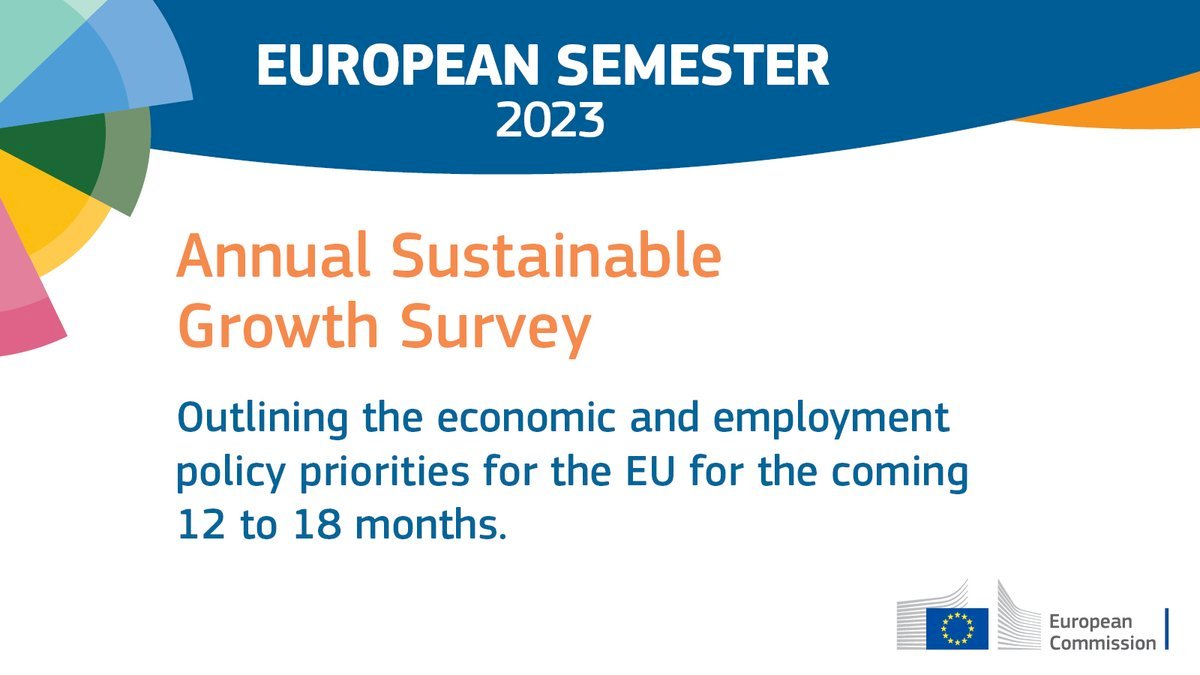
European Commission releases Annual Sustainable Growth Survey (ASGS) 2023: What’s in it for Europe’s Roma?

On 22 November 2022, the European Commission published the Annual Sustainable Growth Survey 2022, accompanied by the draft Joint Employment Report 2022 (among other annexes), as part of the Autumn Package launching the European Semester 2022. The Annual Sustainable Growth Survey reaffirms that “the European Semester and the Recovery and Resilience Facility continue to provide a robust framework for effective policy coordination in view of the current challenges”, while it also confirms the commitment to the four complementary dimensions of the European Semester: environmental sustainability, productivity, fairness, and macroeconomic stability.

  • Read our full response to Autumn Package here!

ERGO Network warmly welcomes the explicit mention of the Roma in this year’s Annual Sustainable Growth Survey (page 11), in the context of supporting their access to employment. We further appreciate wording about the implementation of the Union of Equality, which includes important strategies such as the EU Anti-Racism Action Plan and the EU Roma Strategic Framework for Equality, Inclusion and Participation among others. While these references are minimal, they are nonetheless commendable after two years in a row where the ASGS made no reference to the Roma or to these important strategies. However, disappointingly, discrimination, racism, or antigypsyism are not mentioned at all.

As every year, the main focus of the document is on the green and digital transitions. Social concerns are dealt with under the Fairness section (one of the four dimensions of the European Semester), which is rather narrowly dedicated to employment and skills. Nevertheless, we appreciate calls to strengthen collective bargaining and to raise wage levels, to improve the quality and accessibility of healthcare and long-term care systems, and to preserve and improve de adequacy of social safety nets, including pensions. It is a pity, however, that access to adequate and affordable housing is not mentioned, and that education continues to be understood in a limited sense of providing skills for jobs. We equally salute language about delivering affordable energy and mitigating the economic and social impact of high energy prices on vulnerable households.

We are very pleased to see Europe’s Roma mentioned multiple times in the Joint Employment Report, concerning issues such as their heightened risk of experiencing poverty and social exclusion (including that of children), gaps in educational outcomes, early school leaving, school segregation, discrimination in accessing healthcare, and labour market integration. Additionally, strong links are made to the EU Strategic Framework on Roma Equality, Inclusion, and Participation, as part of the Union of Equality. Very disappointingly though, there is no mention of antigypsyism or racism, and only four references to discrimination.

The ASGS reaffirms the European Commission’s commitment to “an inclusive process and the timely involvement of social partners and other relevant stakeholders during the European Semester cycle”, calling on Member States to “engage actively […] in particular representatives of civil society organisations, through regular exchanges” (our bold). This is very positive, as are the several references to civil society in the draft Joint Employment Report.

The ASGS also provides some clarity about the future of the European Semester, as well as what are the key steps and milestones to be expected for 2023. This year’s Semester will include the implementation of the Recovery and Resilience Facility, that of the European Pillar of Social Rights Action Plan, and that of the Sustainable Development Goals.

ERGO Network will continue to advocate for a stronger focus on Roma rights and inclusion much more in focus in the delivery of these initiatives, and for stronger synergies between the European Semester and the EU Roma Strategic Framework for Equality, Inclusion, and Participation.

For more information about ERGO Network’s work on EU social inclusion and employment policy (European Semester, European Pillar of Social Rights, Sustainable Development Goals etc), please contact Senior Policy Adviser Amana Ferro.

Briefing on Discrimination and Social Exclusion of Roma with Disabilities

BRIEFING ON DISCRIMINATION AND SOCIAL EXCLUSION OF ROMA WITH DISABILITIES

This briefing is prepared jointly by the European Disability Forum and ERGO Network

Studies from 2016 show that at least 15% of Roma people have a disability, amounting to over 1.6 million people between the European Union, the Western Balkans and Turkey. The available data highlights a high prevalence of disabilities among Roma communities, also due to the health inequality gap and poorer health condition of the Roma population. However, the information on Roma with disabilities is very limited.

To gain a better understanding of the discrimination and social exclusion that Roma with disabilities face in Europe, together with the European Disability Forum, we have conducted a research study based on the data collected by the EU Agency on Fundamental Rights (FRA) and our own research. The outcomes and analysis are published in a joint EDF-ERGO Network briefing on discrimination and social exclusion of Roma with disabilities.

The briefing highlights a comparatively high risk of intersectional and multiple discrimination for Roma with disabilities, with the disability marginalisation adding to the systemic racial discrimination and antigypsyism that keeps them at the margins of society. Discrimination affects their access to basic services such as inclusive education, healthcare and long-term care, their integration into the job market and, in turn, their overall socio-economic condition.

Findings

Available data clearly show that Roma with disabilities encounter more obstacles than the average to complete quality education, 81% of them dropping out of education early. Early school abandonment and inequalities in educational outcomes are partly encouraged by the bullying and harassment that young Roma people with disabilities endure in school settings and that, according to the FRA, affect 27% of them, as well as by a general trend to falsely diagnose Roma children with developmental and learning disabilities, leading them to be placed in segregated schools with reduced curricula.

As a result of the low average educational attainment, young Roma with disabilities encounter numerous issues entering the labour market. Within the age bracket 16-24, 63% of Roma with disabilities is neither in education, employment or training – with the percentage raising to 84% for the people of the same age with high support needs. The situation is further worsened by discrimination during job search and on the workplace: many respondents claimed to have felt discriminated against when looking for a job, largely because of being Roma.

The limited access to education, lower access to employment, and unequal access to social protection make so that Roma with disabilities stand an exponentially higher chance of living below the poverty line: 82% of persons with disabilities with moderate support needs, and 90% with high support needs, are at risk of poverty. The marginalisation of Roma with disabilities also reflects on their access to the housing market: inability to pay rent and anti-Roma discrimination when looking for housing are part of the reason why 55% of Roma with disabilities experience housing deprivation and 75% live in overcrowded housing.

The Roma experience an overall poorer state of health than the majority of the population, with a higher prevalence of chronic illnesses and a lower life expectancy. Deterring them from accessing healthcare and long-term care are not only the high cost of treatments and the lack of information, but also discriminatory attitudes informed by antigypsyism.

The ethnic discrimination intensifies for those with some form of disability: 18% of Roma with disabilities with moderate support needs and 17% of Roma with disabilities with high support needs felt discriminated against in accessing healthcare, compared to 12% of Roma without disabilities. It is also important to note that the inaccessibility of healthcare system and healthcare services create another discriminatory barrier for Roma with disabilities.

Read the full Briefing here

Conclusions

While some of the issues highlighted in our briefing could be addressed by separate Roma and disability policies, the current legal framework adopted by the EU does not offer a comprehensive protection for people facing intersectional and multiple discrimination, e.g. on grounds of ethnic discrimination and disability. Because of this, Roma with disabilities are left with limited protection of their rights and limited legal remedies to respond to their marginalisation.

We therefore, together with European Disability Forum, recommend the EU and Member States to adopt targeted actions, in particular:

  • Increase the visibility of Roma with disabilities and address policy gaps at the European and national levels
  • Adopt a comprehensive EU equality law to prohibit intersectional and multiple forms of discrimination
  • Collect equality disaggregated data on people living in institutions in the EU;
  • Invest in housing first initiatives and targeted outreach measures to improve access to healthcare and long-term care services for Roma with disabilities;
  • Involve Roma with disabilities and their representative organisations in designing, implementing and monitoring policies that affect them.

For more information about ERGO Network’s work on Roma health and related fields, please contact Senior Policy Officer Isabela Mihalache and our Senior Policy Adviser Amana Ferro.

Research report: Roma access to healthcare and long-term care

ERGO Network launches its research report on Roma access to healthcare and long-term care

The European Roma Grassroots Organisations (ERGO) Network held its annual Policy Conference on 23 November, entitled “Implementing the EU Roma Strategic Framework. Roma access to healthcare and long-term care.” A significant health inequality gap exists between the Roma and the majority population, persisting across every area of physical and mental health and wellbeing, including rates of suicide, disability, life expectancy, and infant mortality. The Covid-19 pandemic laid bare and worsened the pre-existing dire situation of Roma health in Europe.

The EU Roma Strategic Framework for Equality, Inclusion, and Participation 2020 – 2030 includes as one of its four sectoral objectives “Improve Roma health and increase effective equal access to quality healthcare and social services”, while the Council Recommendation on Roma Equality, Inclusion and Participation features a comprehensive section on “Health and access to quality healthcare and social services”, calling on Member States to “ensure equal access without barriers to quality healthcare and social services, especially for those groups that are most at risk or those living in marginalised or remote localities.” Ensuring access to health and long-term care is also extensively covered by the European Pillar of Social Rights, the compass for Europe’s recovery, while it is also supported by Goal 3 of the Sustainable Development Goals of the United Nations.

During 2022, ERGO Network conducted in-depth national case studies in six countries (Bulgaria, the Czech Republic, Hungary, Romania, Slovakia, and Spain), looking at the main determinants of Roma health as well as at the key barriers the Roma face when trying to access healthcare and long-term care services in these countries. The main findings and recommendations were brought together in an EU synthesis report, launched today in the framework of the above-mentioned event.

Key messages:

1. In all 6 countries, social determinants greatly influence a poor Roma state of health.

Tackle unsanitary dwellings and living conditions, exposure to environmental hazards, lack of adequate nutrition, dire poverty and material deprivation, and unhealthy working conditions.

2. High costs of healthcare and long-term care and gaps in health insurance coverage are significant deterrents for the Roma to seek care.

Support access to universal health insurance for all including the Roma and make healthcare and long-term care free or affordable at the point of use, including specialist care.

3. Limited healthcare and long-term care infrastructure and staff shortages are prevalent in rural and remote Roma communities.

Invest in an adequate supply of medical and care facilities, as well as qualified personnel, making healthcare and long-term care available to people where they live.

4. Roma health mediators play a key positive role which deserves better support.

Health mediators must be Roma themselves, anchored in the communities they serve but formally employed by the national health system with adequate pay, ongoing training, and due recognition.

5. The Roma continue to face widespread antigypsyism in healthcare and long-term care.

Combat prejudices and stereotypes within medical services and care facilities, ending segregation and ensuring anti-bias training and compliance with anti-discrimination legislation.

6. Roma communities and their civil society organisations must be involved in a bid to build trust and improve take-up.

Policy-makers, as well as healthcare and long-term care professionals, must cooperate closely with Roma stakeholders and their representatives, to ensure evidence-based solutions.

With this research, we aim to kick-start a debate with policy makers on how to improve the availability, accessibility, affordability, quality, inclusiveness, and take-up of healthcare and long-term care services by Europe’s Roma, including in the framework of the European Pillar of Social Rights Action Plan, the European Care Strategy, and the announced European initiative on Mental Health in 2023, among others.

For more information about ERGO Network’s work on Roma access to healthcare and long-term care, as well as on the European Care Strategy and related fields, please contact Senior Policy Adviser Amana Ferro.

ERGO Network response to the Spring Package 2022 – What’s in it for Europe’s Roma?

European Commission releases Spring Package 2022 – What’s in it for Europe’s Roma?

On 23 May 2022, the European Commission published the so-called Spring Package, comprising the 27 Country Reports, 27 Country-Specific Recommendations, and the accompanying Communication on the Spring Package, in the framework of the 2022 European Semester. This marks a return to the 2020 European Semester procedure, as – exceptionally – 2021 did not feature Country Reports or Country-Specific Recommendations. ERGO Network and its national members have reviewed the Package, to see to which extent it explicitly mentions Roma rights and inclusion, as well as ethnic minorities, discrimination, racism, and the role of civil dialogue.

Access the full analysis here.

Key Findings

  1. The accompanying Communication highlights the Roma as one of the most affected groups by the Covid-19 pandemic and speaks of improving their labour market inclusion.
  2. 7 Country Reports include references to the Roma (BG, HR, CZ, HU, RO, SK, SI) in 2022, which is one more than in 2020, but still insufficient as Roma live in 26 EU Member States.
  3. Only one Country-Specific Recommendation (HU) mentions the Roma, a slight improvement from 2020 (the first year with no Roma CSRs since 2012), but less than pre-2020.
  4. Ethnic minorities, discrimination, and racism are absent from both sets of documents, with only discrimination mentioned twice each in the Country Reports for 3 countries (BE, HR, IE).
  5. Civil society organisations were not associated to the drafting of the Country Reports, and the Spring Package references to their role are few and vague (7 Country Reports, 1 CSR).

Overall, while our members welcome references to Roma communities in some countries, they lament that most of the Spring Package 2022 doesn’t explicitly mention them, whereas the Roma are present in all Member States except Malta, and experience rates of poverty and social exclusion of over 80% in all of them except the Czech Republic. This situation was exacerbated by the aftermath of the Covid-19 pandemic, the war in Ukraine, and the rising cost of living and energy price spikes. As the Package itself highlights these very challenges, it would have warranted more attention paid to one of Europe’s most left-behind communities.

The recurrent focus on supporting just transitions and mitigating the consequences for vulnerable groups is very positive, however it is our members’ experience that, unless the Roma are explicitly named as key target beneficiaries of support measures, mainstream initiatives and dedicated national and EU funds end up not reaching them. Europe’s Roma must be specifically prioritised in the EU’s Recovery Package and associated funds, if the EU is serious about delivering on its commitments for Roma equality, participation, and inclusion.

Our members equally express disappointment that issues of discrimination and antigypsyism are not present in the Package, as these have increased in recent years, and even more so during the pandemic. The fact that the country analyses and recommendations do not seek to establish explicit synergies with the EU and national Roma Frameworks is a tremendous missed opportunity.

Finally, they deplore the lack of recognition and support given to civil society organisations in the documents, given that most of them are not only on the frontlines, providing essential support to communities in need, but they equally possess the knowledge, expertise, and direct links to beneficiaries which are needed to inform the design of public policies and ensure both ownership and effectiveness of interventions.

For more information about ERGO Network’s work on the European Semester and associated frameworks (European Pillar of Social Rights, Sustainable Development Goals etc), please contact Senior Policy Adviser Amana Ferro.

REPORT: PECAO Synthesis Report on Antigypsyist Online Hate Speech

REPORT: PECAO Synthesis Report on Antigypsyist Online Hate Speech

Today we are happy to present you with the most recent work – PECAO Synthesis Report on Antigypsyist Online Hate Speech.

The Peer Education to Counter Antigypsyist Hate Speech Online project focuses to address and counter antigypsyist hate speech online by working with young people, using a combination of peer education and monitoring in order to obtain two-fold results: the peer education methodology serves the purpose to achieve a direct change in attitudes and actions of a high number of young people, and the monitoring to contribute to better understanding and a more systemic change of policies through advocacy based on the results.

ERGO network acknowledges the contribution of all peer educators engaged in the project and would like to thank all of them!

This report was elaborated by Ileana Rotaru, assoc. prof. PhD habil. of West University of Timisoara, research expert of Nevo Parudimos Association and responsible for the research instruments and methodology elaborated and applied for the purpose of the PECAO project.

The report represents a deliverable of the PECAO project in relation to the project’s overall objectives:

• To reach out to at least 2000 young people in Spain, Hungary, Czech Republic, Romania, Bulgaria, Ukraine, Italy, France, North Macedonia and Albania through peer education activities in universities or youth clubs to raise their awareness of the adverse impact of hate speech on Roma and to
empower them to recognise and report hate speech online.

• To empower 50 young Roma peer educators in 10 countries to monitor hate speech in online media and report cases of hate speech to IT companies, national equality bodies and relevant state institutions to reinforce implementation of anti-discrimination legislation. Their work will lead to national datasets of at least 150 cases, as well as at least 50 reported cases.

• To advocate towards national and EU decision-makers for anti-discrimination policies that take into account the online sphere as well as
antigypsyism as a bias motivation for hate speech and hate crime.

• To use the experiences of peer educators and results of the monitoring to raise awareness of other stakeholders (wider civil society, educational practitioners, young people) of antigypsyist hate speech in online media and the urgency to counteract.

When it comes to the Roma people: The people most suffering under hate speech are obviously those targeted – Roma, citizens of Europe. The project should have a positive long-term impact on them if hate speech content is reduced in online media as a result of this project. Less hate speech online means less incitement to violence and less stereotyping by the majority of society, leading to a general decrease in antigypsyism.

Read the full report HERE.


This publication was funded by the European Union’s Rights, Equality and Citizenship Programme (REC 2014-2020) and Google.Org Impact Challenge on Safety. The European Commission’s and Google.Org’s support for the production does not constitute and endorsement of the contents, which reflect the views of the authors only, and the European Commission and Google.Org cannot be held responsible for any use which may be made of the information contained there.

`
Publications – Page 4 – ERGO Network

By continuing to use the site, you agree to the use of cookies. more information

The cookie settings on this website are set to "allow cookies" to give you the best browsing experience possible. If you continue to use this website without changing your cookie settings or you click "Accept" below then you are consenting to this.

Close