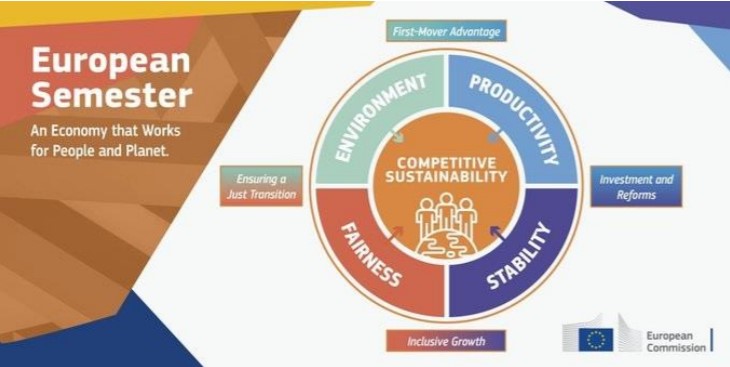
ERGO Network response to the Winter Package 2020

ERGO Network response to the Winter Package 2020

On 26 February 2020, the European Commission published the so-called Winter Package, comprising the 28 Country Reports 2020 (including the United Kingdom), and the usual Communication on Country Reports, in the framework of the 2020 European Semester.

Download the response here

A Place for All

A Place for All – ERGO Network’s employment campaign

ERGO Network is launching its new campaign ‘A Place for All’, shedding light on the important role that employers play in supporting the employment of Roma and other ethnic minorities, as well as on the benefits that an inclusive workforce.

Roma employment – it should be obvious – is important for Roma themselves, for the employers and for society as a whole.

  • Improving Roma access to quality employment breaks the cycle of poverty, discrimination and exclusion and gives people back their dignity.
  • Getting more Roma into employment helps counter widespread stereotypes based on antigypsyism.
  • Having more employed Roma creates positive role models for the inclusion of Roma communities.
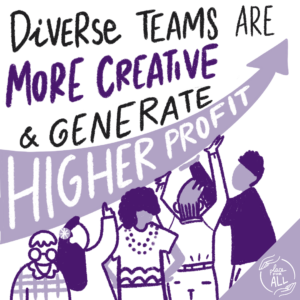
  • A diverse workforce increases emotional intelligence, creativity and productivity in any workplace.
  • A diverse workforce builds trust with minority customers and service users.
  • Hiring more Roma is a smart economic choice, improving growth and combatting demographic change.


Through the Place for All campaign, ERGO Network will therefore raise employers’ awareness of the benefits of an inclusive and diverse workplace as well as of the motivation and competencies of young Roma. It will also highlight employers’ good practices in diversity and inclusion and encourage others to follow their example.

How will the campaign work?

The main focus of the campaign will be on employers who have been approved by ERGO Network members as inclusive employers and who sign the Place for All pledge, reaffirming their commitment to making their workplace a place for all. These employers will be awarded a badge and will be promoted by the ERGO Network. This will include sharing of their good practices, providing further support and generally giving them visibility. In the future, once a group of employers in several countries has been awarded the badge, ERGO Network members can furthermore organize peer learning, networking and exchanges between these employers.

To not only highlight employers, but also Roma employees who overcame the huge hurdle of antigypsyism – manifesting itself in poverty, lack of education and discrimination by employers – we will at the same time feature inspiring stories of Roma employees from different countries.

Follow the campaign on its Facebook page and ERGO Network’s social media accounts to get to know the first awarded employers and inspiring stories!
Do you know an employer who fits our profile? Contact info@staging.ergonetwork.org or ask them to sign up for the badge directly on our website: www.ergonetwork.org/employment.


The campaign has been made possible thanks to the financial support of the European Commission’s EaSI Programme.

Case studies of ERGO members

Case studies of ERGO Network members

During 2019, in the framework of our EaSI funded work programme ‘Roma Included in Social Europe’ (RIISE) ERGO Network members in Slovakia, Romania, Bulgaria and Hungary conducted case studies to shed light on specific challenges relating to Roma integration in their countries.

In Slovakia, the Roma Advocacy and Research Centre looked into the challenge of indebtedness of Roma and how a change in the bankruptcy law, which was not particularly focused at Roma, greatly improved their financial inclusion. You can read the case study here.

In Hungary, Autonomia Foundation spoke to mid-sized employers in one region of the country to learn more about their attitude towards employees of Romani origin and their employment and hiring capacity of Romani workers. Read the case study here.

Our Bulgarian member Integro Association discusses the impact of EU Operational Programs on the shrinking Roma civil society in Bulgaria. Read Integro’s case study here.

Finally, our Romanian member organization Nevo Parudimos explored the phenomenon of school drop-out or early school-leaving as well as to identify its reasons among disadvantaged young Roma aged 14–22, who failed to complete lower and/or upper secondary education. Antigypsyism inside the classroom and persistent poverty and difficult living conditions are the two main causes for early school dropout, which need to be countered by positive government measures. Read the full study here.

ERGO Network response to the Autumn Package 2020

ERGO Network response to the Autumn Package 2020

On 17 December 2019, the European Commission published the so-called Autumn Package, including the Annual Sustainable Growth Strategy 2020 and its annex, the draft Joint Employment Report, thus marking the beginning of the 2020 European Semester.

Download the response here

ERGO NETWORK BRIEFING PAPER Inclusive Education

ERGO NETWORK BRIEFING PAPER
Inclusive Education

Education is one of the five headline targets of the Europe 2020 Strategy: target of reducing early leavers of education and training to less than 10 percent of population aged 18 to 24, and increasing the tertiary educational attainment to 40 percent of the same age frame.

Download the briefing paper here

`
Publications – Page 14 – ERGO Network

By continuing to use the site, you agree to the use of cookies. more information

The cookie settings on this website are set to "allow cookies" to give you the best browsing experience possible. If you continue to use this website without changing your cookie settings or you click "Accept" below then you are consenting to this.

Close