Save the Date for ERGO’s Annual Members Meeting 2021

When: 6-9 December 2021

Where: Zoom Platform

Please save the date for ERGO’s Annual Members Meeting.

We will be looking back and ahead of us, building on the milestones we reached with our work until 2021, analysing where our expertise lies and how it can be generated for a greater impact.

What is it that ERGO Network wants to be engaged in during the next years? What is the follow up of our strategy building, how we ensure that the European policy making is translated on the national level? To answer all these questions we rely on the input from our members.

In this Annual Members Meeting will work under motto Think European, Promote Nationally, Act locally – to make the change!

Introducing the Decade Against Antigypsyism

The meeting will provide the first step to foresee the implementation of our new strategic pillars, while building a solid ground for our 4 years Framework partnership program with DG Justice and going beyond it.

Times of the meeting

Our Annual Members Meeting 2021 will be held online at the following times (all Brussels time):

Monday 6 December 2021

13:00-17:00 – Updates, sharing and learning

Tuesday 7 December 2021

10:00 – 11:30   –  Working groups

13:30 – 16:00  –  Building membership capacity and exchange

Wednesday 8 December 2021

09:30-13:30 – Vision for ERGO

Thursday 9 December 2021

10:00-12:00 – Round table on fundraising

The agenda will be shared in the coming weeks. 

Call for a graphic recorder

ERGO Network is contracting a graphic recorder to support our Annual Members Meeting from 6-9 December 2021

ERGO Network

ERGO Network (www.ergonetwork.org) brings together over 30 members from across Europe and supports organisations with a common perspective on Roma grassroots empowerment and equal citizenship to challenge stereotypes and combat stigmatization. We mobilize and connect organisations and individuals that share and express our values – active citizenship, shared responsibility, and passion – to strengthen and empower Roma civil society involvement in decision-making at local, national and European level and to address existing shortcomings of policies targeted at Roma.

For the second time, we are supported by DG Employment through a 4-year Partnership Framework Agreement that allows us to work closely with our members and to advocate for better policies for Roma through our work programme entitled “Roma Included in Social Europe”.

TASK

Our Annual Members Meeting (AMM) will be held online at the following times (all Brussels time):

  • 6 December 2021 – 13:00-17:00
  • 7 December 2021 –  10:00-17:00
  • 8 December 2021 – 09:30-13:30
  • 9 December 2021 – 10:00-12:00

The AMM will bring together all ERGO Network members to share experiences from their work on national level, discuss EU-level developments in the Roma field and hear updates from the ERGO Network team. It will also serve to discuss statutory items of the organisation.

We are looking for a graphic recorder who will live-record all online AMM sessions so that the participants can directly see the results of discussions on the screen. The recordings will also be used to give visibility to the meeting on social media and for the AMM report that will be produced after the meeting.

Profile

  • Experience in graphic recording of online events
  • Preferably some understanding of ERGO Network’s work
  • Good English skills
  • Availability for the full time of the meeting

Conditions

The graphic recorder will be paid a maximum of 3,000€ for the event. We will select the graphic recorder based on the principle “value for money”. If you are interested in supporting the event, please send a quote and (a link to) examples of previous work to a.rozanova@staging.ergonetwork.org by 9 November 2021.

For further questions, please contact Ana Rozanova at a.rozanova@staging.ergonetwork.org

ERGO Network Annual Policy Conference

ERGO Network Annual Policy Conference:


Implementing the EU Roma Strategic Framework.

Roma access to adequate minimum income

23 November, 10h – 13h, Online

Join us for our Annual Policy Conference 2021!

The Covid-19 public health crisis has worsened the situation for many Roma, Sinti and Travellers in Europe, in terms of poverty, exclusion, dire living conditions, and widespread antigypsyism.

Access to adequate minimum income and social protection is the cornerstone of the European Social Model, and it needs to be guaranteed also for Europe’s Roma. In a cash-based economy, providing people with sufficient financial resources is a necessary pre-requisite for fighting poverty and social exclusion, as well as for enabling individuals to reach their full potential and to access rights and opportunities on the labour market and in society. During the recovery from the devastating economic crisis due to the pandemic, this is today more important than ever.

The first part of the event will serve to launch ERGO Network’s research report on “Roma access to minimum income”, based on five national case studies carried out in Bulgaria, the Czech Republic, Hungary, Romania, and Slovakia. The main findings and recommendations aim to kickstart a debate with policy makers on how to improve the adequacy and take-up on minimum income and social protection by Roma in Europe, including in the framework of the European Pillar of Social Rights Action Plan, and the foreseen Council Recommendation on Minimum Income (2022).

Furthermore, after advocating effectively for the adoption of a strong EU Roma Strategic Framework on Equality, Inclusion, and Participation, it is essential to now continue to monitor its implementation and the adoption of corresponding national frameworks in EU Member States and Western Balkan countries. Unfortunately, the targets set out in the framework are often too low or non-ambitious, and while participation is made more visible than in the previous period, there are very few commitments made in this area, and the implementation of the EU framework remains entirely up to national governments.

The second part of the event will take stock of the first six months of the, as well as of the Roma involvement with the preparation of the corresponding National Roma Frameworks. In the absence of a binding character of the EU Framework, the event will try to assess how serious is the commitment of governments to tackle antigypsyism, improve living conditions, and ensure meaningful participation of Roma.

The conference will bring together ERGO Network members from the grassroots level, EU policymakers from across the institutional spectrum, as well as other relevant EU and national stakeholders.

  • Find the final agenda here.
  • Register here by 20 November.

We’re looking forward to counting you among the participants, so that together we can build positive, sustainable, evidence-based policy solutions that work!

#ERGOConference2021

This conference is kindly supported by the European Union Programme for Employment and Social Innovation EaSI (2014-2020) and by the German Federal Foreign Office.

Open letter to the Members of the Future of Europe Conference

Civil society organisations are  disappointed and concerned about the lack of consideration that the Executive Board of the Conference on the Future of Europe has shown in regard to the inclusion of marginalised communities.

ERGO is among a group of over 50 civil society organisations from across Europe who have prepared a letter the Executive Board of the Conference , expressing strong concerns about the lack of inclusion and other shortcomings.

The open letter can be found below:


20 October 2021

Dear members of the Conference Plenary,

On 19th June, 57 civil society organisations from across Europe sent a letter to the Executive Board of the Conference on the Future of Europe (hereafter: the Conference), expressing strong concerns about the lack of inclusion of marginalised communities in the Conference. On 16th July, the Co-Chairs sent a reply, indicating that they are not planning on taking any concrete measures in response to these concerns. With this letter, civil society organisations from across Europe, many of which have signed the first letter, issue a final appeal to the Conference Plenary.

We are disappointed and concerned about the lack of consideration that the Executive Board has so far shown in regard to the inclusion of marginalised communities. We call on EU institutions to address this oversight in order to fulfill the Conference’s intended goals of being an open, democratic, and inclusive process. In its current form, the Conference epitomizes Europe’s fundamental shortcomings rather than its solutions. The Conference Plenary meeting on 23rd October is a crucial opportunity to turn things around and to create an inclusive and meaningful participatory Conference process.

We turn towards you, the Conference Plenary and highest decision-making body of the Conference: we urge you to use your power and influence to ensure that the voices of marginalised communities are prevented from being silenced and can be included at the centre of the Conference, and in the debate and decision-making on the future of Europe more generally.

More concretely, we call on you to join us in voicing the following demands during the upcoming Plenary meeting and throughout the Conference process:

  1. Implement a diversity assessment of the Citizens’ Panels[1]: the selection of participants for the Citizens’ Panels has been insufficiently clear and transparent and highly problematic in its design: EU residents without EU passports have been excluded, and due to the gender binary approach, non-binary people have been mistreated, if not excluded, as well. Finally, no quota has been set to ensure adequate representation for racialised and other marginalised communities. This dynamic may reproduce the same inequalities this Conference aims to tackle. While it seems impossible to make changes to the composition of the Citizens’ Panels now, a diversity assessment would make transparent how (non-)diverse the panels are. The assessment should also address the degree of diversity of the organisers, moderators and experts that are involved in the Citizens’ Panels.
  2. Take measures to create a safe space for all Citizens’ Panel participants[2]: the Citizens’ Panels have started already, but we need to ensure that all the selected people are equally included and heard in the process, given the structural inequalities in society and the previously identified inconsistencies in the participant selection criteria and process. Active and inclusive measures should be taken to ensure a safe space for all panel participants, including notably those from marginalised communities, starting with the appointment of a qualified Inclusion Officer or Person of Trust who is mandated and equipped to address complaints and needs from participants in a confidential and resolute manner.
  3. Set up a Conference Inclusiveness Council and ensure the representation of marginalised communities in the Conference Plenary: in order to ensure that the voices of marginalised communities are heard, and to compensate for the shortcomings of the Citizens’ Panels, an additional Conference body should be set up: a Conference Inclusiveness Council. This body should be composed of a wide variety of EU citizens and residents from marginalised communities with a proven track record of social and political engagement with underrepresented communities. Like the Citizens’ Panels, this body should appoint 20 members as delegates for the Conference Plenary. The Conference Plenary should commit to examining and responding in detail to the proposals put forward by the Inclusiveness Council.
  4. Invite the Coordinator on Anti-Racism as member of the Conference Plenary: in order to ensure that anti-racism is mainstreamed in all of the work of the Conference, the EU Coordinator on Anti-Racism Michaela Moua should be invited to become a member of the Conference Plenary. This would enable a consistent policy alignment and an intersectional approach across EU policies.
  5. Extend the timeline of the Conference: in order to ensure intentional and impactful engagement with marginalised communities around the Conference process, more time is needed to effectively build pathways for participation. Additionally, we call on the Conference organisers to create more accessible conditions for ideas to be shared and events to be organised on the Conference Digital Platform. An extended timeline and more accessible participation opportunities would enable both civil society organisations and Conference organisers to bridge gaps in communication and bring a better representation of marginalised groups into the Conference at the community level.

The above list of demands is not exhaustive, but they constitute important steps towards an inclusive Conference.

An explicit, credible and sustained effort of implementing strategically inclusive and equitable practices in the Conference process is crucial. The oppression experienced by many marginalised communities, which lies at the root of many of Europe’s pressing social and political problems, should not be exacerbated in a free and democratic exercise overseen by EU leadership. Without the voices of marginalised communities, the EU will not comprehensively address these inequities, effectively contributing to the reproduction of systems of oppression that underlie them.

We count on you to lead the way towards an inclusive Europe!

Sincerely,

List of 59 organisations co-signing the letter:

#DiasporaVote!

A Buon Diritto Onlus

AEGEE-Europe

Alliance4Europe

Allianz für WERTEorientierte Demokratie (AllWeDo)

Alpe Adria Green International Org

Asociación Musulmana por los Derechos Humanos

Avrupa Gençlik Parlamentosu Derneği (AGPD)

Balkan Civil Society Development Network (BCSDN)

BIL:Armenia

Bulgarian Center for Not-for-Profit Law

Citizens Take Over Europe

CIVICO Europa

Culture Action Europe

Danubiana Network

Democracy International

Equinox Initiative for Racial Justice

Eumans – citizens for democracy and sustainability

Eurochild

Europe for Scotland

European Alternatives

European Anti-Poverty Network

European Center for Not-for-profit Law Stichting (ECNL)

European Civic Forum

European Council of Doctoral Candidates and Junior Researchers (Eurodoc)

European Democracy Lab

European Environmental Bureau

European Forum of Muslim Women

European House

European Movement Italy

European Network Against Racism (ENAR)

European Network on Religion & Belief (ENORB)

European Roma Grassroots Organisations Network

FEMYSO – Forum of European Muslim Youth and Student Organisations

Fórum dos Cidadãos

Friends of the European Republic

Gong

Greek Forum of Migrants

Green Liberty

IGLYO – International Lesbian, Gay, Bisexual, Transgender, Queer & Intersex Youth and Student Organisation

Initiative for Development and Cooperation

Music Theatre International

New Europeans

Oxfam

Regional Roma Educational Youth Association-RROMA

Schwarzkopf Stiftung

SDG Watch Europe

Social Platform

Society for Sustainable Living

SOLIDAR & SOLIDAR Foundation

Stand Up for Europe

The ECI Campaign

The European Federation of National Organisations working with the Homeless (FEANTSA)

The Good Lobby

Understanding Europe

Volonteurope

WeMove Europe

Women Engage for a Common Future

Women’s Coalition – Turkey (Kadın Koalisyonu)


[1] We take note of the fact that the Executive Board already foresees to send a questionnaire to participants at both the start and at the end of the process (https://assets.futureu.europa.eu/uploads/decidim/attachment/file/28447/en.pdf, page 5). This questionnaire can be developed and integrated in (the spirit of) the diversity assessment as described above.

[2] During the European Youth Event there was a far-right attack targeted at Muslim youth and other young people from racialised communities (see https://femyso.org/a-response-to-far-right-attacks-targeting-muslim-youth-at-the-european-parliament/

and https://www.diasporavote.eu/2021/05/19/press-release/). It is of crucial importance that we all, and the EU institutions first and foremost, speak out against this. Active measures need to be taken to ensure a safe space for everyone, especially in the framework of the Conference.

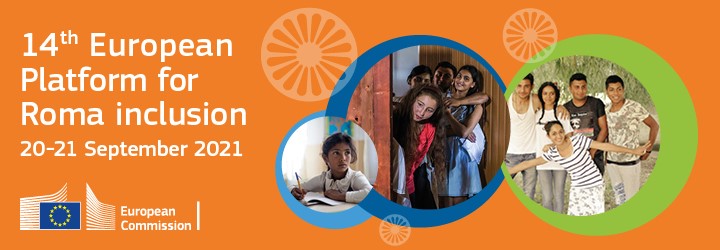
14th European Platform for Roma Inclusion

14th European Platform for Roma Inclusion

The European Platform for Roma Inclusion 2021 was held online on 21-22 September by the Directorate-General for Justice and Consumers. The meeting aimed to reaffirm the commitment to Roma equality, inclusion and participation of European institutions and Member States and focus on key thematic areas identified in close consultation with civil society organisation, such as Mainstreaming and Targeted Policies to Address Antigypsyism in National Roma Strategic Frameworks and Tackling unequal access to education to mitigate the impact of the COVID-19 pandemic on Roma communities. 

The event was honoured with high level participation on the part of the European Commission, including through a video message – partly in Romanes – by President Ursula von der Leyen, the European Parliament and EU Member States. Roma and pro-Roma civil society were given center stage in the thematic workshops and had an equal floor during the political panels alongside political leaders. 

The thematic workshop ‘Assessing the National Roma Strategic Frameworks: Mainstreaming and Targeted Policies to Address Antigypsyism” discussed how measures on health, education, housing, and employment, access to justice, child protection and environment are addressed from the perspective of combating antigypsyism and what specific actions are being developed at the national and local level for addressing antigypsyism. Finally, the panel also addressed how structural funds in Member States and enlargement countries can better contribute to Roma equality, inclusion, and participation.

The thematic workshop “Mitigating the impact of the COVID-19 pandemic on Roma communities: tackling unequal access to education and spatial segregation” discussed how access to quality and inclusive education of Roma students, specifically from marginalised localities, can be improved in the persisting pandemic and how to ensure that implementation of the National Recovery and Resilience Plans reaches marginalised Roma communities.

Gabriela Hrabanova, ERGO Network Director, delivered important key messages to the attendees. She strongly expressed the need for national governments to demonstrate that the fight against antigyspsyism in their countries does not remain a “buzz” word. She asked Member States to start making amends with their historic past by investing in real recounts about the Roma Holocaust, slavery, forced sterilization and many other dehumanising events in Europe’s history. Member States have a responsibility to help us reconcile as nations, learn about who Roma really are, provide the tools for our children to love each other and live together in a sense of unity, not division. 

She highlighted that “we first need to reconcile parts of us that hurt most and that manifest still today in very aggressive and punitive ways, such as police violence or forced sterilisation, if we want to change the general negative perception and knowledge about Roma among European citizens”. She called on Member States to ensure that national strategic frameworks meet the expectations of combating segregation in education and housing, increased police violence against Roma, addressing hate speech and hate crime against Roma and to make sure that EU funds for social cohesion and recovery and resilience together with direct grants by the EU and national funding are used to address the major challenges identified in national Roma strategies. In the end of her speech, the ERGO Director called for a “Decade of fighting antigypsyism”.

The report with the final conclusions of the meeting will be published by the European Commission on their event website here

`
Ana Rozanova – Page 38 – ERGO Network

By continuing to use the site, you agree to the use of cookies. more information

The cookie settings on this website are set to "allow cookies" to give you the best browsing experience possible. If you continue to use this website without changing your cookie settings or you click "Accept" below then you are consenting to this.

Close