North Macedonia: News from the “New solutions to old problems” project

Conference “Funding programs for Roma: community and civil expectations organizations versus donor expectations”

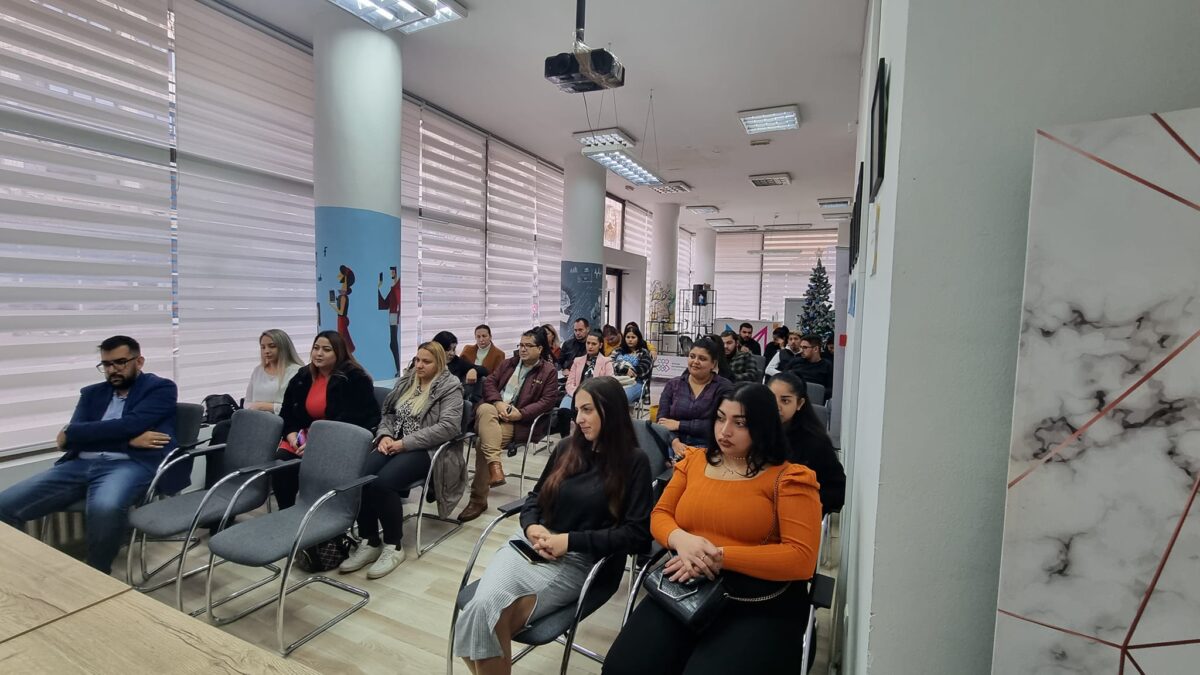
The conference “Funding programs for Roma: community and civil expectations organizations versus donor expectations” took place on 5 December 2022 in North Macedonia under the project  “New solutions to old problems – exchange of new types of approaches in the field of Roma integration” financed by Iceland, Liechtenstein and Norway through the EEA and Norway Grants Fund for Regional Cooperation.

The main goal of the event is the bottom up approach, how the priorities of the community are incorporated into the state programmers and foundations/donors, as well as the exchange of information between the interested parties or stakeholders.

In the first panel, the current programs by the institutions in the direction of promotion and inclusion of the Roma in the Republic of North Macedonia were discussed and presented.

The second panel, entitled “The Way Forward” included the folllowing topics:

  • The alignment of priorities and funding at local and national level to overcome antigypsyism,
  • Roma Employment at Local Level
  • Inserting Roma Priorities as Municipal Priorities
  • Including Roma Solutions in Mainstream Plans
  • mapping of municipal capacities
  • consultative access to institutions regarding financing
  •  coordination between donors
  • sharing of activities and projects between non-governmental organizations
  • networking and sharing resources
  • comprehensive project for spending funds.

The conference brought together non-governmental organizations, representatives from municipalities and mayors, members of Parliament, representatives from the government, national and international donors.

Young Roma in the 21st century, opportunities and challenges

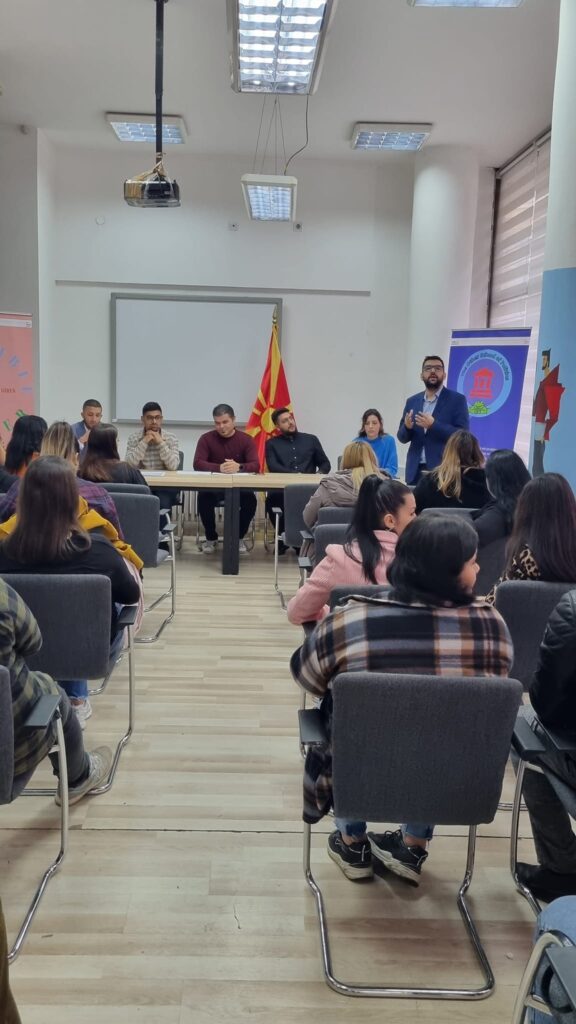
On Saturday 10 December 2022, the international human rights day, the two final events were held within the framework of the small projects “The other schools of politics” and “Invisible power”, supported by Iceland, Liechtenstein and Norway through the EEA and the Norwegian Fund for Grants for Regional cooperation as part of the strategic partnership within the framework of “New solutions to old problems”.

These two projects were taken as good practices by the partners in Turkey and the Czech Republic. The event was held in the premises of the office of the President of the country, which is currently being used by the National Youth Council of Macedonia.
The “Other School of Politics” aims to encourage young Roma and pro-Roma interested in social issues to become active citizens in the political and social field and to increase their participation in decision-making mechanisms. Accordingly, the training program includes various political areas, namely; active citizenship, social policy, functioning of local governments, policies towards Roma and development of Roma civil society in North Macedonia and Europe.

In addition, thematic issues such as discrimination and social inclusion, gender, art and activism. The programme, which emphasizes the development of participation and leadership skills, additionally includes practical modules such as political communication, alternative models of activism and public speaking.

In a panel discussion, the young mentors who were part of the project discussed issues related to what was the biggest challenge within the project that they were working on in their municipality where they come from, what were the challenges they faced during the work and whether there were enough opportunities for young people in the country and what are their contributions as young Roma and non-Roma in the 21st century, what are they proud of.

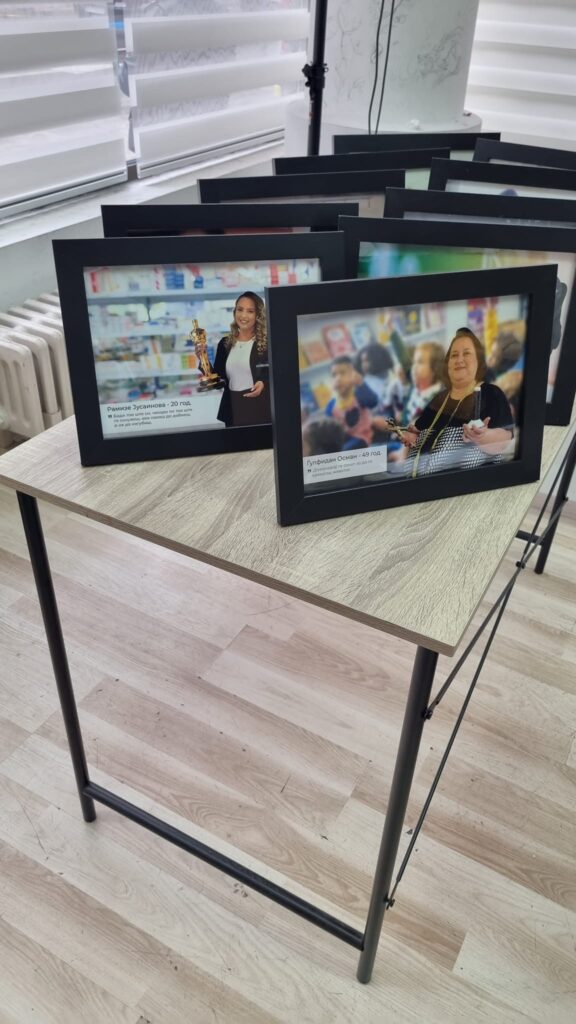
The general goal of the “Invisible Power” project is to support and educate Roma girls and women in order to gain enough self-confidence, and to raise awareness of “Invisible Power”, to set their priorities and to fight for their position in Roma society. families and Macedonian society. The photographs that were previously taken were exhibited in the premises of the NYCM, together with their stories, qualities and values that make up their invisible strength, made in the form of brochures.

The attendees had the opportunity to hear their stories, and the event itself was very emotional for the women, who said that this was very meaningful for them, because even though they did not achieve their dream, this was an opportunity for them at least for one day, even if in a picture to feel like what they dreamed of.
The event was organized within the project “New solutions to old problems – exchange of new types of approaches in the field of Roma integration” financed by Iceland, Liechtenstein and Norway through the EEA and Norway Grants Fund for Regional Cooperation.

Romania: News from the “New solutions to old problems” project

Training on Local project implementation

Our partner from Romania, Nevo Parudimos Association started implementing locally the “Mutual saving cooperative” initiative – a good practice example adopted from Autonomia, Hungary. The aim of this initiative is to increase the financial education of disadvantaged communities in Resita city so that they can better manage their finances, become self-sustainable and cover their living costs.

On November 12 Nevo Parudimos organized a training under this project. Two financial experts presented to adults from disadvantaged communities in Reșița the principles on which the initiative works and the different ways to save money. The training brought together a total of 14 disadvantaged adults who will be grouped according to the community they belong to and start implementing the idea.

The objectives of the project are:

  • Develop the financial skills of the involved families
  • Consolidate the household budget of the involved families
  • Find solutions and tricks to lower the expenditures, increase the income
  • Set up community based ’bank’ – CAF method, self-financing group
  • Increase financial knowledge

As a first exercise to increase community spirit, the group from the disadvantaged neighborhood of Câlnic already had an initiative to cover a common need – the rehabilitation of the public fountain that serves the community with water for everyday use. In recent years the fountain has not been in optimal conditions of use, but now the beneficiaries created a fund where they contributed with money and sanitized the fountain.

“Bottom up funding for Roma – Models of intervention in the process of inclusion and empowerment of Roma” meeting in Romania

Nevo Parudimos Association, in partnership with the Sastipen Organization, organized on 24 November 2022 in Bucharest, the meeting “Bottom up funding for Roma – Models of intervention in the process of inclusion and empowerment of Roma”.

The purpose of the meeting was to increase the level of awareness of different interested factors regarding the importance of developing sustainable partnerships with Roma and pro-Roma NGOs in order to create programmatic documents and implement programs in the field of Roma inclusion based on the real needs of the local communities and on compliance with the 10 common basic principles regarding the inclusion of Roma.

The event was organized within the project “New solutions to old problems – exchange of new types of approaches in the field of Roma integration” financed by Iceland, Liechtenstein and Norway through the EEA and Norway Grants Fund for Regional Cooperation.

Briefing on Discrimination and Social Exclusion of Roma with Disabilities

BRIEFING ON DISCRIMINATION AND SOCIAL EXCLUSION OF ROMA WITH DISABILITIES

This briefing is prepared jointly by the European Disability Forum and ERGO Network

Studies from 2016 show that at least 15% of Roma people have a disability, amounting to over 1.6 million people between the European Union, the Western Balkans and Turkey. The available data highlights a high prevalence of disabilities among Roma communities, also due to the health inequality gap and poorer health condition of the Roma population. However, the information on Roma with disabilities is very limited.

To gain a better understanding of the discrimination and social exclusion that Roma with disabilities face in Europe, together with the European Disability Forum, we have conducted a research study based on the data collected by the EU Agency on Fundamental Rights (FRA) and our own research. The outcomes and analysis are published in a joint EDF-ERGO Network briefing on discrimination and social exclusion of Roma with disabilities.

The briefing highlights a comparatively high risk of intersectional and multiple discrimination for Roma with disabilities, with the disability marginalisation adding to the systemic racial discrimination and antigypsyism that keeps them at the margins of society. Discrimination affects their access to basic services such as inclusive education, healthcare and long-term care, their integration into the job market and, in turn, their overall socio-economic condition.

Findings

Available data clearly show that Roma with disabilities encounter more obstacles than the average to complete quality education, 81% of them dropping out of education early. Early school abandonment and inequalities in educational outcomes are partly encouraged by the bullying and harassment that young Roma people with disabilities endure in school settings and that, according to the FRA, affect 27% of them, as well as by a general trend to falsely diagnose Roma children with developmental and learning disabilities, leading them to be placed in segregated schools with reduced curricula.

As a result of the low average educational attainment, young Roma with disabilities encounter numerous issues entering the labour market. Within the age bracket 16-24, 63% of Roma with disabilities is neither in education, employment or training – with the percentage raising to 84% for the people of the same age with high support needs. The situation is further worsened by discrimination during job search and on the workplace: many respondents claimed to have felt discriminated against when looking for a job, largely because of being Roma.

The limited access to education, lower access to employment, and unequal access to social protection make so that Roma with disabilities stand an exponentially higher chance of living below the poverty line: 82% of persons with disabilities with moderate support needs, and 90% with high support needs, are at risk of poverty. The marginalisation of Roma with disabilities also reflects on their access to the housing market: inability to pay rent and anti-Roma discrimination when looking for housing are part of the reason why 55% of Roma with disabilities experience housing deprivation and 75% live in overcrowded housing.

The Roma experience an overall poorer state of health than the majority of the population, with a higher prevalence of chronic illnesses and a lower life expectancy. Deterring them from accessing healthcare and long-term care are not only the high cost of treatments and the lack of information, but also discriminatory attitudes informed by antigypsyism.

The ethnic discrimination intensifies for those with some form of disability: 18% of Roma with disabilities with moderate support needs and 17% of Roma with disabilities with high support needs felt discriminated against in accessing healthcare, compared to 12% of Roma without disabilities. It is also important to note that the inaccessibility of healthcare system and healthcare services create another discriminatory barrier for Roma with disabilities.

Read the full Briefing here

Conclusions

While some of the issues highlighted in our briefing could be addressed by separate Roma and disability policies, the current legal framework adopted by the EU does not offer a comprehensive protection for people facing intersectional and multiple discrimination, e.g. on grounds of ethnic discrimination and disability. Because of this, Roma with disabilities are left with limited protection of their rights and limited legal remedies to respond to their marginalisation.

We therefore, together with European Disability Forum, recommend the EU and Member States to adopt targeted actions, in particular:

  • Increase the visibility of Roma with disabilities and address policy gaps at the European and national levels
  • Adopt a comprehensive EU equality law to prohibit intersectional and multiple forms of discrimination
  • Collect equality disaggregated data on people living in institutions in the EU;
  • Invest in housing first initiatives and targeted outreach measures to improve access to healthcare and long-term care services for Roma with disabilities;
  • Involve Roma with disabilities and their representative organisations in designing, implementing and monitoring policies that affect them.

For more information about ERGO Network’s work on Roma health and related fields, please contact Senior Policy Officer Isabela Mihalache and our Senior Policy Adviser Amana Ferro.

ERGO Network Annual Policy Conference 2022

IMPLEMENTING THE EU ROMA STRATEGIC FRAMEWORK. ROMA ACCESS TO HEALTHCARE AND LONG-TERM CARE

This past 23 November, ERGO Network organised its Annual Policy Conference, for the first time in person since 2019 but also fully streamed online for remote participants. This year’s event was dedicated to exploring how to improve Roma access to adequate, affordable, and inclusive healthcare and long-term care services, as well as to taking stock of the implementation of the EU and National Roma Frameworks.

A significant health inequality gap exists between the Roma and the majority population, across every area of physical and mental health and wellbeing, including rates of suicide, disability, life expectancy, and infant mortality. The Covid-19 pandemic laid bare and worsened a pre-existing dire situation. Ensuring access to healthcare and long-term care is a key topic under the European Pillar of Social Rights, the compass for Europe’s recovery, while it is also supported by Goal 3 of the Sustainable Development Goals of the United Nations. It is high time the European Union and national governments delivered.

First panel – Susanna Ulinski, Philippe Seidel, Marine Uldry, Kumar Vishwanathan, Tomas de Jong, Camille Butin

The first part of the event served to launch ERGO Network’s research report on “Roma access to healthcare and long-term care”, based on six national case studies carried out in Bulgaria, the Czech Republic, Hungary, Romania, Slovakia, and Spain. The main findings and recommendations fed into a dialogue with key decision-makers and stakeholders, aimed at identifying positive solutions to support better health inclusion for Roma and inform the delivery on the EU Roma Strategic Framework and the Social Pillar, as well as on initiatives such as the European Care Strategy.

The Key Messages of the report are:

  1. In all 6 countries, social determinants greatly influence a poor Roma state of health.
  2. High costs of healthcare and long-term care and gaps in health insurance coverage are significant deterrents for the Roma to seek care.
  3. Limited healthcare and long-term care infrastructure and staff shortages are prevalent in rural and remote Roma communities.
  4. Roma health mediators play a key positive role which deserves better support.
  5. The Roma continue to face widespread antigypsyism in healthcare and long-term care.
  6. Roma communities and their civil society organisations must be involved in a bid to build trust and improve take-up.

With the adoption of the EU Roma Strategic Framework up to 2030, governments were asked to develop national Roma strategic frameworks both in EU Member States and Western Balkan countries. In addition, civil society in EU Member States received funding from the European Commission to engage in monitoring the elaboration and adoption process of these national frameworks. In order to ensure their effective implementation, a robust and continued monitoring of the entire policy process should be ensured.

Second panel – Zuzana Havirova, Sia Sararu, Adriatik Hasantari, Abriel Schieffelers

The second part of the event assessed the state of play of the newly adopted national Roma strategic frameworks in both the EU and enlargement countries and their alignment with the EU Roma Strategic Framework on Equality, Inclusion, and Participation and linked Council Recommendation, as well as of the Roma involvement in the drafting process. In addition, it discussed the follow-up steps in the implementation of the national Roma stratetic frameworks at EU and national levels.

The event ended with concluding remarks from the Czech Presidency of the European Union on the importance of dedicating more policy attention to access to healthcare, particularly for vulnerable groups such as the Roma, which should be seen in conjunction with the overall delivery on the EU Roma Framework and its objectives on housing, employment, education, and poverty, while closely associating Roma communities and their representatives to these efforts.

The conference was very well attended with over 70 on site and online participants, and it brought together ERGO Network national members from the grassroots level in many European countries, as well as other national practitioners, European civil society organisations, policy-makers from the EU and national levels, and other stakeholders.

If you attended this event, or watched the recording, don’t forget to let us know what you thought about it by filling in this brief Evaluation Form (project reference: 101051359; event title: ERGO Network Annual Policy Conference). Thank you!

See more:

Graphic facilitation provided by Ale Listens and Draws.

For more information about this event, please don’t hesitate to contact us: info@staging.ergonetwork.org

Research report: Roma access to healthcare and long-term care

ERGO Network launches its research report on Roma access to healthcare and long-term care

The European Roma Grassroots Organisations (ERGO) Network held its annual Policy Conference on 23 November, entitled “Implementing the EU Roma Strategic Framework. Roma access to healthcare and long-term care.” A significant health inequality gap exists between the Roma and the majority population, persisting across every area of physical and mental health and wellbeing, including rates of suicide, disability, life expectancy, and infant mortality. The Covid-19 pandemic laid bare and worsened the pre-existing dire situation of Roma health in Europe.

The EU Roma Strategic Framework for Equality, Inclusion, and Participation 2020 – 2030 includes as one of its four sectoral objectives “Improve Roma health and increase effective equal access to quality healthcare and social services”, while the Council Recommendation on Roma Equality, Inclusion and Participation features a comprehensive section on “Health and access to quality healthcare and social services”, calling on Member States to “ensure equal access without barriers to quality healthcare and social services, especially for those groups that are most at risk or those living in marginalised or remote localities.” Ensuring access to health and long-term care is also extensively covered by the European Pillar of Social Rights, the compass for Europe’s recovery, while it is also supported by Goal 3 of the Sustainable Development Goals of the United Nations.

During 2022, ERGO Network conducted in-depth national case studies in six countries (Bulgaria, the Czech Republic, Hungary, Romania, Slovakia, and Spain), looking at the main determinants of Roma health as well as at the key barriers the Roma face when trying to access healthcare and long-term care services in these countries. The main findings and recommendations were brought together in an EU synthesis report, launched today in the framework of the above-mentioned event.

Key messages:

1. In all 6 countries, social determinants greatly influence a poor Roma state of health.

Tackle unsanitary dwellings and living conditions, exposure to environmental hazards, lack of adequate nutrition, dire poverty and material deprivation, and unhealthy working conditions.

2. High costs of healthcare and long-term care and gaps in health insurance coverage are significant deterrents for the Roma to seek care.

Support access to universal health insurance for all including the Roma and make healthcare and long-term care free or affordable at the point of use, including specialist care.

3. Limited healthcare and long-term care infrastructure and staff shortages are prevalent in rural and remote Roma communities.

Invest in an adequate supply of medical and care facilities, as well as qualified personnel, making healthcare and long-term care available to people where they live.

4. Roma health mediators play a key positive role which deserves better support.

Health mediators must be Roma themselves, anchored in the communities they serve but formally employed by the national health system with adequate pay, ongoing training, and due recognition.

5. The Roma continue to face widespread antigypsyism in healthcare and long-term care.

Combat prejudices and stereotypes within medical services and care facilities, ending segregation and ensuring anti-bias training and compliance with anti-discrimination legislation.

6. Roma communities and their civil society organisations must be involved in a bid to build trust and improve take-up.

Policy-makers, as well as healthcare and long-term care professionals, must cooperate closely with Roma stakeholders and their representatives, to ensure evidence-based solutions.

With this research, we aim to kick-start a debate with policy makers on how to improve the availability, accessibility, affordability, quality, inclusiveness, and take-up of healthcare and long-term care services by Europe’s Roma, including in the framework of the European Pillar of Social Rights Action Plan, the European Care Strategy, and the announced European initiative on Mental Health in 2023, among others.

For more information about ERGO Network’s work on Roma access to healthcare and long-term care, as well as on the European Care Strategy and related fields, please contact Senior Policy Adviser Amana Ferro.

`
Ana Rozanova – Page 22 – ERGO Network

By continuing to use the site, you agree to the use of cookies. more information

The cookie settings on this website are set to "allow cookies" to give you the best browsing experience possible. If you continue to use this website without changing your cookie settings or you click "Accept" below then you are consenting to this.

Close