Monitoring Mission to Moldova on the situation of Ukrainian Roma refugees

Monitoring Mission on the situation of Ukrainian Roma refugees in Moldova

On 30-31 January Ukraine coordinator Dejan Markovic and Communication and Campaigns officer Ana Rozanova from the ERGO Network Secretariat together with our partners and associate members from Foundation Jaw Dikh in Poland went on a monitoring mission to Moldova. We were hosted by our local partner Roma Women Platform ROMNI and aimed to better understand the country’s situation regarding the Roma refugees from Ukraine: the national policies, the living conditions of refugees, the support they get from the state, the registration process, and other important factors.

According to unofficial sources, there are currently 5000 Roma refugees from Ukraine in Moldova and an additional 2000 in the region of Transnistria, making it one of the key countries for our monitoring and humanitarian support. A significant number of refugees in the country are not registered, limiting them in the services they receive and their families’ mobility. Because of these and other factors, we have chosen Moldova as the destination for this second monitoring mission of our one-year-long project supported by the European Programme for Integration and Migration (EPIM).

Roma Women Platform “Romni”

Our partner in Roma Women Platform “Romni” is supporting the arriving Roma refugees from Ukraine since the beginning of the war in February 2022. Despite the small size of the organisation, they have efficiently organised the work and were able to provide humanitarian aid thanks to partnerships with not only ERGO Network, but also the UN agencies, Oxfam, MADRE grants and other donors.

They have carried out the first basic monitoring of the locations of refugees (often unregistered), their demographics and the main needs they face, putting together detailed lists of humanitarian aid needs for the donors to maximise the clearly insufficient support for the number of people in need.

“Romni” has also been a part of the informal Roma civil society coalition which pushed for establishing a position in the government crisis response group (presently the Crisis Centre for Refugees under the Ministry of Interior) who would be advocating specifically for the Roma refugees. As the director of “Romni” Elena Sirbu is an established journalist, her organisation was active in communicating the issues refugees face both on national and international level and also runs several media projects, raising awareness among the arriving refugees themselves through leaflets and a Youtube channel in 5 main dialects of Romanes.

Visiting Ukrainian Roma refugees

We started our mission by visiting the Roma Refugees Center “Testimiţeanu 6” in Chișinău. This centre was established in March 2022 and is currently hosting approximately 115 people, the majority of them Roma from the Odesa region. Although the living conditions have improved in comparison to the first centre for Ukrainian refugees set up in the “Manej” athletics centre of Chișinău, it still lacks showers (currently only one is functional), and the rooms are crowded, with often 6-8 or more people in one room.

We had a chance to speak with several families living in the centre about their main problems – unfortunately, many. While all the inhabitants of the centre spoke of their gratitude to be able to stay in a safe country and be provided with meals and a roof above their heads, several issues could be improved.

The meals provided in the centre by the catering company are one-dish-fits-all: often it is not suitable for very young children or older people staying in the centre. When the meal contains pork, it also cannot be eaten by the Muslim inhabitants of the centre (mostly of Azerbaijani origin). The children of the centre have a chance to go to school, but the school is located relatively far away, only accessible by two consequent means of transport, which is lengthy and costly. The medicine provided to the inhabitants is only the most basic one, covering urgent needs, but does not include the medicine for less acute but still very pressing health problems.

Food provided by the catering company

We followed this by visiting several Roma families from Ukraine who stay in private accommodations. While this housing option gives families more privacy and likely more opportunities to feel better integrated into the country, it is also very expensive. As both rent and charges for heating, water, and electricity went up this winter, and at the same time the monthly subsistence payments granted by the UN agency were delayed for two months, many families from private accommodation had to leave it and return to the centres or are fearing that soon they will have to.

Meeting national stakeholders

On the second day of our visit, we met with Marin Alla from the Crisis Centre for Refugees under the Ministry of Interior of Moldova, who is the only Roma representative in the centre and is a strong ally of the refugees, trying to both understand their situation in depth and to push for solutions which would improve it.

A new form of temporary protection will be available for all Ukrainian refugees in Moldova from the beginning of March. This form would ensure more comprehensive protection and improved conditions for accessing medical and other services. This type of registration will also enable the schools in Moldova to cooperate with the schools in Ukraine and to receive the necessary data for the pupils to progress from the currently provided “auditioning” form of schooling to a full form of school education, which would be acknowledged in both Ukraine and Moldova.

However, this type of temporary protection would still not include any financial support to the refugees from the state and will additionally restrict their mobility. As we have learnt a day before, many refugees would still travel to Odesa to visit their homes and extended family, and to receive medical consultations from their doctors. The journey by regular bus takes only 3 hours.

The new temporary protection – the way it is currently formulated in the final draft form – only allows a refugee to leave Moldova for up to a total of 35 days per year. After this limit has been reached, the protection status is removed and cannot be applied for again. Therefore, this would limit the Odesa region’s refugees from visiting their homes as often as they would like.
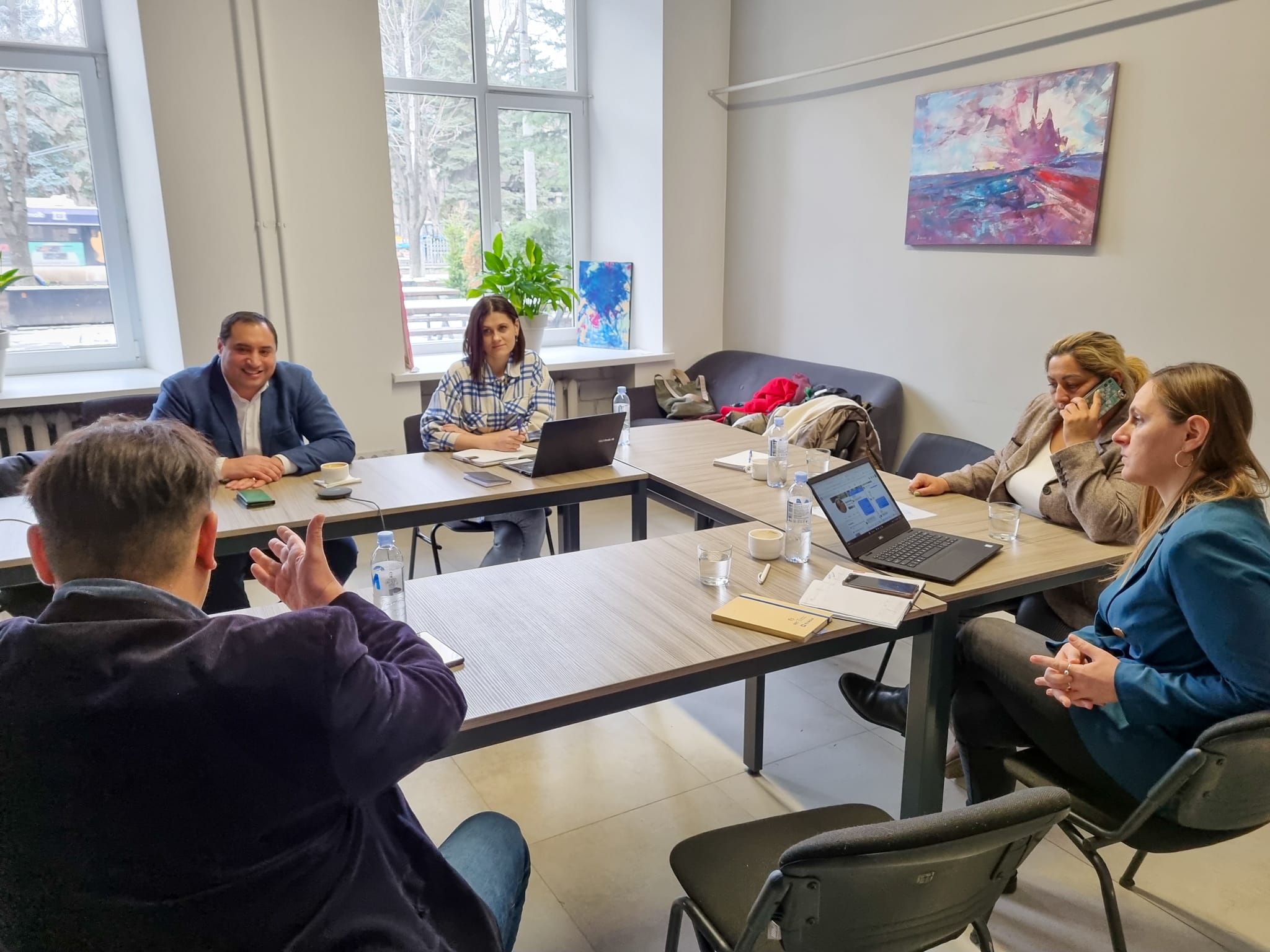
Another national partner we met was Nicolae Rădiţa, Adviser for Human Rights and Interethnic Relations to the Prime Minister. In addition to the state policies concerning Ukrainian Roma refugees, we also discussed the current National Roma Programme 2022-2025, coordinated by the Agency for Interethnic Relations, and the needs of the local Roma population of Moldova. This is a country where until recently ERGO Network was not actively involved, but due to the newly established partnership, we hope to keep a closer eye on the situation.

We believe that we have left the country with a better understanding of the situation, which we knew mostly from reports before. A crucial role in this understanding was played by the fact that we met national partners, representatives of civil society, and importantly also many refugees themselves. We discussed the issues from different angles and with different actors involved, and we hope that we can now continue our work in Moldova with better-targeted and more in-depth measures.

Conclusions and Recommendations

We have seen that there are several main issues contributing to the generally problematic situation of the Ukrainian Roma refugees in Moldova.

While the state provides the refugees with a lack of financial support the state puts the refugees in a situation where they often lack money for covering their basic needs, such as food, medicine and transport to school for the children. The situation is even more precarious for the refugees who do not stay in the centres either by choice, but more often because of the circumstances: the payments they receive are so unstable that they ensure monthly payments for their rented accommodation.

ERGO Network would encourage the state authorities and national and international donors to better coordinate the financial help for refugees, to ensure they have access to the needed services and have a decent standard of living.

The state is preparing a registration for temporary protection, but the CSOs doubt whether this policy will make the life of particularly Ukrainian Roma refugees easier or put an extra burden on them. ERGO Networks welcomes the position of Marin Alla as responsible specifically for the Roma refugees and would encourage the authorities to keep this position for the full duration of the crisis, as well as to take into account his suggestion when it comes to drafting policies concerning the refugees.

We would further encourage the authorities to ensure that the refugees – even those lacking either literacy skills or technology or both – are able to register for temporary protection. The CSOs can assist them with this task, but for this, they would need to be supported by the state.

Antigypsyism also penetrates all the areas of refugee treatment, making the daily life of the already-vulnerable Roma refugee community even more complicated, and has to be first acknowledged, before it can be tackled on structural level.

A report will be prepared, which will provide ERGO Network and the partners with the necessary data to strengthen our advocacy and cooperation with possible allies. A similar mission has already taken place in the Czech Republic and others will also take place in the coming weeks in Hungary, Poland, and Slovakia.

 

Holocaust Memorial Day: Pact of Silence

“Pact of Silence”: Remembering Roma Holocaust

Written by Annamária Pšenková

The balance between remembering and forgetting the past seems to be disrupted with the tendency to clash in the present times with raised concerns of finding the golden means to not repeat the past, to not forget but reconcile, forgive and move forward. Memory predominantly serves as the essential tool for official institutions to deal with the past in terms of remembering, which is perceived as the effective narrative within the international community. Although memory is opposed by academic scholars who point out the presence of uncertainty, instability, and inconsistency in it; the prevailing argument is based on the reality that society chooses which memories are important to be remembered (Assmann, 2008).

Indeed, history is written notably by winners, whereas losers have memory. Therefore, the memory pursues the ability to fill the ethical deficiency and contribute to the archives to fulfil justice and prevent inhuman treatment in the present and future times. The importance of memory in our present politics is particularly needed for a shift towards reconciliation, which can be done only by being responsive to the past (Kusa, n.d.).

The atrocious crimes committed in the past hold the duty to be remembered within our social and political spheres. By creating the space for memory which has been inherently tied to past traumatic experiences, one adheres to individual dignity, recognition, acceptance and responsibility to provide mechanisms to protect human rights. Therefore, Holocaust Remembrance Day demonstrates the momentous occasion to widen the circle of empathy and fulfil its goal of making human beings comprehend the brutality committed by an irrational, inhuman political system. Holocaust Remembrance Day was established as an international day to honour all victims of the Holocaust – Jews, Roma, LGBTQ+ and disabled people. However, this paper aims to dedicate it to Roma victims whose victimhood status has usually been forgotten.

The Holocaust is considered to be a pillar of European identity and whereas people tend to only connect it with Jews, the Roma were also part of this abhorrent policy. Thus the Roma Holocaust is referred to as the “Forgotten Holocaust”. Nazi Germany committed genocide against Roma and Sinti that caused indescribable physical, cultural and psychological harm. After the war, victims have been struggling to gain recognition and compensation for their persecution during the war. Roma and Sinti groups are victims of discrimination until this very day and have not received any reparations in some countries such as Slovakia. The lack of political will to approach the Roma Holocaust and the lack of knowledge about the horrendous events are notably missing in public discourse.

The Genocide committed by Nazi Germany was the outcome of their public policies and political structures that aimed to eliminate everyone who differed from “pure race”. The whole process started after Germany withdrew from the League of Nations. The decision taken by Nazi Germany posed a real threat to any minority living in their territory, based on the nature of minority rights that can be secured either by the state or by the foreign power through international treaties (Rosting, 2017). A similar scenario is happening right now as the Russian Federation announced plans to withdraw from the Council of Europe and the European Court of Human Rights. It is not strictly limited to the past, eventually, it can happen in our present times, therefore, remembering the past is immensely important. (Hillebrecht, 2022) As Nazi Germany was not bound by any international treaty, the process of securitization had begun in the forms of sterilization, persecution, medical experiments, euthanasia, and concentration camps that emerged into genocide. The 11 million Jews were eradicated, of which 6 million were killed in concentration camps and between 200 000 to 500 000 Roma people were murdered by the Nazi regime and their collaborators (MRG, 2020).

The story that illustrates the brutality committed by Nazis is about Rita Prigmore and her twin sister Rolanda. Rita and Rolanda were born in the Sinti family in 1943 in Würzburg. The same year earlier Nazi Germany adopted a law – “racial law applied on Gypsies” that forced Romani women to undergo compulsory sterilisation. As a punishment for refusing it, they were sent directly to Auschwitz. Rita and Rolanda’s mother were forced by Nazis to undergo abortion right after the sterilisation, however after they realised she was carrying twins, Nazis let her give birth. After their birth, Rita’s mother was forced to sign a paper to give her children to the hands of Nazis for medical studies. When she returned to the hospital to see her daughters, she found Rolanda’s body lying in the bathtub dead. Thanks to the Red Cross, Rita was reunited with her mother in 1944 (Zafeiri, 2014). Forced sterilisations were a common practice even under communism in Czechoslovakia, where Romani women were forcibly sterilised without their consent. Only last year some women in the Czech Republic could receive compensation for such barbaric practice (Hutt, 2021).

Unfortunately, an abominable act was committed, and it has had a destructive impact on the whole of European society in the forms of police brutality, structural antigypsyism, and institutional racism that continues until now. These practices were happening even before the Holocaust, however, during the Nazi occupation it was legitimised and now it is even harder to get rid of them. Since the reality of the past cannot be changed, the question that remains raised is how to approach the past concerning the principle of memory and truth that should be leading towards reconciliation.

For dealing with such a horrendous past Assmann (2010) presented four models for overcoming it, which relied on Margalit’s two paradigmatic solutions – either remembering or forgetting that is inevitably intertwined with the memory. The models are as follows: dialogic forgetting; remembering to prevent forgetting; remembering to forget; dialogic remembering aim is to explain the ways how to approach the past (Assmann, 2010).

The first approach – dialogic forgetting – was principally oriented on solving the issue with pragmatic “silence”, especially in the past. The state did not possess the power to influence human memories, but it could have claimed control over the public presentation of the past. Assmann (2010) has pointed out the case of post-war Germany, where the public sphere was generally shaped around the pact of silence to support the economic and political reconstruction of the state. Unfortunately, this scenario is certainly applied to the Roma minority in many member states of the European Union until now.

The other one – remember to never forget – has been adopted as another model by acknowledging that the first model – dialogic forgetting though – was a remedy for symmetric situations (mutual forms of violence) however it does not function as a cure for atrocious asymmetric situations (powerful perpetrator attack defenceless victims) (Assmann, 2010). The shift that has been made from forgetting to remembering has enormously changed our moral sensibility. As one of the responses to that, International Holocaust Remembrance Day was adopted by the United Nations Assembly in 2005 to honour the victims and signify the liberation from Nazi Germany (International Holocaust Remembrance Day, 2022).

The third model might seem to be a bit controversial – remembering to forget – but the term “forget” should not be taken literally. Remembering in this context is perceived not as a primary goal but as a medium that aims towards recognition and reconciliation. Therefore, “forgetting” is understood as an act of reconciling and putting the past behind to focus on a common future.

Finally, the fourth model – dialogic remembering – functions as a transition of the history of violence into recognition of guilt and is applicable first and foremost for states (Assmann, 2010). The shared knowledge, memories and history of past traumatic experiences let us coexist together peacefully.

Along with these four models, Assmann (2008) elaborates further on the memory that functions in two ways – whether the memory has relevance or potential concerning state position (Assmann, 2008). Roma people in the Eastern bloc countries have not received compensation and reparations for atrocities that were committed against them. The non-recognition of the “Forgotten Holocaust” demonstrates the irrelevance of the event to be remembered in our society. As Eagleston (2004) described, memory has the power of identifying, naming or legitimising things around us (Eagleston, 2004). Identifying and recognizing the victims of the Roma Holocaust society led to legitimising the importance of the past traumatic experience on the national and international dimensions.

The Roma minority is frequently left behind when it comes to the memory of the Holocaust. Besides all other atrocious deeds committed against the Roma minority, the cruelty undertaken upon Romani people by Nazi Germany killed the sense of humanity within our societies. The Roma and Sinti have been experiencing centuries of discrimination and racism that have survived until now. According to Assmann’s (2008) theories, the memory of the Roma Holocaust in this matter has no potential or relevance for society to be acknowledged and remembered. A clear example is the absence of an adequate curriculum concerning the Roma minority in the educational system or the lack of general knowledge in public discourse. There is eloquent evidence of stagnation in terms of the integration of the Roma population into the society that is encouraged by institutionalised racism. Even though memory is considered a moral foundation of our democratic societies, it is institutionalised from the position of power: in a sense, it is shaped by the interest and needs of the actors possessing the power (Kusa, n.d.).

All things considered, the crucial elements that play an important role in the remembering process of the Romani past must be noted. The victims hardly encountered any compensation or recognition from the traumatic past which illustrates the ongoing racism in European countries. There is a general lack of political will to address and solve the issue, concerning the European and national institutions, which unofficially demonstrates how discrimination is deeply institutionalised. The outspoken evidence of the ongoing racism is illustrated in real cases – sterilisation was a common practise after the Nazi regime fell, and police brutality is not being taken seriously regarding Romani people (Stanislav Tamas and currently the Greek Murder). And as a reaction to the issues mentioned above and consideration of Assmann’s (2010) four models of overcoming the horrendous past and memory theory, the Romani people remain within the first model – the “pact of silence”, as a consequence of being continually forgotten as victims of genocide and other crimes against humanity, due to holding no potential or relevance towards states positions to be remembered.

Sources:

Assmann, A. (2010). From Collective Violence to the Common Future: Four Models for Dealing with the Traumatic Past. Martin Modlinger and Philipp Sonntag, Eds. Other People’s Pain: Narratives of Trauma and the Question of Ethics. Series: Cultural History and Literary Imagination. Peter Lang, pp. 43 – 62.

Assmann, A. (2008). The transformation between history and memory., Collective Memory and Collective Identity 75(1), pp. 49–72.

Eagleston, R. (2004). The Holocaust and the postmodern. Oxford University Press.

Hillebrecht, C. (2022). Rights at risk: Russia’s withdrawal from the ECtHR. Open Global Rights. https://www.openglobalrights.org/rights-at-risk-russias-withdrawal-from-the-ecthr/

Hutt, D. (2021). The Shameful Story of Roma Women’s Forced Sterilisation in Central Europe. Euronews. https://www.euronews.com/2021/08/02/the-shameful-story-of-roma-women-s-forced-sterilisation-in-central-europe

International Holocaust Remembrance Day. (2022) United States Holocaust Memorial Museum. https://encyclopedia.ushmm.org/content/en/article/international-holocaust-remembrance-day

Kusá, D. (n.d.). Introduction: Regimes of Memory. BISLA: International Conflict and Cooperation Reader. pp. 340–359

Roma/Sinti. (June 30, 2020). Minority Rights Group. https://minorityrights.org/minorities/romasinti/?fbclid=IwAR0oypfy0sxA8e46LtvPwzAUxffYBBIzuKblWe52HsSEchCP4uGfOIGHlVo

Rosting, H. (May 4, 2017). Protection of Minorities by League of Nations. American Journal of International Law. https://www.cambridge.org/core/journals/american-journal-of-international-law

Zafeiri, A. (August 6, 2014). They Survived Genocide. Now, They Have a Message for Us All. Open Society Foundation. https://www.opensocietyfoundations.org/voices/two-survivors-roma-genocide-share-their-stories


Annual Sustainable Growth Survey 2023: What’s in it for Europe’s Roma?

European Commission releases Annual Sustainable Growth Survey (ASGS) 2023: What’s in it for Europe’s Roma?

On 22 November 2022, the European Commission published the Annual Sustainable Growth Survey 2022, accompanied by the draft Joint Employment Report 2022 (among other annexes), as part of the Autumn Package launching the European Semester 2022. The Annual Sustainable Growth Survey reaffirms that “the European Semester and the Recovery and Resilience Facility continue to provide a robust framework for effective policy coordination in view of the current challenges”, while it also confirms the commitment to the four complementary dimensions of the European Semester: environmental sustainability, productivity, fairness, and macroeconomic stability.

  • Read our full response to Autumn Package here!

ERGO Network warmly welcomes the explicit mention of the Roma in this year’s Annual Sustainable Growth Survey (page 11), in the context of supporting their access to employment. We further appreciate wording about the implementation of the Union of Equality, which includes important strategies such as the EU Anti-Racism Action Plan and the EU Roma Strategic Framework for Equality, Inclusion and Participation among others. While these references are minimal, they are nonetheless commendable after two years in a row where the ASGS made no reference to the Roma or to these important strategies. However, disappointingly, discrimination, racism, or antigypsyism are not mentioned at all.

As every year, the main focus of the document is on the green and digital transitions. Social concerns are dealt with under the Fairness section (one of the four dimensions of the European Semester), which is rather narrowly dedicated to employment and skills. Nevertheless, we appreciate calls to strengthen collective bargaining and to raise wage levels, to improve the quality and accessibility of healthcare and long-term care systems, and to preserve and improve de adequacy of social safety nets, including pensions. It is a pity, however, that access to adequate and affordable housing is not mentioned, and that education continues to be understood in a limited sense of providing skills for jobs. We equally salute language about delivering affordable energy and mitigating the economic and social impact of high energy prices on vulnerable households.

We are very pleased to see Europe’s Roma mentioned multiple times in the Joint Employment Report, concerning issues such as their heightened risk of experiencing poverty and social exclusion (including that of children), gaps in educational outcomes, early school leaving, school segregation, discrimination in accessing healthcare, and labour market integration. Additionally, strong links are made to the EU Strategic Framework on Roma Equality, Inclusion, and Participation, as part of the Union of Equality. Very disappointingly though, there is no mention of antigypsyism or racism, and only four references to discrimination.

The ASGS reaffirms the European Commission’s commitment to “an inclusive process and the timely involvement of social partners and other relevant stakeholders during the European Semester cycle”, calling on Member States to “engage actively […] in particular representatives of civil society organisations, through regular exchanges” (our bold). This is very positive, as are the several references to civil society in the draft Joint Employment Report.

The ASGS also provides some clarity about the future of the European Semester, as well as what are the key steps and milestones to be expected for 2023. This year’s Semester will include the implementation of the Recovery and Resilience Facility, that of the European Pillar of Social Rights Action Plan, and that of the Sustainable Development Goals.

ERGO Network will continue to advocate for a stronger focus on Roma rights and inclusion much more in focus in the delivery of these initiatives, and for stronger synergies between the European Semester and the EU Roma Strategic Framework for Equality, Inclusion, and Participation.

For more information about ERGO Network’s work on EU social inclusion and employment policy (European Semester, European Pillar of Social Rights, Sustainable Development Goals etc), please contact Senior Policy Adviser Amana Ferro.

Welcome to the New Network and Programme Coordinator

Welcome, Martina!

The ERGO Network Secretariat team is growing and we welcome a new member of our Team – Martina Horváthová as the Network and Programme Coordinator.

Martina will focus on maintaining and strengthening the ERGO Network, building the capacity of ERGO Network members and empowering Roma youth and activists.

Here is more about Martina in her own words:

Living near Prague, the capital of the Czech Republic, I joined the ERGO Network team in January 2023. Since 2002 I have been active in the empowerment of Roma, especially Roma women and Roma youth, as programme manager in an NGO. Last four years I worked as a desk officer in the Czech National Agency for the Erasmus+ programme. I am happy to say that I succeeded to attract more organisations working with youngsters with fewer opportunities including Roma youth to apply for Erasmus+ grants.

For five years I was member of the Governmental Council for Roma Minority Affairs proposing, in cooperation with others, solutions on Roma integration to the government from the position on active Roma citizen. During this time several big changes and important steps in terms of the fight against antigypsyism and for the Roma integration were undertaken. 

Besides the Roma issues, my professional life is also connected very tightly to topics ad adult education, support of participation, inclusion, gender equality, and NGOs management and fundraising.

For me the best way how to relax is cooking and baking. Time to time I love to travel and explore landmarks and contemporary life of different (not only) European cities. I am always ready to see good theatre piece and living close to Prague is ideal for such cultural enjoyment.

I often go to the forest countryside and forests anyway, love picking mushrooms (as almost all Czech people). I love to look at and touch the sea.  At home I take care, together with my parents and brothers, of a cat. And I also take care of boyfriend and time to time of his son.

Opinion piece by RAVS: Antigypsyism Definition

When incompetence leads to bad decisions

Opinion piece by ERGO Member Zuzana Havirova from Roma Advocacy and Research Center (RAVS), Slovakia.

[Disclaimer: The opinions expressed within the content are solely the author’s and might not reflect the opinions of the website or its affiliates.]

In October 2022, the National Council of the Slovak Republic adopted the IHRA’s definition of antigypsyism. The IHRA definition states: „Antigypsyism/anti-Roma discrimination is a manifestation of individual expressions and acts as well as institutional policies and practices of marginalization, exclusion, physical violence, devaluation of Roma cultures and lifestyles, and hate speech directed at Roma as well as other individuals and groups perceived, stigmatized, or persecuted during the Nazi era, and still today, as “Gypsies.” This leads to the treatment of Roma as an alleged alien group and associates them with a series of pejorative stereotypes and distorted images that represent a specific form of racism.“

The reference to lifestyle is probably related to Travellers and Gens du voyage, but in the context of Roma living in excluded localities in Slovakia, such content is dangerous and stereotypical. We often encounter statements that Roma who live in marginalized communities live this way because it is their lifestyle, and it is also said that living from day to day is their lifestyle. It is also pointed out that education is not a priority for Roma from poor localities because their lifestyle is to live on welfare. All of these statements are made by people who are prejudiced and, in essence, racist. Roma living in marginalised communities have not chosen their life and it is not their lifestyle.

On the contrary, it is also because of this marginalisation that they experience discrimination and face structural racism on a daily basis. I understand that the IHRA has tried to include several groups of Roma living in Europe in its definition, but it should have taken into account the fact that in some countries the interpretation of their definition may lead to an even greater marginalisation of Roma or even the legitimisation of discrimination against Roma in the context of the lifestyle that is mentioned in their definition. In fact, the definition does not explain what lifestyle means.

In the Concept of Combating Radicalisation and Extremism until 2024, which was approved in 2021 by the Slovak Government, there is a definition of antigypsyism, which states that: „Antigypsyism is defined as a type of racist classification of Roma, who are stigmatized as “gypsies” through it, in order to construct a false justification and legitimization for the dehumanization of Roma, their discrimination, exploitation and the possibility of perpetrating violence against them.

Anti-Gypsyism/anti-Roma racism creates non-existent, misleading and negative descriptions, qualities and characteristics (the so-called “profile”) of the “gypsy“, the basis of which:

  1. a supposedly “common form” of physical appearance;
  2. are homogenizing and generalizing social, mental and character “traits” (antisociality, criminality, high birth rate, lack of hygiene, poverty, superstition, primitiveness, tribal kinship, crookedness, nomadism, music in the blood, promiscuity, etc.);
  3. the essentialization of this “common form” of physical appearance and the above social, mental, and character “traits” for the entire Roma ethnic group.

Anti-gypsyism/anti-Roma racism is therefore not based on real life and negative personal experiences, is not a consequence of Roma life, but uses historical forms of discrimination, prejudice, and stereotypes, and considers the “common form” of physical appearance and the above social, mental, and character “traits” as “essential” (i.e., “innate”) in every Roma. This means that even if some of the above “descriptions”, “qualities” and “characteristics” could be applied to a member of the majority (e.g. criminality + low hygiene + poverty), the social situation of that member of the majority would not be understood as an “essential” (“innate”) characteristic of him/her, as is the case for Roma in antigypsyism/anti-Roma racism.

For this reason, antigypsyism/anti-Roma racism is a type of racist categorisation claiming that Roma collectively share a ‘distinct racial essence’ that is not influenced by any form of socialisation, upbringing and education, nor by any social, societal and financial measures. Anti-gypsyism/anti-Roma racism ascribes to the Roma an irreversible “biological (racial) destiny” from which there is no escape, while at the same time asserting that the Roma are, precisely because of these “essential (innate) characteristics”, unable to integrate into society.

The definition also includes examples of expressions of antigypsyism based on the IHRA’s working definition of antigypsyism:

  1. distortion and denial of the persecution of the Roma or the genocide of the Roma,
  2. glorification of the genocide of the Roma,
  3. incitement, perpetration and justification of violence against Roma communities, their property and individuals,
  1. forced and coercive sterilization, as well as other forms of severe physical or psychological treatment of Roma,
  1. feeding and endorsing discriminatory stereotypes about and against Roma,
  2. blaming Roma, using hate speech, for real or perceived social, political, cultural, economic or health problems,
  1. stereotyping Roma as perpetrators of crime,
  2. the use of the word ‘gypsy’ as a slur,
  3. endorsing and promoting exclusive anti-Roma mechanisms based on racial discrimination, such as the exclusion of Roma children from mainstream schools or institutional practices and policies leading to the segregation of Roma communities,
  1. adopting policies without a legal basis or setting conditions that allow arbitrary or discriminatory displacement of Roma communities and individuals,
  1. holding individuals collectively responsible for real or perceived actions of Roma communities,
  2. dissemination of hate speech targeting Roma communities in any form, including on the internet and social networks.

The resolution adopted by the National Council of the Slovak Republic recommends the Government of the Slovak Republic to carry out an analysis of the legal order of the Slovak Republic and, if necessary, to prepare legislative proposals for relevant legislation so that the above definition is respected in the activities and decision-making of the public authorities of the Slovak Republic.

Unfortunately, the proponents of this proposal in the Slovak Parliament do not have sufficient knowledge on this topic and therefore they have presented a definition without prior discourse with the scientific community. If they had made a professional discussion on this proposal, they would have found that in Slovakia there is already an approved definition of antigypsyism from 2021, which, among other things, includes examples of antigypsyism from the definition developed by the IHRA. They could thus bring to the Slovak Parliament a definition of antigypsyism that is more precise, more concise and has a greater meaningful value in the conditions of the Slovak Republic.

Such actions cause confusion in professional terminology and bring unnecessary contradictions into the field of combating antigypsyism, which can lead to confusion about what antigypsyism actually means.

`
Ana Rozanova – Page 21 – ERGO Network

By continuing to use the site, you agree to the use of cookies. more information

The cookie settings on this website are set to "allow cookies" to give you the best browsing experience possible. If you continue to use this website without changing your cookie settings or you click "Accept" below then you are consenting to this.

Close