Call for support for the Roma victims of the earthquake in Turkey and Syria

ERGO Network is working with our member Zero Discrimination Association to support Roma victims of the earthquake

Two earthquakes of 7.7 and 7.6 magnitude hit Türkiye and Syria on 6 February 2023. With an epicentre in Kahramanmaraş, the earthquake caused catastrophic scale of mass destruction in 10 provinces in Türkiye including Hatay, Adıyaman, Malatya, Şanlıurfa, Adana, Gaziantep and Diyarbakır.

In this deadliest earthquake of the century, more than 42 thousand 310 people lost their lives, 80.000 people were injured and over 2 million were internally displaced. Many of the survivors are fleeing the region to other cities as soon as they can bury their loved ones. Numbers are predicted to increase.

Roma, Dom, and Abdal Communities cannot access help

The affected provinces are home to numerous vulnerable groups including the Roma communities (Doms and Abdals). As a result of social exclusion, they cannot access aid mechanisms efficiently.

There is no official census for Roma in Turkey, so the exact number of affected Roma communities in the disaster area cannot be detected. Based on the reports of Roma grassroots organizations in our working neighbourhoods, 50.000-60.000 Roma are estimated to be affected in Hatay, Gaziantep and Şanlıurfa. Moreover, there are approximately 300.000 Roma people all around the 10 affected provinces.

How can you help?

ERGO Network Member Organisation Zero Discrimination Association in Turkey is in constant communication with their network members there and tries to help them access some help.

Since the earthquake’s first day, the network has delivered food, tents and fuel to the regions of Gaziantep, Şanlıurfa, Hatay and Adana.

You can donate here using your credit or debit card or PayPal. Every small donation can change people’s lives today. 

The urgent needs currently are:

1. Food and water
2. Tents
3. Heating systems for the tents, pocket warmers
4. Medicine
5. Female sanitary pad
6. Blankets, sleeping bags
7. Winter Clothes (Boots, coats, gloves, hats and socks)
8. Synthetic underwear (baby/child)
9. Powerbank for phones
10. Diapers and baby food

The ERGO Network and its members will collect and coordinate disaster relief and our member Zero Discrimination Association will be implementing the aid in the region.

Here you can find more information about the affected regions and the detailed needs in each of them.

Below are the images taken by our colleagues in Zero Discrimination Association and their network.

One year since the start of the war in Ukraine

Today marks 365 days – one year – since the full-scale war that Russia started against Ukraine.

A year ago today ERGO Network strongly condemned this war. We expressed our full solidarity and our support to Ukraine, and in particular to our member organisation in Ukraine – Roma Women Fund “Chiricli”.

With the help of our Ukrainian colleagues, we advocated and fundraised for the Roma people who stayed in Ukraine and faced danger, displacement, and economic and physical hardships. Through our networks in Moldova, Poland, Slovakia, the Czech Republic, Romania and Hungary we supported the arriving Ukrainian Roma refugees and did our best to make their forced move easier.

Through our network and our members, we were fortunate to be able to contribute to the fight for freedom, democracy and human rights. We were even more fortunate to be able to support the Roma people.

Throughout this year we have seen that the war did not eradicate antigypsyism. If anything, it worsened the already hard situation of many Ukrainian Roma both in Ukraine and in Europe.

Today, one year later, we stand strong in our commitment to work and support our people as long as it takes for Ukraine to win the war. We will also continue to fight antigypsyism, which is never justified: neither in the peacetimes nor during the war.

In his speech today, marking the one year since the beginning of the war, the President of Ukraine Volodymyr Zelenskyy said:

“We became one family. We no longer have strangers here. Ukrainians today are all our own. Ukrainians hosted Ukrainians, opened their homes and their hearts for those who needed to flee the war.”

We want to believe that those many Roma soldiers on the frontlines defending their country, those Roma men and women protecting their cities and villages, doing their part in helping their communities and their neighbours, those Roma mothers who had to flee the country to save their children – the future of Ukraine and every Ukrainian Roma citizen making the small but significant daily steps to advance the victory; We want to believe that these Ukrainians will be recognised as a part of the big family, and their contribution in the victory remembered and cherished.

EC on strengthening social dialogue – What’s in it for Europe’s Roma?

European Commission releases initiative on strengthening social dialogue – What’s in it for Europe’s Roma?

On 25 January 2023, the European Commission put forward an initiative on strengthening social dialogue, aimed at empowering social partners to deliver on their role to ensure social fairness and democracy at work, and to boost Europe’s prosperity and resilience. The initiative includes a Council Recommendation, which sets out how EU countries can further strengthen social dialogue and collective bargaining at national level, as well as a Communication on reinforcing and promoting social dialogue at EU level.

ERGO Network has engaged with the preparation of this initiative during 2022, with a view to raise awareness on the specific concerns of Roma workers. We contributed to the call for evidence issued by the European Commission in October last year, based on our Snapshot on social dialogue and involvement of workers. We have reviewed the proposed initiative in light of this input.

  • Read our full response to the initiative here!

We warmly welcome this initiative of the European Commission to ensure that social dialogue continues to fulfil its key role for just, resilient, inclusive, and democratic societies, particularly at a time when several Members States are attempting to shrink trade union powers. However, the approach does not seem to be inspired by a view to contribute to inclusive labour markets, through supporting diversity and giving a voice to the most disenfranchised, including vulnerable groups.

We are very disappointed to note that there is no reference to Europe’s Roma in either the proposed Council Recommendation or the Commission communication. Moreover, there is no mention of ethnic minorities or ethnic background, or migrant or refugee workers, or other key groups of workers facing discrimination in employment. In fact, there is no mention of racism or discrimination in the two documents.

We further appreciate that the initiative clearly points out the decline in trade union coverage over the past three decades, however these findings are disaggregated by gender, but not by any other indicator relating for example to race and ethnicity, age, disability, sexual orientation or gender identity etc. Equally disappointingly, the European Commission puts forward no proposals on how to improve trade union membership. This should have been a key objective of the initiative, as a means to strengthen legitimacy and credibility of social partners.

We salute that the initiative makes a strong plea for trade unions to take into account the emergence of new forms of employment including the self-employed, and to make efforts to include these workers in their structures. This can be very positive for Roma workers, often excluded from the traditional labour market due to widespread antigypsyism, and hence forced to engage in atypical forms of work to survive.

In the context of the evolving nature of labour markets, it is regrettable and inaccurate that both documents use “company” in an interchangeable way with “employer”, thus completely overlooking labour relations in the public and the third sector, where adequate social dialogue to protect workers’ rights is just as needed.

It is high time that the European Commission put forward a similar initiative, codifying, supporting and strengthening civil dialogue. Social fairness and democracy must be guaranteed for the whole of society, not just in the workplace.

Finally, we are pleased to see the European Commission’s commitment to promote social dialogue and collective bargaining in the context of the enlargement process, supporting candidate countries to strengthen their social dialogue processes.

For more information about our work on the Roma employment, please contact Amana Ferro (a.ferro@staging.ergonetwork.org), Senior Policy Adviser in the ERGO Network staff.

Storytelling on project development for advocacy purposes

Storytelling on project development for advocacy purposes

“Storytelling for advocacy works because our brain is wired to remember narrations and is equipped to experience them as being told. It is the oldest and most powerful tool to affect change in society.

And personal stories detailing the challenges one faces are easier to connect with and bring out our ability to empathize with the storyteller. In this way, stories can influence people and help bring about change.

The art of storytelling for advocacy helps you bring out the importance of the issues that matter to your organization and how it relates to people.”

“The Art Of Storytelling For Advocacy Campaigns” by

In the framework of our long-running project “New Solution to Old Problems”, funded by EEA and Norway Grants, we want to use storytelling to raise awareness and bring good examples of local projects. We did this by contacting our partners in over 10 different countries in Europe and asked them:

What was your biggest achievement with the project? What was the most surprising to you in the project implementation? What was the biggest challenge and how did you solve it? How has this project affected you personally?

In other words, we have asked our partners and beneficiaries to tell us stories about the projects they have carried out. Not the reports (although this would come too), not the presentations. But to ask the beneficiaries, the members of the community from different countries to tell us a story about what they have done and could be replicated in other countries. We have collected all these stories and turned some of them into visuals to promote a bottom-up approach in funding.

The objectives of this project are: 

– To raise awareness of the benefits of bottom-up approaches and community organizing to Roma inclusion through personal stories
– To gain an insight into the process of bottom-up project development through personal stories
– To highlight the successes of the project “New Solution to Old Problems”

We are now happy to share these stories with you.

 This initiative has received financial support in the framework of the project “New solutions to old problems”. The project “New solutions to old problems – exchange of new type of approaches in the field of Roma integration” is funded by Iceland, Liechtenstein and Norway through the EEA and Norway Grants Fund for Regional Cooperation.
Roma rights experts take part in the UN Commission

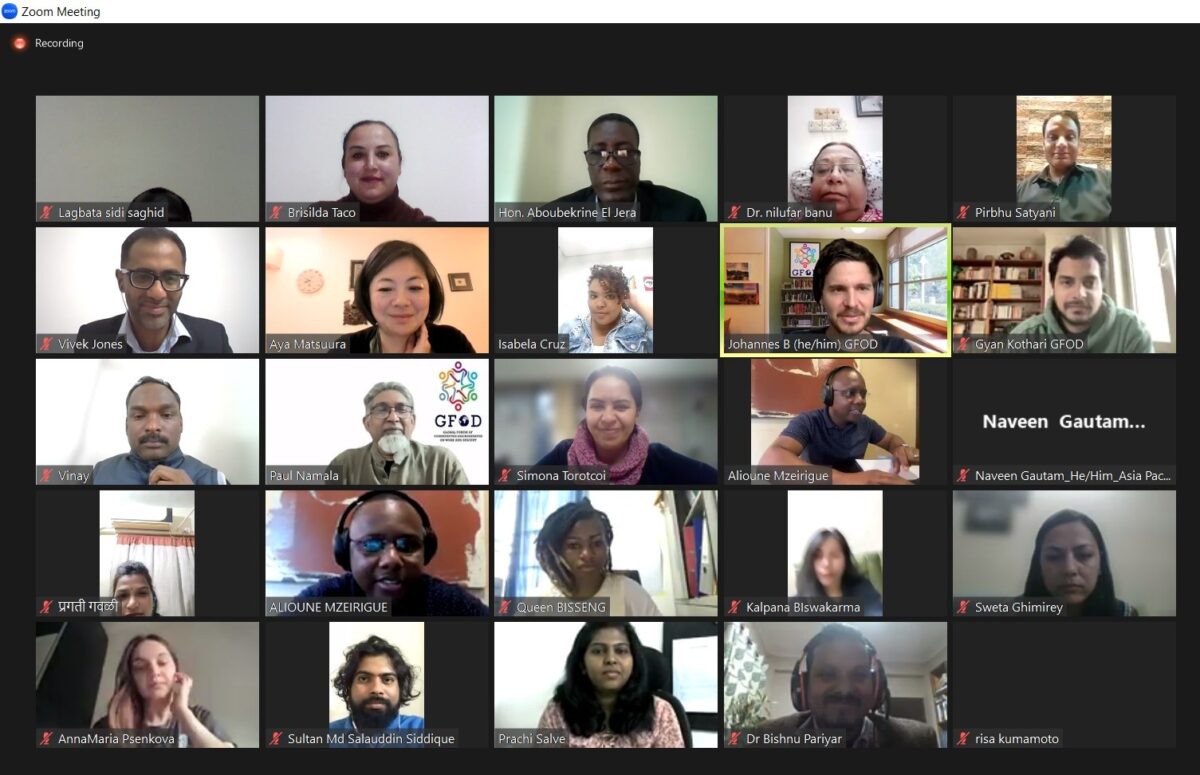
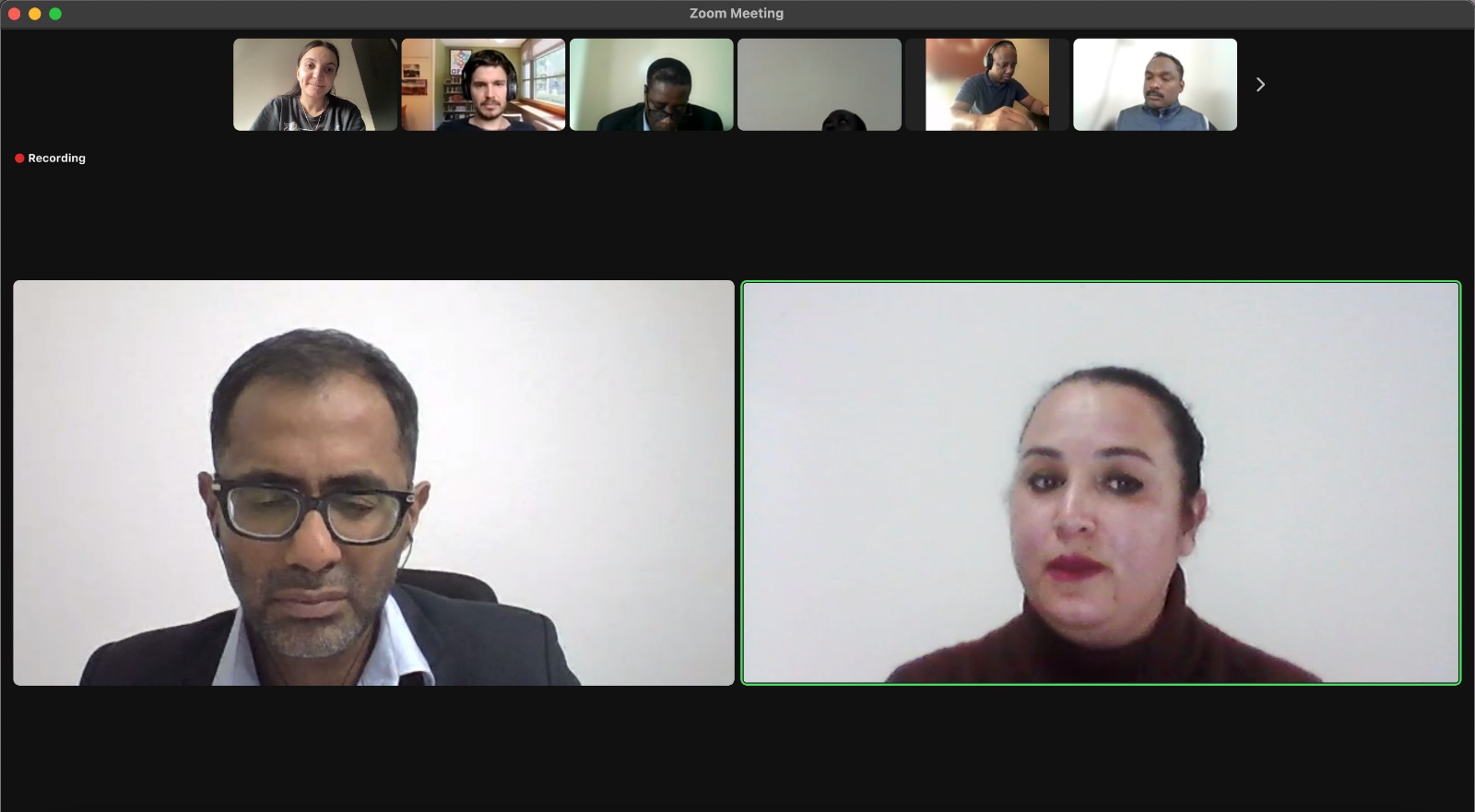
GFoD and ERGO Network Roma rights experts take part in the UN Commission for Social Development session 

The 61st United Nations Commission for Social Development session took place on 6-15 February. The priority theme this year was “Creating full and productive employment and decent work for all as a way of overcoming inequalities to accelerate the recovery from the COVID-19 pandemic and the full implementation of the 2030 Agenda for Sustainable Development”.

The Roma rights expert Brisilda Taco draw attention to the recent data of the European Union Agency for Fundamental Rights on Roma employment in the EU during the side event “Overcoming the barriers of full and productive employment focusing on social hierarchical discriminatory practices based on work and descent” organized by the Inclusivity Project and Global Forum of Communities Discriminated on Work and Descent (GFoD).

Her main points raised in the presentation were the following:

  • 58% of Roma aged 20 to 64 were not in paid work in 2021
  • 56% of the surveyed Roma aged 16–24 were NEET in 2021
  • discrimination experiences in employment doubled on average between 2016 and 2021, with very third of Roma older than 16 experiencing discrimination due to being Roma when looking for work in the last 12 months

Brisilda also emphasized the challenges Roma throughout the EU and Western Balkans encounter in accessing decent jobs including:

  • Lack of vocational training
  • Skills mismatch and over education
  • Lack of professional capacities and appropriate education
  • No information on employment programs
  • Discrimination at work
  • Lack of urban transport in/to some Roma settlements
  • Underpaid jobs exacerbating inequalities
  • Exploitation by employers

To know more, you can read the full presentation here.

`
Ana Rozanova – Page 20 – ERGO Network

By continuing to use the site, you agree to the use of cookies. more information

The cookie settings on this website are set to "allow cookies" to give you the best browsing experience possible. If you continue to use this website without changing your cookie settings or you click "Accept" below then you are consenting to this.

Close