Youth Ambassadors of the Decade against Antigypsyism – Study Session 

Youth Ambassadors of the Decade against Antigypsyism – Study Session 

Youth Ambassadors of the Decade against Antigypsyism –  
From passion to action: A new generation of Roma activists 

When: 21 – 28 September 2025 (including travel days)

Where: European Youth Centre Budapest, Hungary

Application deadline – 6 June, 2025, 23:59 CET

In case you will be selected, your participation will be notified by the end of June at the latest, and you will need to confirm your participation. 

We invite young Roma and non-Roma to apply for our six day youth meeting, a study session to empower youth as ambassadors for the “Decade to counter Antigypsyism”. We welcome young people who already have some little experience and who are able and feel ready to implement their own small projects to counter antigypsyism after they are back home. 

We welcome applications from all candidates irrespective of gender, disability, marital or parental status, racial, ethnic or social origin, religious belief, or sexual orientation. We aim to foster an inclusive and collaborative environment that encourages mutual understanding, dialogue, and potential cooperation between Roma and non-Roma participants.

Objectives:

  • To discuss the concept of antigypsyism and connect it with broader human rights concepts, such as racism, colonialism and intersectionality. 
  • To support young people in recognising the manifestations and consequences of antigypsyism.  
  • To share successful approaches to challenging antigypsyism by making use of the CM Recommendation on Roma Youth Participation, the ECRI standards on combating antigypsyism and the Committee of Ministers’ recommendation on Roma women.  
  • To provide young people with specific tools and methods to challenge antigypsyism on different levels.  
  • To give young Roma and their non-Roma allies the opportunity to join support networks of activists.

Profile of the participant:

  • to be committed to act as Ambassadors of the Decade Against Antigypsyism after the study session
  • to be committed to developing initiatives/actions 
  • motivated to develop their competences and to share their experiences with other participants;
  • aged 18 – 30 (exceptions are possible);
  • committed to attend for the full duration of the course;
  • able to work in English;
  • resident in a member state of the European Cultural Convention of the Council of Europe

Location: 

The study session will take place in the European Youth Centre in Budapest (Hungary) from 21 – 28 September 2025 (travel days are 21st and 28th September). The Youth Centre is run by the Council of Europe and frequently hosts youth programmes. It is uniquely equipped to make our stay as pleasant and enjoyable as possible. 

Logistics

All travel and programme costs are covered by the Council of Europe via reimbursement of real costs. We will provide all participants with a detailed information sheet. 

BACKGROUND OF THE EVENT & DECADE AGAINST ANTIGYPSYISM

In the last years, ERGO Network, ternYpe – International Roma Youth Network and other partners of the “Alliance against Antigypsyism” have achieved great progress in the recognition of antigypsyism on the European political level. The European Roma Grassroots Organisations Network (ERGO) with its member organisations in Central Europe and the Western Balkans and the Alliance want to address the current situation of many Roma in Europe with the large-scale campaign “Decade to Counter Antigypsyism” which started in 2022 targeting the general public, to raise awareness for antigypsyism and contribute to changing attitudes towards Roma in the majority society. 

For any questions, please don’t hesitate to contact us: ergoternype@gmail.com 

Please take note that by submitting this application, you agree with the Code of Conduct and our detailed safeguarding policy. 
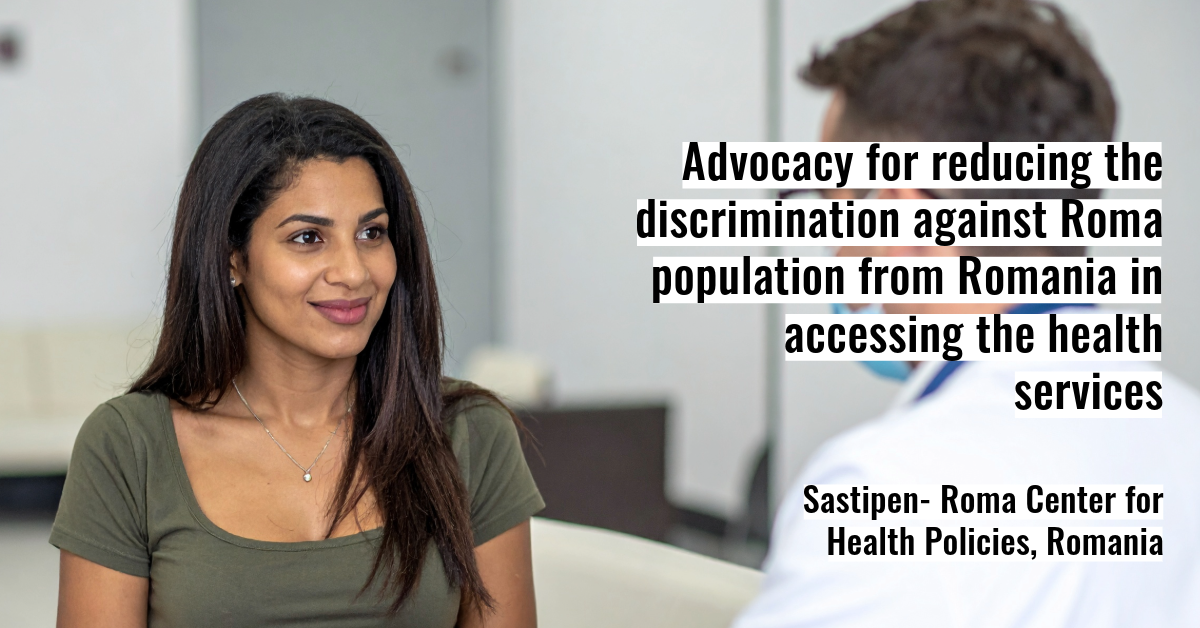
Advocacy for reducing the discrimination against Roma population from Romania in accessing the health services

Advocacy for reducing discrimination against the Roma population from Romania in accessing the health services

This is an article presenting the project prepared by Sastipen – Roma Center for Health Policies, Hungary, given the subgrants under the ERGO sub-granting scheme 2024, funded by the EU

Roma people across Romania still face unequal treatment in healthcare settings, despite legislation protecting against discrimination. Through this project, Sastipen aimed to strengthen its long-standing advocacy work, to ensure that medical professionals and policymakers take anti-discrimination and antigypsyism laws seriously and apply them in practice, not just on paper.

Building Awareness Among Health Workers

A key part of the project involved training health professionals on the front lines of patient care. Two online seminars brought together 54 participants, including community nurses, health mediators, and medical assistants. These sessions focused on human rights, non-discrimination, and the harmful impact of bias in medical settings. Guest speakers, including experts from ERGO Network  and the National Agency for Roma, helped to frame the issue and encouraged open discussion that made the meeting very impactful.

The second phase of the project involved direct engagement with national and local health authorities. In partnership with the National Institute of Public Health, Sastipen hosted a two-day training with 32 officials from the Ministry of Health and County Public Health Directorates. Participants reviewed case studies and collaborated to draft a working procedure aimed at preventing discrimination within public health units.

This procedure was further refined during a follow-up online workshop with 28 key stakeholders, including ministry representatives, hospital managers, and family doctors. By the end of the session, the document was finalised and submitted to the Ministry of Health.

Between July and October 2024, the team launched an advocacy campaign aimed at incorporating the non-discrimination procedure into national practice. High-level meetings with the Minister of Health and key officials led to a huge and successful breakthrough: the Ministry formally recognised Sastipen as a partner in managing the national health mediation programme, a first in Romania!

Sastipen also built a coalition with Roma and pro-Roma organisations across the country. A formal partnership was signed with the Roma Party ProEuropa to coordinate future action and monitor cases of discrimination.

Looking Ahead

By the end of the project, a working anti-discrimination procedure was developed, partnerships were created, and a new chapter of cooperation with health authorities had begun. The hope is that this model of collaboration, driven by grassroots expertise and formal recognition, can be replicated in other areas of Roma inclusion policy.

If you have any further questions about this application, drop us an email at info@staging.ergonetwork.org.


National Coalition

Strengthening Roma Civic Participation in Developing of Roma Social Policies

This is an article presenting the project prepared by Autonamia Foundation, Hungary, given the subgrants under the ERGO sub-granting scheme 2024, funded by the EU

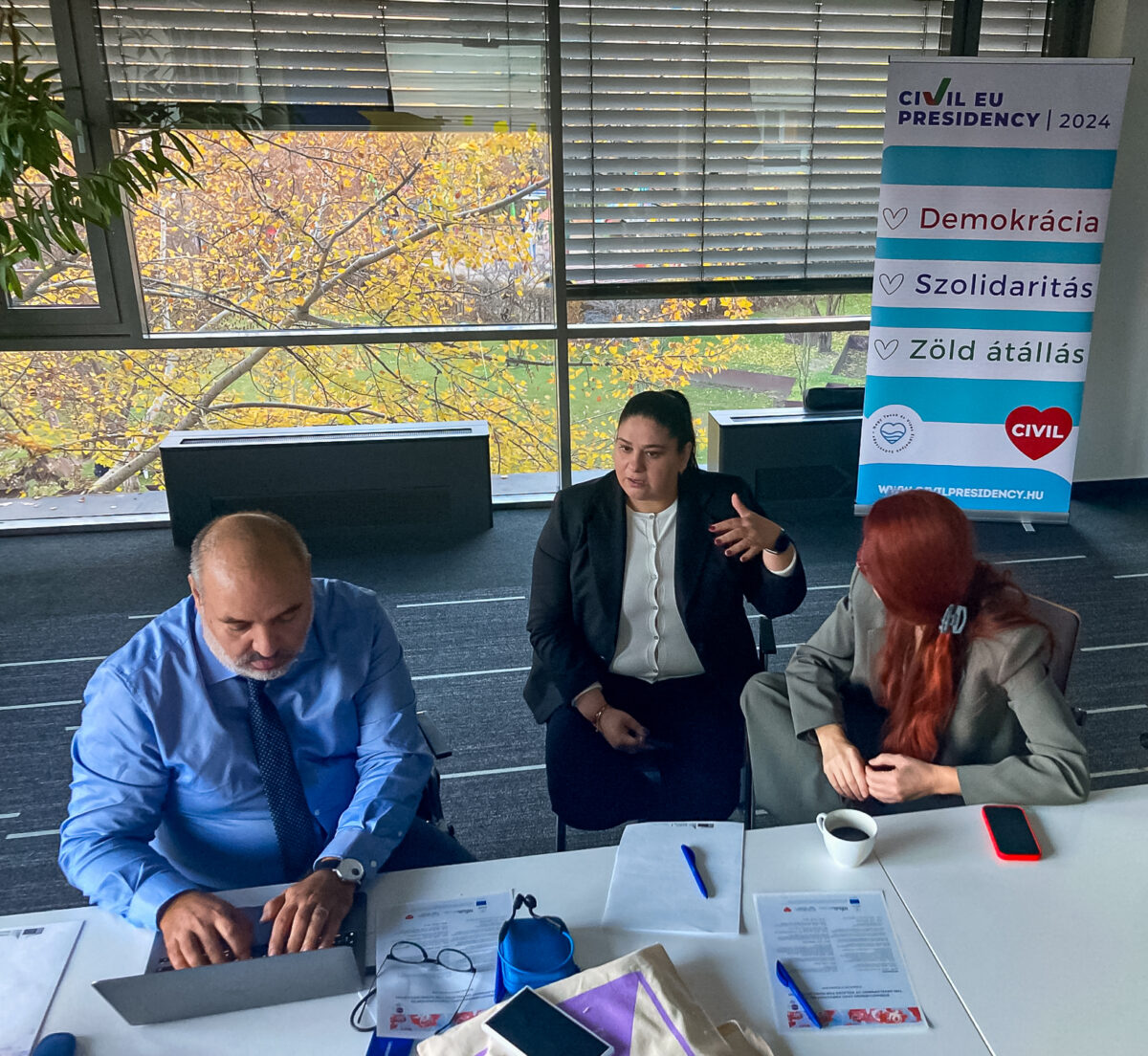
On 15 November 2024, representatives from civil society organisations and government officials from across Europe gathered in Budapest for a meeting focused on strengthening national Roma strategies. Organised by Autonomia and supported by ERGO and partner CSOs, the event aimed to promote practical collaboration between governments and grassroots actors working on Roma inclusion.

During the event, actionable and transparent strategies to address long-standing challenges were created. But just as importantly, it provided a much-needed space to listen, learn, and understand one another’s perspectives more deeply.

Working Together

Preparation began in May 2024. Each country team was composed of both CSO and government representatives. Twelve participants attended, with all invited countries represented except the Czech Republic. The meeting included guest speakers such as the representative of the Roma unit from DG JUST and Gabriela Hrabanová, executive director of ERGO Network. The representative of the Roma unit delivered the feedback, offering insights into the EU’s expectations for national Roma strategies and highlighting the importance of inclusive dialogue throughout the planning, implementation, and monitoring phases.

Country teams presented on three key topics:

  • Updates to national Roma strategies.
  • Consultation processes between governments and civil society.
  • The role of Roma NGOs in monitoring progress.

Participants discussed examples and explored the principles of effective civil society and government cooperation. These conversations helped to draft the declaration, which the participating CSOs endorsed. A professional video team was on-site, offering participants a chance to record short, self-promotional clips. Six participants took part, producing one-minute videos. The videos hold powerful and impressive messages that can now be used for outreach and awareness. All these initiatives serve as a promising starting point for future advocacy.

Looking Ahead

The event delivered several clear achievements. It provided a safe space for open discussion, allowing participants to engage meaningfully with one another. This multi-stakeholder approach, which brought together national representatives and civil society actors from multiple countries, created a valuable foundation for sustained exchange and mutual learning. A joint declaration was also drafted, laying a solid base for continued advocacy and collaboration.

ERGO now holds valuable materials from the event to support its future efforts, while Autonomia is expected to build on this momentum in its ongoing work with the Hungarian government. The event demonstrated that although collaboration between governments and civil society can be complex, it is both possible and essential, particularly when it comes to ensuring that national Roma strategies are not merely theoretical documents but are actively implemented and grounded in lived realities.

If you have any further questions about this application, drop us an email at info@staging.ergonetwork.org.

ERGO Network opinion on Multiannual Financial Framework for Roma

ERGO Network opinion on Multiannual Financial Framework for Roma

Significant shifts are underway as the EU prepares its next long-term budget (2028–2034). Global crises, digital change, and new leadership are shaping priorities, and the European Commission’s recently published Roadmap focuses heavily on competitiveness and efficiency.

However, one crucial issue is missing: Roma inclusion.

Over 6 million Roma live in the EU—80% at risk of poverty, fewer than half in paid work, and 1 in 4 facing daily discrimination. The proposed budget risks cutting or merging key social programs, threatening the fragile progress made so far.

Roma inclusion must be built into the next multiannual financial framework (MFF) from the start to meet the EU’s 2030 goals and uphold the European Pillar of Social Rights.

ERGO Network has outlined clear recommendations to ensure this happens:

  • Keep rights-based rules: Tie EU funds to real action, including national Roma inclusion strategies.
  • Protect social funding: Maintain the EU’s Cohesion Policy, which supports education, housing, and health for vulnerable groups.
  • Keep ESF+ independent: The European Social Fund+ must remain a dedicated tool for fighting poverty and inequality.
  • Enforce EU values: Countries should not violate basic rights – through racism, discrimination, or abuse.
  • Support civil society: Roma-led organisations need resources to advocate and build inclusion from the ground up.

The next EU budget is a test of values. A competitive Europe must also be a fair one, and the MFF must deliver on both.

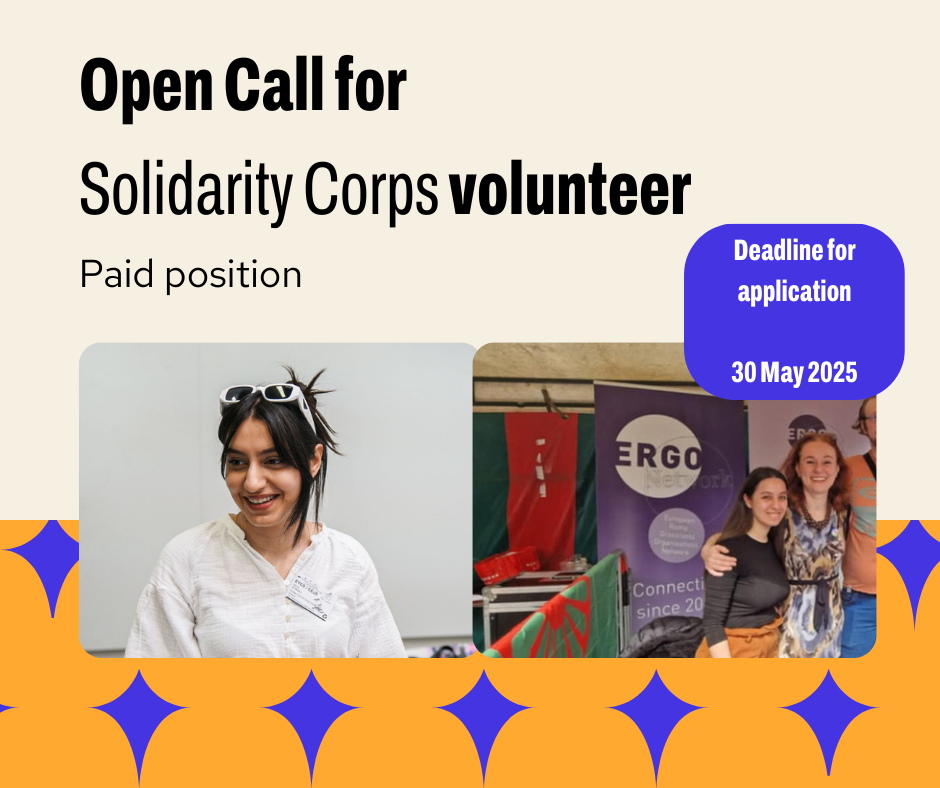
Call for Solidarity Corps volunteer in ERGO Network 

Call for Solidarity Corps volunteer in ERGO Network 

ERGO Network is looking for one enthusiastic and active young Roma who would like to join our office team in Brussels for 8 months in the framework of the European Solidarity Corps. 

When: 1 volunteer from September 2025 – April 2026 (8 months) 

Where: ERGO Network office in Brussels, Belgium 

Who: Young Roma professionals between 18 and 30 

How much: Monthly allowance of 1200 Euro 

Deadline for applications: 30th May 2025

During your time in ERGO Network, you will learn about international advocacy, help us organise international meetings and events and get actively involved in Roma activism and international Roma networks in Brussels.  

Because our organisation aims to nurture a new generation of Roma activists, we are looking for a young Roma person to stay with us until the end of April 2026. 

Your tasks will be defined together with you depending on your interests and skills, but can include: 

  • Youth participation and non-formal education: Representation of ERGO Network in Roma youth events, facilitation of workshops and seminars. 
  • Advocacy and policy: Support ERGO staff in EU advocacy work on social policies and anti-discrimination policies; attend debates, hearings and meetings with other stakeholders to challenge stereotypes and racism, build partnerships with Roma and non-Roma organisations from Belgium and other European countries. 
  • Meetings and events: Assist in the organisation of the International Roma Day 2025 in Brussels and the EU Roma Week 2025, contribute to the organisation of meetings, conferences, events and international seminars of ERGO Network and its partners. 

Your profile: 

  • Young Roma between 18 and 30 years from an EU Member State 
  • Good English language skills, both oral and written (At least level B1) 
  • Computer literacy (experience with Microsoft office package and social media) 
  • High motivation to learn more about Roma activism and advocacy work and to contribute to a small but very active European NGO 
  • Previous involvement in Roma or (pro) Roma NGOs will be considered an advantage 
  • Reliable, well-organised, and with attention to detail 

You will work 30 hours per week (including an online language course if desired). Working hours will be from Monday to Friday between 9:00 – 15:00. However, working hours can be adapted to your needs and the activities you will be involved in.  

We aim to support young people who are enthusiastic about our cause and want to gain experience that can be later transferred to national or local NGOs. We especially welcome applications from people who are motivated to challenge stereotypes, antigypsyism and racism, and who show an open attitude for a unique learning and life experience, as well as a volunteer spirit of creativity, initiative, responsibility and independence. 

We offer: 

  • An allowance of 1200 Euro that includes money for accommodation, meals, local transport, language course, and pocket money 
  • Travel costs to Brussels 
  • Health insurance for the whole year (offered through the ESC scheme, in addition to the EHIC card of your country) 
  • On-arrival and mid-term training with other Solidarity Corps volunteers, and lots of learning and development opportunities with ERGO Network and our partners 
  • Access to an online French course offered to European Solidarity Corps volunteers 
  • An exciting and unforgettable experience, working for a multicultural international organisation in the capital of Europe! 

How to apply: 

Please send your motivation letter (1 page) and CV (max 2 pages) by 30th May 2025 by e-mail to:  m.horvathova@staging.ergonetwork.org.  

We will interview shortlisted candidates in the week of 23rd June and will make our decision by the end of June at the latest.  

Before coming to Brussels, we will support you in finding accommodation and help you get ready for your time with us.  

Do not hesitate to contact us for more information at m.horvathova@staging.ergonetwork.org. Please also feel free to contact our current volunteer Stelina Dungaj (s.dungaj@staging.ergonetwork.org) for any questions you would like to ask from future to current volunteer 😊.  

`
General – Page 5 – ERGO Network

By continuing to use the site, you agree to the use of cookies. more information

The cookie settings on this website are set to "allow cookies" to give you the best browsing experience possible. If you continue to use this website without changing your cookie settings or you click "Accept" below then you are consenting to this.

Close