Nothing about us without us – housing in Usty nad Labem

ERGO Network today wrote a letter to the Social and Health Commission of the Municipality of Usti nad Labem, Czech Republic, concerning the housing situation of more than 200 inhabitants of two residential hotels, among them at least 80 children and most of them of Romani origin.

The news agency Romea writes:  “The inhabitants of two residential hotels in the Czech city of Ústí nad Labem that will close at the end of June still do not know where they will be moving. During their housing search they are encountering the need to pay deposits they cannot afford, as well as discrimination from landlords.  The Střekov Municipal Department wants to buy out the residential hotel on its territory, according to local mayor Eva Outlá (PRO!Ústí), who informed the Czech News Agency (ČTK) and Czech Radio of her plans. The tenants of both facilities allegedly learned last week from media reports that their current landlord will be closing up shop.”

The local Roma organisation Konexe describes the situation as follows:

“We have been using the community work and empowerment methods in the residential hotels intensively since Friday, 25 May. During that time, several meetings of tenants were held at both residential hotels, during which the people facing eviction have formulated their demands. These families are actually facing the pressure of a horrible situation. On the regular housing market they have almost no chance of finding apartments, there is an atmosphere of depression and hopelessness dominating the facilities. That is being passed on to the children there”.

ERGO Network is asking the municipality that a solution is found in dialogue with the target group. It is very important not to favor solutions that are not designed together with the people whose lives will be influenced by the decisions.  Local organizations, naturally, should play an important role in facilitating such contact and organizing a series of meetings. At those meetings solutions could be found that will satisfy all sides.

We are aware of the situation in the Czech Republic. Romani people face antigypsysm daily and their chances at being included in the fair housing market are almost zero. Nevertheless, the fact that Romani people do not have that opportunity and that they pay much higher rents to be accommodated in shocking conditions is something that must be underlined in this case. Who else besides City Hall and nonprofit organizations is able to give a helping hand with aiding the inclusion of these people onto the housing market?

Read the letter here in English or in Czech.

Read the full article of Romea about the situation in Usty nad Labem:
Roma Cafe

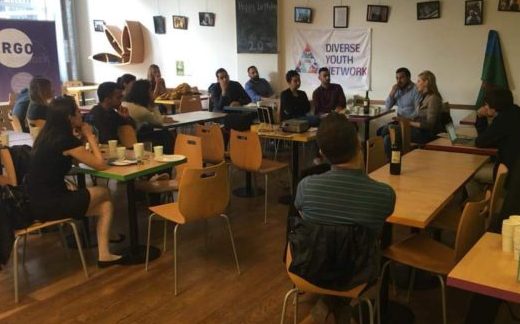
Roma Café discussion kicks off on Romani Resistance Day

May 16 is a symbolic date for now in the contemporary Roma movement throughout Europe – a day that intends to shift into a positive narrative by highlighting Roma heroes during the holocaust. ERGO Network together with the Diverse Youth Network organized a renewed concept of Roma Café on May 17 to engage in discussions with Roma and non-Roma on what it means to us to have a Roma Resistance Day.

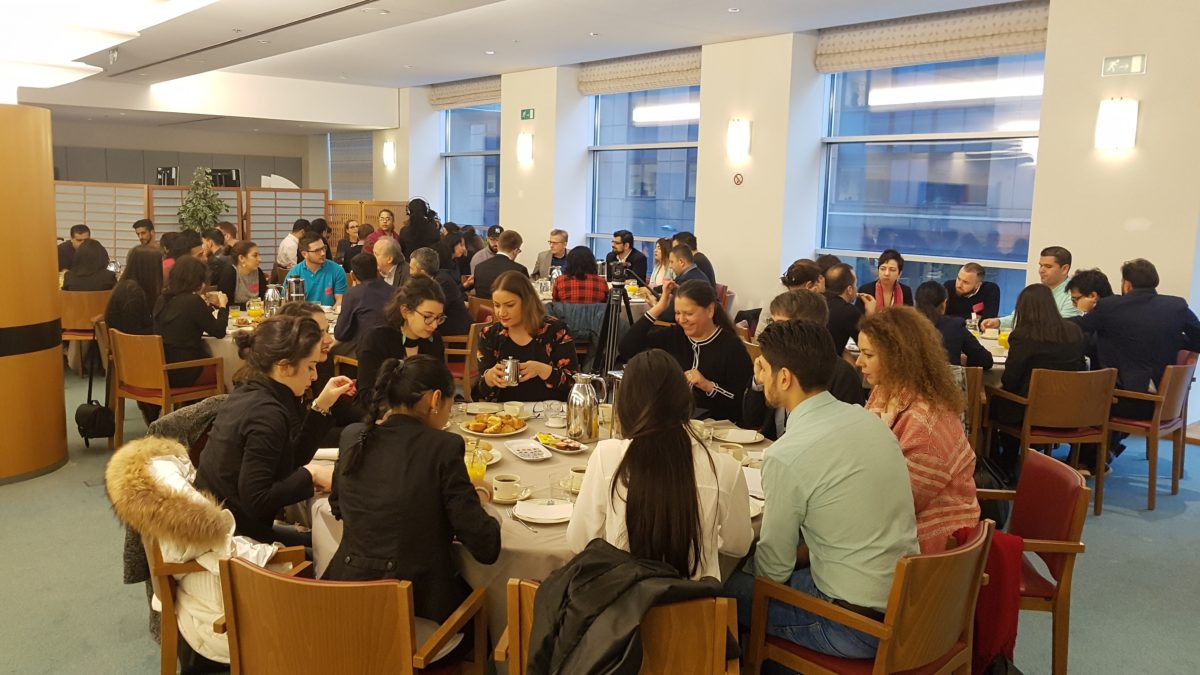
During the Roma Café guests came together from all over Brussels and Europe. Ms Evelin Verhas joined us from the Budapest based Tom Lantos Institute to present the approach of a human rights organization as well as to provide insights into the Roma Resistance research that has been conducted in 5 European countries. It was important to set the scene with a video interview, where a French Roma World War II survivor, Raymond Gureme explains his every days during the 40s in a very informative testimony. Mr. Atanas Stoyanov kicked off the discussion sharing his own motivation and experience being part of the Dik I Na Bistar movement as a young Roma who has been involved since the very beginning as a participant, later as a trainer and group leader. The DIK I NA BISTAR movement is organized by the Ternype Roma International Youth Network bringing together young people from all over Europe to Krakow and Auschwitz to commemorate the Roma genocide on August 2. Besides the remembrance initiative, a training component is also empowering young Roma and non-Roma.

The research – Joanna Talewicz-Kwiatkowska: `Resistance and Survival of the Roma and Sinti in Auschwitz-Birkenau` – presented by Evelin Verhas pointed out a number of focal points to consider in the current discourse. The minority rights perspective requires the equal recognition of the genocides that have been committed against minorities, and inter and multicultural education must serve as a basis for that. May 16 is researched using the resources that are at disposal such as Roma and Sinti survivor testimonies, memoirs, official records etc., most of them found in the archives of the Auschwitz-Birkenau Memorial and Museum. It should be noted that Joachimowski submitted his testimony three times, each time giving a different date for the events at the Zigeunerlager. Whilst recalling a date from the past may be a challenge for a person submitting a testimony, one needs to be cautious assuming that testimonies necessarily describe historical facts. It should be noted that, until now, no existing research could verify or or disprove Joachimowski’s story. Therefore, this research was meant as a first step towards reconstructing events connected to Roma and Sinti resistance in the Zigeunerlager.

The intention was to stimulate new thoughts and to engage in discussions. The meaning of resistance and how it is present in our everyday lives was very important, but the questions of identity also raised a number of valid points.


Roma and the Post–2020 Policy: Challenges and Opportunities

ERGO Network together with its member organizations will be present at a meeting where they will discuss and present the recommendations they and their partners prepared regarding Roma people in the next EU Multiannual Financial Framework’s post-2020. In advance of the meeting, some background information is provided. We will keep you updated on the event tomorrow.

The current Multiannual Financial Framework, the EU’s long-term budget, runs until the end of 2020. This May, the European Commission will put forward a comprehensive proposal detailing the budgetary objectives and regulations governing the post-2020 Multiannual Financial Framework. Currently at the core of these proposed objectives are the protection of EU’s external borders, support for a true European Defense Union, boosting Europe’s digital transformation, and making the EU’s cohesion and agricultural policies more efficient.

Civil society organizations have identified a number of shortcomings concerning the budget, particularly regarding human rights standards, rule of law compliance as a condition to receive EU funds by member states, and effective monitoring mechanisms on the use of EU funds, including funds spent on Roma inclusion. In the current proposal, the Roma people—as well as other minorities—are not direct beneficiaries of cohesion policy funds, a troubling sign regarding future funding.

This conversation about human rights issues in the EU, featuring European civil society organizations in partnership with national Roma and pro-Roma organizations, will focus on the future political and budgetary priorities of the Union concerning Roma populations.

Speakers

  • Josef  Weidenholzer is a member of the European Parliament, Group of Progressive Alliance of Socialists and Democrats (S&D).
  • Soraya Post is a member of the European Parliament, S&D.
  • Jávor Benedek is a member of the European Parliament, Group of the Greens/European Free Alliance.
  • Claude Cahn is a human rights adviser for the United Nations High Commissioner for Human Rights.
  • Jamen Gabriela Hrabanova is executive director of the European Roma Grassroots Organisations Network.
  • Freek Spinnewijn is director of the European Federation of National Organisations Working with the Homeless (FEANTSA).
  • Nikolay Kirilov works for the Roma Standing Conference.
  • Zsombor Farkas is assistant professor of the Social Work Department at ELTE University.
  • Marc Hostert is head of cabinet of Henri Grethen, reporting member responsible for the audit at the European Court of Auditors.
  • Marie-Anne Paraskevas is senior policy expert at the Directorate General for Employment, Social Affairs & Inclusion of the European Commission.
  • Andor Urmos is policy analyst for the Directorate General for Regional Policy of the European Commission.


EU Roma Week: an opportunity to focus on tackling antigypsyism in Europe

EU Roma Week took place last week for the third time in the European Parliament, to mark International Roma Day on 8 April. It was an important opportunity to put the fight against antigypsyism – the specific form of racism faced by Roma, Sinti and Travellers – at the forefront of the European Union agenda, and to highlight the need to uphold the fundamental rights of Roma in Europe.

Roma are part of European societies and have been for centuries. But many barriers prevent them from being equal citizens. Tens of thousands of Roma are qualified professionals, but they remain invisible because of the “Gypsy” stigma. An overwhelming proportion of Roma – 80 % on average in the nine EU Member States – still live at risk of poverty, according to a recent report by the EU Fundamental Rights Agency. One in three Roma are victims of harassment. Roma also regularly experience discriminatory stop and search by police, police raids on Roma settlements and other forms of harassment by police forces.

Antigypsyism is often used in a narrow sense to indicate anti-Roma attitudes or the expression of negative stereotypes in the public sphere or hate speech. However, antigypsyism gives rise to a much wider spectrum of discriminatory expressions and practices, including many implicit or hidden manifestations. Antigypsyism is not only about what is being said about Roma and to Roma, it is also about what is or is not being done to combat structural discrimination and dehumanisation. As such, it is also a root cause of Roma exclusion in Europe.

Eight years ago, the EU adopted measures for Roma inclusion, but European Roma continue to live in a deplorable situation. Discrimination, hate crime and speech, police brutality and segregation persist across EU countries and fuel exclusion of Roma from society. This highlights the urgency of stepping up efforts to tackle structural and institutional racism so that Roma can finally become equal citizens in their societies.

This will require that structures that monitor racism, discrimination, hate crime, hate speech, policy implementation are revised and strengthened to effectively document and combat antigypsyism in all its complexity. Civil servants, educators, care workers, police, judiciary and other relevant official bodies need to receive training in how to recognise and combat antigypsyism. The EU and national governments must allocate specific and adequate funding to programmes aiming to fighting antigypsyism. Roma civil society must also be empowered to advocate for better policies and make their concerns heard at the local, national and EU level. They have a crucial watchdog role to make public institutions accountable.

EU decision makers must realise that social inclusion programmes will have no impact if racist narratives and discriminatory practices are left unaddressed. A growing sense of impunity for toxic discourses and violent acts will undermine implementation of these programmes on the ground. By fighting antigypsyism, including within institutions, we can secure a better place for Roma in Europe.

Roma Traineeship at the European Union Agency for Fundamental Rights (FRA)

Roma Traineeship at the European Union Agency for Fundamental Rights (FRA)

The call for applications for the FRA Roma Traineeship programme 2018-2019 is now open. 

To apply please see the vacancy notice. 

What is it all about?

This traineeship scheme is addressed mainly to recent university graduates of Romani background, without excluding those who – in the framework of lifelong learning – are at the beginning of a new professional career.

The aims of the traineeship at the FRA are:

To provide Roma trainees an understanding of the objectives and activities of the Agency’s role in ensuring full respect for fundamental rights across the EU.

To enable Roma trainees to acquire practical experience and knowledge of the day-to-day work of FRA Departments and sectors. To provide the opportunity to work in a multi-cultural, multi linguistic and multi-ethnic environment, contributing to the development of mutual understanding, trust and tolerance. To promote European integration within the spirit of new governance and through active participation to create awareness of true European citizenship.

To enable Roma trainees to put into practice knowledge acquired during their studies, and in particular in their specific areas of competence. To introduce these graduates to the professional world and the constraints, duties and opportunities therein.

To allow Roma trainees to contribute to the Agency’s mission in helping to make fundamental rights a reality for everyone in the EU.

`
General – Page 38 – ERGO Network

By continuing to use the site, you agree to the use of cookies. more information

The cookie settings on this website are set to "allow cookies" to give you the best browsing experience possible. If you continue to use this website without changing your cookie settings or you click "Accept" below then you are consenting to this.

Close