Roma inclusion in the SDGs: Call for experts

ERGO Network is contracting an external consultant to prepare a report on the Sustainable Development Goals as a tool for Roma inclusion


Download the complete call for an external consultant.

Roma in the Sustainable Development Goals

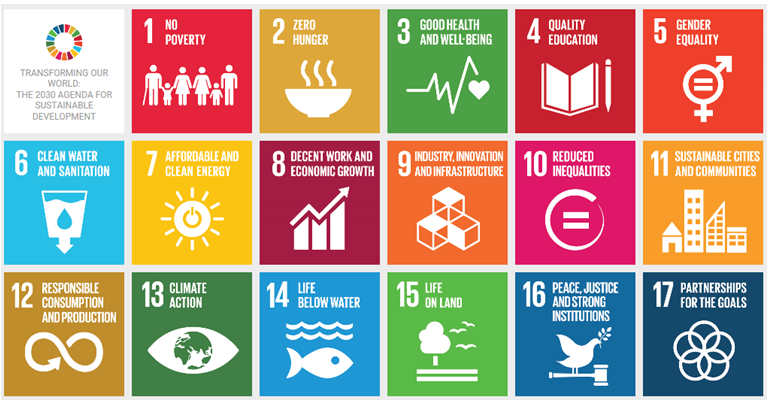
Since the universal acceptation of the Agenda 2030 in 2015, the Sustainable Development Goals and their targets stimulate action in areas of critical importance for humanity and the planet. All UN Member States are asked to work towards fulfilling the SDGs until 2030. They are thus an important advocacy tool for civil society in order to push their governments and international institutions towards ending poverty and hunger, protecting the planet and fostering peaceful, just and inclusive societies.

ERGO Network intends to include the SDGs in its work with Roma and pro – Roma grassroots organisations across Europe.

Role of the consultant

We are searching for an external consultant who will prepare a report on the role of the Sustainable Development Goals in the field of Roma inclusion and combatting antigypsyism. Specifically, the consultant is expected to prepare a report of approximately 20 pages in English including the points given in the attached call.

Profile

  • Proven knowledge about Roma and sustainability issues, specifically the Agenda 2030
  • Experience working with civil society organisations in the fields of advocacy and capacity-building
  • Excellent writing skills
  • Proven research and analytical skills
  • Ability to work independently

Contract and budget

The independent evaluator will be subcontracted to fulfil part of the work programme in the Framework Partnership Agreement between ERGO Network and DG Employment. The expert has no rights vis-à-vis the European Commission.

The expert shall be paid for the execution of the activities and services a fee of 3,000 EUR, all taxes and VAT included.

Timing

The deadline for the first draft of the report is 1 November. A final version should be finished, after feedback from the ERGO Secretariat, by 15th December.

Application procedure

Interested and qualified candidates should submit the following documents:

  • Motivation letter
  • CV
  • Sample writing (at least 2 pieces)

We will select the expert according to the principle “Value for money”. Please send your application to info@staging.ergonetwork.org, by August 20th 2018, 23:59 CET.

For further questions, please contact Christine Sudbrock (c.sudbrock@staging.ergonetwork.org, +32 2 893 10 49)


Call for consultant for external evaluation

Call for external consultant

Download the Call for external consultant.

We are searching for an external consultant to assess the achievements and lessons learned of the Framework Partnership Agreement between ERGO Network and DG Employment (2018-2021) entitled ‘Roma Included in Social Europe’.

The expert will be contracted for the evaluation of the first year of the work programme – 2018 – but we foresee a longer-term cooperation for the whole duration of the Framework Partnership Agreement for annual evaluations in order to improve our work through the consultant’s feedback and recommendations. This longer-term cooperation is subject to receiving the annual operating grant of DG EMPL and the success of the cooperation in the first year.

Specifically, the evaluator is expected to:

  • Conduct interviews with ERGO members participating in the implementation of the FPA as well as with ERGO staff in order to assess how well the objectives of year 1 have been achieved and how well the management structure of the work programme functions.
  • Conduct one evaluation visit to Hungary in order to interview organisations participating in the FPA.
  • Draft a report describing lessons learnt and providing recommendations for improvement for the next three years of the FPA.

Profile:

  • Excellent knowledge of evaluation methodology and experience with programme evaluations
  • Expertise on Roma issues and policies on European Union and member state level
  • Experience working with civil society organisations in the fields of advocacy, capacity-building and network building
  • Excellent writing skills and ability to concisely summarise evaluation results for different audiences
  • Excellent research and analytical skills
  • Ability to work independently
  • Additional language skills desirable

Conditions

The evaluation will be conducted from September to December 2018, with the final report expected for the end of December 2018.

Times for the evaluation visit and interviews will be agreed together with ERGO staff and partner organisations.

Contract and budget: The independent evaluator will be subcontracted to fulfil part of the work programme in the Framework Partnership Agreement between ERGO Network and DG Employment. The expert has no rights vis-à-vis the European Commission.

The expert shall be paid for the execution of the activities and services a fee of maximum 5,000 EUR, all taxes and VAT included. The expert is expected to pay her or his own travel and accommodation to Hungary (2 days) and Brussels (2 days).

Application procedure

Interested and qualified candidates should submit the following documents:

  • CV, highlighting past similar assignments
  • Motivation letter, including proposed methodology

We will select the expert according to the principle “Value for money”. Please send your application to info@staging.ergonetwork.org by August 20th 2018, 23:59 CET.

A detailed project summary can be provided upon request.

For further questions, please contact Christine Sudbrock:  (c.sudbrock@staging.ergonetwork.org)

Roundtable in the European Parliament on Transparency Criteria

Transparency and Accountability Criteria for Roma Grassroots NGOs

Brussels, 28 June 2018

At a round table discussion in the European Parliament ERGO Network and its members from the Western Balkans, Turkey and the ‘Visegrad countries’ Hungary, Slovakia and Czech Republic presented a new project that will strengthen Roma civil society as independent and transparent watchdog organizations.
The event was kindly hosted by Soraya Post (Greens/EFA), Peter Niedermuller (S&D), Tomas Zdechovsky (EPP) and Javor Benedek (Greens/EFA).

Being transparent and accountable are important prerequisites for the effectiveness of civil society that is taken seriously by its institutional counterparts and other partners, and at the same time gives the right to demand transparency and accountability from other stakeholders.
–Therefore ERGO Network developed a set of ‘transparency and accountability criteria’ and a corresponding capacity-building tool to improve the quality in governance, financial management and performance of grassroots organisations.

The discussion was opened by ERGO Network Director Jamen Gabriela Hrabanova who stressed the importance of promoting transparency and accountability within NGOs and among institutions.

Benedek Javor MEP welcomed the transparency criteria through a video message. “In particular I found especially meaningful the goal for equal partnership with the institutions for the better connection with the grassroots level and greater sustainability of NGOs” Benedek Javor said. He also stressed the importance of funding for NGOs in order to be able to fulfill the duties as watchdogs organisations. Tomas Zdechovsky MEP added that the spotlight on Roma participation in the European Parliament needs to happen all year long and not only during the Roma Week.

Jelena Jovanovic, Policy and Research Coordinator of ERGO Network presented the transparency criteria and explained the cooperative development process between all partners, followed by Andras Nun, director of the one of Hungarian ERGO member organisations Autonomia Foundation who introduced the participants to a board game ‘to help you fall in love with the dreadful issues of accountability and transparency’.

In the second panel of the day participants heard from Vitor Teixeira, Transparency International Europe, about the importance of not just being transparent as civil society, but more so holding institutions to account. Gabriella Civico from Civil Society Europe discussed the shrinking space for civil society in Europe and repeated the call for better funding for civil society’s watchdog role.

The debate was closed by Bodil Valero MEP and Natacha Katatchkine, Head of the EU internal policy team for the Open Society European Policy Institute. Bodil Valero and Natacha Katatchkine added that the lack of transparency has been used by those who want to silence things. She closed by pointing out that NGOs are ready to take the lead and are able to bring tools like those of ERGO Network.

The project was implemented with financial support from the European Commission and the International Visegrad Fund.

Download the Transparency and Accountability Criteria

Evictions of Roma Travelers in Brussels

Evictions of Roma Travelers in Brussels: Is Antigypsyism the last accepted form of racism?

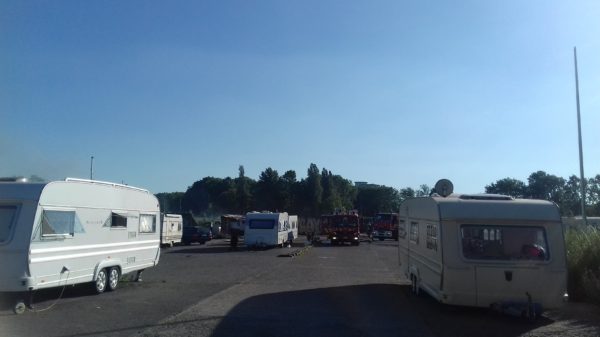
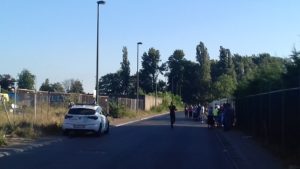
On 28 June 2018, evictions of Roma Travelers are to take place in Anderlecht, Brussels. The group of Roma who are going to be evicted are Belgian Roma for centuries. They were born here, as well as their parents and their grandparents. Roma Travelers have always been living on the territory of the Municipality of Anderlecht – part of the European capital Brussels.

Nevertheless, Belgian Roma Travelers remain one of the most neglected communities in Europe. During the Second World War, a big part of the Belgian Roma Community who is traditionally travelling and living in caravans were deported to the Nazi concentration camps. Today, a generation later, Belgian Roma Travelers are being constantly evicted from site to site, unwanted and unwelcomed by the local authorities.

Only two weeks ago, the Anderlecht Municipality announced to the Belgian Roma living on Dante Street that they needed to leave the site. The motive: the land where the camp is located is polluted.

Apparently, this is not the first attempt of the Mayor of Anderlecht Eric Tomas from the Socialist Party to get rid of the Belgian Roma Travelers site. Many times the police have come to the site and ordered them to move without any official order or notice.  In April 2018, the local police went to the Belgian Roma Travelers site on Dante Street and ordered them to move, again without any document. However, this time the Roma refused to follow orders without the needed legal attributes.

The owner of the land where the Roma camp is located is not the municipality of Anderlecht.  The land of the camp is the private property of the Boghossian Foundation – an Armenian philanthropist family. So far, the Boghossian Foundation refused to cooperate with local authorities and police and to support the eviction of the Roma from their private land. Despite this, the municipality have found an excuse to still conduct the evictions – the pretext is that the land is polluted. This is happening in the context of the coming local elections that will take place in October.

The questions are many. Is Antigypsyism acceptable in the very heart of the European Union and its values? Is the Socialist Party ready to take responsibility for such an act and do they propose any alternative for the Belgian Roma who actually are Belgian citizens? What is the moral right of an Armenian foundation to evict another minority that went through the very same persecution and genocide? Is Antigypsyism the last acceptable form of racism?

There has been the possibility for several years now to create a Travelers site with allocated land and facilities. There is even a special fund from the Brussels Region that can be used for this. However, no municipality so far showed an interest and took advantage of this funding (except Haren).

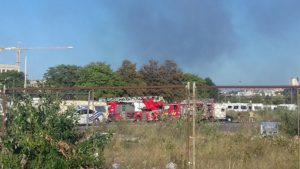
Three days before the evictions part of the camp was set on fire. Тhe perpetrators remain unknown. The evictions will still take place as planned on 28 June 2018. Where will the Belgian Roma go? Will their children attend school? Will they be provided an alternative? The answer is No. Until the next evictions.

Written by Atanas Stoyanov

How realistic is the new EU programming period when it comes to Roma?

How realistic is the new EU   programming period when it comes to Roma?


Last month the European Commission has launched their proposals for the next European Union Multi Annual Financial Framework (MFF) 2021-2027 called “A Modern Budget for a Union that Protects, Empowers and Defends”.   The MFF is meant to increase solidarity, social cohesion and social protection and will be supported by a series of proposals and financial instruments such as ESF+ ERDF, InvestEU, Eramsus+  etc. These proposals are under discussions and until the final approval in 2019.

ERGO Network fed into the process of the European Commission in drafting and proposing new priorities for its programmes and frameworks targeting Roma  through a  set of specific recommendations in which we address a number of shortcomings that must be tackled in the next cycle.

The proposed MFF did mentions  some general points that are in line with our suggestions, such as the fact that there should be an open and transparent monitoring process, that the EU funds shall not support actions that promote segregation and that there should be more focus on capacity building for civil society organisations.

Roma are mentioned in the proposal of the MFF: “promoting socio-economic integration of third country nationals and of marginalised communities such as the Roma”. However, this narrative implies that they are still not seen as European citizens; furthermore there are no specific indicators that would reflect a stronger focus on Roma inclusion in the current proposal.  The annexes of the proposal  only briefly mention that there should be “inclusion of the thematic enabling conditions such as National Roma Integration Strategy”.

ERGO Network also calls upon the European Council and the European Parliament to ensure in their negotiations that the EU Framework for Roma Integration will continue.  The ERGO secretariat together with the Alliance against Antigypsyism  sent recommendations to Members of the European Parliament  ahead of the European Parliament plenary debate on 13th of June on the Implementation of and follow-up to the EU framework for National Roma Integration Strategies. Our position was clearly strengthened by most of the European Parliament Members. They argued in favour of a renewed post-2020 EU Framework for National Roma Integration Strategies, which should address antigypsyism as a central priority.

However, the 25% earmarking for social inclusion under the ESF+ , the main fund supporting Roma inclusion, is still not enough. So far most of the EU member states have easily reached this amount in the current ESF framework and still there has been little or no progress in tackling poverty, discrimination and social exclusion.

Without a clear Framework, thematic objectives and specific budget lines, Roma, as the biggest minority in the EU, will again be lost in the new programming period mixed under the marginalized groups and competing with “third country nationals”

ERGO will continue to monitor the discussions and negotiations in Brussels and ask a strengthened EU Roma Framework with clear objective and indicators and sufficient resources to address inclusion and Antigypsyism.

`
General – Page 37 – ERGO Network

By continuing to use the site, you agree to the use of cookies. more information

The cookie settings on this website are set to "allow cookies" to give you the best browsing experience possible. If you continue to use this website without changing your cookie settings or you click "Accept" below then you are consenting to this.

Close