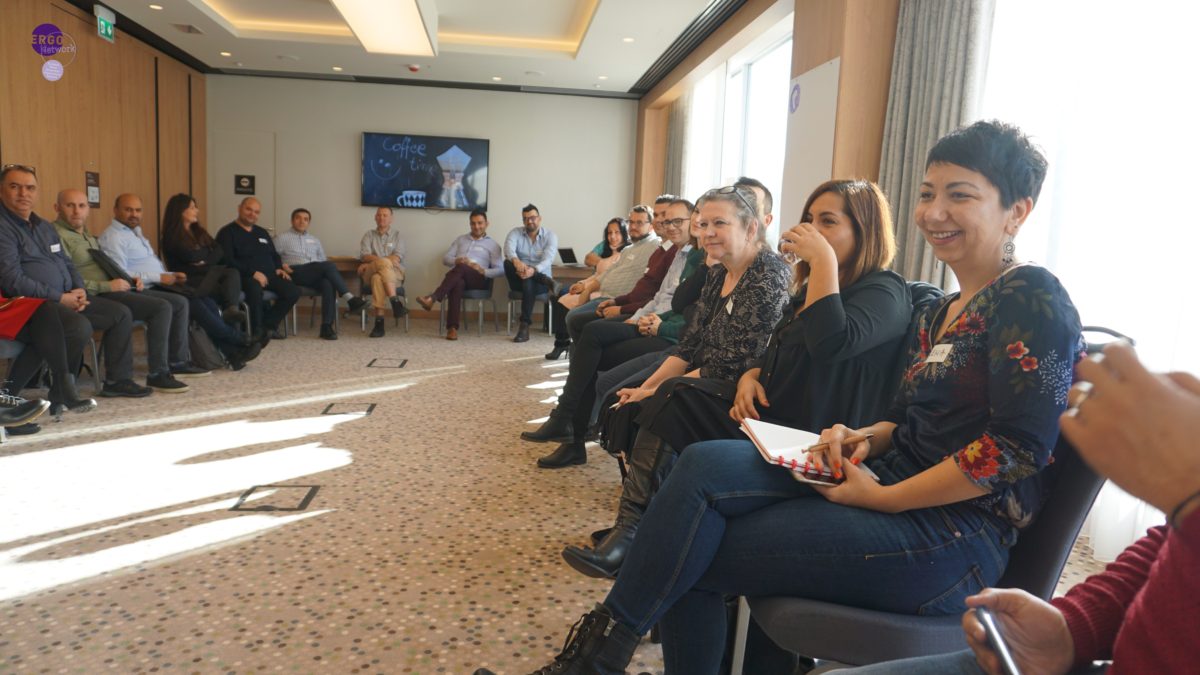
Annual Members Meeting Tirana, December 8 –12 2018

The ERGO Network 2018 Annual Members Meeting took place on 10-11 December in Tirana to consult members on the update of programmes and initiatives and to enable exchange of experiences and information. In addition the participants discussed the future of ERGO Network and a possible formalization as an association.
During the 1st day we updated the members about current and future projects and initiatives of ERGO Network and discussed advocacy priorities of ERGO members.

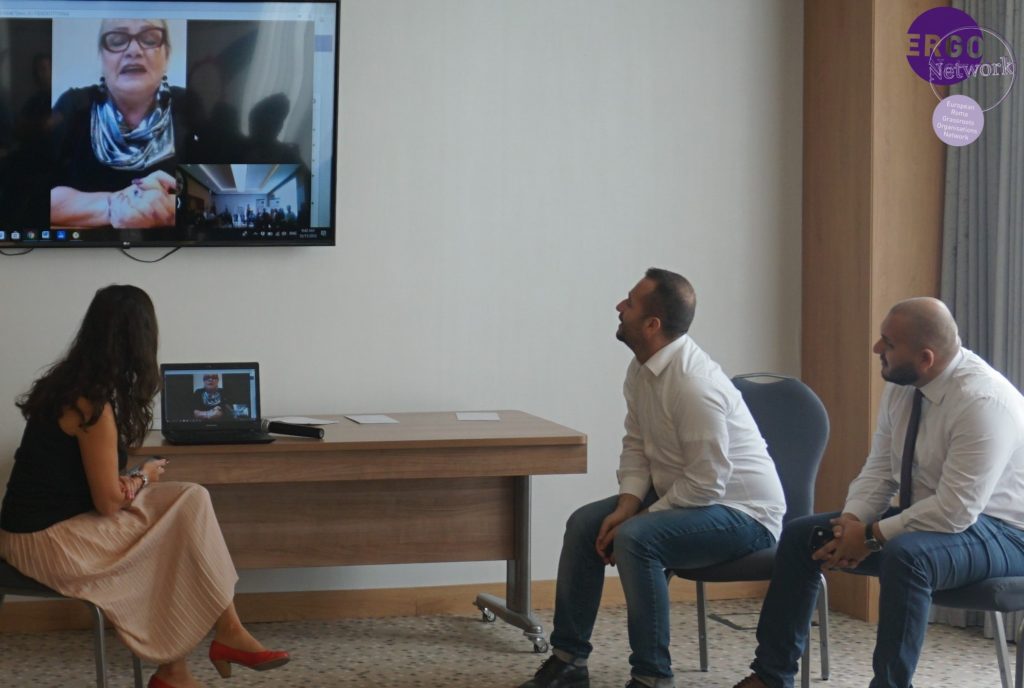
The 2nd day opened with a breakfast with Marta Garcia Fidalgo,adviser for the coordination of Roma policy at DG NEAR. The breakfast was followed by a video meeting with Soraya Post MEP, the new co-chair of ERGO Network.

Furthermore ERGO member Andras Nun from Autonomia Foundation introduced one of the highlights that we developed in 2018: the transparency and accountability criteria and a board game that supports civil society organisations to implement them. 

Then, after reminding ourselves of the 10-years history of ERGO Network and reflecting on the challenges and successes of the organisation, ERGO members discussed the future of the network and a possible formalization as an association under Belgian law.

Moreover they had the opportunity to join working groups that will support ERGO’s work in 2019.

The 2018 Annual Member Meeting ended with a birthday party. The staff of Roma Active Albania prepared an amazing night for the 10 years celebration of ERGO Network. We would like to thank them not only for the party, but for all their help in the preparation and implementation of the Annual Member Meeting!
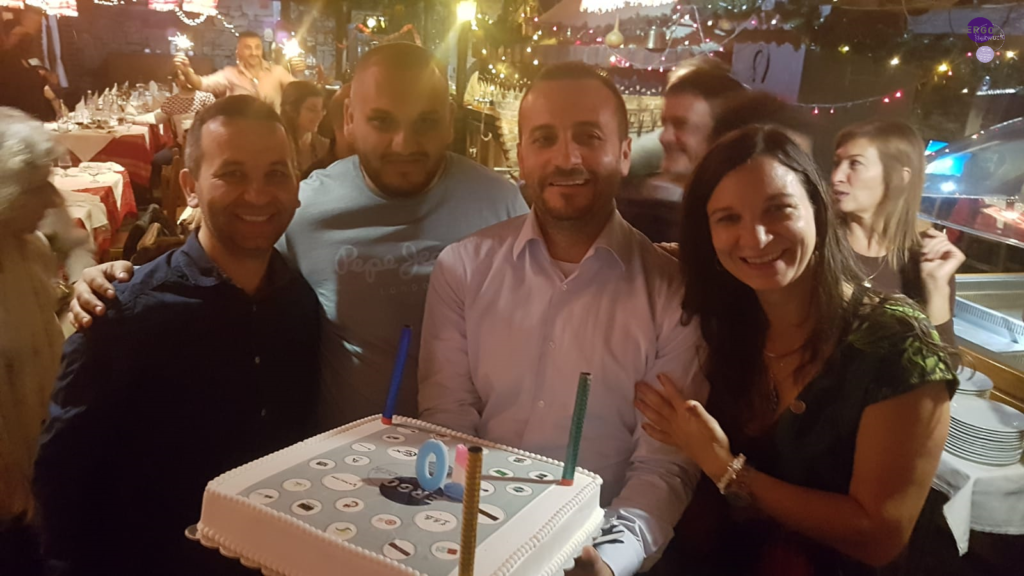
ERGO’s Network Party

ERGO is looking for a volunteer

DEADLINE EXTENDED: Call for Solidarity Corps volunteer in ERGO Network

ERGO Network is looking for an enthusiastic and active young Roma who would like to join our office team in Brussels for 11 months in the framework of the European Solidarity Corps.

When: February to December 2019

Where: ERGO Network office in Brussels, Belgium

Who: Young Roma professional between 18 and 30

EXTENDED Deadline for applications: 13 January 2019

During the 11 months in ERGO, you will learn about international advocacy, help us organise international meetings and events and get actively involved in Roma activism and international Roma networks in Brussels.

Your main tasks will be:
  • Communication and visibility: contribute to the update of the ERGO Network and RomaReact websites and social media channels; development of creative approaches and publicity work to promote our activities and mission and a positive image of Roma.
  • Researching and reporting: Assisting ERGO’s research work e.g. on cases of inequality and antigypsyism all over Europe.
  • Advocacy and policy: Support ERGO staff in EU advocacy work on poverty reduction, social inclusion and antigypsyism; attend debates, hearings and meetings with other stakeholders to challenge stereotypes and racism, build partnership with Roma and non-Roma organisations from Belgium and other European countries.
  • Meetings and seminars: Assist in the organisation of meetings, events and international seminars of ERGO Network and its partners, e.g. our Advocacy Academy, Annual Members Meeting etc.
Your profile:
  • Young Roma between 18 and 30 living in an EU member state or in Macedonia or Turkey
  • Good English language skills, both oral and written
  • Computer literacy (experience with Microsoft office package and social media)
  • High motivation to learn more about Roma activism and advocacy work and to contribute to a small but very active European NGO
  • Previous involvement in Roma or (pro) Roma NGOs will be considered an advantage
  • Reliable, well organised and with attention to detail

You will work about 38 hours per week, including your language course. Working hours will be from Monday to Friday between 9:00 – 17:00. However, working hours can be adapted to your needs and the activities you will be involved in.

We aim to support young people who are enthusiastic about our cause and want to gain experiences that can be later transferred to national or local NGOs. We especially welcome applications from people who are motivated to challenge stereotypes, antigypsyism and racism and who show an open attitude for a unique learning and life experience, as well as a volunteer spirit of creativity, initiative, responsibility and independence.

We offer:
  • An allowance of 1049 Euro that includes money for accommodation, meals, local transport, language course and pocket money
  • Travel costs to Brussels (a lump sum depending on the distance to Brussels)
  • Complementary health insurance
  • On-arrival training with other Solidarity Corps volunteers, and lots of learning and development opportunities with ERGO Network and our partners
  • An exciting and unforgettable experience, working for an international organisation in an international city!
How to apply:

Please send your motivation letter (1 page) and CV (max 2 pages) latest by 13th January 2019 to info@staging.ergonetwork.org.

Do not hesitate to contact us for more information.

You can download the call for applications here.

Christine Sudbrock t: +32 2 89 31 045 | e: info@staging.ergonetwork.org

Minimum Standards for Minorities in the EU

On Monday 3 September 2018, the European Parliament Committee on Civil Liberties, Justice and Home Affairs (LIBE) held a mini-hearing on minimum standards for minorities in the EU. The respect for the rights of persons belonging to minorities is one of the EU’s founding principles and the effective protection of minorities across the EU needs to be strengthened.

ERGO Network Executive Director Jamen Gabriela Hrabanova was one of the experts invited to the hearing to give input to the Committee’s report on the topic.  She pointed out that Roma and other minorities enrich the diverse cultural heritage of the EU; the protection of their rights, however, is currently not ensured. EU Member States have different definitions for minorities and apply different standards for their protection. There is a need for a common understanding and definitions, but also for ensuring the protection of minorities especially against discrimination and any forms of racism.

The Roma Civil Monitor, a project issuing civil society shadow reports on National Roma Integration Strategies in 27 EU member states, shows that even where Roma are recognised as minority, respect of their rights is still lacking or the minority status is only granted for ‘autochthonous’ Roma and not those of migratory background.

ERGO Network believes that the lives of minorities in every country are fragile; the policy frameworks on minorities are depending on political will and societal climate.  For Roma the situation is even more difficult, as there is no home country standing behind them to support the growth of their cultural heritage and language or to ensure the full recognition and protection of their rights. The European Union is the safeguard that brings hope to many.

Minimum standards for minorities should ensure rights to both ethnic and national minorities. They should also pay attention to intersectionality, especially when it comes to discrimination of LGBTI and people with disabilities.

During the hearing, Gabriela Hrabanova furthermore expressed the importance of addressing antigypsyism as core problem for the exclusion of Roma. “Antigypsyism is not explicitly recognized in the relevant policy and legislative documents and antigypsyist crimes are often not seen as such by the responsible institutions”, says Hrabanova. As stated in the European Parliament Resolution on fighting Anti-Gypsyism from 2015 and in the LIBE Committee Report on Anti-gypsyism from 2017 the situation of Roma is worsening and there is a need for urgent action to ensure the remedy of the centuries’ long discrimination and marginalization.

Member states should take both proactive and reactive measures to safeguard equal access of members of minority groups to services, goods, information, etc. and to provide mandatory trainings to duty-bearers.

But importantly, there will be no achievement without real and systemic consultations of minority groups at local, regional and national level to prepare, run, monitor and evaluate both minority specific and mainstream programmes in order to ensure their inclusiveness and non-discrimination.

2017 ERGO Network Annual Report

2017 ERGO Network Annual Report

ERGO Network’s annual report for 2017 is now available. Read the  2017 ERGO Annual Report and learn how ERGO Network and  its members introduced and pursued numerous initiatives to fight antigypsyism and to empower Roma in 2017. In addition the annual report 2017 presents the initiatives undertaken by ERGO to ensure networking between, and capacity building of member organisations. The report contains relevant information and graphs on the achievements and progress made to strengthen the Roma community. ERGO Network will definitely keep the wheel rolling to support the implementation of more and better measures for Roma.

Read the  2017 ERGO Annual Report

`
General – Page 36 – ERGO Network

By continuing to use the site, you agree to the use of cookies. more information

The cookie settings on this website are set to "allow cookies" to give you the best browsing experience possible. If you continue to use this website without changing your cookie settings or you click "Accept" below then you are consenting to this.

Close