Joint Work for the Inclusion of Roma in Bosnia and Herzegovina

Joint Work for the Inclusion of Roma in Bosnia and Herzegovina

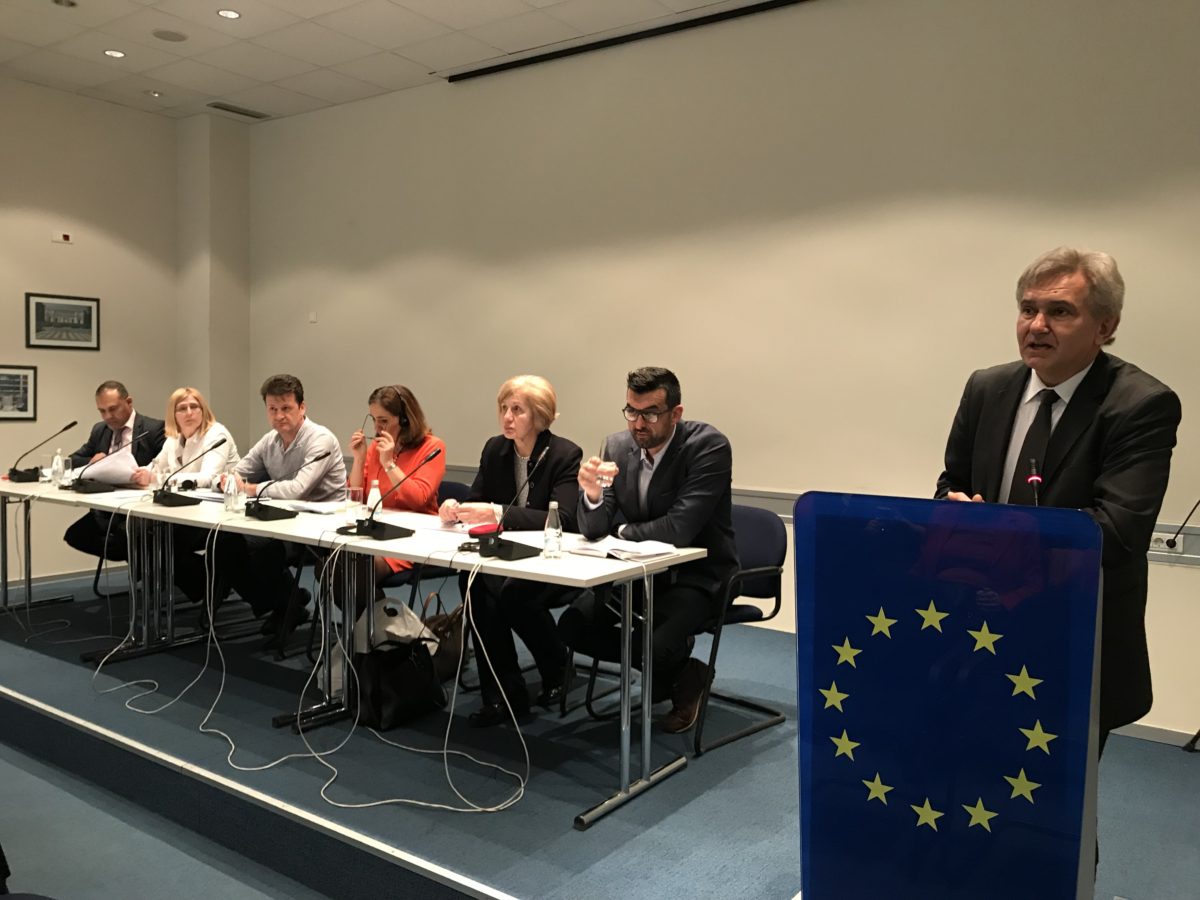
The EU Delegation / Office of the EU Special Representative in BiH, in cooperation with the Ministry of Human Rights and Refugees of Bosnia and Herzegovina, organized on January 31, 2018, Seminar on the Inclusion of Roma in Bosnia and Herzegovina in Sarajevo.

More than 80 representatives of local authorities, non-governmental and international organizations participated in the 4th Seminar on Roma Integration in Bosnia and Herzegovina.

Bosnia and Herzegovina has made some progress in the integration of Roma in the area of housing and registration of citizens, but much still needs to be done in employment, education and health care, said the Roma Affairs Adviser at the European Commission’s Directorate for Enlargement and Neighborhood Policy Marta Garcia Fidalgo.

Minister of Human Rights and Refugees of BiH, Semih Borovac, emphasized that discrimination, prejudice and exclusion from social life continue to be the problems of Roma both in BiH and Europe, and that it warns of the importance of greater political engagement and commitment to the issue of inclusion of Roma in BiH and adequate separation money from the budget for the needs of this population.

Chairman of the Committee on Roma at the Council of Ministers of BiH, Mujo Fafulic, is grateful to international organizations and authorities in BiH (especially the line ministry) for money allocated for solving Roma problems, but also says that their problems are still not resolved.

Head of the EU Delegation to BiH and EU Special Representative to BiH Lars Gunnar Wigemark emphasized in Sarajevo that resolving the position of the Roma minority in BiH is certainly a matter of national interest, and it is also important in the context of joining the European Union of Bosnia and Herzegovina and other countries Western Balkans.

The second annual meeting of the Roma Forum network took place with prominent guests

The second annual meeting of the ROMA FORUM network took place with prominent guests

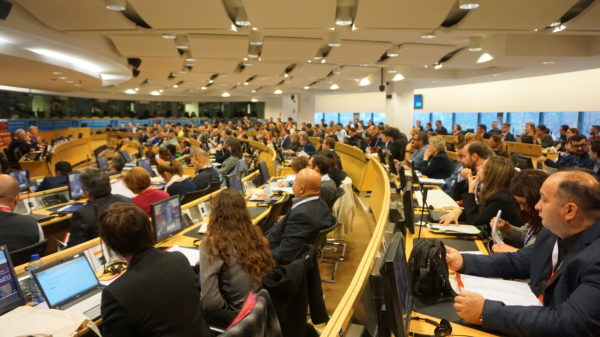
ERGO partner Nevo Parudimos organized the second meeting of ROMA FORUM network. The meeting took place on 4-5 December, 2017 at the Sports Cultural Complex Tei in Bucharest. The meeting was organized within the framework of the strategic partnership coordinated by ERGO.

The meeting was attended by Minister Delegate for European Affairs, president of the National Agency for Roma, , deputy of the Roma minority in Parliament.  Alongside them were representatives of Roma civil society in the country. The novelty of this meeting was that for the first time organizations of Christian Roma participated with a significant number of participants.

The topics addressed at the meeting were:

  • Romanian Presidency of the EU Council – Roma issues on the social agenda of the European Union;
  • Explore strategies to improve the situation of Roma people – the implementation thereof;
  • The analysis of the opportunities available for the Roma NGOS;
  • Presentation of the programs LEADER, Erasmus+ and Europe for Citizens;
  • The planning of future activities of ROMA FORUM;

The Roma FORUM network intends to provide space for debate and analysis of existing policies for Roma people. Roma FORUM is a network of Romani organization, Roma activists and researchers, who want to contribute to the improvement of public policies for Roma communities.

Making the wheel roll

Making the wheel roll

The European Platform for Roma Inclusion,  convened by the European Commission, brings together national governments, the European institutions, international organisations and Roma civil society representatives. By creating a professional hub and meeting place for all, the goal is to strengthen co-operation and exchanges of relevant experience among all stakeholders on efficient Roma inclusion and integration policies and practices.

The European Roma Platform is a significant forum for reflection and apprehensive actions of the multi-stakeholder circle on social and economic integration the Roma population.

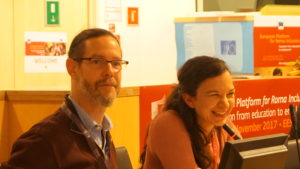
The 11th European Roma Platform took place on 27/28 November in Brussels and focused on the transition from education to employment. Szabolcs Schmidt, head of unit of non-discrimination and Roma coordination, delivered the opening remarks on behalf of the European Commission. The first panel provided evidence on the choice of this event`s topic. The latest numbers and percentages of the European Minorities and Discrimination Survey of the EU’s Fundamental Rights Agency show that despite growing national employment levels, the changes in Roma employment levels are small, or negative. The rate of those Roma who are not in education has also risen in almost all Member States of the EU where a considerable Roma population lives.

Participants from all over Europe shared their concepts and findings from the national level through thematic workshops in the afternoon.

ERGO Network was actively involved in the preparation and running of the event. Not only did several member organisations participate in the platform, ERGO director Jamen Gabriela Hrabanova also facilitated the thematic workshop on employment.  ERGO furthermore launched a campaign to mobilize support for investing in employment opportunities for young Roma during the platform: `Investing in our future: What work(s) for young Roma?’ We brought the messages of young Roma themselves to the event, explored and developed at the ERGO Summer Academy by members of our network. 11 powerful testimonies of young Roma were furthermore portrayed on figurines exhibited around the venue of the event in order to raise awareness of the education and employment challenges of Roma in Europe.

The conclusions of the Platform might not be new to most, but they show the will of the EU institutions and civil society to make the wheel roll for Roma youth employment.  It was clearly highlighted that particularly mechanisms challenging school segregation are in high need and that challenging antigypsyism needs to be the basis for combating poverty and social exclusion.

ERGO Network will definitely keep the wheel rolling to support the implementation of more and better education and employment measures for young Roma.

ERGO Network has a new website!

With this newsletter, we present you our new website – more structured, more colourful and with a lot more content than before. We will regularly update the website with news from our members and institutional developments, upload documents, inform about ERGO projects and campaigns and update ERGO’s membership list.

Browse through ERGO’s and our members policy papers and find institutional policy documents on the Resources page.

Find out which organisations belong to the network on the Membership page.

Read more about ERGO’s work in the fields of Monitoring, Networking, Campaigning and Empowering.

We hope that you like the new online portal of ERGO Network and will be a regular visitor.

Roma civil society working group meeting in Brussels

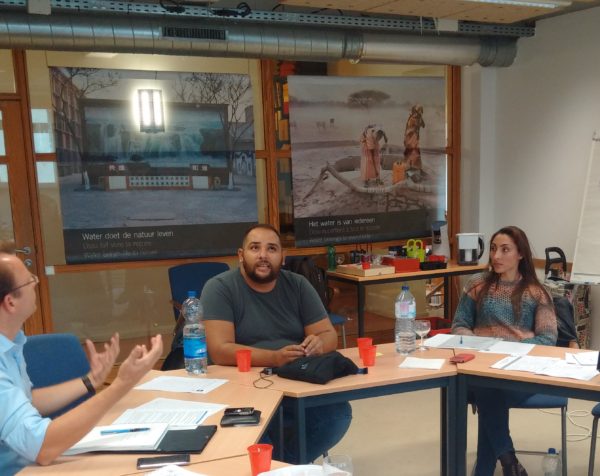
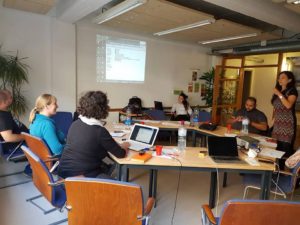
From 20-22 September, ERGO’s members involved in our Annual Work Programme under DG Employment, met in Brussels for their third Roma Civil Society Working Group Meeting. Important issues were on the agenda: The group gave input into ERGO’s work programme on employment and social inclusion for the next four years, evaluated the cooperation of the past years together with an external evaluator and built relations with desk officers of the European Commission Directorate Generals for Employment and Social Affairs and Regional and Urban Policy.

ERGO’s members from Hungary, Bulgaria, Romania, Czech Republic and Slovakia are cooperating with the ERGO Network secretariat in Brussels since 2014 in the framework of the project ‘Roma Included: Roma recognised as equal stakeholders in the policies targeting them’. In 2017, the organisations continue to coordinate national Roma coalitions in their countries, build the capacity of grassroots NGOs and Local Action Groups to benefit from the community-led local development process and take part in a common research project on Roma youth employment. The results of this year’s work will be disseminated by the end of the year.

`
General – Page 39 – ERGO Network

By continuing to use the site, you agree to the use of cookies. more information

The cookie settings on this website are set to "allow cookies" to give you the best browsing experience possible. If you continue to use this website without changing your cookie settings or you click "Accept" below then you are consenting to this.

Close