Input to the European Commission consultation on the Roadmap for a Council Recommendation for a Child Guarantee

Input to the European Commission consultation on the Roadmap for a Council Recommendation for a Child Guarantee

While the Roadmap identifies several groups of “children in need”, Roma children are not one of them. This is unacceptable, where the Fundamental Rights Agency found that every third Roma child (30%) lives in households where someone went to bed hungry at least once in the previous month, and only about half (53%) of young Roma children are enrolled in early childhood education and care programmes. Unless they are explicitly mentioned as target group and specific measures put in place to deal with very specific needs, experience shows that Roma children will once again be left behind.

Download link

Civil Society calls upon Member States to step up implementation of new EU Framework

European Coalition of Roma and pro-Roma Civil Society calls upon Member States to step up the implementation of new EU Roma Strategic Framework


Brussels, 12 October 2020 – CSOs call  on the European Commission to ensure that commitments made under the new EU Strategic Framework on Roma are held at the highest standards, and demand Member States to adopt an EU Council Recommendation supporting national Roma strategies to bring real justice and equality and ensure meaningful Roma participation at all levels and walks of life.

The EU Roma and pro-Roma Coalition welcomes the Communication for a new EU Strategic Framework for Roma equality, inclusion and participation at a time when real human rights commitments are crucial for the 12+ million Roma in Europe. We believe that the strategic framework announced last week is a step in the right direction. It can, however, only mean something if Member States, Enlargement and Neighbourhood countries put the fight against antigypsyism at the core when implementing national Roma strategies for Roma equality, inclusion and participation.

“As ERGO Network, we welcome the commitment of the European Commission to embed the EU strategic framework in a human rights and equality framework and include Roma participation, the fight against antigypsyism and poverty among the horizontal priorities. Now national governments need to step up. They have to ensure the highest commitments under EU Council recommendations to fight antigypsyism, make school segregation illegal, sanction hate speech, hate crimes and police ill-treatment, prevent forced evictions, invest in infrastructure, clean and safe housing, employment, healthcare and empowerment at the grassroots level”, says director Jamen Gabriela Hrabanova.

“It is crucial that the new EU action plan against racism reinforces the EU Roma framework so that we can effectively address antigypsyism and structural racism experienced by Roma communities in Europe”, said Michael Privot, Director of the European Network Against Racism (ENAR). “National governments should prioritise adopting concrete commitments and measures against racism, for example by prohibiting racial profiling, collecting equality data disaggregated by race and ethnic origin, and increasing racial diversity in institutions.”

“The fight against antigypsyism is the decisive prerequisite for this new Framework in order to achieve an equal participation of Sinti and Roma. We expect that going forward more of our political representatives in Europe act as true human rights promoters and stand up against antigypsyism and any other form of racism”, says Romani Rose, chair of the Central Council of German Sinti and Roma.

“We welcome that the framework emphasizes the crucial role of civil society in designing, implementing, monitoring and evaluating public policies aimed at increasing equality, inclusion and participation, as well as the need for increasing transparency and accountability of these policies. Many important recommendations of the Roma Civil Monitor pilot project have been incorporated into the new framework, for example the supervisory role of national parliaments over governmental actions, engagement of Roma civil society in ESIF monitoring committees, the Roma Civil Monitor continuation and stronger target-setting, data collection and reporting. The actual effect of these recommendations will, however, depend on the Member States’ political will to take steps towards a more inclusive and equal society.” – Roma Civil Monitor pilot project.

“Any efforts aimed at social and economic integration of Roma will remain fruitless unless we address the deeply-rooted discrimination against the Roma. We appreciate that the Commission acknowledges the fight against antigypsyism as one of the new priority areas, however, reacting against discrimination when it happens is not enough. Preventive measures that foster a sense of belonging, contribution and value of Roma as members of our societies need to be central to the new EU Roma Framework. Culture needs to have a more pivotal role as a positive and preventive strategy that effectively alters negative perceptions and builds greater acceptance of the Roma among the majority. At the same time it reinforces a sense of dignity and pride among the Roma”.- European Roma Institute for Arts and Culture.

“We are happy that the Western Balkan countries have taken a step forward and already committed to play an important part in fighting discrimination against Roma throughout Enlargement and Neighborhood countries and dedicate national and EU resources to improve the situation of Roma throughout the accession process.” stated by Adriatik Hasantari, Director of Roma Active Albania.

“Phiren Amenca welcomes the European Commission’s efforts to include Roma youth and achieve equality for them in the areas of employment, education, training and participation. We remind Member States that it is not enough to involve young Roma: Roma youth’s place is at the forefront of these processes. At the end of the day, all these policies concern young Roma the most.” Marietta Herfort, Director of Phiren Amenca International Network.

“The European Public Health Alliance welcomes the European Commission commitment to improve Roma health by reducing the life expectancy gap between Roma and the general population. However, this ambitious objective requires strong efforts in many policy areas going beyond access to healthcare. Therefore, EPHA calls on Member States and Candidate countries to adopt and implement holistic and comprehensive policy measures addressing the social determinants of health within national strategies for Roma equality and inclusion and to set up national indicators and targets enabling progress monitoring of child, women and elderly’s health”. – European Public Health Alliance

“We applaud the Commission’s attempt to mainstream equality across policies, including on socio-economic inclusion, artificial intelligence, the European Green Deal, digital inclusion and the fight against hate speech. Such alignment must now be built into the budgetary instruments of the EU. A first step would be to link recovery funds with the European Semester country-specific recommendations on Roma. However, we and our Roma partners had hoped for more ambitious targets in the Framework. This is partly due to outdated datasets and evidence with low numbers of incidents. We are calling on the Commission to ensure updated data is being made available to improve the policy work of the EU institutions and civil society. We will keep on pushing for a legally binding EU Framework and call on the Council to follow the same positive path of the European Parliament by endorsing the concept of positive incentives. This is vital to foster a European Union that cares about and protects all its citizens,” says Heather Grabbe, Director of Open Society European Policy Institute.

“The new Framework recognizes the importance to invest into the empowerment and participation especially of Roma youth and Roma women. Voluntary and civic activism is an important contribution to combat stereotypes and antigypsyism in our societies. Therefore, the European Commission and Member States need to strengthen and fund the work of civil society, especially of Roma youth organizations.” Vivian Isberg, TernYpe International Roma Youth Network.

“We very much welcome the EC proposal to include novelties compared to the previous EU Framework, widening the number of sectorial and horizontal key objectives, on which Member States should focus their investments in the next 10 years. Considering that, from our experience, education and employment are essential to ensure equality and close the gap between Roma and the general population, we applaud the effort of including specific minimum objectives and targets in these areas. The allocation of specific EU funds for Roma is also a priority at Fundación Secretariado Gitano, so we hope that the proposed financial instruments will support the endeavours to guarantee the exercise of civil and social rights as a way to achieve full equality under the same conditions as the general population”. Isidro Rodríguez, General Director of FSG.

In times of social and public health uncertainty, it is important that Roma are not left behind and that this coming decade is being used by governments to amend some of the past injustices and daily racial discrimination against Roma. National politics must shift their narratives and measures on Roma in a positive and empowering way, reflective of democratic societies, the rule of law and respect for human rights. Failing to act now will have long term and profound consequences upon generations to come and on society as a whole.

Signatories

European Roma Grassroots Organisations (ERGO Network)

European Network against Racism (ENAR)

European Roma Institute for Arts and Culture (ERIAC)

European Public Health Alliance (EPHA)

Central Council of German Sinti and Roma

Open Society European Policy Institute (OSEPI)

TernYpe International Roma Youth Network

Phiren Amenca International Network

Roma Civil Monitor project (RCM)

Fundación Secretariado Gitano (FSG)

Roma Active Albania (RAA)


EU Child Guarantee: Don’t leave Roma children behind

Input to the European Commission consultation on the Roadmap for a Council Recommendation for a Child Guarantee

The European Commission will be proposing a Child Guarantee in 2021, an instrument specifically designed to tackle the situation of children in need.

The Child Guarantee is meant to ensure that all children in Europe who are at risk of poverty, social exclusion, or are otherwise disadvantaged, have access to essential services of good quality.

It will recommend that EU countries invest in and develop strategies and action plans to ensure that children in need have access to free or affordable services such as education, healthcare, nutrition & housing, culture and leisure activities.

ERGO Network strongly welcomes the initiative for an EU Child Guarantee and has given input into the Roadmap leading towards it (Download the full input). With Roma children especially hard hit by poverty, we appreciate the attention paid to this important topic.

The first years of a child’s life are the most important in their personal development, and yet Roma children have been left behind for centuries in what concerns a good start in life. While the Roadmap towards the Child Guarantee identifies several groups of “children in need”, Roma children are not one of them. This is unacceptable, where the Fundamental Rights Agency found that every third Roma child (30%) lives in households where someone went to bed hungry at least once in the previous month, and only about half (53%) of young Roma children are enrolled in early childhood education and care programmes. Unless they are explicitly mentioned as target group and specific measures put in place to deal with very specific needs, experience shows that Roma children will once again be left behind.

The Roadmap features an almost exclusive focus on services, where nothing is said about access to income. There are no poor children in rich families, and wrap-around support for parents must be part of the solution, including income support and pathway approaches towards sustainable, quality jobs. Currently, only 43% of Roma aged 20-64% are in paid work, and over 80% of Europe’s Roma are at risk of poverty and social exclusion, according to FRA. Poverty has a considerable impact on the children’s physical, mental, and emotional development, and increases the chances of lagging behind in all the aspects of their adult life.

The vicious circles of poverty,  spatial segregation, and discrimination act as powerful barriers, preventing Roma children from accessing education on equal footing with their non-Roma peers. While education, including early childhood education and care, is touted to be free in many countries, it is de facto not, and many poor Roma families can’t cope with the associated costs of clothing, nappies, transport, hygiene etc. Lack of majority languages skills, limited access to early childhood education and care, and a state of poverty which does not allow for proper studying at home mean that Roma children end up segregated and bullied by colleagues, their parents, and staff alike, and even sometimes placed in schooling for children with learning disabilities. During the Covid-19 pandemic and associated protection and prevention measures, many Roma children found themselves unable to access online education, due to absent infrastructure and equipment (the digital divide).

In what concerns housing, many Roma neighbourhoods are segregated or isolated, with no childcare or healthcare facilities nearby. Adequate housing is an urgent priority for Roma communities, as one in three Roma (32%) live in households with a leaking roof, damp walls, or rot, one in five Roma (20%) live in dwellings that are too dark, and 78% of Roma live in overcrowded households. These disastrous living conditions have a tremendously damaging impact on the health and wellbeing of Roma children, who experience significant health inequalities. The life expectancy of Roma across Europe is 10 to 15 years lower than of the majority population. In many countries, the public health infrastructure does not cover Roma communities, with the nearest clinic (not to mention hospital) often located far away. Additional complicating factors include the lack of identity papers, the lack a legal address, the lack of access to a bank account, the lack of information about registration processes and available services, as well as language barriers. Investing in children must mean, first and foremost, guaranteeing good health and wellbeing for all, particularly those suffering the most disadvantages, such as Roma children.

In order to ensure that Roma children develop and thrive while enjoying the same opportunities as their non-Roma peers, it is fundamental to tackle antigypsyism in all its forms, as well as intersectional discrimination. 41% of Roma feel they have been discriminated against in everyday situations such as looking for work, at work, or when trying to access housing, health, and education – and this is the environment that Roma children grow up in. This should be a de facto horizontal priority in the fields of education, employment, health, housing, and poverty reduction. Preventive and proactive measures are needed to alter public perceptions, prevalent misrepresentations, and misinformation about Roma, and to develop positive counter-narratives. The Child Guarantee should strive to ensure the teaching of Romani language and history in schools, including about the Holocaust and slavery of Roma across Member States, as well as for the necessary dedicated special pedagogical support, including trained Roma education mediators in communities.

The Covid-19 situation highlights the urgent need to invest in proper care services and income support to children and their families. In order to provide equal opportunities for every Roma child, we must guarantee that Roma children and families are not left behind in the Child Guarantee. Appropriate links must be made to the objectives of the EU Strategic Framework for Roma Equality and Inclusion, and interplay ensured between the implementation of the Child Guarantee multi-annual national strategies and the National Roma Integration Strategies. The EU Cohesion Policy and recovery funds will also have a key role to play.

The Child Guarantee will only be effective if it achieves wide ownership by beneficiaries, if it is rooted in direct evidence from the ground about what works and what is needed, and if its delivery and monitoring are underpinned by a comprehensive and meaningful partnership of all stakeholders, including civil society organisations. Tailored outreach measures need to be put in place to ensure the participation of Roma children and that of their parents, including through the civil society organisations representing them. Clear dialogue and cooperation protocols need to be put in place, to ensure that the voice of marginalised and racialised children is heard and taken into account, while necessary financial resources need to be made available to support Roma NGOs and build awareness, participation, and active citizenship, as well as more resilient democracies.

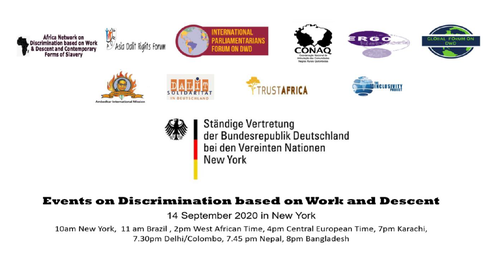
UN Side event on discrimination based on work and descent

UN Side event on discrimination based on work and descent

Since 2019, as a consequence of ERGO Network’s work on the Sustainable Development Goals for Roma inclusion, ERGO Director Gabriela Hrabanova works together with the Global Forum on Discrimination on Work and Descent (GFoD), the Asia Dalit Rights Forum and other global minority organisations to raise awareness of the important topic Discrimination based on Work and Descent (DWD) at the United Nations level and to bring together Roma with other communities victims of DWD.

In the framework of the 2020 United Nations General Assembly, a series of side events took place in New York and online organised by GFoD and with the support of the Permanent Mission of Germany in New York, which attracted the participation of politicians and members of civil society from across the world. Besides ERGO Network Director Gabriela Hrabanova also Member of the European Parliament Romeo Franz (Greens/EFA) was a panelist in the meeting.

This year, due to the pandemic, the Forum took the form of a Round Table with 15 Parliamentarians from countries in Africa (Somalia, Niger, Mauritania), Asia (Bangladesh, India, Nepal, Pakistan, Sri Lanka), Brazil and Europe (Germany, Spain, Slovakia, Belgium).

The discussions focused mostly on the strategies for the caucus of MPs to make appropriate and effective interventions at both UN & Regional Bodies, and with bilateral bodies/processes towards the elimination of DWD globally. An additional topic was the outlining of measures for building up the International Parliamentarians Forum on DWD to operate as an effective platform  at global and regional level.

The participants discussed best practices and possible strategies at local, national, regional and UN level to improve the fight against DWD.

Discrimination based on work and descent affects around 260 million people worldwide. Communities discriminated on work and descent are one of the most excluded and segregated groups globally, and this affects their daily social, economic, political, civil and cultural life. Compared to the majority population in their respective countries, Dalits in South Asia have less access to education, communities of former and modern slavery in Mauretania are economically deprived and Roma in Europe have less access to health care and services.

International cooperation around the topic of DWD has been gaining momentum since 2015, when DWD communities looking for solidarity beyond their own countries and communities found similar discrimination practices among African, European and Latin American communities and founded The Inclusivity Project at international level. But the kick-off for the Forum was a Round Table at the Permanent Mission of the Republic of Senegal in New York in 2019. Seven parliamentarians from Bangladesh, India, Nepal, Pakistan, Somalia and Sri Lanka have discussed DWD and options for action with representatives from European Roma networks, the African Network on DWD and Slavery, the Asia Dalit Rights Forum and Quilombola from Brazil.

As a consequence of all endeavours in the last decades the Global Forum on DWD – against Casteism, Antigypsyism & Traditional and contemporary forms of slavery has been formed during the first Congress on DWD in September 2019 in New York with representation by descendants of former slaves, Burakumin, Dalis, Quilomboa, Sinti & Roma.

Romaversitas response to the Covid-19 pandemic

Romaversitas response to the Covid-19 pandemic

On March 13, 2020, Prime Minister Viktor Orbán announced through Facebook that as a result of the coronavirus pandemic, just a few short weeks before the term-end exams and high school graduation tests, schools and dormitories were to be closed nationwide and education was to be completely transferred to the online space. The measures forced a fair share of our students to move back to their childhood homes, where they were cut off from the infrastructures of their educational institutions and they had to prepare for the approaching exams in overcrowded houses, without personal space, quality IT equipment or broadband internet.

The pandemic made an already bad situation worse for the Roma in Hungary. According to data released by the Roma Education Fund, a significant share of Romani high school students and their families who reside in rural areas or settlements had no access to internet or to IT equipment which data is especially appalling from the perspective that the transfer of education to the online space and dormitory closures were carried out instantly and without any plans to ensure the participation of students belonging to marginalized communities in educational activities.

In this context, we contacted all of our students and we saw that in many cases, if we can’t provide them with additional scholarships, they wouldn’t be able to finish their school years or university terms. We set the goal of not allowing the effects of the crisis to take a toll on our students’ ability to finish the academic year. As providing additional scholarships exceeded the financial possibilities of our organization, we launched a crowdfunding campaign titled “Finish Line – Crisis Fund for Romani Students” to collect the necessary funds for providing additional scholarships to students in need.

The short-term impact of the activity was that we could provide cca. 150 EUR monthly scholarships for 12 students in April, 12 students in May, 14 students in June and 6 students in July. In personal interviews following the campaign, we saw that many of the recipients spent this amount directly related to the mitigation of the impact of the crisis on their ability to finish the academic year, like purchasing a good internet connection to the place where they were forced to move because of the closure of the dormitories.

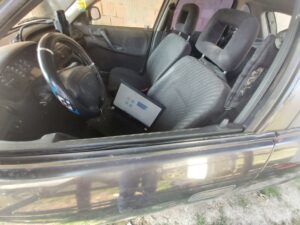
As dormitories closed in mid-March, many of our students had to move back to overcrowded family homes. “When I need some space to attend online classes, I sit outside of our home in my family’s car,” wrote one of our students when sending this photo. We love this picture because it exemplifies the resilience of our student body.

A long-term impact on our students and Romaversitas was that our crowdfunding campaign received national attention via the press, and by reaching new donors, our coalition to carry out our mission broadened. During our crowdfunding campaign we collected cca. 8K EUR which is more than four times the average of the previous 3 crowdfunding campaigns of the organization. We also reached 70 percent more donors than in previous campaigns and the value of average donations more than doubled.

We managed to detach the messaging of the campaign from the usual socio-narrative which mostly dominates Romani issues in the media. Our campaign was centered around education and positive achievements which resonated well with our audience.

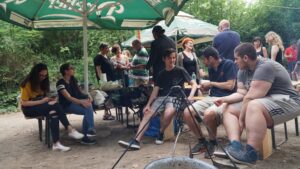
As soon as the pandemic situation got better in June, we organized an open-air event to close the academic year. The event was attended by several students, our staff, our founder and some key donors. It was encouraging to experience how much our community evolved during the pandemic.
`
General – Page 28 – ERGO Network

By continuing to use the site, you agree to the use of cookies. more information

The cookie settings on this website are set to "allow cookies" to give you the best browsing experience possible. If you continue to use this website without changing your cookie settings or you click "Accept" below then you are consenting to this.

Close