News from the Centre de Mediations des Gens de Voyage et des Roms

Centre de Médiation des Gens du Voyage et des Roms, Belgium:

Since 2001, the CMGVR has been active with both the Roma and the Traveller communities, providing daily social and administrative help, as well as support for their professional integration.  As a mediation body, it makes the relation with authorities, institutions and services easier and more effective for Roma families. The CMGVR proposes frequent supervisions for local authorities, and trainings for Roma mediators and social, educative, administrative and health workers. Our NGO also tries to support the effective participation of Roma and Travellers at the discussion tables on national, regional and local levels and ensures that Roma and Travellers’ claims reach the political level.


New local projects of integration through housing

For a number of years, the CMGVR has drawn attention to an alarming observation: the number of Roma families in situation of homelessness is increasing, not only in Brussels but also in other Belgian cities. To this day, there is hardly any humanitarian (and even emergency) answer to the worrisome situation of these families and children. Recently, the difficulties they face have even worsened with the introduction of the “anti-squat law”.

Beyond to the lack of infrastructure and regulation, an additional difficulty lies in the family dimension of homelessness faced by Roma, as most of the existing initiatives meant to tackle homelessness or develop housing insertion are conceived for individuals, not for families. This observation holds for the most basic housing support like emergency night shelters, the great majority of which are not accessible to children. Beyond short term emergency sheltering, Roma people face numerous obstacles on the rental market and in accessing social housing.

In the face of this significant lack of perspectives for families living in precarious housing conditions, the CMGVR has decided to innovate and launch local projects of insertion through housing. At this time, two families have been provided with temporary housing (6 months to a year). These projects are developed in partnerships with local authorities and with the social housing public and private agencies. They are inspired by the method of “Housing First”[1] and have the ambition of bringing marginalized families back into regular social and administrative rights. The CMGVRW thus follows up on the accompaniment of these families with social, educational, administrative and health support.

This experience has shown that housing insertion comes with an increased ability for families to cope and stabilize other areas of life, which they could not address while living in the streets. The numerous positive outcomes of these local projects illustrate that while there are no ready-made solutions, some successful operational practices do exist and should be developed on a wider scale.

Working in the context of a sanitary crisis

In 2020, the CMGVR has had to adjust its projects and services to the global pandemic of COVID-19, particularly during the lockdown period.

From the very beginning of the healthcare crisis, the CMGVR became aware that communicating about COVID-19 would be a major challenge, particularly for the most “vulnerable” groups, for whom language barriers or situations of socio-economic poverty might hinder access to information or health care. All through the confinement period, the CMGVR team thus made sure to maintain optimal communication and follow-up with Roma and Traveller families.  As early as March 2020, the CMGVR launched a wide information campaign about the COVID-19 crisis and the sanitary measures recommended by the government. As the government decisions and confinement phases evolved, the information was regularly updated and made available on social networks, as well as through mails and texts translated into several Eastern European languages (including romanes). The objective was to respond to the many fears and questions raised by the pandemic, and to ensure that the sanitary measures were understood and applied by all.

The CMGVR also sought to support health care professionals by offering translation services to hospitals, medical houses and general practitioners in order to facilitate communication with Roma individuals and families. Similar services of translation and mediation were also offered to schoolteachers and other educational actors as schools reopened, both in June and in September 2020.

Now that the lockdown period is over, the CMGVR has resumed its on-site projects and accompaniment, notably its mobile school support project, which provides complementary learning support to Traveller families and children with a focus on reading, writing and calculation. The CMGVR also offers school support to Roma children who face language or learning difficulties.

[1]    “Housing First” is the name of a method meant to tackle homelessness, based on the idea that any effective inclusion process starts with a decent place to live. In this logic, providing homeless people with an individual and permanent housing is a prerequisite for durable inclusion.

New volunteer in the ERGO team

New European Solidarity Corps volunteer in ERGO Network

Welcome, Izabela!

The ERGO Network secretariat team is getting bigger! This week our new European Solidarity Corps volunteer Izabela Tiberiade from Romania joined us in Brussels. She will stay one year with us to learn more about how we work and support all our work areas.

Here is how Izabela describes herself:

My name is Izabela Tiberiade and I come from a traditional Rromani family in Craiova, southern Romania. Due to my background, I have struggled tremendously to get an education and to overcome a multitude of stereotypes, both from within my community and on behalf of the non-Roma majority.

I am joining the ERGO Network today as an undergraduate in Human Rights at the University of Malmo, Sweden. It is with real excitement and curiosity that I anticipate the encounter between the real world and the knowledge I accumulated from the university courses. Therefore, my apprenticeship at ERGO Network represents the start of a journey in search of an understanding that leads to the actions which my people, and many other excluded groups, need so urgently.

In my free time, I am an avid reader of fiction and nonfiction alike, and I have tried my hand at writing myself. Reading and writing have provided me with a passage to a parallel world where the various troubles that encroached my people disappeared into the imagination. Likewise, I tremendously enjoy learning new languages, which also give me a glimpse of other peoples and other ways of thinking, and this has always fascinated me.

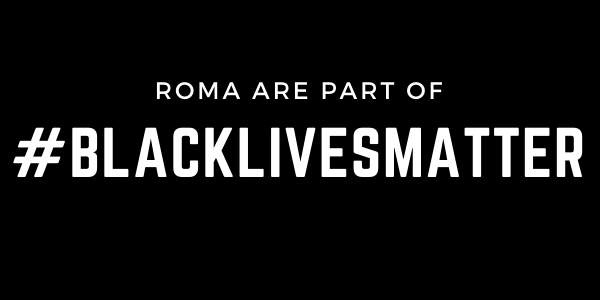
Roma part of #BlackLivesMatter

Roma part of #BlackLivesMatter

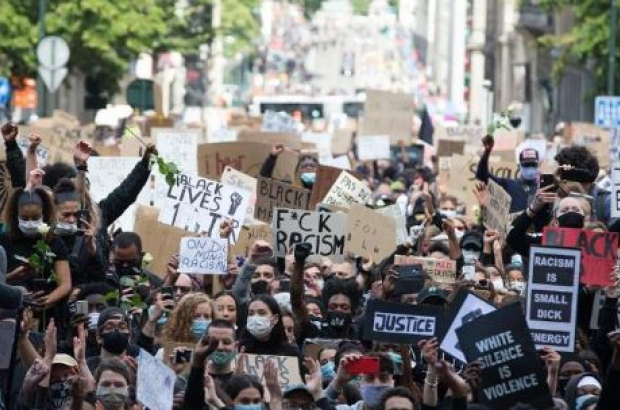
On 25 May 2020 George Floyd, an African American man, was killed by police in Minneapolis, Minnesota. Mass protests in response to his death quickly spread across the United States and internationally in a joint mobilisation against police violence and structural racism. Across the world, people have started to take down statues of colonisers and racist figures. A global Black Lives Matter movement is surging alongside  wider anti-racist movements in an attempt to restore centuries of injustice, killings and oppression of people of African descent, but also institutional and structural racism and discrimination of all ethnic and racialised minorities.

As ERGO Network we stand with the Black Lives Matter movement and we say it loud and clear: In Europe, Black and Brown Lives matter! We hope that everyone now protesting on the streets takes this into account in their political demands as well as in their own everyday lives.

Photo: Nicolas Maeterlinck/Belga

Structural racism and discrimination against ethnic and racialised minorities are deeply rooted in European societies. Across the EU, people of African descent, Roma, Muslims, Jews and immigrants face widespread and entrenched prejudice and exclusion. Racial discrimination and harassment are common place.

Roma in Europe are more likely to live in poverty than the majority population, have a higher risk of unemployment and have poorer health – as tragically seen during the Covid-19 pandemic. They are exposed to racism by their co-citizens (with, in some countries, one third to half the population not wanting to work with Roma colleagues according to a Fundamental Rights Agency survey), and more often victims police brutality. Just in the last couple of months, 14 year old Gabriel Djordjevic was severely beaten by police in Paris, 5 Romani children between 7 and 11 were beaten by police in Slovakia, approximately 20 Romani men and women were beaten by police in Romania and a young man during a police control in the Netherlands.

The pandemic exposed the racial bias of the police even more: Between March and May 2020, Amnesty International documented cases of militarized quarantines of ten Roma settlements in Bulgaria and Slovakia. This disproportionate restriction on freedom of movement that selectively targets ethnic minority groups, without evidence that they represent an objective threat to public health or security, imposes an unnecessary and disproportionate burden on this group and amounts to discrimination.

It is regrettable that 70 years after the adoption of the European Convention of Human Rights and subsequent international and EU standards on equality and anti-discrimination, minorities continue to be racialised, harassed, attacked and killed in Europe because of their innate characteristics. It is scandalous that the EU and national legislative frameworks and state institutions fail to protect them and to educate themselves and the majority populations about historical facts, diversity, compassion and living together as equal human beings.

Looking at the construction, priorities and progress of the European Union, it is safe to claim that European leaders have prioritised economic growth over the protection of the most vulnerable groups in our societies and over ensuring equity of wealth and wellbeing across the world. The strong awakening, protesting and mobilisation of the majority population in times of a global pandemic to the persistent racism and dehumanization and consequences of colonialism, slavery and historic oppression such as the Holocaust is an unprecedented moment in the history of humanity. It speaks to the urgency with which world and European leaders need to take corresponding unprecedented steps to bring about fundamental changes in our society. Only with systemic change can we set up a social contract that ensures justice and equality for all, prioritizing those most marginalised and oppressed to date.

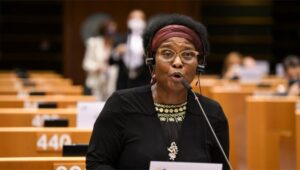
Since the start of the protests, many political figures in Europe have spoken out in solidarity with the Black Lives Matter movement. While we appreciate condemnation of police violence in the US, the EU leadership has not said or done enough to acknowledge and address structural racism and racist police violence in the EU against ethnic and religious minorities. As quoted in the Financial Times on 3 June 2020, European Commission Vice-President Schinas went as far as  saying “I do not think that we have issues now in Europe that blatantly pertain to police brutality or issues of race transcending into our systems.” This is a slap in the face of all victims of police violence in Europe, including many Roma. Member of the European Parliament Pierrette Herzberger Fofana set the record straight when she had the courage to publicly talk about her personal experience with racist police violence at the Gare du Nord in Brussels just a few days after Schinas’ comment.

Pierrette Herzberger-Fofana | Photo credit: European Parliament Audiovisual

In a rushed action, the European Parliament adopted a Resolution on anti-racism protests (2020/2685(RSP)) on 19 June. It shows that public pressure can work and that the Parliament sees an urgency to react, but failed to appropriately address structural racism in Europe. The title of the resolution is related to the US protests following the death of George Floyd, without a clear intention and focus on structural racism against all racialized minorities in Europe, triggered by events in the US. An immediate reaction and a resolution by the European Parliament requesting an unprecedented response by the European Commission and EU Council like in the case of Covid-19 is still necessary; therefore such a resolution should have focused primarily on EU Members States, Enlargement and Neighborhood Countries and involved Roma and other anti-racist civil society and racialized minorities in drafting it. Structural and institutional racism cannot be tackled without listening to those suffering under it. When it comes to its ambitions, the resolution is asking for an European Anti-Racism Summit, a comprehensive strategy against racism and discrimination and an EU Framework for National Action Plans Against Racism, the creation of a EU Council mechanism for equality and an interinstitutional task force to fight racism and discrimination at EU level.

Following the adoption of the resolution, the all-white European Commission held an internal debate on racism and decided that an “Action Plan to address racial discrimination and Afrophobia” would be prepared by Commissioner for Equality Helena Dalli. While we believe this is a too low of a bargain for racialized minorities, we truly hope that this Action Plan on paper will really be followed up by REAL  Action – not just by the EU institutions but also by its Member States and adhering countries, and that it will be prepared in close consultation and at equal level with ALL racialized minorities, including Roma, and CSOs.  

Here are some of our recommendations to the EU institutions and member States.

  • Finally adopt the 10-year old draft of the Horizontal Anti-discrimination Directive
  • Systematically record and publish disaggregated data on hate crime
  • Fully transpose and apply the provisions of the Framework Decision on Combating Racism and Xenophobia, treating racist and xenophobic motivation as an aggravating circumstance
  • Address ongoing ill-treatment, profiling and over-policing of minorities by police officers.
  • Reform internal policies and working methods in order to ensure a fair representation of minority populations within EU institutions as well as an adequate participation and consultation of minority groups in EU decisions in policies, programmes and funding
  • Commit to an ambitious, comprehensive, and binding EU Strategic Framework for Roma to achieve equality, social and economic justice, and combat antigypsyism.
  • Ensure equitable access to quality inclusive education for all children and invest consistently in raising awareness and adequately teach European societies about their colonial and racist past, including the history of antigypsyism.
  • Define segregation as illegal in housing and in education.
  • Address discrimination of minority groups in employment.
  • Take into account the needs of racialised minorities and define them as a priority in all mainstream policies and measures of the Covid-19 recovery plan; meaningfully involve Roma stakeholders and their civil society organisations in the design, implementation, and monitoring of such recovery plans
  • Ensure funding for equality and fundamental rights of minority groups under the Multi-Annual Framework.

Find here a  detailed briefing paper on the fundamental rights situation in Europe and a full list of our recommendations.

For more information on our work addressing antigypsyism in Europe, please contact Senior Advocacy Officer Isabela Mihalache (i.mihalache@staging.ergonetwork.org).

News from Slovo 21

Recent activities of ERGO member Slovo 21

Slovo 21 has been very active in the last weeks, focusing their efforts on their contributions to ERGO Network’s Annual Work Programme Roma Included in Social Europe (RIISE).

National Roma Integration Strategy:

Since May 2020 NGO Slovo 21 has been organizing meetings with the network of Roma NGOs in the Czech Republic  to discuss the Strategy of Roma Integration 2021 – 2030. Roma representatives met with the coordinators of the Strategy (SRI) at the Office of the Government to express disagreement with the SRI prepared by the government. On June 19th, Roma representatives together with the relevant government resorts met with EU Commission desk officers to discuss the SRI. So far, Roma NGOs cooperate closely and prepare suggestions for new goals of the SRI in order to reach the best results and to include Roma indicators in new SRI.

Community-Led Local Development

On May 21st Slovo 21 met with the representatives from the newly built Roma Centre in Náchod to discuss further cooperation between local authorities, Local Action Group (LAG) and the Roma community in Náchod city. We were informed about the achievements and planned activities. After the meeting with the Roma representatives, we met with the representatives of LAG Stolové Hory to discuss future cooperation with the Roma community from Náchod city, the membership of NGO Slovo 21 in LAG Stolové Hory and our contribution to CLLD.

On 29 June, we met with Roma activists to prepare our next steps. We targeted issues and discussed about a survey to find out the needs of the Roma community in Náchod city. We then met with the mayor of Náchod to discuss our cooperation and offer our activities to the city, including the organization of a festival of Roma culture in Náchod. The meeting was successful: The mayor is positive about the planned activities and is supporting the festival.

On 15 June, we also met with representatives of the LAG Opavsko to learn about opportunities, discuss issues of the Roma community and plan a meeting with the mayor of the city – Budišov and Budišovkou.

CLLD Capacity-Building

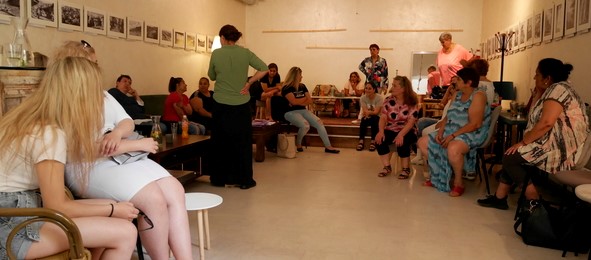
On 29/30 May, Seven Roma women – the local coordinators from five different Czech localities – participated in a two-day capacity building meeting in Prague. During the meeting participants received information about the CLLD process, small grants and future activities. An important part of the capacity building meeting was to share  experiences, challenges and successes with the cooperation with local authorities and plan the next steps of their work.

From 26-28 June, more than 15 Roma women participated in the next capacity building meeting together with their local coordinators. During the meeting, the Roma women from 5 localities improved their competences to work in the CLLD process. Our goal was to inform them about the CLLD process and the activities they could organize in their localities. The meeting was organized together with the coordinator of Roma women group Manushe.

Amaro Drom: Jekhipe – Together

Jekhipe – Together

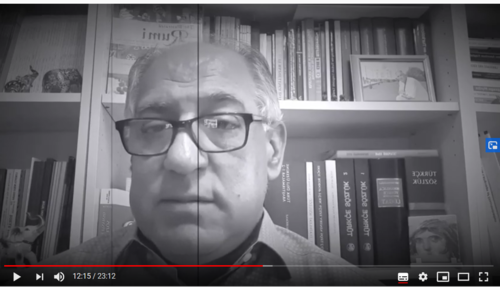
German ERGO Network member Amaro Drom produced two interesting online lectures by Prof. Dr. Hristo Kyuchukov that are dedicated to 8th April, the International Romani Day and 16th May, the Romani Resistance Day. These lectures were recorded within the framework of the project „Jekhipe – Together” in video format due to restrictions caused by COVID-19 epidemics. Both lectures are recorded in Romani language and subtitles in English and German are also provided in order to cover a wide audience.

`
General – Page 29 – ERGO Network

By continuing to use the site, you agree to the use of cookies. more information

The cookie settings on this website are set to "allow cookies" to give you the best browsing experience possible. If you continue to use this website without changing your cookie settings or you click "Accept" below then you are consenting to this.

Close