Incorporating Roma in European Youth Policies: An Assessment of Inclusion Efforts
The Roma community constitutes one of the largest European minorities. Simultaneously, it has continuously experienced structural and institutional marginalisation, resulting in its persistent exclusion from various spheres of society. This systemic exclusion is reflected in the hindered effectiveness of youth-focused measures within the EU policies that, based on the outcomes of this online survey, are insufficient in addressing the multifaceted needs and aspirations of Roma youth.
Many individuals of Roma youth face substantial barriers impeding their accessibility to essential resources, opportunities, and representation within wide-raging societal constellations. These impediments comprise disparities in education, restricted economic prospects, cultural biases, lack of access to healthcare, or inadequate housing. The identified situation is paradoxical, given that various dedicated efforts aim to foster Roma inclusion nationally and internationally. However, regardless of specific initiatives targeting Roma inclusion, the meaningful engagement and representation of Roma youth remains limited within broader youth-centric policies and related programs.
This survey illustrates an endeavour to underpin the challenges faced by Roma youth and proposes a possible orientation for a more holistic approach to including Roma youth. This survey aims to inform policy decision-makers who seek to address Roma exclusion through empowering Roma youth.
To achieve the mentioned aim, this survey consists of four objectives:
To evaluate the inclusiveness of youth measures concerning the Roma community.
To identify potential barriers that hinder the effective participation of Roma youth in these measures.
To gather stakeholders’ perspectives on the importance of Roma inclusion in broader youth policies.
To provide recommendations for enhancing the representation and participation of Roma youth in youth-focused initiatives.
Recommendations from the Roma youth:
This survey presented the outcomes of an online survey. By analysing respondents’ insights on the general and specific youth policies, it assessed the effectiveness of existing youth measures for including the Roma youth in various policies regarding decision-making and participation within related youth initiatives. The findings of the survey affirm that Roma youth continue to be underrepresented in the European Union’s youth-focused policies despite numerous inclusion efforts.
Regarding that, this survey efforted not only to underpin the challenges faced by Roma youth but also to propose a possible avenue of a more holistic approach to including Roma youth.
Generally, the suggestions revolve around creating more inclusive policies that directly engage Roma youth in decision-making processes, empower them through various educational opportunities, and design workshops or trainings for Roma and non-Roma awareness raising about anti-Roma racism and means of combating them. This survey is expected to bear valuable insights for policy decision-makers aiming to empower Roma youth by reversing the long-lasting Roma exclusion.
Human Rights Day: A Critical Look at Roma Housing and Human Rights in Europe
On this International Human Rights Day, we find ourselves reflecting on the persisting challenges faced by the Roma and Traveller communities across Europe, particularly in the realms of housing, discrimination, and social inclusion. This article provides ERGO Network’s position on the pressing issues surrounding access to one of the fundamental human rights – the quality and affordable housing for Roma.
As we delve into the discourse, the narrative reveals a stark reality exacerbated by the adverse effects of the COVID-19 pandemic, inflation, and escalating costs of living, all of which disproportionately affect these marginalised communities.
As we commemorate Human Rights Day, let this article serve as a call to action, urging governments, institutions, and civil society to collaborate in realising tangible progress and comprehensive solutions for the Roma across Europe.
According to ERGO Network’s most recent case studies on Roma and Traveller access to quality and affordable housing and accommodation in Bulgaria, Czechia, Hungary, Romania, Slovakia, and Spain, with additional benchmarking evidence from 6 other European countries – in Ireland and the Western Balkans and Turkyie, the impact of Covid-19 and increase in inflation and cost of living – hit Roma and Travellers’ communities in Europe the hardest on top of existing inequality and antigypsyism.
The vast majority of Roma and travellers experience vast amounts of poverty and homelessness. Their living conditions tend to be considerably poorer than those of non-Roma, including the lack of utilities and services, unsafe and unsound dwellings, exposure to environmental hazards and injustice more broadly, as well as chronic overcrowding, but not lastly segregation, which is flourishing also because of mass forced evictions without the provision of alternative housing and accommodation, and which entails among others insecurity of tenure and lack of identity papers.
In the face of the demonstrated picture of historical, widespread structural and institutional antigypsyism against Roma and Travellers across the EU and Enlargement countries, the EU has taken unprecedented action by proposing the EU Roma Framework in 2011 and mobilising Member States to commit to developing national strategies and local action plans, including a council recommendation on Roma in 2013. However, as the 2018 evaluation report of the implementation of the EU Framework showed, in the areas of housing and discrimination, the situation was reported as worsening while some progress was observed regarding the general objective of fighting poverty.
Fortunately, the new EU Strategic Framework for Roma Equality, Inclusion and Participation, supported by the Council Recommendation, has somehow tried to mitigate the situation by proposing specific targets in the area of housing. With the 2023 Commission assessment of the NRSFs, Several Member States included measures to improve access to essential services […] and, to some extent, prevent and eradicate spatial segregation. Few NRSFs have […] measures to facilitate access to social housing, while several NRSFs propose measures for urban and residential upgrading and to invest in infrastructure such as electricity, gas, running water, sewage and waste management, roads and access to transport. Combatting discrimination and antigypsyism as obstacles to accessing housing or addressing forced evictions are only mentioned by a few Member States.
The European Pillar of Social Rights also covers housing aspects and is applicable under the UN Sustainable Development Goals. Desegregation is also covered under the European Semester but not followed up on under the Resilience and Recovery; more needs to be done to ensure operational alignment and synergy throughout EU policies, including EU environmental policies. Some shortcomings are also evident with the newly adopted conclusions on Roma housing, where linked social determinants are not adequately addressed, including its proxies such as environmental justice.
But more needs to be done by the Member States to commit to improving desegregated housing and accommodation for Roma and travellers, combat poverty, social exclusion and antigypsyism, political will and know-how.
We salute the Spanish Presidency for continuing the work on Roma housing under the National Roma Platform. However, we need all MS and Enlargement countries to invest in improving the structural condition of the dwellings of Roma, including their connection to utilities and develop and implement comprehensive desegregation plans, tackling the legalisation of irregular housing situations and the environmental consequences stemming from the use of unsuitable locations; Roma housing and energy poverty must be addressed. Evictions should be the last resort and always accompanied by adequate alternative accommodation. Social housing allocation should follow a human rights-based approach, reducing conditionality and unaffordability and ensuring that vulnerable groups such as Roma are prioritised.
The new Roma Framework is aligned with all relevant EU and Enlargement countries funding for addressing Roma housing and linked social determinants, so governments need to make use of the ESF+, ERDF, Horizon 2020, Invest EU, Recovery and Resilience, IPA 2021-27, Neighbourhood, Development and International Cooperation Instrument – for the Enlargement countries. Perhaps even more relevant is the possibility for MS to use the Technical Support Instrument that provides tailor-made technical expertise to EU Member States to design and implement reforms, which is demand-driven and does not require co-financing from Member States. The same type of technical assistance is available for Enlargement countries under TAIEX and Twinning.
Western Balkan need to be an integral part of all policy processes under the EU Roma Framework and also benefit from the same attention and representation in the EU Platform agenda, mainly because the enlargement countries are those where political commitment can be leveraged easier through the enlargement criteria and where the situation of Roma whether in the area of housing or otherwise is even more dire.
As such, in July 2019, at the Poznan Summit, the Western Balkans Prime Ministers adopted the Declaration on Roma integration in the EU enlargement process. The Poznan commitments cover housing and inclusion of the Roma dimension in the green and digital agendas, and new Roma inclusion Strategies/Action Plans align with the EU Roma framework.
As we advance with the EU Roma Platform, we need to ensure that until the upcoming EU Presidency event, we have concrete and tangible progress and developments at the national level. We also allow civil society to attend even party meetings with national Roma Contacts Points. In these meetings, we need to see a higher and broader in-person political representation from the EU and National MS.
Ultimately, let us not forget about the principle of nothing for Roma without Roma – the shrinking space of Roma civil society is an undeniable reality, following the negative trend in Europe where we experience a human rights crisis both in our communities, including in the leadership of the EU and many of its Member States. In the context of antigypsyism, limiting the role and exercise of NGOs to participate and monitor human rights issues and policy implementation process on Roma inclusion and equality is not only undemocratic but also dangerous not only to protecting Roma lives but also to ensuring their wellbeing. Ensuring that Roma NGOs are inside the programmes and projects as partners and leaders is essential.
This article is an adaption of the speech held by ERGO Network’s Senior Advocacy Officer Isabela Mihalache as a part of the panel on the political conclusions of the 16th Roma Platform organised by the European Commission under the patronage of the Spanish Presidency in Madrid. If you have more questions about our work on the EU Roma Framework, please email i.mihalache@staging.ergonetwork.org.
For more information about our work on Roma access to quality and sustainable housing, please contact Amana Ferro (a.ferro@staging.ergonetwork.org)”
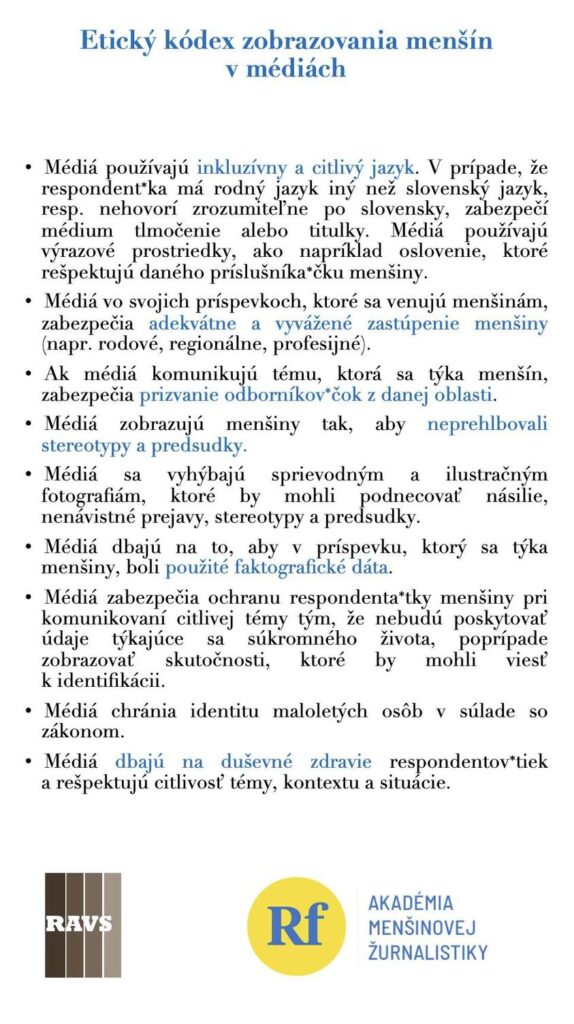
Code of Ethics for the Portrayal of Minorities in the Media: A Success Story from Slovakia
We celebrate the remarkable achievements of our member organisation, the Roma Advocacy and Research Centre (RARC) in Slovakia. RARC, in collaboration with the civic association eduRoma, has introduced a groundbreaking initiative – the “Code of Ethics for the Portrayal of Minorities in the Media” – which has the potential to serve as a model for other European countries.
The Code of Minority Portrayal, developed in response to media outlets that have too often portrayed minorities insensitively, was the result of a collaborative effort during the Minority Journalism Academy, held on October 11 and 12, 2023. The Roma Advocacy and Research Centre spearheaded this initiative as part of the National Roma Coalition project.
Zuzana Havírová, the chair of the organisation, which addresses issues such as combating antigypsyism, emphasised the pivotal role of the media in shaping public perceptions. She stated, “The media plays an irreplaceable role in our society, and it turns out that it is extremely important how they reach out to the public. We often come across stories that are unjust towards minority communities, such as the Roma or LGBTI+ people. Sometimes, the media may not even know that their stories may harm a minority, so we agreed that it is necessary to have basic principles for portraying minorities in the media. This document is open for discussion, and we hope to expand it with further suggestions. It can make us more respectful and tolerant of each other.”
The Minority Journalism Academy, an educational venture by the online magazine Romano Forum, published by the civic association eduRoma, is at the heart of this transformative movement. Vlado Rafael of eduRoma explained: “The Minority Journalism Academy aims to provide journalists, bloggers, journalism students, columnists, and those who shape national public discourse basic information about the position of different minorities living in Slovakia. One of our primary goals is to improve the overall perception of minorities in our country. As a result of the first year of our academy, we have produced a draft code of ethics for portraying minorities in the Slovak media. We intend to engage with journalists to refine and expand this code, hoping media outlets will gradually adopt and adhere to its principles.”
In the forthcoming period, methodological material will be developed to explain each aspect of the Code in greater detail. This initiative aspires to see the code embraced by as many media outlets as possible. This initiative aims to gradually develop a code that will be adopted by as many media as possible, so that the media’s portrayal of minorities is fair, sensitive and objective at the same time.
ERGO Network is proud to have dedicated members like RARC, who are actively contributing to the cause of promoting ethical and inclusive media portrayals of minorities. We hope to witness more such success stories within our member countries, furthering our mission to foster understanding, respect, and equality for all.
Challenges Faced by Roma Refugees from Ukraine in Moldova
A Closer Look at the Plight of Ukraine’s Roma Community as They Navigate Moldova’s Borders
Moldova – In the heart of Eastern Europe, a lesser-known humanitarian crisis unfolds as over 40,000 Roma citizens from Ukraine have sought refuge in Moldova since February 24, 2022. Among them, an estimated 5,000 Roma refugees now reside in Moldova and Gagauzia, with an additional 2,000 in Transnistria, facing daunting challenges and discrimination in their quest for a better life.
Moldova has opened its doors to approximately 40,000 Roma citizens from Ukraine since February 24, 2022, offering them refuge from the conflict in their home country. However, a recent report by ERGO Network, together with our member organisation in Moldova Roma Women Platform ROMNI, highlights the numerous challenges and hardships that these vulnerable Roma refugees continue to encounter in their new host nation.
As of the most recent data available, Moldova is now home to around 5,000 Roma refugees, with an additional 2,000 residing in Transnistria. Women constitute approximately 35% of this population, while men make up 10%, leaving the rest as children and youth. These numbers are subject to change due to fluctuating financial situations and the support available from local authorities and organizations.
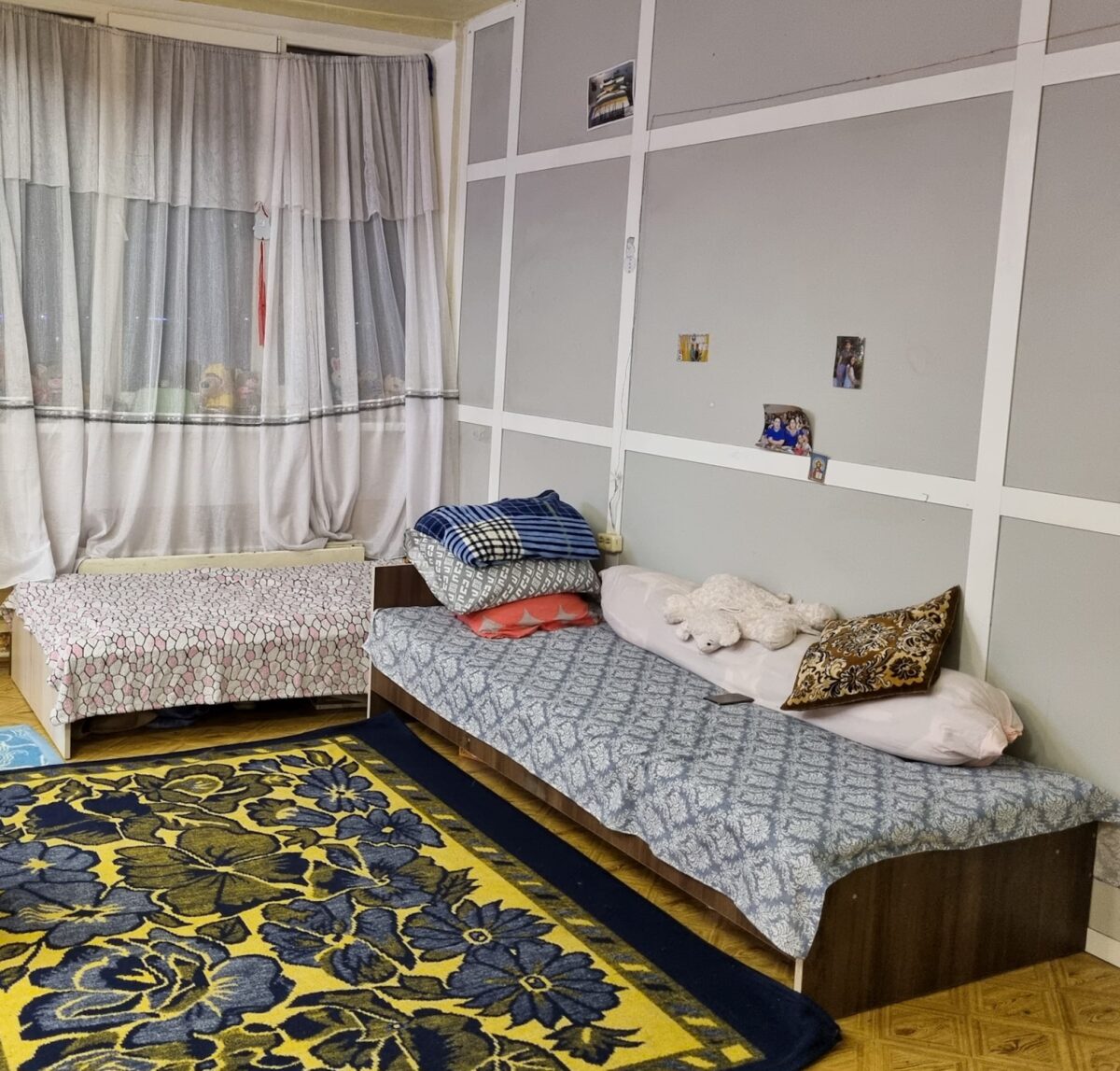
Many Roma refugees are not able to stay in private accommodation and still live in the centres.
Battling Discrimination
Historically, Roma has faced discrimination and antigypsyism. Language barriers and a lack of identity documents further contribute to their difficulties. Even in times of peace, Roma often encounter obstacles, and during times of conflict, their needs are exacerbated. They often do not receive the same level of compassion, services, or rights as other refugees, and more traditional Roma families face even greater hardships.
The social distance index underscores that Roma refugees are among the least tolerated groups in Moldova. The situation for the Roma community is particularly complex due to differences in language, traditions, appearance, and religion when compared to other refugee groups and the larger population. Reports of intimidation and discrimination against Roma refugees by Moldovan authorities, locals, and even other refugee groups have added to their challenges.
Interviews and discussions with public authorities and non-governmental organizations reveal that Roma refugees are often indirectly accused of not being Ukrainian, highlighting the vulnerabilities of the Roma community during crises and underscoring the need for targeted assistance and protection.
Disparities in Housing
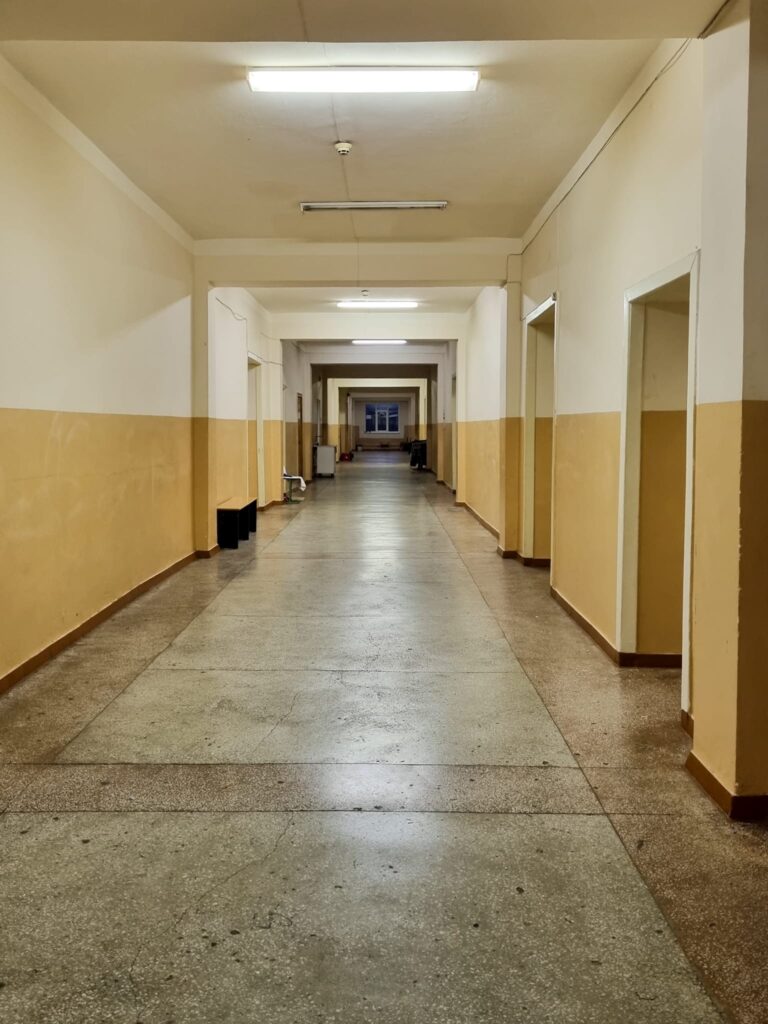
Moldova’s national authorities have established 136 Refugee Accommodation Centres (RACs) across the country, with 60 remaining active as of April 25, 2023, to provide refugee shelter. However, the challenges facing Roma refugees are starkly evident. They are often separated from Ukrainian refugees and face difficulties being accepted by centre administrators. The conditions in these centres, particularly early on, were deplorable, with inadequate food, insufficient bedding, and limited facilities.
Despite the efforts of international organisations to improve conditions across Moldova’s RACs, including the segregated ones, Roma refugees struggle to access necessary services. There is a notable disparity between the treatment of Roma refugees and other refugee categories in terms of living conditions, food, access to aid, location, infrastructure, and medical and educational services.
Concerns in Education
Approximately 80% of Ukrainian Roma refugees in Moldova are either illiterate or have limited education. This lack of education significantly hampers their ability to meet basic needs, access services, and secure employment in the Moldovan labour market. Negative stereotypes and prejudices only compound the problem, making it difficult for those with limited education to find work in a new country.
Addressing the educational needs of refugee children from Ukraine has been a crucial development. The Crisis Management Centre (CUGC) issued a provision requiring the enrolment of foreign refugee children in educational institutions. It tasked the Ministry of Education and Research with developing the enrolment mechanism. This allowed all children from Ukrainian refugee families, regardless of their asylum seeker status, to participate in educational activities without the obligation to attend compulsory school or take exams.
Notably, the status of refugee children as auditors in educational institutions remains valid until the child’s legal representatives submit an application for temporary protection within the Republic of Moldova. Once temporary protection status is granted, it becomes crucial to establish clear mechanisms for the integration of refugee children into educational institutions.
Unfortunately, the number of families with temporary protection status remains low, thus also impacting children’s education. An additional challenge is created by the lack of suitable clothes, shoes, school supplies and transport facilities between the school and the centres where the refugees live.
Healthcare Challenges
Healthcare provision for displaced persons from Ukraine remains a challenge, particularly in Temporary Accommodation Centres and rented accommodations. Access to medical care, medicines, and medical devices is inadequate, with a greater impact on vulnerable groups such as children and those with chronic illnesses, disabilities, or special needs. The situation is particularly dire for Roma refugees, with deficiencies in medical supplies and essential care noted in certain centres.
Previously, a set of provisions granted displaced persons free primary and emergency healthcare, medical assistance, and services for chronic diseases, but these were revoked. Now, basic healthcare access requires being a beneficiary of temporary protection or an asylum seeker, a condition unattainable for most Roma refugees. This creates a pressing need for medicines, medical devices, and surgical interventions to respect human dignity and prevent severe consequences.
Financial Assistance
Financial assistance is crucial in supporting Ukrainian refugees in Moldova, irrespective of their legal status. UNHCR provides this assistance and helps vulnerable families meet their basic needs, mitigate protection risks, and stimulate the local economy. Each member of a refugee family is entitled to financial aid, with regular renewals through personal verification.
Registration for financial assistance occurs through personal verification at registration centres in various cities. While eight centres operate in Moldova, there is a gap in coverage in Transnistria.
Measures to Support Roma
The Roma Task Force (RTF) brings together various groups to address the needs of Roma refugees. They work on discrimination, healthcare and education access, paperwork difficulties, and cultural awareness.
The shift to temporary protection reveals the need for online support. The application process requires skills to navigate official sites and fill out required forms and documentation, where many Roma face challenges due to illiteracy. Temporary protection initially lasts for one year but can be extended up to two years if needed.
As of May 22, 2023, applications for temporary protection were in process, even for minor children. A significant challenge in implementing temporary protection is obtaining proof of residence, causing difficulties for applicants and posing a barrier to those who intend to apply. Miscommunication and reliance on property owners or managers to obtain proof of residence further complicate the situation for refugees.
Conclusions
In conclusion, Moldova’s response to the influx of Roma refugees from Ukraine has been marked by a series of challenges, ranging from issues in housing and education to healthcare and financial assistance. The report underscores the need for targeted support and protection for the vulnerable Roma community in Moldova. It highlights areas where improvements are necessary to ensure the well-being and integration of these refugees into Moldovan society.
Moldova and the international community must continue supporting and protecting this vulnerable community. The plight of Ukrainian Roma refugees serves as a stark reminder of the inequalities and prejudices that persist in times of crisis and the urgent need for collective action to address them.
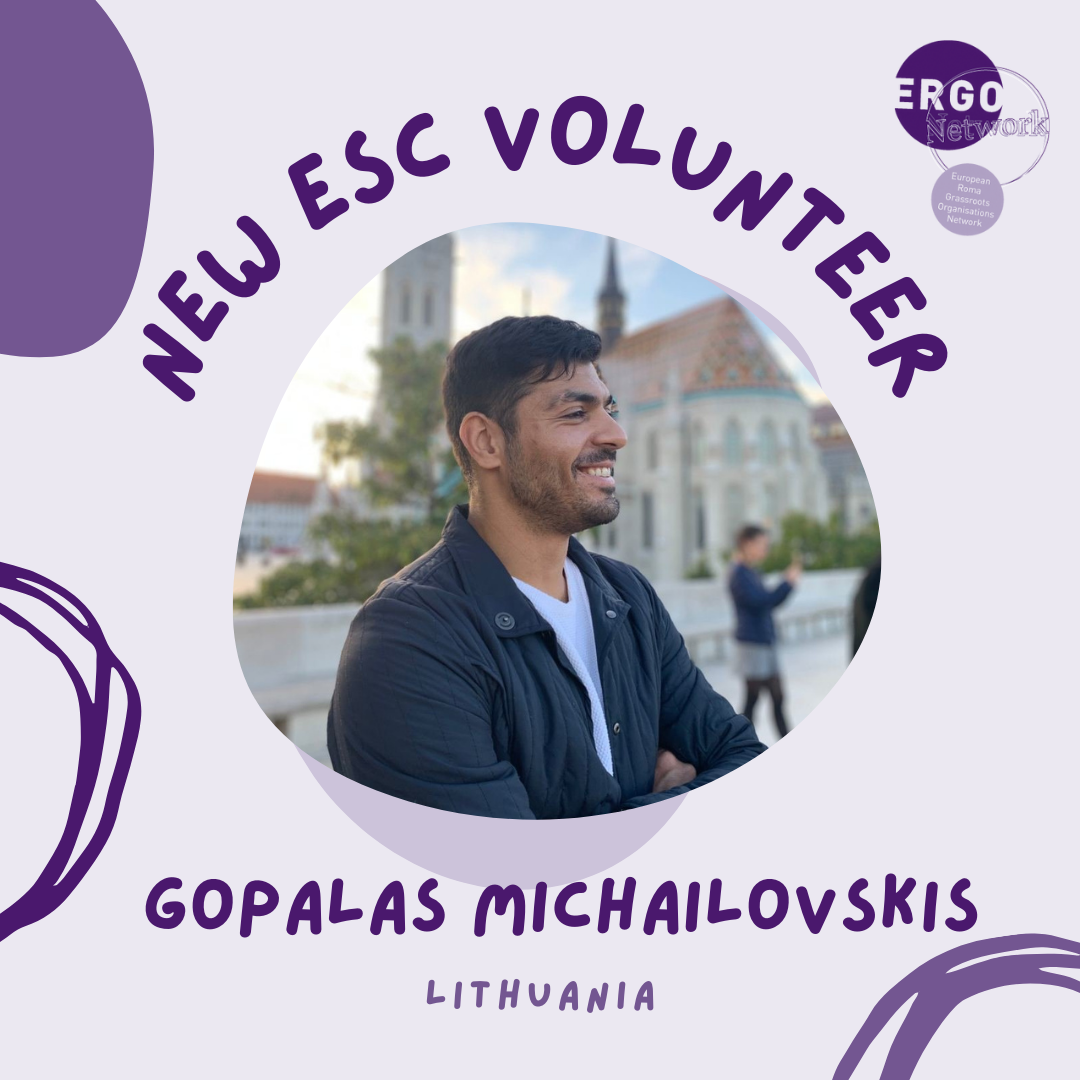
The ERGO Network Secretariat team is growing! This week our new European Solidarity Corps volunteer Gopalas Michailovskis from Lithuania joined us in Brussels.
He will stay eight months with us to learn more about how we work and support all our work areas.
Here is more about Gopalas in his own words:
I am from Lithuania with a diverse educational background that, I believe, reflects my passion for issues related to social justice, human rights, and the fight against antigypsyism or anti-Roma racism. With a Master’s degree in opera singing and another in Cultural Heritage Studies, I have honed my skills in both the arts and the humanities. Yet, my journey in academia was never disattached from the struggles many Roma face in various spheres.
Being a Roma individual myself, I find it meaningful to critically engage with these struggles and pave the path for nuanced rectification of racial injustices. My focus is not only to strengthen the means of awareness raising regarding antigypsyism, but also to envision the possible forms of such rectification, e.g. reparations, reconciliation, etc.
Therefore, my current internship with ERGO holds great significance for me. It represents an opportunity to direct my academic knowledge and prospect them into practical action. I believe that this experience will be a cornerstone for my future academic pursuits that will equip me with invaluable insights in the field of social justice, human rights, and the fight against antigypsyism or anti-Roma racism.
I am keen to work with and learn from you. Feel free to reach me out so that I can hear from you.