New European Solidarity Corps volunteer in ERGO Network

Welcome Siljana!

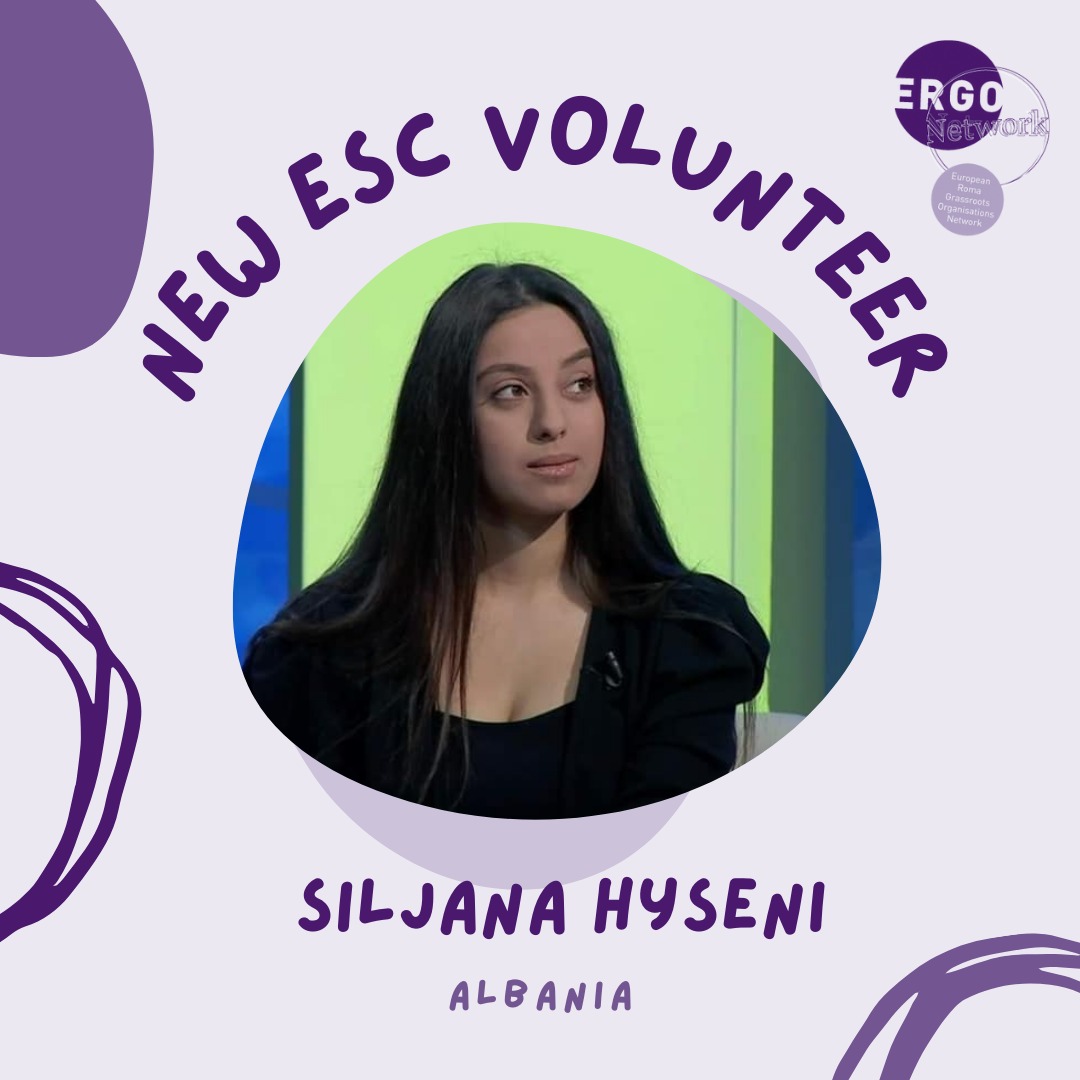
The ERGO Network Secretariat team is growing! This winter a new European Solidarity Corps volunteer Siljana Hyseni from Albania joined us in Brussels.

She will stay with us until the end of April to learn more about how we work and support all our work areas.

Here is more about Siljana in her own words:

I am a Roma woman from Albania with a strong interest in working for civil society. From a young age, as a volunteer, I joined different Roma-led NGOs, which significantly impacted my academic endeavours and equipped me with a unique perspective on human rights, social justice, and the fight against antigypsyism.

Completing a bachelor’s degree in International Relations and Political Science from New York University in Tirana has equipped me with a thorough understanding of global challenges, the importance of intercultural communication, and the necessity of social justice. Throughout my academic journey, I have explored in depth the role of international organisations in conflict resolution and the rights of marginalised communities.

My passion for social justice led me to focus on the impact of armed conflicts on Roma refugees, a group often overlooked and marginalised in times of war. I am particularly interested in shedding light on their experiences and advocating for their rights as they face unjust treatment and discrimination in their search for safety and refuge.

I firmly believe that change starts at the grassroots level, and I am committed to being a voice for those whose voices are often silenced. My goal is to continue advocating for the rights and dignity of the Roma minority, working towards a society where everyone, regardless of their background, has equal opportunities and access to justice.

xemeaino

I am excited to continue this journey of advocacy and empowerment, and I am grateful for the opportunity to contribute to the work of ERGO Network. Being at ERGO Network, I have the chance to engage and gain a European perspective on the challenges faced by the Roma minority.

Ukrainian Roma Refugee Odyssey in Central and Eastern Europe

Challenges and Urgent Needs: Ukrainian Roma Refugee Odyssey in Central and Eastern Europe

Today marks two years since the beginning of the war in Ukraine on 24 February. Since the very beginning, ERGO Network has been supporting Ukrainian Roma both in Ukraine and abroad as they sought refuge in other countries in Europe. The war triggered a migration crisis of a proportion Europe was not prepared for: among the 5 million Ukrainian refugees, approximately 100,000 Roma individuals. From that very first day, through our work with our member organisation, Roma Women Fund Chiricli, we have followed the journeys of many Ukrainian Roma, setting up emergency funds and providing money for food, medicine or petrol to individuals and families.

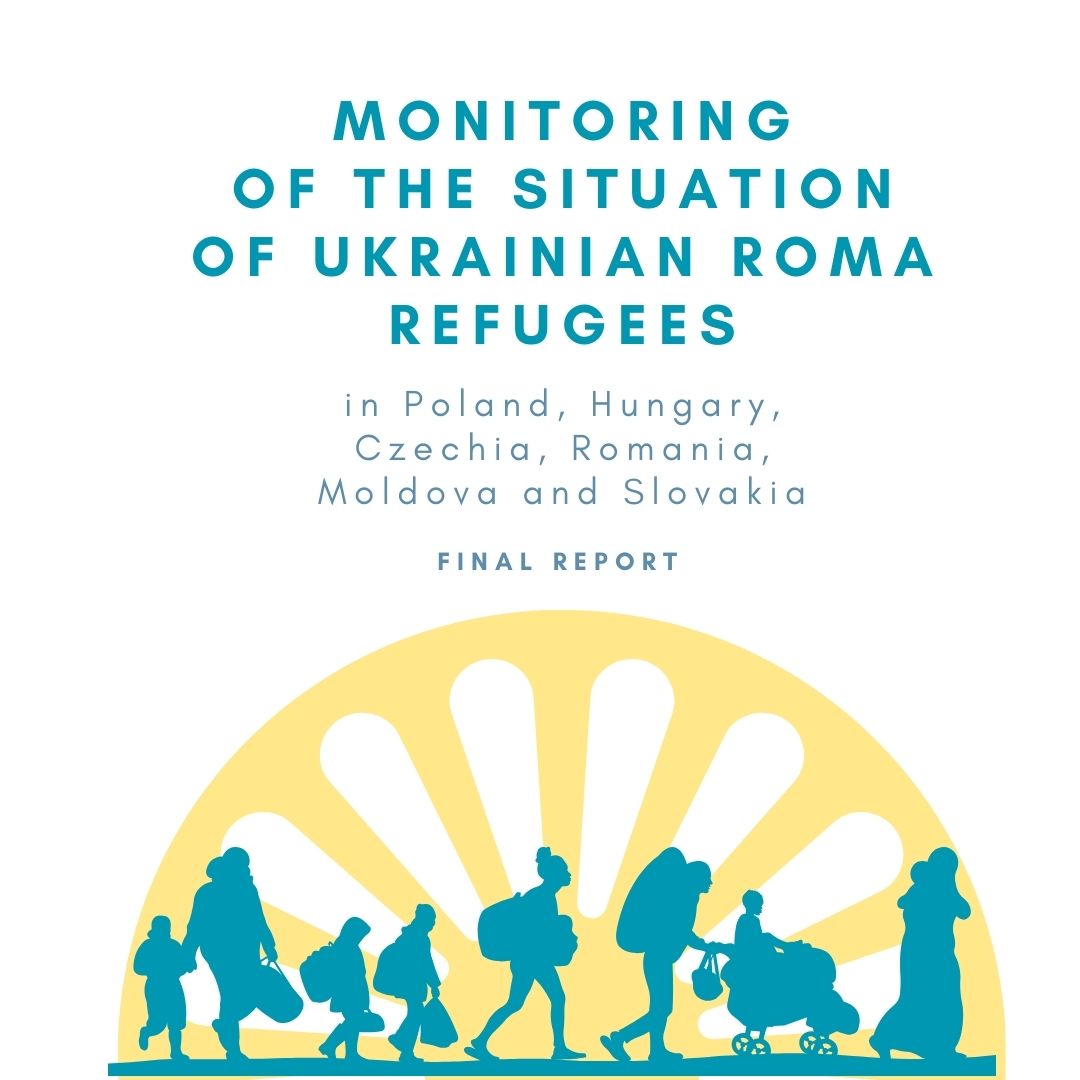
In the true spirit of ERGO Network, our work on Ukraine started from the very grassroots and scaled up in those two difficult years into a fully-fledged line of work, with the support of EPIM and other smaller grants. Today, on this sad anniversary, we would like to share with you one of the results of this work: the Monitoring Report of the Situation of Ukrainian Roma Refugees in Poland, Hungary, Czech Republic, Romania, Moldova and Slovakia. Our member organisations and associates brought it together, painting the big picture with the brushstrokes of individual interviews and research analysis.

The focus of this crisis goes beyond sheer numbers. In Poland, Hungary, the Czech Republic, Romania, Moldova, and Slovakia, Roma refugees from Ukraine face enduring discrimination rooted in cultural-historical issues, presenting challenges not commonly encountered by other refugees. Discrimination takes various forms, hindering access to crucial resources like housing, employment, information, and support services.

Despite the implementation of Temporary Protection (TP) and subsequent enhancements, the vulnerabilities of the Roma community within refugee populations persist. Cultural differences, discrimination, and limited education continue to shape their journey, resulting in subpar conditions and ongoing challenges.

The report, drawing from diverse data sources and covering the period until June 2023, provides a comprehensive understanding of the challenges faced by Roma refugees in these countries. It underscores the imperative for sustained attention and targeted interventions to address the unique challenges confronted by the Roma refugee community.

Major Findings: A Closer Look

The Roma refugee crisis unfolded in two distinct periods, with concrete measures taken by individual countries crucial for understanding and addressing challenges specific to the Roma community. Across Poland, Hungary, the Czech Republic, Romania, Moldova, and Slovakia, multifaceted challenges rooted in cultural-historical issues permeate crucial aspects like housing, employment, and support services.

In Poland, the collective approach of Roma refugees seeking security exacerbates challenges for activists facing substantial personal, financial, and societal pressures due to antigypsyism. Hungary grapples with historical racial marginalisation, necessitating a comprehensive strategy to address prolonged shelter stays and align with EU guidelines.

The Czech Republic views Roma refugees mainly as transient, demanding urgent attention for their long-term integration. Despite a robust legal framework, Romania confronts housing, education, employment, and healthcare challenges. Moldova contends with persistent disparities, emphasising the need for concerted efforts to bridge gaps in access to services, combat discrimination, and enhance advocacy initiatives.

The Slovak Republic, while actively assisting Ukrainian refugees, highlights instances of bias and challenges faced by Roma families. Slovakia’s legal framework and support measures reveal areas where targeted interventions are crucial to address discrimination and ensure equitable treatment for all refugees, including the Roma community.

Persisting Challenges Despite Efforts

While certain aspects, such as advancements in legal frameworks and increased awareness, offer positive aspects, socioeconomic problems, discrimination, and barriers to employment persist. ERGO Network Coordinator for Ukraine Dejan Markovic criticised the ‘colour-blind’ approach of service providers exacerbates the situation, overlooking institutional antigypsyism and challenges faced by the Roma refugee community:

“Ukrainian Roma refugees, forced to flee conflict and persecution, face not only the challenges of displacement but also the risks of discrimination and marginalisation in their quest for safety and stability.”

Increased awareness regarding the discrimination faced by Roma refugees has prompted advocacy and awareness campaigns, fostering improved understanding and collaboration among stakeholders. Yet, the prolonged armed conflict has intensified challenges within Roma communities, affecting socioeconomic indicators and hindering access to essential services.

Persistent barriers to employment, particularly for Roma women, highlight ongoing challenges. Limited educational access and language barriers remain formidable obstacles, indicating the need for targeted interventions.

Discrimination against Roma refugees, particularly in Central and Eastern European countries, remains pronounced. The report emphasises the imperative for targeted interventions, ongoing monitoring, and adaptive strategies to address the distinct challenges faced by the Roma refugee community.

Recommendations for International organisations

Recommendations put forth in the report include implementing comprehensive anti-discrimination legislation, streamlining asylum processes, providing free legal counselling, launching public awareness campaigns, ensuring equitable healthcare access, offering language and integration classes, developing job placement and vocational training programs, supporting NGOs, fostering collaboration, and establishing data collection and monitoring mechanisms.

The report recommends sustaining and evolving collaborative efforts for international organisations, emphasising the importance of ongoing engagement with the Roma Coordination Group and incorporating contributions from thematic meetings conducted by UN WOMEN.

For the European Union, the report urges heightened awareness, the universal application of the Temporary Protection Directive, and the adoption of promising initiatives observed in certain EU countries. A multifaceted approach at the EU and national levels is recommended, encompassing legal frameworks, streamlined asylum processes, culturally sensitive services, public awareness campaigns, and financial support for NGOs.

For the past two years, we have worked jointly with our member organisations and independent Roma researchers to create a comprehensive analysis of the so-called bigger picture by bringing the perspective of the grassroots and connecting and empowering them. It is not in our power to stop the war. Still, we hope this report serves as a compelling call to action, stressing the need for sustained efforts to ensure the inclusion and well-being of the Roma refugee community in the broader European context.

Most Roma Friendly Mayor Award, 2024

Launch of the award in the Western Balkans and Türkiye:
Most Roma Friendly Mayor Award 2024

This is the fourth edition of the “Most Roma Friendly Mayor” Award in the Western Balkans and Türkiye. The award recognises those local authorities who believe in their citizens and treat them equally. It aims to change attitudes towards Roma inclusion and features local authorities who give power to Roma communities and listen to their needs.

The winners will be selected through a competition open to municipalities willing to apply for the award “Most Roma Friendly Mayor”. The competition is being simultaneously implemented in the Western Balkans and Türkiye, with one winner for each country.

The awarded mayors from Albania, Serbia, Kosovo, Republic of North Macedonia, Bosnia and Herzegovina, Montenegro and Türkiye will participate in a special event from 9th to 11th of April 2024, in the frame of the Roma Week, organised in Brussels where they will meet a high representative from DG NEAR.

The award ceremony will emphasize positive examples of Roma inclusion, highlighting the philosophy of empowerment, mobilization and equal dialogue between local authorities and Roma communities, where the municipalities and the Roma community can come together and engage in a dialogue on an equal level.

The competition for this award will be open from February 8th until February 29th, 2024. An independent jury will be established in each country, and it will, based on the given questionnaire, select the winner of the contest “Most Roma Friendly Mayor”.

Application documents:

  • The application form completed
  • Articles/news/reports/documents/protocols that support your responses in the application form
  • Feedback / Roma Community assessment regarding the municipality
  • Pictures

The application form can be mailed to:

Roma Active Albania, Rr.Ylbere Bylykbashi; P. 25; Shk. 2; Ap 4; Tirane, Albania, or be sent via email to info@raa.al until February 29th 2024, local time 23:59.

This activity is implemented in the frame of the project “Romani Women POWER OF CHANGE in the Western Balkans and Turkey”, financed by the European Union, Europe Aid / 162473/DH/ACT/Multi, Project number CN 2019/413-758.

Inclusion or Exclusion? The Reality for Roma Refugees in Poland

Inclusion or Exclusion? The Reality for Roma Refugees in Poland

The ongoing conflict in Ukraine has led to a massive humanitarian crisis, forcing millions of people to seek refuge in neighbouring countries. Among these displaced individuals are the Roma, a discriminated-against ethnic group in both Ukraine and Poland. This article delves into the situation of Ukrainian Roma refugees in Poland, as outlined in the ERGO Network project’s report, “Supporting Ukrainian Roma impacted by war.” The report, prepared for ERGO Network by Elżbieta Mirga-Wójtowicz, Kamila Fiałkowska and Monika Szewczyk, sheds light on Roma refugees’ challenges and highlights the urgent need for comprehensive support and advocacy efforts.

The Scale of the Crisis and Legal Assistance

As of February 2023, nearly 1,563,000 people from Ukraine had sought refuge in Poland, with a significant part being Roma. Despite the staggering numbers, the plight of the Roma within the broader refugee crisis tends to be overlooked. The report suggests that tens of thousands of Roma have crossed the Polish border, and estimates by the European Commission put the figure at least 100,000 Roma fleeing Ukraine. The Roma face a complex set of challenges rooted in historical discrimination and exacerbated by the trauma of being refugees from a war-torn region.

The legal initiatives for Ukrainian refugees at both the European and Polish levels include the activation of the Temporary Protection Directive and the extension of legal stay for Ukrainian citizens in Poland until March 4, 2024, with various assistance measures. However, despite these efforts, the author notes a significant lack of adequate support for Ukrainian Roma refugees in Poland, highlighting systemic discrimination and challenges in accessing assistance due to antigypsyism.

Distinct Challenges of Ukrainian Roma Refugees

The discrimination faced by Ukrainian Roma refugees is profoundly ingrained and multifaceted. In both Ukraine and Poland, they encounter various forms of discrimination, both verbal and non-verbal. This discrimination extends beyond rhetoric, affecting crucial aspects of their lives, such as housing, employment, information access, transportation, and vital support services, including psychological, legal, and educational assistance.

Antigypsyism, or prejudice against Roma, compounds the challenges faced by this group. The report highlights that the Roma tend to form larger groups for security, yet this collective behaviour complicates voluntary efforts to assist them. The trauma of war, coupled with enduring discrimination, creates a paradoxical situation where Ukrainian Roma refugees experience both exclusion and inclusion simultaneously.

Role of Roma Activists and NGOs

In the absence of comprehensive government-led initiatives, the primary efforts to aid Ukrainian Roma refugees are spearheaded by Roma activists and organisations in Poland. While these organisations treat Roma as equals, their capacity is often stretched thin due to the unique challenges faced by the Roma refugees. The burden falls on activists and NGOs to independently provide support and assume responsibility for the well-being of the refugee community.

The report emphasises the necessity of establishing a precise mechanism for financial support for NGOs and activists working with Roma refugees. The support should extend to individual services, such as psychological and legal assistance for activists, recognising the additional pressures on them. At present, Roma activists and organisations, along with local authorities, share a similar attitude towards Roma refugees, creating a need for a more sustainable and collaborative approach.

Official Stance and Color-Blind Policies

While the report does not explicitly detail services being denied to Roma, it highlights an official stance of being ‘colour-blind.’ This approach, while seemingly neutral, inadvertently negates the existence of institutional antigypsyism and discrimination against Roma in Poland. By overlooking the specific challenges faced by Ukrainian Roma refugees, the colour-blind policy exacerbates the situation and impedes the development of targeted solutions.

Advocacy and Awareness

The report stresses the importance of advocacy to raise awareness of the social and economic challenges faced by Ukrainian Roma refugees. With Roma residing in reception centres, the dynamic situation calls for dialogue and cooperation between various stakeholders, including owners, coordinators, staff, volunteers, Roma NGOs, and local authorities. The involvement of the Ombudsman is suggested, and avenues such as meetings, trainings, workshops, and social campaigns are proposed to foster understanding and break down resentment against the Roma community.

Conclusion

The plight of Ukrainian Roma refugees in Poland underscores the need for a nuanced and targeted approach to address the unique challenges faced by this marginalised group. From systemic antigypsyism to the trauma of war, the Ukrainian Roma refugees navigate a complex web of discrimination and exclusion. The role of Roma activists and organisations is crucial, but sustainable solutions require broader collaboration, financial support, and a concerted effort to raise awareness and challenge colour-blind policies.

The recommendations outlined in the report aim to enhance human rights protection for Roma refugees from Ukraine in Poland. They include the development of a comprehensive migration policy, establishing intergovernmental collaborations, addressing discrimination issues at a national level, aligning governmental programs with the specific needs of Roma refugees, and providing support for NGOs and activists. Specific measures include creating monitoring systems, fostering integration through workshops, sensitising stakeholders, prioritising Roma issues within national structures, and initiating transnational advocacy efforts. 


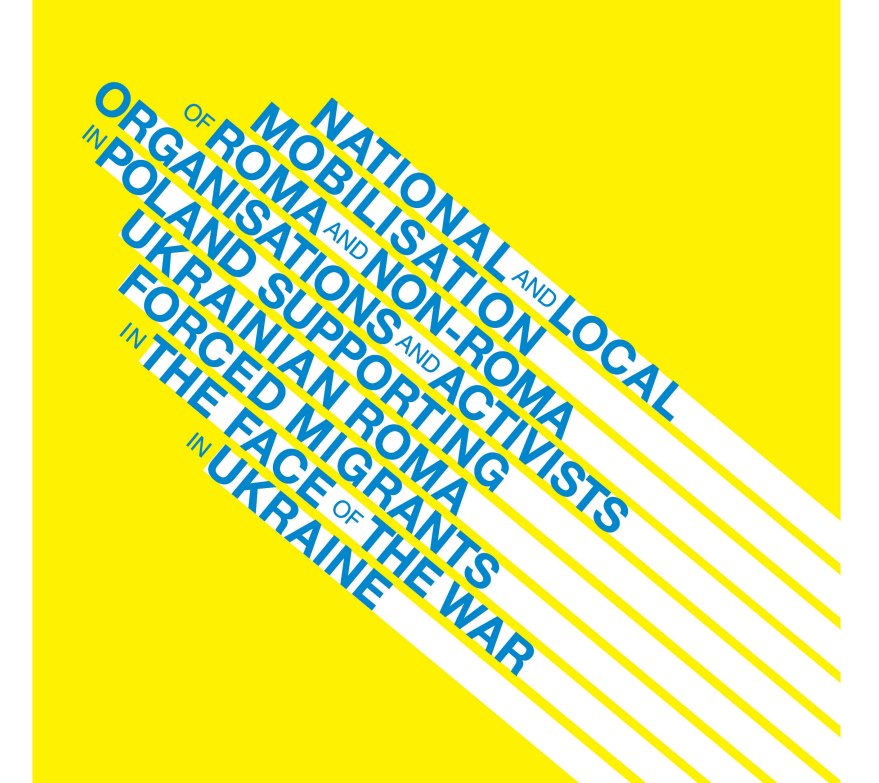
This report was made through the ERGO Network project “Supporting Ukrainian Roma impacted by war”, financed by the European Program for Integration and Migration (EPIM) and the European Commission’s CERV programme.

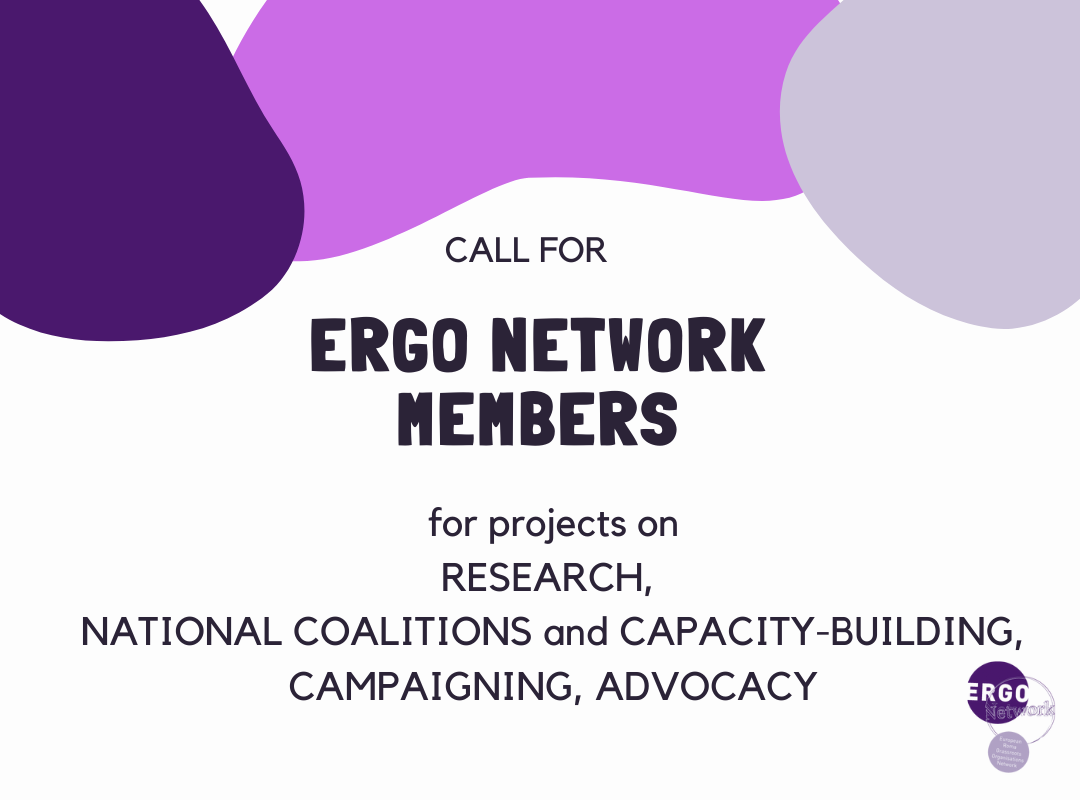
Call to ERGO Network Members for Applications for Re-Granting 2024

Roma equality, inclusion and participation (EQUIP) 2024: Re-granting to ERGO Network members

This year, the ERGO Network can give grants to its members in three categories. These grants are part of ERGO Network’s financial support to third parties through its Annual Work Programme ‘Roma Equality, Inclusion and Participation 2024, funded by the Citizens, Equality, Rights and Values Programme (CERV) of the European Commission.

RESEARCH:

Call for applications for small-scale research projects: To support local and national Roma civil society in gathering evidence of challenges Roma faces locally through research activities.

Three projects with budgets up to 4,000 €

NATIONAL COALITIONS: 

To support local and national Roma civil society in gathering evidence of challenges Roma face locally through research activities and strengthening the networks.

Six projects with budgets up to 5,000€

CAPACITY-BUILDING, CAMPAIGNING, ADVOCACY: 

Call for applications for capacity-building, campaigning, and advocacy projects.

Nine projects with budgets up to 10,000€

Eligibility criteria: 

– Be a member (full or associate) of the ERGO Network
– Be established as a Member State of the European Union
– Be a legal entity, a non-profit organisation
– Respect EU values as laid down in Art.2 of the Treaty on European Union and the EU Charter of Fundamental Rights.
– Not be a sub-contractor of ERGO Network
– Adhere to ERGO Network’s safeguarding policy, have their safeguarding policy or agree to start developing a safeguarding policy.

All ERGO Network full member and associate member organisations can apply to more than one of the calls.

The deadline for applications is 29 March 23:59 CET.

The selection will be done by a team of ERGO Network Secretariat, board members, and one external evaluator.

The implementation period is foreseen for May to November 2024.

This project is funded by the European Union.

`
General – Page 14 – ERGO Network

By continuing to use the site, you agree to the use of cookies. more information

The cookie settings on this website are set to "allow cookies" to give you the best browsing experience possible. If you continue to use this website without changing your cookie settings or you click "Accept" below then you are consenting to this.

Close