CSOs react to New European Commission

European and national equality civil society networks and organisations react to the portfolio of the Commissioner-designate for Preparedness, Crisis Management and Equality

In light of the recent unveiling of the new European Commission, European and national equality civil society networks and organisations wish to express their shock and dismay over the downgrading of the Equality portfolio compared to the previous mandate.

When the President of the European Commission delayed announcing the new College due to the lack of female Commissioners, we were hopeful that this signalled a commitment to strengthen the Equality portfolio and advancing the EU’s vision for a “Union of Equality.” Instead, we are disappointed that this delay appears to have been more a performative gesture regarding an expected “gender quota” than a genuine commitment to substance.

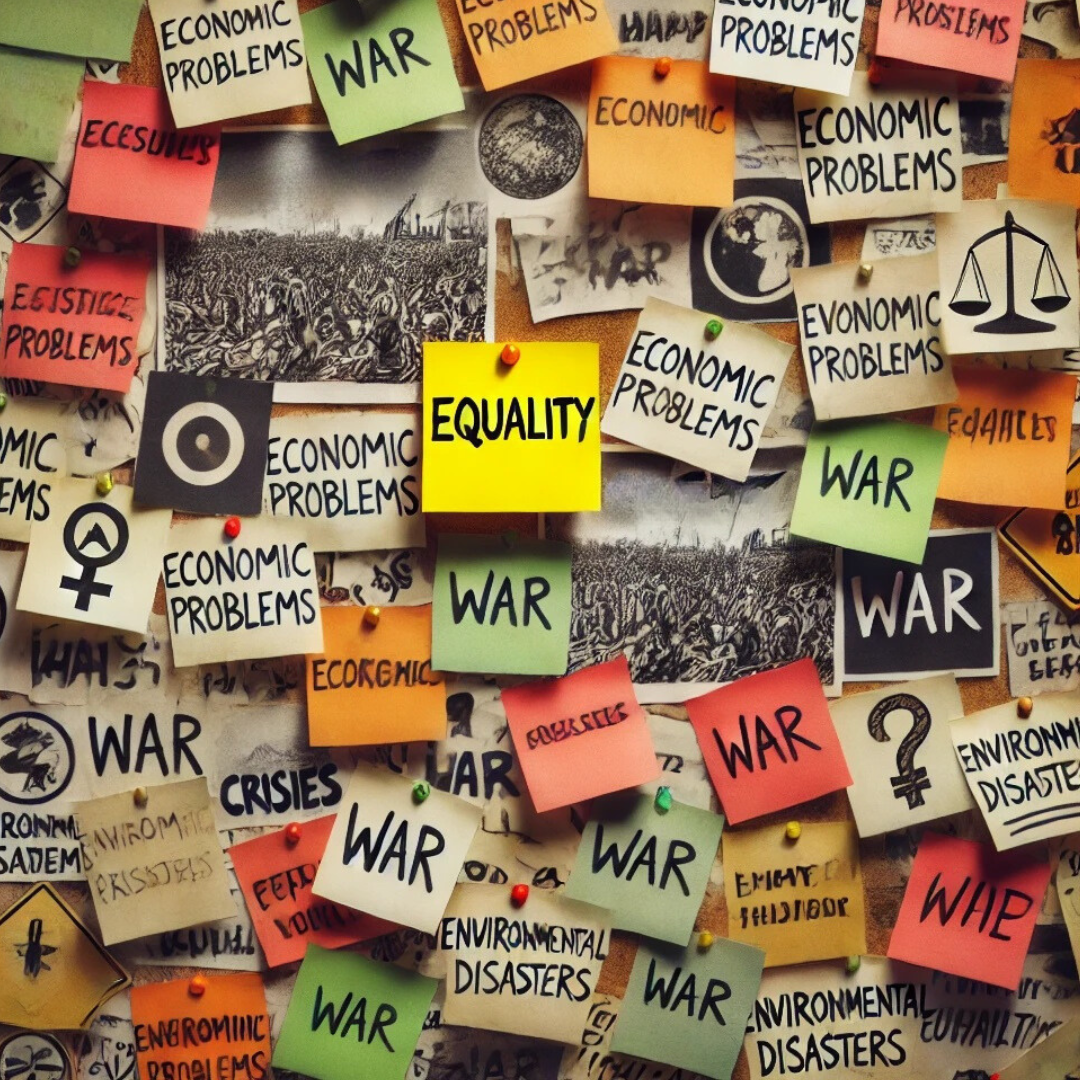
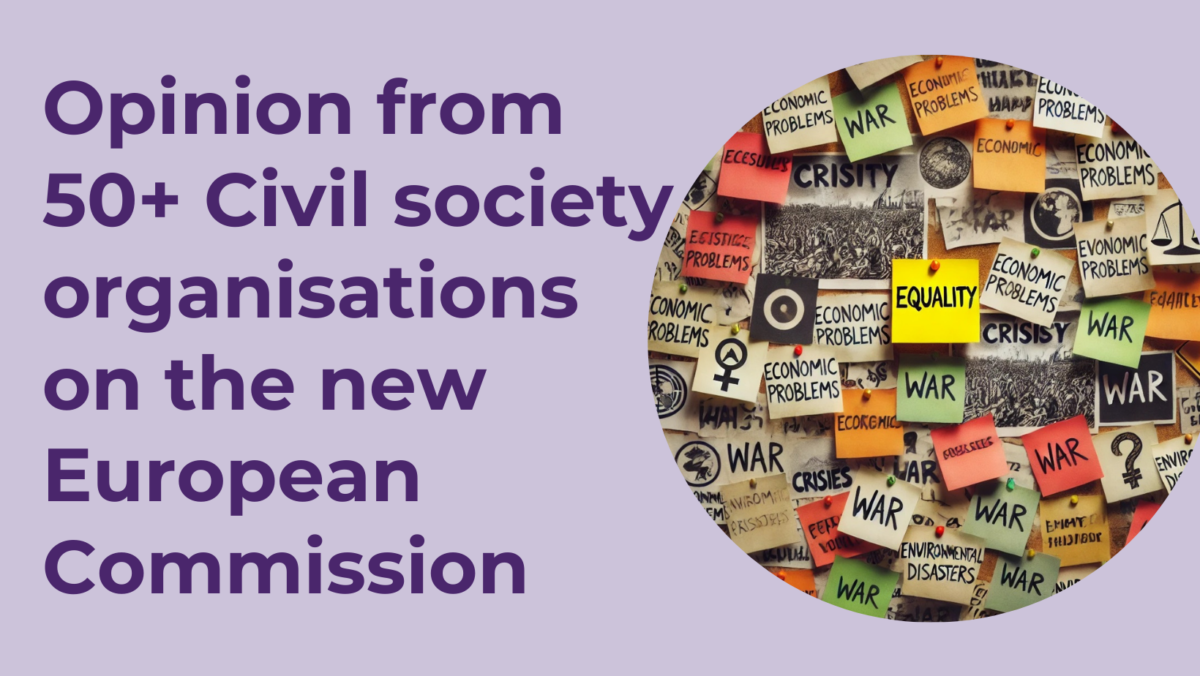
The shift from Equality being a stand-alone portfolio to now being combined with Crisis Management and Preparedness under the same Commissioner poses a significant risk that the latter will be prioritised to the detriment of the former. Given crises’ urgent and often overwhelming nature, we fear that equality issues will be sidelined in favour of crisis management. This new configuration risks undermining the consistent and diligent implementation of the Equality agenda, as crises like pandemics, wars, and economic or environmental disasters will likely dominate the Commissioner’s time and focus. Recent years have shown that crises can easily overwhelm even the most dedicated officials.

Despite the ambitious goal of building a Union of Equality, the mission letter fails to grant the Commissioner-designate a broad mandate to lead the fight against structural and intersectional discrimination or to advance anti-discrimination legislation. Worrisome is also the complete omission of age discrimination, a ground for action under EU treaties, marking a step backwards from the previous Commissioner’s mandate. The letter also fails to underpin these objectives with the necessary Commission services as it only refers to the Equality Taskforce.

We are also concerned by the lack of long-term consideration of gender equality based on collective values, knowledge and behaviours acquired through education and life-long learning. We regret the absence of long-term investment in education and future generations, essential to allow the EU to « shift from reaction to proactive readiness » in the field.

Gabriela Hrabaňová, the Director of the European Roma Grassroots Organisations (ERGO) Network, stated that “With equality tacked onto crisis management, efforts to address antigypsyism, racism, and intersectional discrimination against Europe’s racialised minorities will likely be overshadowed or significantly diminished.“ 

Sabine Saliba, Secretary General of Eurochild, stated, ‘’Considering global conflicts, the increasing effects of climate change, and the importance of non-discrimination policies, we believe these issues warrant more focused attention. The integration of the two portfolios may risk sidelining essential efforts to uphold the rights of all children, including those facing unique vulnerabilities due to their circumstances, such as children with disabilities, Roma children and children with a migrant background.’’

Farah Abdi, Policy Officer at TGEU, stated, “The Mission Letters show a worrying disconnect between equality and key areas like democracy and justice, sidelining protections for LGBTI people, especially trans refugees, who face heightened risks to their fundamental rights. Without committing to a strong legislative push, the renewed LGBTIQ Equality Strategy risks further marginalisation at a critical time.”

Maciej Kucharczyk, Secretary General of AGE Platform Europe, commented on behalf of their network of more than 100 organisations, directly representing millions of older persons in Europe. “At a time when inequalities are increasing in our societies across all population and age groups, the EU must step up – not scale down – its efforts to achieve a ‘Union of Equality’.  It is completely inappropriate to lump together such an important issue for the EU’s internal and external affairs under the broad Preparedness and Crisis Management portfolio. We are particularly concerned by the lack of any reference to the fight against age discrimination in the new equality portfolio, which is a clear downgrade from the mandate of the past Commissioner. There can be no true ‘Union of Equality’ unless the Commission takes action on age discrimination alongside other grounds”.

Together, ERGO Network and other equality-focused networks and civil society organisations call on the European Commission’s leadership to ensure that equality remains a central priority in the EU’s work. We urge President Ursula von der Leyen to reaffirm the EU’s commitment to the Union of Equality and equip the Commissioner with the resources and capacity needed to fulfil this role effectively.

Given the inexplicable absence of DG JUST and DG EMPL from the Mission Letter—departments that oversee the EU Anti-Racism Coordinator and the units responsible for the Union of Equality—we seek clarification from the Commission on how the Equality portfolio will be implemented structurally and practically. A genuine commitment to equality should also include recruiting people of diverse backgrounds within the Commissioner’s cabinet.


Sincerely yours,

The signatory organisations below

European Networks:

  • European Roma Grassroots Organisations Network
  • Eurochild
  • European Federation of National Organisations Working with the Homeless (FEANTSA)
  • European Association of Service providers for Persons with Disabilities (EASPD)
  • European Network Against Racism (ENAR)
  • European Anti-Poverty Network
  • Equinox – Initiative for Racial Justice
  • AGE Platform Europe
  • European Disability Forum
  • Social Platform
  • European Roma Rights Center
  • European Civic Forum
  • TGEU (Trans Europe and Central Asia)
  • Eurodiaconia
  • Feminist Collective of Romani Gender Experts
  • Quality Education in Europe for Sustainable Social Transformation (QUEST)
  • Dynamo International
  • ternYpe – International Roma Youth Network
  • Hope and Homes for Children
  • International Step by Step Association-ISSA
  • OII Organisation Intersex International Europe e.V.
  • Romnja Feminist Library
  • Diaspora Vote

National organisations:

  • Romano Centro, Austria
  • Minority Initiative, Austria
  • Waterford Integration Services, Ireland
  • Changemakers Lab, Greece
  • Greek Forum of Migrants, Greece
  • Equal Opportunities Initiative Association, Bulgaria
  • Roma Forum, Serbia
  • Amalipe, Bulgaria
  • Integro Association, Bulgaria
  • Roma Women Platform ROMNI, Moldova
  • Estonian Human Rights Centre, Estonia
  • Phiren Amenca, Hungary
  • Romni APS, Italy
  • Central Council of German Sinti and Roma (Zentralrat Deutscher Sinti und Roma), Germany
  • Melde- und Informationsstelle Antiziganismus (MIA), Germany
  • Amaro Drom, Germany
  • Zero Discrimination Association, Turkey
  • Advancing Together, Kosovo
  • Trajosko Drom, Sweden
  • Roma Community Centre, Lithuania
  • La voix des rroms, France
  • Regional Roma Educational Youth Association-RROMA, North Macedonia
  • Nevo Parudimos, Romania
  • Roma Advocacy and Research Centre, Slovakia
  • RomanoNet, Czechia
  • Roma Women Fund “Chirikli”, Ukraine
  • Jaw Dikh Foundation, Poland
  • Roma Active Albania, Albania
  • Presencia Gitana, Spain
  • FAGIC – Federación de Asociaciones Gitanas de Cataluña, Spain
  • E-Romnja, Romania
  • Migrant Tales, Finland
  • Helsinki Deaconess Institute Foundation sr, Finland
  • The Finnish Roma Association, Finland
  • KOBV Austria – The Association for People with Disabilities, Austria
Crisis Over Equality: ERGO Network Urges EU to Prioritise Antiracism and Roma Inclusion

Crisis Over Equality: ERGO Network Urges EU to Prioritise Antiracism and Roma Inclusion

In response to the unveiling of the new European Commission, we at ERGO Network express our concern over the diminishing focus on equality, particularly with regard to Roma, Europe’s largest ethnic minority.

The Commission’s composition and portfolio allocations emphasize economic competitiveness and crisis management, pushing social equality into the background. This is a departure from the previous Commission’s commitment to a “Union of Equality” and is sadly rather expected. It is also in line with the current lack of Roma representatives in the new European Parliament and the slogan of the Hungarian Presidency in the Council of the European Union, “Make Europe Great Again.”

Even before the formal announcement from the Commission President, there were “rumours” about Member States’ lack of interest in appointing a candidate for the Equality portfolio. Belgium’s current nomination does not do much to dismiss the rumours.

The new Commissioner-designate for Equality, Hadja Lahbib, is also the Commissioner-designate for Preparedness and Crisis Management.

While ERGO Network wholeheartedly welcomes the presence of a woman with a minority background as Commissioner, we are very much concerned about the merging of the Equality portfolio with issues that have nothing in common and the political message this sends to both Member States and EU citizens.

While there is a decline in the protection of human rights and the rule of law in the EU, this nomination can only legitimise the rise of the far-right and leave space for challenging the priority given by the EU to fighting racism and ensuring equality for all.

With this new nomination (merged portfolio), it is reasonable to expect that a crisis—like a pandemic, war, or another economic, environmental, or geopolitical one—will dominate the Commissioner’s agenda. If the last years have taught us anything, it is that we can always be sure there are enough crises to fill a Commissioner’s working day.

With equality tacked onto crisis management, efforts to address antigypsyism and racism against other racialised minorities will likely be overshadowed or significantly diminished. Questions also remain around the practical arrangements of the Commissioner’s cabinet, the division of tasks, and the human resources allocated to fulfil the tasks on the Equality portfolio. Questions arise particularly about the continuity and role of the Antiracism Coordinator and how the new Coordinator will work with the New Commissioner for Equality.

We welcome the elevation of the portfolio previously responsible for Employment and Social Affairs to the level of Executive Vice-President, but we lament the loss of explicit wording on social rights from the title. We further appreciate the explicit mention of the Union of Equality in the Mission Letter and the call to ensure the fight against discrimination, groundbreaking new initiatives on quality jobs, and the fight against poverty, among others.

Furthermore, portfolios such as that of Magnus Brunner, Commissioner-designate for Internal Affairs and Migration, emphasise the need to improve the safety and security of Jewish communities under the EU Strategy on Combating Antisemitism and Safety of Muslims under the EU Antiracism Action Plan while failing to address human rights threats against Roma in the EU.

Additionally, the broader political context underscores these concerns. Ursula von der Leyen’s willingness to engage with more right-leaning groups like the European Conservatives and Reformists (ECR) signals a potential rightward shift in EU policy. This could mean reducing the attention paid to progressive social policies, including those focused on minority rights and equality.

ERGO Network calls out the failure of both Member States and the leadership of the Commission to ensure that Equality is given the place it needs within the work of the European Union and insists that emphasis on antiracism, including the fight against antigypsyism and Roma discrimination, is not overshadowed but the merger of Equality with other issues.

The Roma community has long been Europe’s largest and most marginalised ethnic minority, and now more than ever, the Commission must prioritise policies that uphold and advance our rights.

EC Spring Package 2024 – What’s in it for Europe’s Roma?

European Commission releases Spring Package 2024 – What’s in it for Europe’s Roma?

On 19 June 2024, the European Commission published the so-called Spring Package, comprising the 27 Country Reports, 27 Country-Specific Recommendations, and the accompanying Communication on the Spring Package, in the framework of the 2024 European Semester. ERGO Network and its national members have reviewed the Package to see to which extent it explicitly mentions Roma rights and inclusion, ethnic minorities, discrimination, and racism, as well as to assess whether national civil society was involved in drafting the Country Reports.

Key Findings

1.    The Communication on the Spring Package mentions the Roma twice regarding their labour market participation and the impact of inflation—but nothing on health, housing, or education.

2.    8 Country Reports include references to the Roma (BG, CZ, GR, HU, IE, RO, SK, SI) in 2024, one more than in 2023, but still insufficient as Roma live in 26 EU Member States.

3.    There is 1 Country-Specific Recommendation (SK) on Roma, who are also mentioned in 6 Preambles (BG, CZ, GR, HU, RO, SK), a significant step up from 2023 (only one Preamble, HU).

4.    Ethnic minorities feature in 4 Country Reports (BG, DE, EE, FI) and no CSRs, while discrimination is mentioned in 7 CRs (AT, HU, IE, NL, SK, ES, SE) and two Preambles (AT, NL).

5.    Civil society was poorly associated to the drafting of the Country Reports, but it is mentioned in 8 of them (CZ, DK, GR, HU, IE, LV, SK, SI), and in all Preambles except CY & ES).

Overall, while our members welcome references to Roma communities in more countries, they lament that most of the Spring Package 2024 doesn’t explicitly mention them, whereas the Roma are present in all Member States except Malta and experience rates of poverty and social exclusion of over 80% in most of them, and almost 100% in some. This situation was exacerbated by the aftermath of the Covid-19 pandemic, the war in Ukraine, and the rising cost of living and energy price spikes. As the Package itself highlights these very challenges, it would have warranted more attention paid to one of Europe’s most left-behind communities.

The recurrent focus on competitiveness as well as productivity, and curbing public spending spells dire times for social inclusion, human rights, and equality. It is our members’ experience that, unless the Roma are explicitly named as key target beneficiaries of support measures, and unless specific measures and resources are dedicated to them, mainstream initiatives and broad national and EU funds end up not reaching them. Europe’s Roma must be specifically prioritised in the EU’s Recovery Package and associated funds if the EU is serious about delivering on its commitments for Roma equality, inclusion, and participation by 2030.

Our members equally express disappointment that issues of discrimination and antigypsyism are largely absent from the present Package, while these phenomena have increased in recent years. The fact that the country analyses and recommendations do not seek to establish explicit synergies with the EU and national Roma Frameworks and with the National Action Plans against Racism is considered a significant missed opportunity.

Finally, they deplore the lack of recognition and support given to civil society organisations in the two country documents, given that most of them are not only on the frontlines, providing essential support to communities in need, but they equally possess the knowledge, expertise, and direct links to beneficiaries which are needed to inform the design of sustainable and effective public policies.

For more information about ERGO Network’s work on the European Semester and associated frameworks (European Pillar of Social Rights, Sustainable Development Goals etc), please contact Senior Policy Adviser Amana Ferro.

New European Solidarity Corps volunteer in ERGO Network

Welcome Stelina!

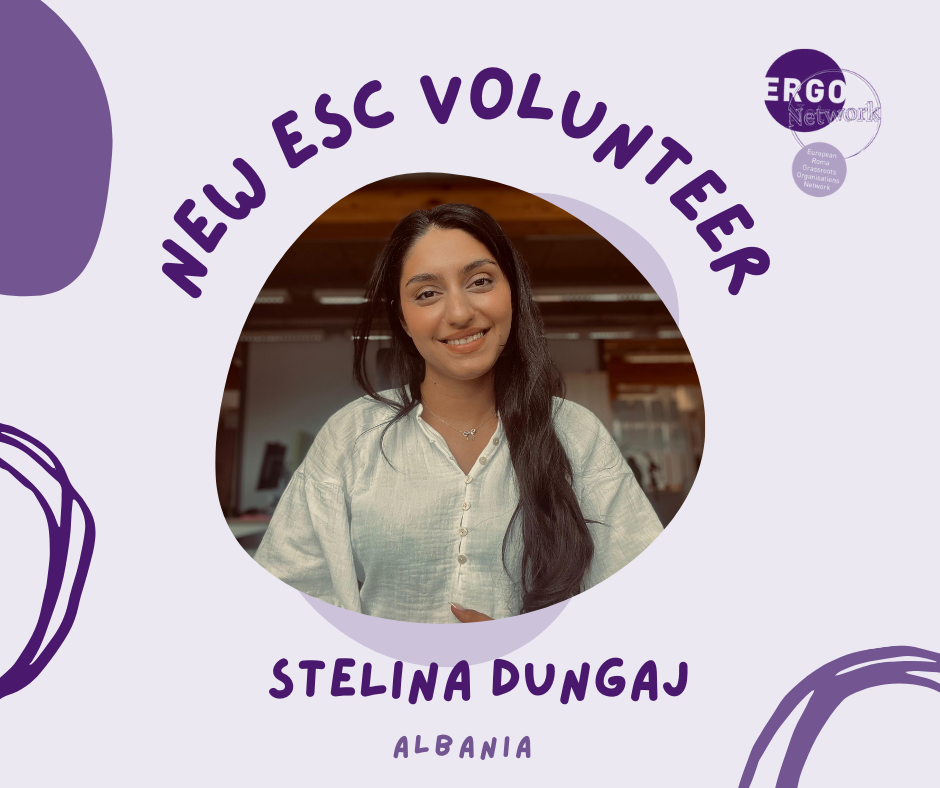
The ERGO Network Secretariat team is growing! This week a new European Solidarity Corps volunteer Stelina Dungaj from Albania joined us in Brussels.

She will stay with us until the end of June 2025 to learn more about how we work and support all our work areas.

Here is more about Stelina in her own words:

I am Stelina from Albania, a young Roma woman dedicated to becoming the best version of myself, not only for personal growth but to inspire and uplift my community, especially the youth. My passion has driven me to seek out knowledge and insights into the current conditions of Roma across Central and Eastern Europe. Through my analysis, I’ve identified racism as a key barrier holding Roma back, with the path to change lying in combating antigypsyism at both institutional and grassroots levels.

Completing my MA in Sociology and Social Anthropology at CEU, obtaining an Advanced Certificate in Romani Studies, and engaging with various Roma NGOs have equipped me with extensive knowledge of Roma and the immediate issues that need to be addressed, particularly through research, policy making and advocacy. These experiences have only fuelled my enthusiasm for observing and analysing the Roma situation within European institutions. Consequently, I have focused on the Roma Framework and Strategic Plans, evaluating the effectiveness of policies over time and recommending improvements.

I firmly believe that change should start from within and for this reason I will be contributing at ERGO Network as the New Solidarity Corps Volunteer. I am excited for the given opportunity where besides my passion and professional aspirations I will be contributing immensely in the communication part to ensure an effective outreach and engagement over the next 10 months. I believe that through the communication work I will be doing I can gain knowledge on policy topics and issues that are going on, while creating the space for me to grow more in this area.

As a new team member of ERGO, I am eager to challenge myself and, as I always say, work diligently towards changing societal narratives about minorities from being seen as “the other” to being recognized as “us.” Besides that, I am a very social person who loves music and conversations about different topics. I sing and make covers of different songs to post on my social media. I love travelling, coffee and good company.

CALL FOR NATIONAL FOCAL POINTS 

[wp_code id=”1″]

ERGO Network is seeking dedicated Roma Civil Society representatives to serve as National Focal Points in Albania, Bulgaria, Czechia, Greece, Germany, Italy, North Macedonia, Romania, Spain and Slovakia. The focal points will assist in data collection and provide valuable insights on the implementation of Human Rights standards related to antigypsyism and discrimination against Roma and Travellers, specifically for the RIPE (Roma Inclusion, Participation & Equality) Index & Map. 

Deadline for applications: 26th August 2024 CET


Background 

The RIPE (Roma Inclusion, Participation & Equality) Index & Map is a vital tool currently being developed by the ERGO Network to tackle the pervasive discrimination against the Roma community within various European States. RIPE offers a unified framework to assess and compare the conditions of Roma populations across diverse political, social, and economic contexts. Inspired by established human rights mechanisms, the RIPE Index & Map systematically assesses a wide array of rights and social indices, ensuring comprehensive coverage from human rights to socio-economic conditions. RIPE leverages empirical data to advocate for policies that prevent discrimination and promote Roma inclusion, equality, and participation, while also investing at the Roma grassroots level. 

Importance of the RIPE Index 

The RIPE Index systematically captures and analyzes data on the social conditions of Roma, their experiences of discrimination, and their access to opportunities across European States. This tool: 

  • Standardizes Measurement: Facilitates comparisons and tracking progress across countries. 
  • Shapes Policy: Provides detailed data to inform national and international policies. 
  • Promotes Inclusion and Rights: Identifies areas where Roma rights are inadequately protected, advocating for inclusive policies. 
  • Raises Awareness and Engagement: Enhances dialogue and cooperation among Roma communities, civil society, and governments. 
  • Directs Resource Allocation: Ensures investments in Roma inclusion projects are targeted effectively. 
  • Creates Policy Nexus: Correlates instances of discrimination with policy outcomes, refining strategies for future policies. 

Responsibilities 

The selected National Focal Points will: 

  • Provide data through tailored questionnaire provided by ERGO reflecting on-the-ground realities. 
  • Provide updates on the collected data to the ERGO Secretariat between the submission of the completed questionnaire and the finalisation of the reaserch, only if needed 
  • Ensure the accuracy and comprehensiveness of data submitted to the ERGO Secretariat. 
  • Submission of all data and responses by the specified deadlines. 

Compensation & Timeline 

Up to 2 (two) Roma Civil Society Organizations acting as National Focal Points may be selected for each country. The total amount for remuneration for National Focal Points per each country amounts to 1000 EUR (500 EUR each in case of 2 National Focal Points).   

The commitment timeline for this role will span from 1 September 2024 to 1 November 2024. 

Countries 

The National Focal Points will be selected from the following countries: 

  • Albania 
  • Bulgaria 
  • Czechia 
  • Greece 
  • Germany 
  • Italy 
  • North Macedonia 
  • Romania 
  • Spain 
  • Slovakia 

How to Apply

Interested candidates should submit: 

  • A document not exceeding 200 words demonstrating the relevant experience, qualifications and operational capacity of your organization. 
  • A brief statement of interest outlining your motivation and suitability for the role. 
  • Please send your application to info@staging.ergonetwork.org by 26/08/2024 CET. For further questions, contact Georgios Tsiakalos at g.tsiakalos@staging.ergonetwork.org. 

Selection Criteria 

The National Focal Points will be selected based on their: 

  • Proven experience in Romani Civil Society work. 
  • Strong understanding of Human Rights standards related to antigypsyism and Roma equality, inclusion and participation. 

ERGO Network is committed to fostering inclusive and participatory processes that reflect the diversity of Roma communities across Europe. We encourage applications from all qualified individuals. 

`
Ana Rozanova – Page 7 – ERGO Network

By continuing to use the site, you agree to the use of cookies. more information

The cookie settings on this website are set to "allow cookies" to give you the best browsing experience possible. If you continue to use this website without changing your cookie settings or you click "Accept" below then you are consenting to this.

Close