Why the 2024 European Commission Hearings Matter for Roma Rights

Why the 2024 European Commission Hearings Matter for Roma Rights

As the new European Commission takes shape, civil society organisations, policymakers, and citizens closely watch the hearings to understand how the next generation of European leadership will address key social and human rights challenges. For the Roma —one of the most marginalised and discriminated groups in Europe—this moment is critical. The Commissioner-designate for Crisis Management, Preparedness and Equality and the Commissioner-designate for Democracy, Justice and Rule of Law are pivotal in setting the agenda for combating discrimination, ensuring inclusion, and addressing systemic inequalities, including antigypsyism.

Ahead of the European Commission’s hearings, European Parliament Committees have submitted written questions for all the Commissioners-designates for their confirmations. While we found some positive aspects, we feel that the questions submitted by the Civil Liberties, Justice and Home Affairs (LIBE), Women’s Rights and Gender Equality (FEMM), and Employment and Social Affairs (EMPL) committees in general fail to include a consistent approach to intersectionality and antiracism.

In our analysis of these questions, we focused on how well the perspectives of racialised minorities, including Roma, are integrated into the inquiries and the extent to which intersectionality is being mainstreamed. These timely questions will shape the EU’s approach to equality and justice for the next five years. 

This analysis aims to preview a broader concern: how the European Union’s policies on equality and justice will address the structural challenges and systemic inequalities faced by racialised groups across member states. It also asks whether the European Parliament will hold other institutions accountable for safeguarding fundamental rights, particularly for marginalised and vulnerable populations, in its commitment to democracy, justice, the rule of law, equality, and non-discrimination.

Questions for the Commissioner-Designate for Democracy, Justice and Rule of Law, Michael MCGRATH

LIBE Committee’s Questions: A missed chance to advocate for marginalised communities

The recent written questions posed by the LIBE Committee (Committee on Civil Liberties, Justice and Home Affairs) to the Commissioner-designate for Justice, Democracy, and Rule of Law reveal a significant oversight in addressing the specific needs of vulnerable and marginalised groups, particularly racialised communities such as the Roma.

While the questions address the promotion and respect of fundamental rights, including through the implementation of the relevant EU Court of Justice and ECHR case law and possible financial sanctions linked to breaches of the Fundamental Rights Charter and the protection and funding of civic society – the LIBE Committee’s questions fall short of tackling the systemic challenges faced by racialised minorities, who disproportionately suffer violations of their rights. The questions emphasise institutional accountability and legal frameworks without acknowledging how marginalised groups experience structural inequalities in housing, education, and policing. This omission is particularly concerning given the ongoing discrimination that communities like the Roma face within European justice and law enforcement systems.

By emphasising broad principles of justice and using fundamental rights language in general terms, the LIBE Committee risks missing the chance to stand up for those who face persistent discrimination, inadvertently reinforcing existing inequalities. The tone of the questions also raises concerns about a possible shift in the LIBE Committee’s priorities under this mandate, as it seems to be moving away from being vocal about defending the rights and freedoms of the EU’s most vulnerable and marginalised communities.

FEMM Committee’s Questions: A broader approach lacking intersectionality

The FEMM Committee (Committee on Women’s Rights and Gender Equality) adopts a similarly broad and universal approach to gender-based violence and equality. While the committee underscores the need for cohesive legislative proposals between justice and equality, its questions treat women as a uniform group, overlooking the distinct challenges faced by those at the intersections of race, migration status, and socio-economic background.

Vulnerable women, including Roma and migrant women, often face compounded discrimination, heightening their risk of violence and exclusion. By failing to address issues such as access to services and bias in the justice system, the FEMM Committee misses a crucial opportunity to advocate for targeted measures that could address the structural barriers these women face.

Questions to the Commissioner-Designate for Preparedness, Crisis Management and Equality, Hadja LAHBIB: Failing to Prioritise Intersectionality

LIBE Committee’s questions: Inconsistent language undermines the fight against intersectional discrimination

The questions posed by the LIBE Committee regarding anti-discrimination and other equality legislation include some positive aspects, such as the need for a legislative approach to fill gaps in the EU’s anti-discrimination framework. This includes unblocking the horizontal Anti-Discrimination Directive, ensuring the effective enforcement of EU anti-racism and anti-discrimination legislation, strengthening the rights of persons belonging to minorities, and extending the list of EU crimes to include hate speech and hate crimes, among other issues. 

However, it would have been preferable for the LIBE Committee to use language that reflects the reality on the ground, specifically by mentioning racialised minorities instead of persons belonging to minorities, as the former are most affected by racial discrimination and inequality in Europe.

Although the question regarding the synergy and mainstreaming of EU equality strategies mentions both the Antiracism Action Plan and the EU Roma Strategic Framework, the question of creating safe and inclusive spaces for all individuals fails to mention other factors such as race, religion, disability, or age. This inconsistency may indicate a lack of political will among some members of the LIBE Committee to address intersectional injustice and inequalities coherently.

FEMM Committee’s questions fall short of fully addressing intersectionality in gender equality

A similar inconsistency regarding intersectionality is found in the questions addressed to the Commissioner-designate on Equality by the FEMM Committee. While intersectionality is acknowledged in health, education, and the provision of goods and services, it is omitted when discussing how women’s rights and gender equality are prioritised within the Commissioner-designate’s portfolio and across the new Commission.

When discussing women in precarious situations or conditions of vulnerability, the FEMM Committee focuses only on homeless women or women in rural and remote regions without acknowledging intersectionality as a factor compounding the vulnerabilities of women in such situations. Furthermore, when gender-based violence is discussed, the experiences of racialised women are not apparent, despite evidence that law enforcement frequently demonstrates bias when addressing cases of gender-based violence involving victims from racialised backgrounds.

Finally, when the LIBE Committee asks how the Commissioner-designate will ensure the full implementation of the Directive on Violence Against Women and Domestic Violence and the Istanbul Convention across the EU, the question remains too generic, raising concerns about for whom strictly these measures are intended.

EMPL questions overlook intersectionality in addressing vulnerabilities of marginalised groups

Unfortunately, the questions from the EMPL Committee reflect a similar approach, with a lack of consistency to intersectionality or the need to address the compounded vulnerabilities faced by racialised women or other individuals from racialised groups while only making specific references to persons with disabilities.

While the Committee is inquiring about an inclusive approach to equality, by creating links with the new Anti-Poverty Strategy, the European Pillar of Social Rights Action Plan and the new European Affordable Housing Plan, it fails to emphasise the vulnerability of racialised communities in Europe, including the Roma, which faces some of the highest poverty rates across the EU.

While we have focused specifically on the questions from the LIBE and FEMM Committees due to their relevance for racialised minorities, it is essential to note that other committees have submitted questions to the Commissioners-designate that also warrant attention. A common concern throughout is that many of these inquiries lack specificity regarding the unique challenges racialised and marginalised communities face in the EU and throughout Europe.

Suggestions for improving the questions from an intersectional and anti-racism perspective

As we look forward to the upcoming hearings, there are several ways that the individual MEPs, who are members of LIBE, FEMM, and other committees, can improve their inquiries to ensure they prioritise intersectionality and a cross-cutting approach to fighting racism and discrimination:

  1. Equality Data Collection: Questions on (equality) data should explicitly include an intersectional perspective. For example:
    • How will you ensure that equality data collection includes an intersectional analysis that captures the experiences of individuals with multiple marginalised identities?
  2. Engagement with Marginalised Communities: Greater emphasis is needed on how Commissioners will engage with marginalised groups:
    • How will you ensure the meaningful participation of marginalised groups and civil society, which represents their interests, in developing and implementing policies and legislation?
  3. Addressing Economic Barriers: Questions should tackle the compounded economic barriers faced by racialised women:
    • What strategies will you implement to support women’s economic empowerment from racialised communities?
  4. Mental Health and Discrimination: The intersection of mental health with discrimination needs more attention:
    • How will you address the mental health needs of marginalised groups experiencing discrimination and exclusion?
  5. Environmental and Social Justice: The EU should consider the intersection of environmental degradation and inequality:
    • What initiatives will you propose to address the intersectional impacts of environmental degradation on vulnerable groups?
  6. Global Role in Promoting Intersectional Equality: The EU’s role in global migration and refugee policy should reflect a commitment to intersectionality:
    • How will your strategies consider the rights of migrants and refugees from diverse backgrounds?

A call for intersectionality in EU policy

As the European Commission hearings proceed, Roma rights and other intersectional inequalities must remain a focus for the new leadership. The questions posed thus far highlight significant gaps in addressing the systemic challenges faced by racialised communities. These oversights are not merely symbolic; they reflect a broader issue of how critical committees engage with the rule of law and justice matters. The lack of emphasis on intersectionality, racism, and equality in these inquiries raises urgent questions about the European Parliament’s commitment to holding the incoming commissioners accountable.

As MEPs also have the possibility for oral questions, members of LIBE and FEMM can still refine their questions, and our recommendations are designed to ensure that the inquiries in the Commissioners; hearings reflect the realities of millions of racialised and vulnerable communities in Europe. The stakes are high—these questions will shape how the EU operates over the next five years. If the European Parliament and its committees are not prepared to be bold and ambitious from the onset, particularly in advocating for the rights of racialised communities, they risk undermining the fundamental rights and equal opportunities for all. Civil society has already voiced its concerns, and these perspectives must be integrated into the decision-making processes.

Pixar is looking for Roma Voices

Pixar is looking for Roma Voices.

Pixar is casting two voice-over roles of Romani characters for an upcoming English-language animated feature

We are most excited about these news and are thrilled to be the first to share it with all of you! Perhaps you will be the voice of the new Romani Pixar animated character? Or know someone else, who could be?

Don’t wait too long to share and apply; the deadline is October 31st 2024.

One is Lena, a 17-year-old Romani musician. She is a passionate violinist who spends her days as a street musician and her nights working a dishwashing job at a restaurant. She’s whip-smart, resilient, and filled with a youthful spirit and sarcastic humour. But she’s also quick to put up walls to protect herself due to years of prejudice against her and her family.

Pixar is looking for actresses, who:

  • Are enthusiastic, outgoing, funny, and energetic
  • Feel comfortable acting in English
  • Can authentically portray a Romani character

The other character is Papu Emil, a 70-year-old Romani musician. Emil is an eccentric and cantankerous Romani grandfather and musician. He’s bedridden but full of spirit, with an intense passion for all things family and music, especially his teenage granddaughter, Lena. Emil might be overly direct and opinionated at times, but it all stems from his unwavering support of his granddaughter.

For this role, Pixar is looking for actors who:

  • Have a confident yet kind and playful voice
  • Feel comfortable acting in English
  • Naturally sound like they are in their 70s
  • Can authentically portray a Romani character

Both Lena and Emil characters speak a few words/lines in Romanes. Actors don’t need to be fluent, but being familiar with the language is helpful.


We wish you the best of luck with the applications and hope the Roma voices are heard in this production!


A Step Back in Roma Inclusion: EU Roma Platform Fails to Address Rising Challenges

A Step Back in Roma Inclusion: EU Roma Platform Fails to Address Rising Challenges

This week, we marked a challenging moment in our ongoing battle for Roma inclusion at the EU Roma Platform in Brussels. The Platform was held for the 17th time, with various stakeholders committed to advancing the Roma agenda, including representatives from EU institutions, national governments, local authorities, and civil society organisations, many of them Roma. The Platform marked a sobering moment for the fight for Roma inclusion in Europe. Despite years of effort, this year’s event underscored growing political apathy and a lack of meaningful engagement from high-level officials. As antigypsyism intensifies across Europe, the absence of a strong institutional support is more glaring than ever. 

ERGO Network organised a preparatory meeting involving Roma and pro-Roma civil society representatives—a practice that had proven effective in the past. Unfortunately, few could attend it due to travel arrangements, despite our prior agreement with the Platform organisers. Although we negotiated for early arrivals, only those who received advance notice from us could arrange their travel and participate. During our preparations, we tackled the complex issue of territorial planning, which presents challenges from multiple perspectives. We expressed concerns about the current political landscape, particularly regarding the nomination of new commissioners and the lack of emphasis on equality in the forthcoming political agenda. This oversight will likely have consequences for the Roma community. For instance, since 2020, the Roma Unit has lost two positions, leaving gaps in leadership and program management. Yet there has been no clear communication from the European Commission on whether these roles will be reinstated or permanently eliminated. 

Reflecting on the 17th EU Roma Platform, I feel nostalgic about the first Platform I organised on behalf of the Czech government in partnership with the European Commission in Prague, the energy and hope it had. It feels like a lifetime ago. High-ranking officials were present, with the Commissioners and ministers attending, there was a tangible sense of commitment from the EU. Many of the following Plantforms had them too. This time, the former Commissioner Dalli sent a video message, and Commissioner Jourova could join us online, but it feels like we are watching those doors slowly close, leaving Roma civil society to bear the brunt of the fight alone. The absence of other high-ranking officials is not sending a good signal about political support for this agenda in general. 

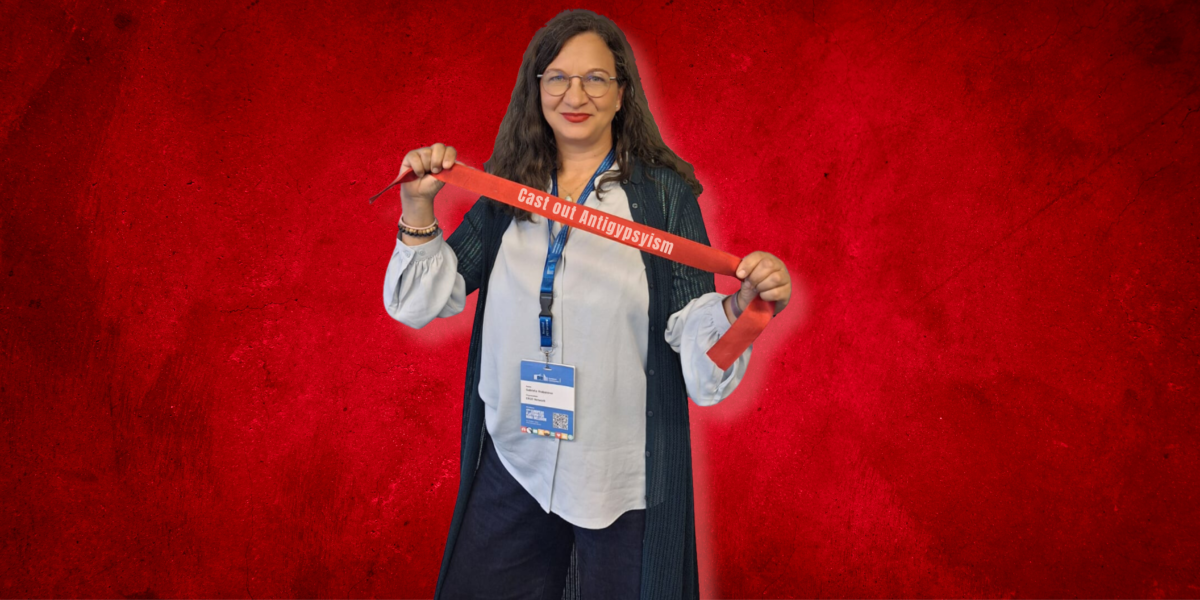
Hungary holds the EU presidency, even though it has not cooperated on the agenda. In a move seen as a symbolic affront, they sent a State Secretary closely associated with Prime Minister Orban’s regime. Sztojka’s presence, despite his Roma heritage, underscored a deeper issue—the co-opting of Roma identity by governments that actively undermine Roma rights and a reflection of the systemic abuses perpetuated by Orban’s government, including widespread corruption, anti-Roma discrimination, anti-LGBTQ+ legislation, refugee rights violations, and democratic backsliding. Adding to the days’s tensions, civil society staged a small protest. When Sztojka raised a point about the need for unity within our community, not making our representation political, some of us raised red cards to show our disagreement. To argue that we did this in response to him speaking in Romanes would be a misunderstanding of his political stance. We must be clear: we cannot support those representing a government that undermines our rights. Which brings us to a crucial question: Can Roma criticise other Roma? I have faced criticism, often from within my community, though I believe my integrity has remained intact. I left the Czech government when it became clear that there was no political support for my work, and that I would merely be a puppet. 

In contrast, Lucie Fukova, the Czech Commissioner for Roma, did not face such backlash; her speech was encouraging and supported our joint fight against antigypsyism. We know Lucie is hardworking and investing all her efforts in advancing Roma rights in Czechia. And I believe having Roma voices represented at panels related to Roma issues and even beyond is essential. We should acknowledge and appreciate the presence of Roma representatives in governmental positions, especially in a climate where accountability is sorely lacking and anti-NGO and anti-Roma legislation is being enacted. But we should then also acknowledge the rise of Roma populism and those countries that are standing against it. Unfortunately, the divisions among Roma mirror those in the broader society. We often struggle to unite in support of one another simply because we are not a homogenous community. Disagreements are natural; even within political parties, where shared ideologies connect individuals, there can be significant rifts and public disputes. 

As we confront the rising tide of antigypsyism and the growing influence of far-right movements within European governments, we must recognise the urgency of our situation. The absence of Roma representatives in the European Parliament highlights the need for institutions like the European Commission to understand these pressing issues and to take decisive action. We need to ensure that they act sensitively and support Roma empowerment, and this is not currently reflected in the Roma Platform: ironically, the first thematic panel did not have a single Roma speaker, further emphasising our marginalisation. 

We are in this struggle alone! How should we support each other? How can we encourage more Romani individuals to step into the political arena and serve as examples of genuine commitment to supporting Roma rights? As we reflect on this year’s Platform and grapple with these questions, we must not lose sight of the progress we have made, nor the potential for change that still exists. We, as Roma civil society, must strive to build stronger alliances, both within and outside our community, to ensure that our rights are not further eroded by political apathy.  

Position: Junior Communications Officer

Position: Junior Communications Officer

ERGO Network is hiring a full-time Junior Communications Officer to join its team in Brussels starting in January 2025.

ERGO Network

ERGO Network (www.ergonetwork.org) brings together over 30 members from across Europe and supports organisations with a common perspective on Roma grassroots empowerment and equal citizenship to challenge stereotypes and combat stigmatisation. We mobilise and connect organisations and individuals that share and express our values – active citizenship, shared responsibility, and passion- to strengthen Roma civil society’s involvement in decision-making at local, national, and European levels and address existing shortcomings of policies targeted at Roma.

As Junior Communications Officer, you will enhance the visibility of ERGO Network and our mission. You will report to the Communications and Campaigns Manager.

Responsibilities

  • You manage ERGO Network’s digital communications channels daily, developing and designing relevant and interesting content.
  • You manage ERGO Network’s quarterly newsletter.
  • You update and maintain ERGO Network’s websites.
  • You support the communications and campaigns manager to deliver on campaign and advocacy objectives in collaboration with policy colleagues. 
  • You support the effective dissemination of project results.
  • You monitor information relevant to ERGO Network’s priorities and network and ensure its rapid dissemination.
  • You ensure that ERGO Network’s mailing lists are maintained and updated in coordination with colleagues.
  • You support communications and campaigns manager in drafting press releases and other relevant national and international media materials.
  • You support the administrative team of ERGO Network in event preparation at peak times.
  • You support digital communications directly from events, e.g. through live streaming.

Qualifications

Essential:

  • Experience in website management, Mailchimp, social media and other relevant communication tools
  • Full proficiency in the English language with excellent communication, written, and listening skills.
  • Experience with the creation and management of visuals (through Canva or Adobe Creative Suite)
  • Ability to communicate persuasively and explain complex information clearly and succinctly
  • Quick learner
  • Able to work independently and as part of a team
  • Keen interest in digital communications
  • Good eye for and attention to detail
  • Understanding of racism

Desirable:

  • Experience with organising events and campaigns
  • Knowledge and understanding of EU policies
  • Experience working with Roma communities
  • Video editing skills
  • Experience with live-streaming

Conditions

  • The location of work is Brussels, with some home office possible.
  • Starting date: 6th January 2025 or as soon as possible.

We offer:

  • An undetermined full-time contract (37,5 hours per week) under Belgian law.
  • Salary: 2.400 EUR per month gross salary coupled with various legal and extra-legal benefits: 13th-month salary, holiday bonus, luncheon vouchers (8€ per working day), transport allowance (49€ per month), telework allowance, hospitalisation insurance, additional seven days of holidays per year. (approximate net salary including benefits: 2200€).
  • An organisation committed to the values of democracy, fairness, integrity and sustainability.
  • A friendly and respectful work environment.

Application procedure

Interested and qualified candidates should submit the application form to info@staging.ergonetwork.org by October 27th 2024, 23:59 CET, indicating in the subject line of the email “Application Junior Communications Officer”. This email address can also be used for further information and questions. It is not necessary to submit a CV or motivation letter in addition to the application form.

Successful candidates will be invited for interviews in Brussels in the week of 4th November. Interviews can be taken in person or online. We are not able to reimburse travel costs to attend the interview.

ERGO is an equal opportunities employer. We respect our employees’ private lives, including where they take care roles. We strive to be an inclusive organisation and encourage applications from a diverse range of candidates.

Help Rebuild Lives: Urgent Aid for Flooded Roma Communities in Central Europe

Help Rebuild Lives: Urgent Aid for Flooded Roma Communities in Central Europe

Description:

The floods of 2024 have left thousands of families in Central and Eastern Europe homeless, without food, clean water, or necessities. Among the hardest hit are Roma families, already facing significant challenges in accessing local aid.

ERGO Network works closely with local partners, like Life Together in Ostrava, to provide immediate humanitarian support to Roma and non-Roma families. While the state and other organisations are working to provide humanitarian aid, some more vulnerable families cannot access it right away and need our support.

We aim to collect a small fund to bridge this gap and ensure our people are not left behind in this crisis.

As floodwaters recede, families are left with nothing but the clothes on their backs. They need our help to clean their homes, feed their children, and start rebuilding their lives.

Fundraising Goals Breakdown:

Our initial target is €5,000 to support urgent relief efforts in Ostrava, Czechia, and other affected areas. Here’s how your contribution will make an impact:

  • €1,500 – Provide cleaning supplies and tools (shovels, disinfectants, gloves) for 50 families to clean and restore their homes.
  • €1,500 – Deliver food and bottled water to 50 families, ensuring they have enough to eat and drink for the critical days ahead.
  • €1,000 – Supply warm blankets and clothing to 50 families who have lost everything in the flood.
  • €1,000 – Equip 60 children with essential school supplies so they can return to school and continue their education despite the crisis.

Call to Action:

We need your help now more than ever. Every euro counts in providing life-saving aid to families who have lost everything.

Donate today to bring relief and hope to Roma families and others affected by the floods. With your support, we can ensure that no one is left behind as these communities rebuild their lives.

  • €20 will provide a family or volunteers with cleaning supplies kits.
  • €30 will cover food and water for a couple of days until humanitarian aid becomes available
  • €15 will ensure a child has the school supplies they need to return to the classroom.

Let’s stand in solidarity with Roma and non-Roma families.

`
Ana Rozanova – Page 6 – ERGO Network

By continuing to use the site, you agree to the use of cookies. more information

The cookie settings on this website are set to "allow cookies" to give you the best browsing experience possible. If you continue to use this website without changing your cookie settings or you click "Accept" below then you are consenting to this.

Close