Exchange visit to Pavee Point, Ireland

Exchange visit to Pavee Point, Ireland

From 24  to 27 May 2022 ERGO Network and its members visited Pavee Point Traveller & Roma Centre in Dublin, Ireland, to learn about the situation of Irish Travellers and Roma communities in Ireland and the invaluable work of Pavee Point for these communities. Among the fellow member organizations who attended were staff from Integro in Bulgaria and RomanoNet from the Czech Republic.

On the first day, our group visited the social enterprise called Shuttle Knit in Wicklow (around a 1-hour drive from Dublin).  Shuttle Knit started over 20 years ago as a partnership between the Traveller and settled communities, with the mission to improve the quality of life for Traveller Women and their families through social enterprise. Traditionally, Traveller women worked by selling door-to-door, at markets and fairs. However, recent Irish legislation has created barriers that prevent Traveller women from selling in the ways in which they did in the past, and so they needed to adapt and change.

One of Shuttle Knit’s goals is to bring inclusion into the labour market through social enterprise. The enterprise provides jobs and training to 11 women who are part of the local Travelling Community in Wicklow. The impact is that their staff have a secure income, and a sense of purpose and they learn a skill. They are empowered and become role models in their own community and contribute to the local economy.

Shuttle Knit is located in the CEART building in Wicklow, which is owned by Wicklow Travellers Group. The location is very much part of the community and thus feels like a “safe space” for Travellers, where everyone is welcome.

After this visit, the participants had an opportunity to take a walk in the picturesque valley of Glendalough, to visit the lake – all while discussing what the other ERGO members could learn from Pavee Point and the social enterprise projects, how they deal with similar challenges and how they could get replicate this model of work in their countries.

The next day the group visited several halting sites and residence points of Travellers in Dublin: Avila Park Finglas, Cara Park Coolock and St Joesph’s Halting Site Dunsink. Although some sites offer decent residential conditions, even they lack facilities for children to play, community work and further development for the young families.

However, the group also had a chance to see the sites with extremely bad living conditions, where according to the residents the Council is deliberately slow in taking any actions to improve these conditions.

In the afternoon the participants met in the office of Pavee Point Traveller & Roma Centre to learn more about the programmes and activities they run. Over the past thirty years, Pavee Point has an established track record in innovative and ground-breaking work using a collective community development approach to addressing Traveller & Roma issues and promoting Traveller & Roma rights.

Their programmes include Roma Civil Monitor, Education, Accommodation programme, Drug and Alcohol Programme, Ethnic Data Collection, Roma Project, Violence Against Women and finally Health project, including a special programme on Traveller Men – something which is an acute problem in many countries, but at the same time rarely included as a priority.

Our participants from the Czech Republic and Bulgaria and ERGO Secretariat members from Romania and Lithuania shared insights about the similarities in the situation in their countries regarding the health, evictions, general poverty and other pressing issues.

On the 27th everyone left for their respective countries, excited, and inspired. The exchange visit proved to be a success with our member organizations – some of them described it as one of the best they ever had! And the credit for this goes to Pavee Point for being amazing hosts and inspiration in their work for all of us.

ERGO plans to organize similar visits to other members in the next years. This type of event is very important for our work to learn about the problems faced by Roma in different countries and to learn how local organizations are trying to find solutions to these problems.

Romani Week 2022

Looking back at the Romani Week 2022

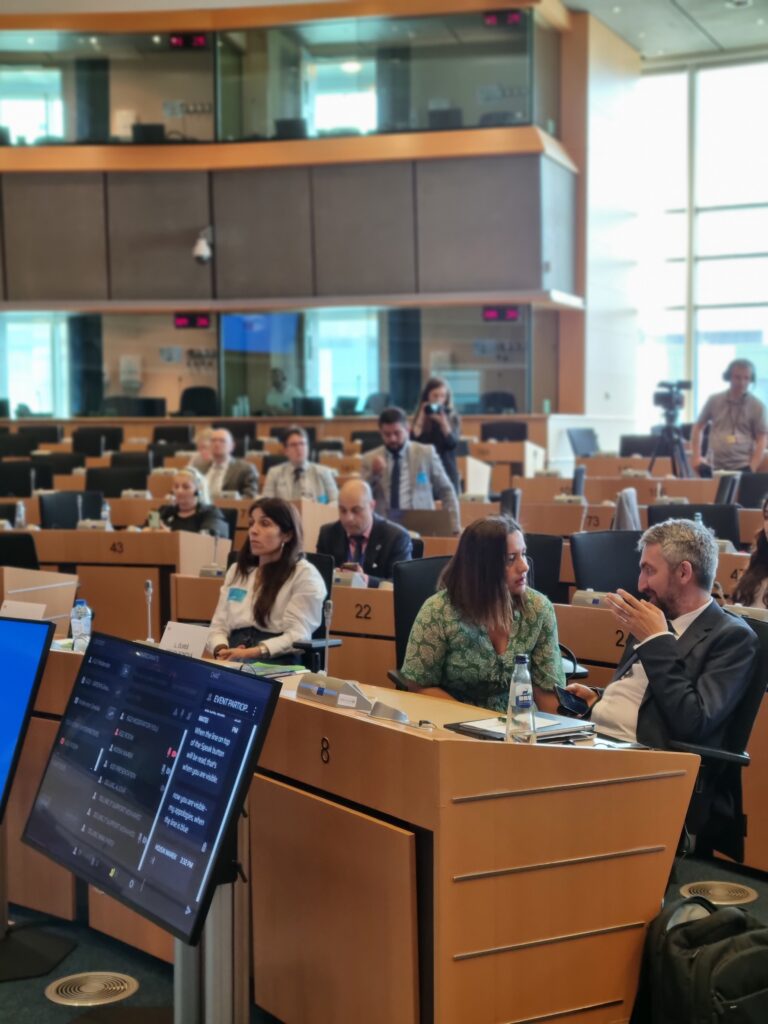
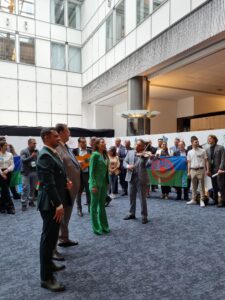
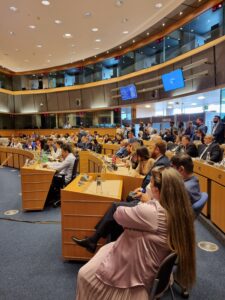
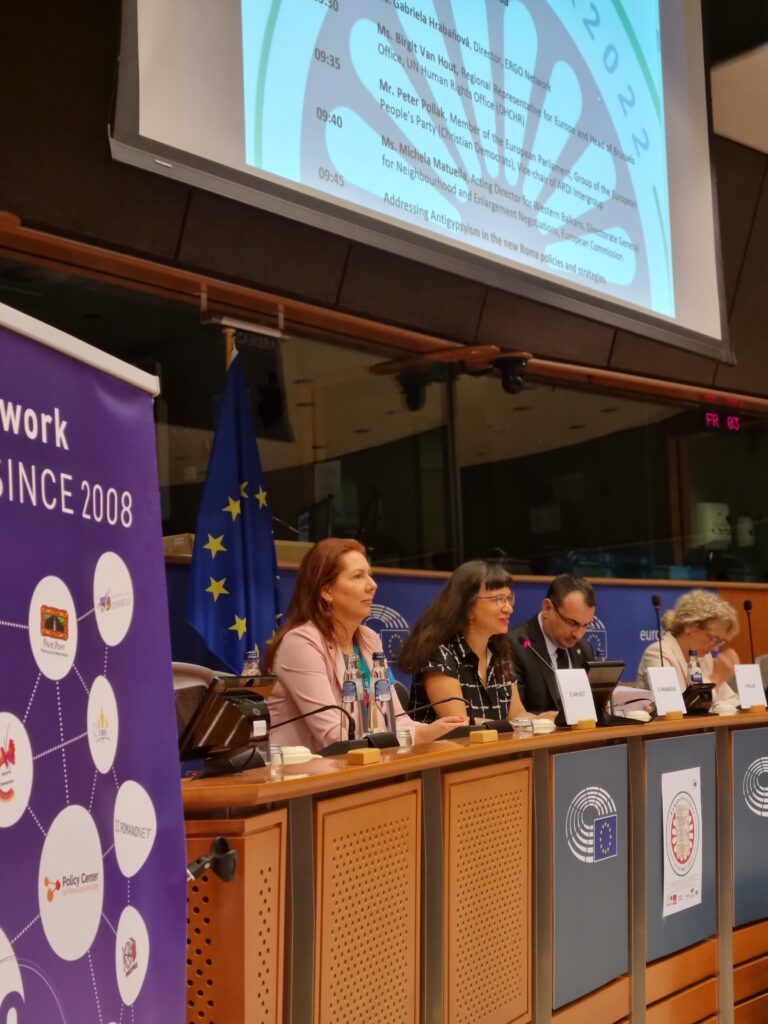
After last year’s online edition of the Romani Week, the Romani Week 2022 brought together Members of the European Parliament, officials of EU institutions and International Organisations, national and international civil society organisations as well as young Roma activists for a series of live events in the European Parliament in Brussels.

The Romani Week built on the work done during previous Romani Weeks and debated EU policies for Romani inclusion. It also called upon the European Commission and the EU Member States to put the fight against antigypsyism at the forefront of efforts for the social and economic inclusion of the Romani people.

ERGO Network was once again a proud co-organizer and partner of this edition of the Romani Week, under the patronage of the European Parliament, European Commission and the Council of the European Union, as well as MEP hosts: Romeo FRANZ, Peter POLLÁK, Anna Júlia DONÁTH, Terry REINTKE, Cornelia ERNST, Klára DOBREV, Sergey LAGODINSKY, Juan Fernando LÓPEZ AGUILAR, Rasmus ANDRESEN, Lucia ĎURIŠ NICHOLSONOVÁ, Monika VANA, Thomas WAITZ and Carmen AVRAM.

ERGO Network’s participation started on the first day, coinciding symbolically with the Romani Resistance Day on 16 May. During the event on “Promoting positive narratives and raising awareness about the Romani language”, ERGO Network Director Jamen Gabriela Hrabaňová underlined that the brave act of Romani prisoners resisting their oppressors in the Auschwitz-Birkenau concentration camp is an inspiration for many contemporary Roma, who have to still resist racism and discrimination in their daily lives.

“The Decade to counter antigypsyism as a new strategy for Roma inclusion in the EU and Western Balkans” was the title of the second event on the next day. co-organised by ERGO Network. It facilitated a discussion on the existing challenges of modern antigypsyism and its forms in the EU and Western Balkan & Turkey and articulated the way antigypsyism and public policies are related and put forward to achieve equality, inclusion, and participation of Roma.

The event highlighted how antigypsyism is addressed in the framework of the new Roma policies and strategies, with special attention given to the governments in the Enlargement Countries, and discussed the importance of large-scale awareness-raising and a deep understanding of antigypsyism as a specific form of racism. ERGO Network’s campaign “Decade to counter antigypsyism” following the timeframe of the EU Roma Strategic Framework up to 2030, will in this regard target the public and offer new narratives and measures to combat antigypsyism.

The third event co-organised by ERGO Network with the title “Ensuring adequate and effective regional, national and local funds for Roma equality, inclusion and participation – past, present and future challenges” took place on 18 May.

The event was organised jointly by ERGO Network, the Central European University Democracy Institute and Fundación Secretariado Gitano under the Roma Civil Monitoring Consortium together with Nevo Parudimos, RROMA, Autonómia Foundation, and the office of MEP Romeo Franz.
The event facilitated discussions on the challenges in ensuring adequate and effective regional, national, and local funds for Roma, as well as on the importance of monitoring data on funding and its effective implementation towards achieving equality, inclusion and participation of Roma. It also highlighted the importance of Roma civil society monitoring of the EU Roma Strategic Framework and National Roma Frameworks for Roma equality, inclusion and participation.

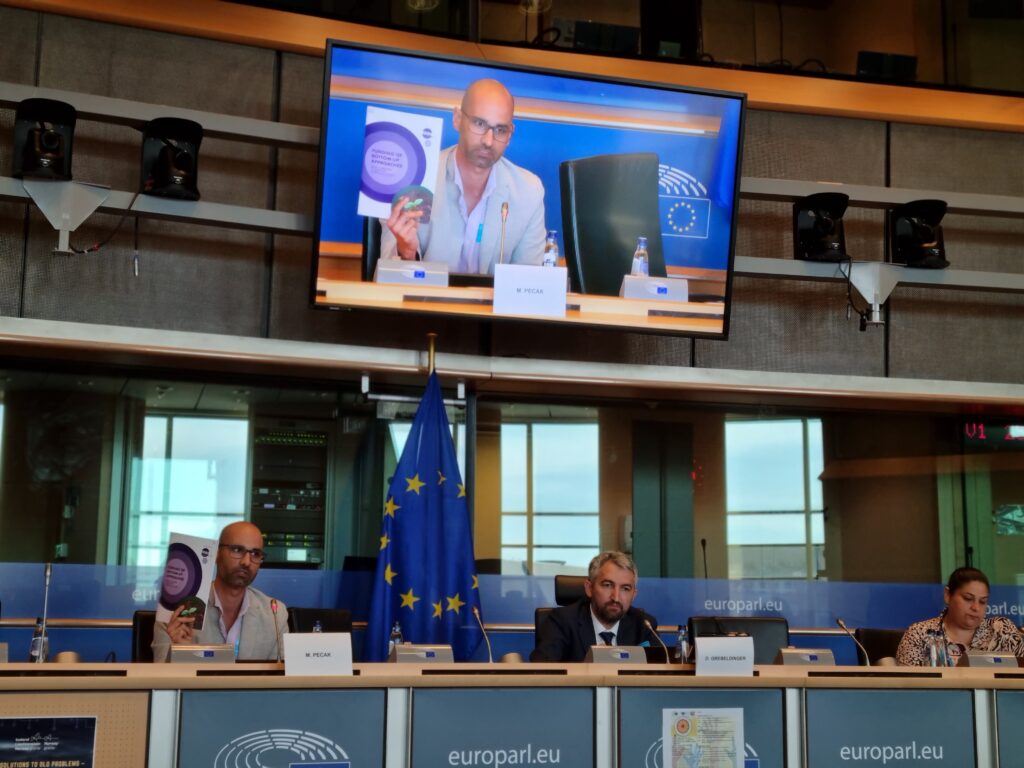
The event provided examples from the national level on the inclusion of funding allocations, or lack thereof, for priorities under National Roma Frameworks as well as synergies with wider national programmes and funding. It introduced a new guide of the Greens/EFA Group in the European Parliament, commissioned by MEP Romeo Franz, on how Roma civil society can best benefit from the new EU funding period 2021-2027, as well as the latest report produced for ERGO Network by Marko Pecak on funding of bottom-up approaches and Roma grassroots involvement and has received financial support in the framework of the project “New solutions to old problems” funded by Iceland, Liechtenstein and Norway through the EEA and Norway Grants Fund for Regional Cooperation.

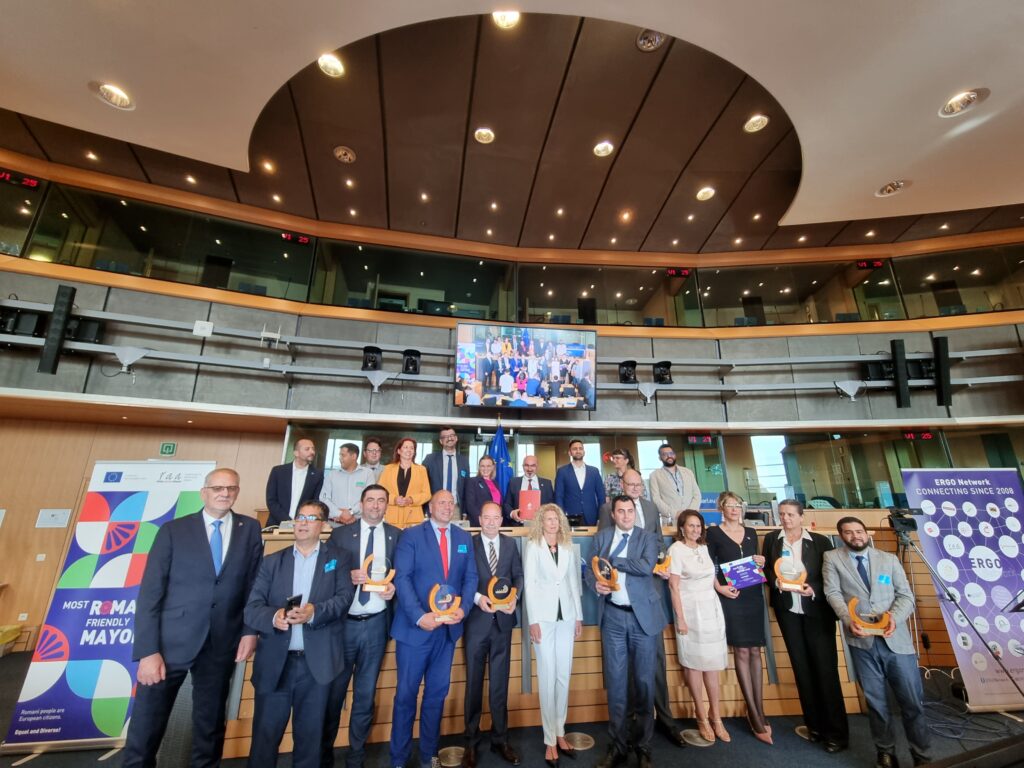
This event was followed by the Most Roma Friendly Mayor Award, taking place live on 18 May in the afternoon. The “Most Roma Friendly Mayor” award is a local advocacy component of the project Romani Women Power of Change in the Western Balkans and Turkey (Power of Change), funded by DG NEAR and delivered by the ERGO Network. “The Most Roma Friendly Mayor” is a regional campaign aiming to mobilize Roma communities and strengthen their ability to engage in dialogue with public authorities.

The Power of Change project is implemented in Albania, Bosnia and Herzegovina, Kosovo*, Montenegro, North Macedonia, Serbia and Turkey and the selection panel chose one mayor per country among the nominated candidates to receive the award in Brussels. The event was hosted by MEP Romeo Franz and opened by Mr Olivér Várhelyi, European Commissioner for Neighbourhood and Enlargement.

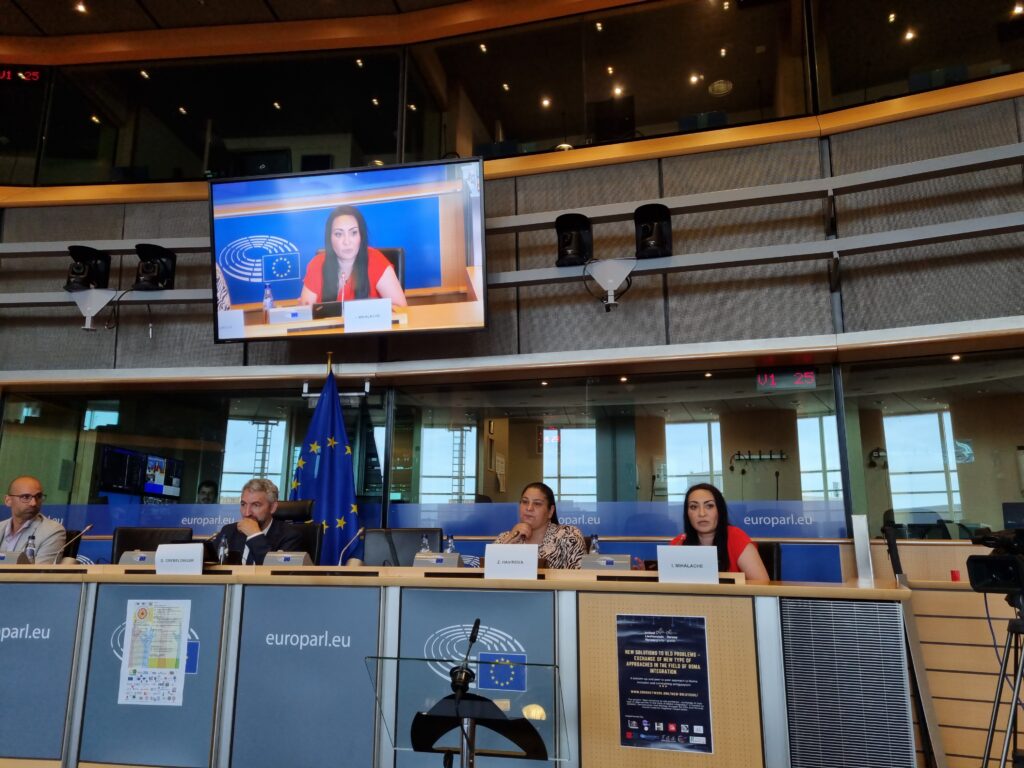
The final event co-organised by ERGO Network was called “Towards zero segregation in education in Europe”. The event was moderated by Damaris Uzoma, Coordinator of the European Parliament Anti-Racism and Diversity Intergroup (ARDI), Belén Sánchez-Rubio, Head of International Department, Fundación Secretariado Gitano, Spain and our Senior Policy Officer Isabela Mihalache.

This insightful event informed about the challenges in preventing, combating and sanctioning segregation in education at national and European levels and proposed sustainable and long-term advocacy and cooperation paths towards zero segregation in education.

The other events of the Romani Week also provided recommendations on combatting antigypsyism, defined the place of Roma in the digital and green agendas, paid special attention to the challenges of Roma women and youth, as well as representation of the local communities and Romani language. Finally, meeting in person for this Romani Week following the previous online format was not only enlightening but also inspiring and motivating. It highlighted the need for cooperation between stakeholders on different levels to bring on a real change in the situation of the Roma communities across Europe.

* This designation is without prejudice to positions on status and is in line with UNSCR 1244/1999 and the ICJ Opinion on the Kosovo declaration of independence.

ERGO Network responds to EC call for evidence on poverty

ERGO Network responds to the European Commission call for evidence on poverty and inequality

As announced in the Action Plan of the European Pillar of Social Rights (2021), the European Commission plans to release, in 2022, a communication on poverty and inequality, aimed at providing guidance for Member States on optimising their use of distributional impact assessments, so that they can better identify the expected effect of reforms and investments on the income of different groups. A call for evidence was launched, in order to gather stakeholder views.

ERGO Network welcomes the recognition that income inequality has increased in the European Union since 2008, and agrees that including ex-ante distributional impact assessments should be prioritised by Member States, with a view to mainstreaming the fight against poverty and inequality in other policy fields. We further appreciate the ambition to look at the disposable income of different groups of the population, as not everybody is impacted in the same way.

Most Roma in Europe experience both relative and absolute levels of poverty and social exclusion, with rates multiple times higher than those for non-Roma. In many Member States, social protection is set at inadequate levels which don’t allow for dignified lives. Getting serious about fighting poverty means stepping up public investment in social infrastructure, which should be financed through progressive taxation, staying true to a redistribution approach and mitigating social polarisation. Enacting an EU Framework Directive on Minimum Income, based on art 153, 1, h TFEU, would be an essential first step in tackling income inequality.

Distributional impact assessments implemented by Member States should be mindful of deeply-rooted, widespread discrimination as a key cause of inequality in accessing rights, resources, and services. The upcoming Commission communication must enshrine strong synergies with the EU Strategic Framework for Roma Equality, Participation and Inclusion, where reducing Roma poverty is an explicit cross-cutting priority. It is crucial that the European Commission closely monitors the implementation of distributional impact assessments by Member States, including in the framework of the Macroeconomic Imbalances Procedure and the European Semester and the National Recovery and Resilience Plans.

ERGO Network and its national members stand ready to provide policy input and direct grassroot evidence to inform the shaping of the Commission communication, as well as the subsequent development and reinforcing of distributional impact assessments at national level, with a view to ensure that Roma-specific concerns and the link with antigypsyism are taken on board in a comprehensive way.

  • Read our full input to the call for evidence here!

For more information on ERGO Network’s engagement with Roma poverty and social exclusion, as well as with the European Pillar of Social Rights, please contact Senior Policy Adviser Amana Ferro.

The Czech government is compensating victims of forced sterilization

The Czech government is compensating victims of forced sterilization

Romani women who have been fighting for almost two decades for apology and compensation have expressed their satisfaction. “Money cannot compensate for the loss of our ability to have children, the violation of our bodies, personal and family life”, says Elena Gorolová, a victim herself.  “We were not respected neither as women nor mothers. We were used against our will by the state that pursued its own plans. Yet, we welcome this symbolic gesture”.

Victims can obtain compensation of 300 000 CZK. Romani women were the primary target of a eugenic practice that was documented from 1966 and widespread especially in the 1980s.

The issue was first brought to light by the Charter 77 human rights movement in 1978, and later by field studies conducted by Paul Öfner, Ruben Pellar, and Zbyněk Andrš in 1988. The ERRC and several Czech and Slovak NGOs took up the issue in 2003. In the same year, a self-support group of women was formed in the Czech city of Ostrava.

In 2005, the Czech Ombudsman Otakar Motejl made the first significant official report which states:

The Ombudsman is convinced that in the Czech Republic the problem of sexual sterilization carried out either with unacceptable motivation or illegally exists and that Czech society faces the task of coping with this fact…….it is clear that the debate on the causes, course and consequences of sexual sterilization carried out as a state-supported social measure or as an intervention that took place in circumstances unable to meet strict informed consent criteria should it should primarily have a place on parliamentary soil.

In 2005 Helena Ferenčíková sued an Ostrava hospital for involuntary sterilization. The district court ordered the hospital to apologize. However, no compensation was paid because of the statute of limitations. The case was finally resolved at the European Court of Human Rights in 2011 with a friendly settlement between Mrs Ferenčíková and The Czech Republic that involved financial compensation.

In 2009, the Czech government apologised to the women for the practice of forced sterilization.

In 2019, nine MPS across the political spectrum- from ruling parties and the opposition- submitted a draft law “on the provision of a lump sum to persons sterilized in violation of the law”

On 4 June 2021, the Czech parliament passed the law with 120 MPs voting for and 1 vote against. The law on compensating victims of illegal sterilization was passed by both houses of the Czech Parliament and signed by the President in 2021

We think that this is a historical act showing the maturity of the Czech nation, a desire to come to terms with the past, and even graciously apologizing to a very vulnerable group of women victims which is definitely a sign of great strength.

However, passing the law is only the first step. In order for it to become a true recognition of the wrongdoing a proper implementation is needed.

This statemement is prepared jointly by Vzájemné soužití o.p.s. – Living Together organisation in Czechia and ERGO Network.

Romani Week 2022 / Romano Kurko 2022

Romani Week 2022 / Romano Kurko 2022

ERGO Network is proud to be once again a key partner of the annual Romani Week! This year it will take place both online and in-person in Brussels, Belgium.

Romani Week 2022 will be organised from 16th to 19th of May 2022. It aims to build on the work done during previous Romani Weeks and will debate EU policies for Romani inclusion. It will call upon the European Commission and EU Member States to put the fight against antigypsyism at the forefront of efforts for the social and economic inclusion of Romani people.

Policymakers, experts, activists, and organisations concerned with persistent antigypsyism in Europe cooperate to organise the Romani Week. The week will consist of a series of events that will provide recommendations on combatting antigypsyism, including the Roma in the digital and green agendas, paying special attention to the challenges of Roma women and youth, and representation of the local communities and Romani language.

Patronage: European Parliament, European Commission, French Presidency of the Council of the European Union

MEP Hosts: Romeo FRANZ I Peter POLLÁK I Anna Júlia DONÁTH I Terry REINTKE I Cornelia ERNST I Klára DOBREV I Sergey LAGODINSKY I Juan Fernando LÓPEZ AGUILAR I Rasmus ANDRESEN I Lucia ĎURIŠ NICHOLSONOVÁ I Monika VANA I Thomas WAITZ I Carmen AVRAM

Partners: Autonómia Foundation; Bundesvereinigung der Sinti und Roma (BVSR); CADO; Centre of Resources for Social Inclusion CRIS; Center for Reproductive Rights; Center of European Policy Studies; Council of Europe; Deacones Foundation; European Parliament Anti-Racism and Diversity Intergroup; European Commission; European Roma Grassroots Organizations (ERGO) Network; European Public Health Alliance; European Environmental Bureau; European Roma Equality Network; Eurodiaconia; E-Romnja; Federation of Roma Organisations in Catalonia FAGIC; Fundación Secretariado Gitano; Hildegard Lagrenne Foundation; International Roma Youth Network TernYpe; Kosovo Roma Coalition, Minority Initiative; Nevo Parudimos; Opre Roma; Plataforma Khetane del Movimiento Asociativo, Gitano del Estado Español; Politirom; Phiren Amenca; Roma Voice Centre; Roma Entrepreneurship Development Initiative; Roma Youth Organization Croatia; Roma Resources Center; Roma Versitas; RomnoKher; Roma Active; Roma Health Network; RRoma; Roma Civil Monitor.

.When: 16-19 May 2022

Where: Online and European Parliament, Brussels

 Aims:

  1. To create a platform to raise concerns and exchange knowledge: To facilitate exchange and capacity building between Romani people, civil society, policymakers and officials.
  2. Advocacy for specific thematic areas:  Such as segregation in education, the inclusion of Roma in digital and green agendas, Romani language, and discrimination of Roma women and youth.
  3. Recognition of antigypsyism: The week will be an opportunity for experts and activists on the issue to lobby European and national policymakers to strengthen the recognition of antigypsyism as well as develop strategic and coherent responses.
  4. Current policies for Romani people: There will be an opportunity to discuss the future of current EU, national and local policies.

Attendees and speakers:

  1. Policymakers and officials from European and national levels;
  2. Representatives of local authorities and large cities in Europe;
  3. Civil society and other relevant stakeholders
  4. Romani people and youth.

ERGO Network is co-organising the following events in the framework of the Romani Week 2022:

Romani Resistance: Opening Ceremony (16/05, 10:00)

New Strategies for Romani Inclusion in the Western Balkans and the Decade to counter antigypsyism in Europe (17/05, 09:30)

Ensuring adequate and effective regional, national and local funds for Roma equality, inclusion and participation – past, present and future challenges (18/05, 14:00)

Most Romani friendly Mayor award – 3rd edition (18/05, 16:30)

Segregation in education in Romania (19/05, 14:00)

Have a look at the complete agenda at the official website of the Romani Week 2022

Register here

#romaniweek2022            #equality4all

`
Ana Rozanova – Page 28 – ERGO Network

By continuing to use the site, you agree to the use of cookies. more information

The cookie settings on this website are set to "allow cookies" to give you the best browsing experience possible. If you continue to use this website without changing your cookie settings or you click "Accept" below then you are consenting to this.

Close