REPORT: PECAO Synthesis Report on Antigypsyist Online Hate Speech

REPORT: PECAO Synthesis Report on Antigypsyist Online Hate Speech

Today we are happy to present you with the most recent work – PECAO Synthesis Report on Antigypsyist Online Hate Speech.

The Peer Education to Counter Antigypsyist Hate Speech Online project focuses to address and counter antigypsyist hate speech online by working with young people, using a combination of peer education and monitoring in order to obtain two-fold results: the peer education methodology serves the purpose to achieve a direct change in attitudes and actions of a high number of young people, and the monitoring to contribute to better understanding and a more systemic change of policies through advocacy based on the results.

ERGO network acknowledges the contribution of all peer educators engaged in the project and would like to thank all of them!

This report was elaborated by Ileana Rotaru, assoc. prof. PhD habil. of West University of Timisoara, research expert of Nevo Parudimos Association and responsible for the research instruments and methodology elaborated and applied for the purpose of the PECAO project.

The report represents a deliverable of the PECAO project in relation to the project’s overall objectives:

• To reach out to at least 2000 young people in Spain, Hungary, Czech Republic, Romania, Bulgaria, Ukraine, Italy, France, North Macedonia and Albania through peer education activities in universities or youth clubs to raise their awareness of the adverse impact of hate speech on Roma and to
empower them to recognise and report hate speech online.

• To empower 50 young Roma peer educators in 10 countries to monitor hate speech in online media and report cases of hate speech to IT companies, national equality bodies and relevant state institutions to reinforce implementation of anti-discrimination legislation. Their work will lead to national datasets of at least 150 cases, as well as at least 50 reported cases.

• To advocate towards national and EU decision-makers for anti-discrimination policies that take into account the online sphere as well as
antigypsyism as a bias motivation for hate speech and hate crime.

• To use the experiences of peer educators and results of the monitoring to raise awareness of other stakeholders (wider civil society, educational practitioners, young people) of antigypsyist hate speech in online media and the urgency to counteract.

When it comes to the Roma people: The people most suffering under hate speech are obviously those targeted – Roma, citizens of Europe. The project should have a positive long-term impact on them if hate speech content is reduced in online media as a result of this project. Less hate speech online means less incitement to violence and less stereotyping by the majority of society, leading to a general decrease in antigypsyism.

Read the full report HERE.


This publication was funded by the European Union’s Rights, Equality and Citizenship Programme (REC 2014-2020) and Google.Org Impact Challenge on Safety. The European Commission’s and Google.Org’s support for the production does not constitute and endorsement of the contents, which reflect the views of the authors only, and the European Commission and Google.Org cannot be held responsible for any use which may be made of the information contained there.

ERGO Network responds to the European Commission call for evidence on minimum income

ERGO Network responds to the European Commission call for evidence on minimum income

The European Commission will release a proposal for a Council Recommendation on minimum income in the third quarter of 2022. This initiative aims to support Member States’ policies to alleviate poverty and prevent social exclusion. It is in line with principle 14 of the European Pillar of Social Rights, which states that everyone lacking sufficient resources has the right to adequate minimum income benefits ensuring a life in dignity, and access to enabling goods and services. The initiative is also part of the European delivery on the Social Pillar Action Plan, Europe’s social inclusion strategy for the period 2020-2030. In this context, the European Commission launched a public call for evidence to collect stakeholders’ input.

In its response to this call for evidence, ERGO Network brought forward the key messages of our comprehensive research report Roma access to adequate minimum income schemes in Bulgaria, the Czech Republic Hungary, Romania, and Slovakia. We highlighted that, in a cash-based economy, providing people with adequate financial resources was a necessary pre-requisite for fighting poverty and social exclusion, as well as for enabling individuals to reach their full potential and to access rights and opportunities on the labour market and in society. Europe’s Roma experience some of the worst social inclusion indicators, with over 80% living in poverty, only 43% in paid employment, and 41% experiencing antigypsyism, a situation worsened significantly by the Covid-19 pandemic.

The upcoming Council Recommendation could make a difference, but only if Roma specific concerns are explicitly incorporated. Access to adequate income is also a key element of reducing Roma poverty, one of the 3 horizontal objectives of the EU Roma Strategic Framework on Equality, Inclusion and Participation. We urge the European Commission to foster strong synergies between the Framework and the Recommendation.

We very much welcome the framing of the Recommendation in the context of poverty reduction, recognising that minimum income schemes are the cornerstone of our European Social Model and a key pre-requisite in the fight against poverty, as well as the link to the Social Pillar Action Plan. We equally welcome the strong focus on low adequacy, including indexation. The amounts and reference indexes need to be increased in close connection to purchasing power, inflation, reference budgets, and the national poverty line, so that they can provide dignified lives. A key aspect is the impossibility to combine minimum income with other income sources (social benefits, part-time work, income generating activities). This pushes people into the grey economy, if even a school cash prize can mean benefits curtailed.

We further appreciate the drive to improve coverage and outreach, as well as take-up, particularly with a view to support access for the most vulnerable and tackle complex procedures which act as deterrents. The methodology, associated bureaucracy and corresponding costs must be simplified as well as significantly reduced, to allow for marginalised people such as many Roma to apply for and maintain their entitlements. Better access to information and support in Roma communities need to be resourced and implemented. Current means-testing and eligibility criteria are very restrictive, impairing access to rights.

We equally support the provision of integrated services, included tailored active labour market policies. We caution, however, that Public Employment Services are ill-equipped to deal with Roma applicants. Urgent investment is needed for more staff as well as anti-bias training and skills to deal in a supportive way with claimants facing multiple and complex barriers. Hiring Roma mediators also helps bridge intercultural gaps.

The Recommendation should equally combat punitive conditionality and sanctions, as well as uphold personalised approaches, supporting people through disadvantage, while condemning the presumption of guilt and the imposition of harsh conditionality and sanctions in exchange for benefits. Adequate minimum income schemes must be rooted in a rights-based approach. Tapering of benefits as a work incentive can easily lead to forcing people to accept any job, which is at odds with a supportive approach.

Fighting discrimination – both antigypsyism as well as the stigmatisation of benefit claimants as lazy – must be a core element of the Recommendation, as a significant deterrent to take-up. Blaming people as responsible for their own poverty and as abusers of the welfare state must end and be replaced by an approach of solidarity and mutual support. Widespread antigypsyism must be combated in all aspects of life.

Last but not least, frequent and structured engagement of people experiencing poverty and discrimination, including Roma, and the civil society organisations representing them is key. The direct input of minimum income beneficiaries is crucial to have evidence-based policies that actually work. Vulnerable recipients such as Roma must be involved in the design, monitoring, and implementation of the Recommendation, through outreach, field research directly in communities, clear and transparent cooperation protocols with civil society and adequate financial resources to support this work.

ERGO Network believes that a Recommendation can only go so far, and more impetus should be given to Member States from the European level, for example through a Framework Directive for Adequate Minimum Income, and a new European Year against Poverty.

For more information on ERGO Network’s engagement with minimum income and social protection, as well as with the European Pillar of Social Rights, please contact Senior Policy Adviser Amana Ferro.

Report: Funding of bottom-up approaches

Report: Funding of bottom-up approaches: Ways forward to support Roma inclusion

We are happy to present ERGO Network’s new Analysis of funding for bottom-up approaches to Roma inclusion. This study sheds light on the importance of bottom-up approaches and assessing funding programmes targeted at Roma inclusion. The paper was prepared by Marko Pecak for the European Roma Grassroots Organisations (ERGO) Network and has received financial support in the framework of the project “New solutions to old problems” funded by Iceland, Liechtenstein and Norway through the EEA and Norway Grants Fund for Regional Cooperation.

The report also analyses the major variety of donors, such as EU, national governments, international organisations, state developement agencies and private foundations. It provides the comprehensive analysis and a set of recommendations to each type of the donors, which can be used to improve their performance.

This report aims to contribute to raising awareness of institutional and private donors in the importance of bottom-up approaches to strengthen Roma inclusion and empowerment. It also reflects on the challenges and discusses improvements to existing funding programmes.

The main recommendations of the report are:

General

  • All strategic and planning documents on Roma inclusion need to be public
  • Donors need to consider weak local governance
  • Beyond consultations. Implement participatory research methods for needs and strategic development
  • Detailed approaches with implementation plans, not general guidance, and concepts
  • More resources, funding, and human capacity, for community-led approaches

European Union

  • Any ESIF funds being managed by local municipalities should use a community-led and participatory approach
  • Good governance support should be highly recommended with any funding managed by local municipalities
  • Desk Officers, Managing Authorities, and NRCPs need specific guidance on what is CLLD and how to implement them
  • EU needs a detailed plan that defines the concepts of participation, empowerment, and bottom-up approaches and how to ensure they will be implemented
  • Monitoring Committees should be more independent, transparent, have representative from Roma community

National Governments

  • There should be a defined Roma inclusion budget with corresponding implementation plans, indicators, and monitoring system
  • Go beyond Monitoring Committee requirements
  • Develop a strong cooperation with RCM
  • Mainstream project need specific Roma inclusion targets
  • Conduct campaigns with local governments and community members on the importance of Roma inclusion to reduce the barrier of bias and antigygpsism

State Development Agencies

  • Develop approaches and priorities outside of the EU agenda
  • Should have public and detailed documents on their approach to Roma inclusion
  • Mainstream social inclusion strategies need details on how they ensure the impact on Roma inclusion 
  • Longer-term investments that use community-led and participatory approaches
  • Shift the priority of their investment from bilateral cooperation to more focus on setting inclusion agendas

Intergovernmental Organizations

  • A new long-term and collaborative initiative to be develop with a focus on community-led, participatory, antidiscrimination, and empowerment approaches
  • Develop agendas based on their organizational values not EU or other institutional agendas

Private Foundations

  • Increase transparency in their funding approaches and strategies for Roma inclusion
  • Implement measures with the goal to test alternative approaches that can be shared and scaled
  • Larger portion of funding should go to supporting community organization’s operational and human capacities. Especially, core funding.

To download the full report, please follow this link.

This report has received financial support in the framework of the project “New solutions to old problems”. The project “New solutions to old problems – exchange of new type of approaches in the field of Roma
integration” is funded by Iceland, Liechtenstein and Norway through the
EEA and Norway Grants Fund for Regional Cooperation.

This publication has received funding from the European Union. The information contained in this publication reflects only the author’s view; and the Commission is not responsible for any use that may be made of the information it contains.


Roma Active Albania’s Learning Academy in Durres

Roma Active Albania’s Learning Academy in Durres

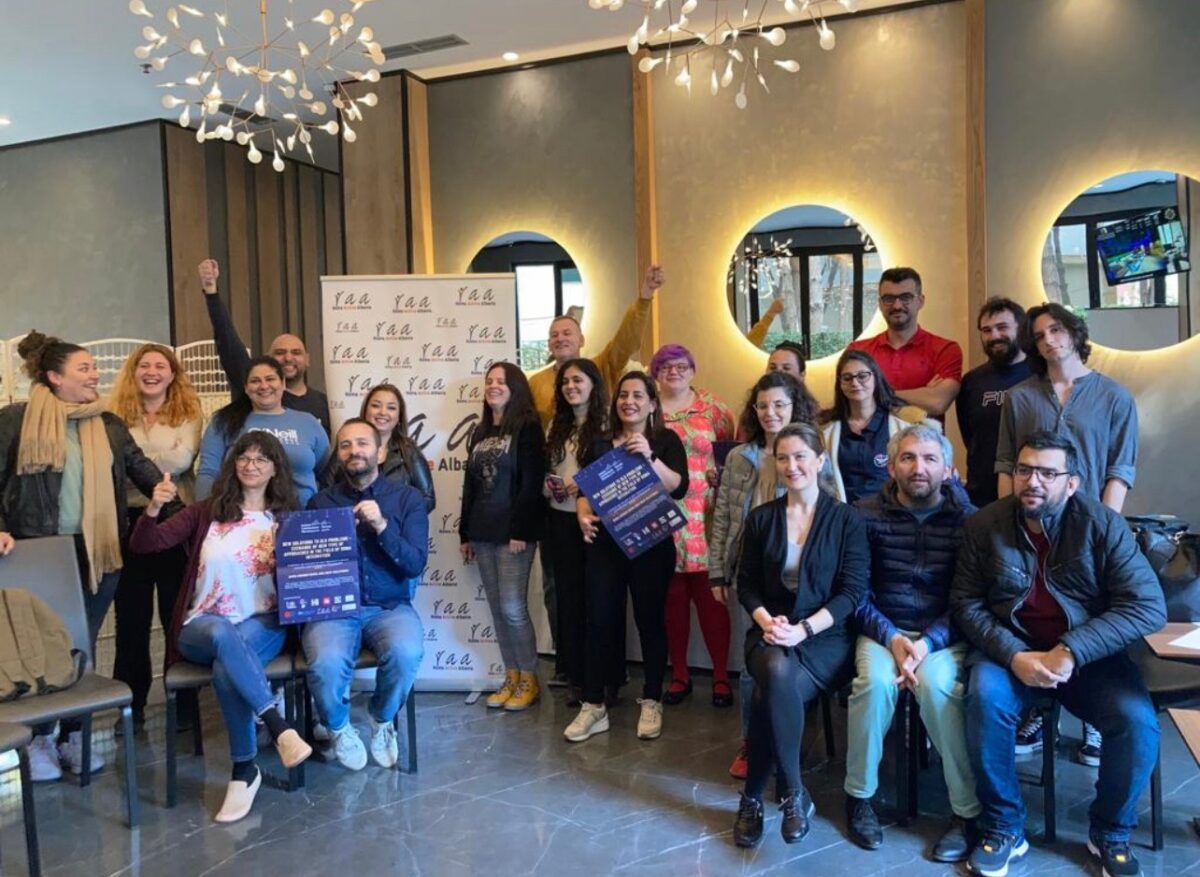
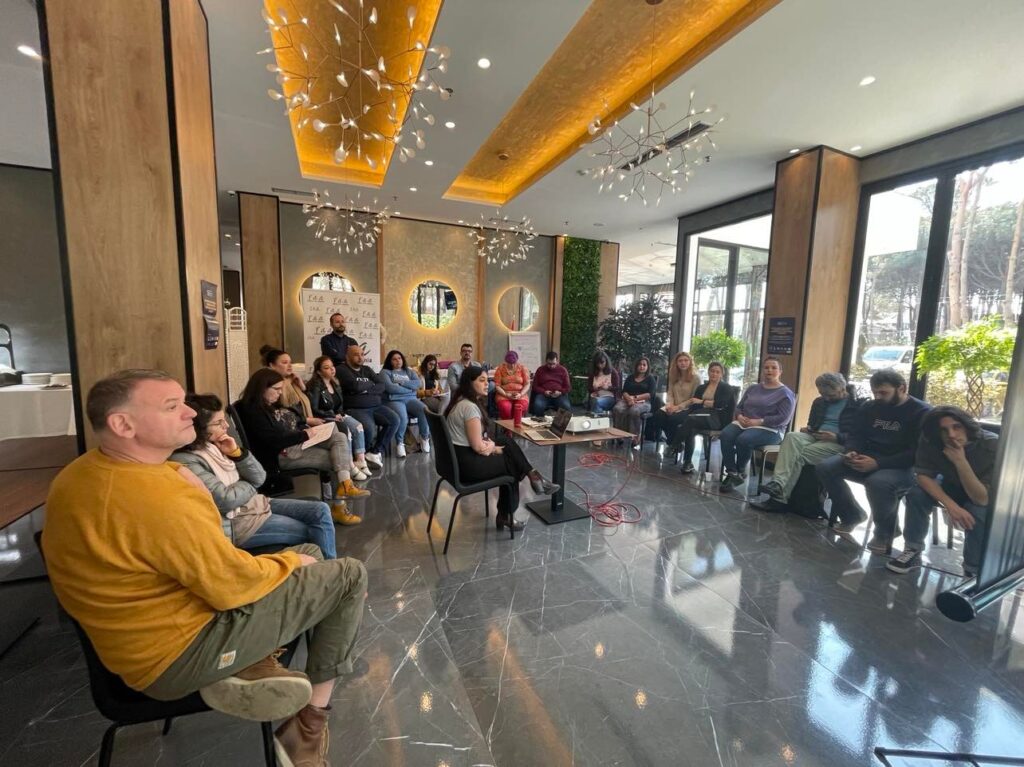
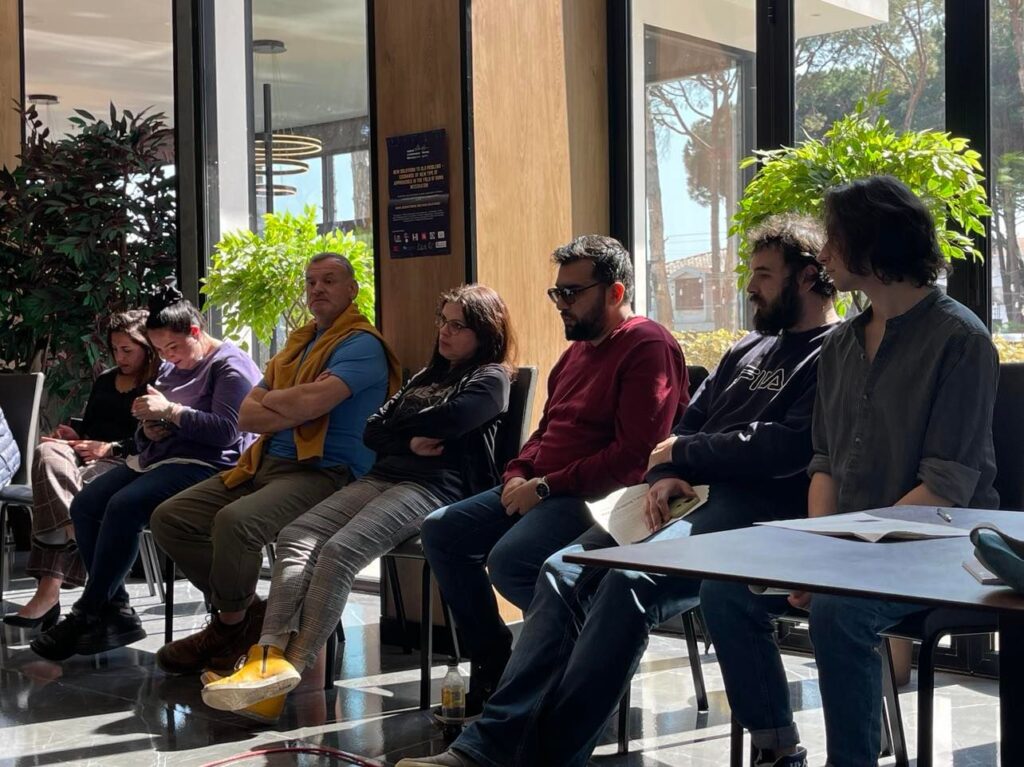
The second Learning Academy was organized by our partner Roma Active Albania (RAA) in Durres from 24-28 March 2022. The Academy was organized under the project New solutions to old problems – exchange of new types of approaches in the field of Roma integration, funded by the EEA and Norway Grants Fund for Regional Cooperation and implemented by Nevo Parudimos association as a lead organization together with its partners from Albania, Belgium, Bosnia and Herzegovina, Bulgaria, Czech Republic, Hungary, Lithuania, North Macedonia, Romania,  Slovakia and Turkey.

It gathered 24 participants from 11 countries from the European Members States, Western Balkans and Turkey.

RAA’s Learning Academy was opened by the Director of Roma Active Albania Mr. Adriatik Hasantari. He welcome the participants and guests who came from different countries and partner organizations.

On the first day of the session, the participants were introduced to each other and the leaders of the Academy explained in detail how the academy program is expected to develop in the coming days. Partner organizations such as, ERGO network Slovo 21, Otaharin, Roma, Zero discrimination, Autonomia, Nevo Paradimos, RARC and Roma Active Albania presented their work and important events of 2022.

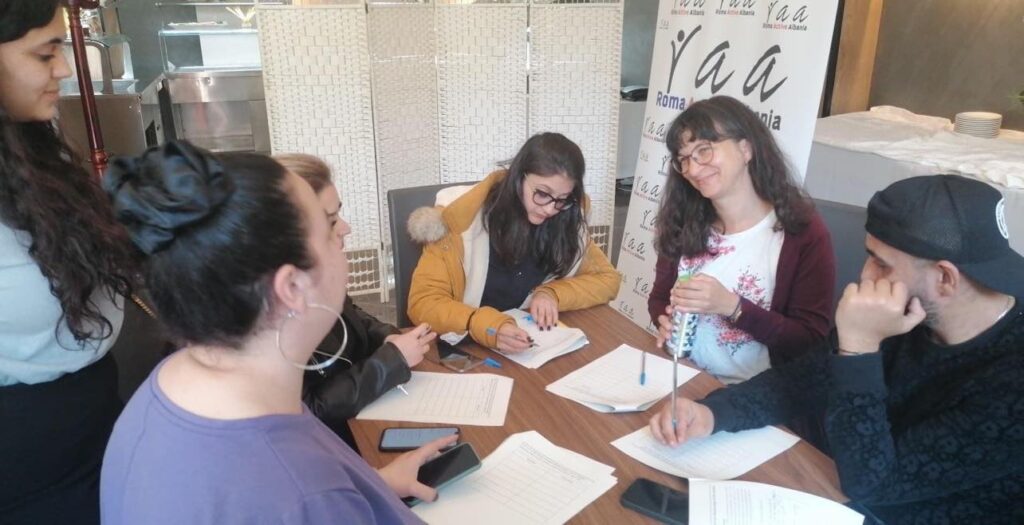
The second part of the day was dedicated to proceeding with complaints concerning various EU institutions. This session called “How to file a complaint to the EU” was delivered by an external expert Andor Urmos. At the end of this workshop, based on their knowledge and expertise, each group presented the method on how to follow up and address issues to institutions that are dependent on the European Union. Participants also shared with each other cases when they themselves had filed a complaint to the EU institutions.

This was followed by the Project Management board game. In this game, the participants had to learn the new development method and offer their feedback. Colleagues from Autonomia helped the rest of the participants with their expertise in the field.

On the next day, the program started framing the previous day and the participants started working on the workshop: Mystery Shopping which was related to a creative method to detect and work on Roma issues.

In the second session of the day, the participants learned about advocacy on how to address Roma issues and the exploration of practices, methods, and tools on how to bring new elements to their work.

The fourth day of the program was related recall the game under “Transparency and accountability of CSOs”. It is a game developed by ERGO Network and its partners and translated into several languages. The game brings recommendations on how grassroots civil society organizations should be governed and managed in order to be reliable and accountable. Fulfilling the criteria will bring attention to the organization’s quality work. The set of criteria focuses on governance, financial management and performance. Later on the day was an open space for members to share their skills, knowledge and expertise.

The Learning Academy was closed with a follow-up and evaluation of the meeting.

ERGO Network responds to the European Commission call for evidence for the upcoming EU Care Strategy

ERGO Network responds to the European Commission call for evidence for the upcoming EU Care Strategy

The European Care Strategy was announced by European Commission President Ursula von der Leyen in her State of the Union speech of September 2021. The Strategy would be aimed at supporting “men and women in finding the best care and the best life balance for them.” The initiative will consist of two Council Recommendations, on childcare (revision of the Barcelona targets) and long-term care, as envisaged under the European Pillar of Social Rights. It aims to strengthen gender equality and social fairness, as well as highlight the need for high-quality, accessible and affordable care services for children and people who need long-term care. In this context, the European Commission launched a three-fold call for evidence, to which ERGO Network responded, inviting stakeholders to submit their views on the European Care Strategy overall, as well as separately on the revision of the Barcelona targets on childcare, and on access to affordable and high-quality long-term care.

We welcome that the initiative will be rooted in a fundamental rights-based approach, including non-discrimination and social inclusion. It will also focus on social investment as well as healthy ageing and prevention policies, and it acknowledges of poor wages and working conditions in the care sector. We support proposed links with the European Pillar of Social Rights, the Sustainable Development Goals and strategies on Ageing, Gender Equality, Disability and the Child Guarantee. However, we also urge strong synergies with the EU Roma Strategic Framework & the EU Anti-Racism Action Plan. We appreciate the explicit mention of Roma and minority ethnic children, but adults must also be considered: older Roma, Roma with disabilities and Roma carers. Their specific needs should be prioritised and the care gap between Roma and non-Roma reduced. Statistical monitoring should be disaggregated by ethnic background when measuring progress.

Europe’s Roma have a 5 to 10-year shorter life expectancy compared to others, while 22% have a longstanding illness / health problem, 28% feel limited by their state of health, and 55% of Roma women aged 50+ are in bad health, according to the Fundamental Rights Agency. Older Roma experience additional difficulties, due to a life spent in poverty, health inequalities and increased health risks and vulnerability to chronic diseases. Low employment rates and overrepresentation in low-paid work give access to no or poor pension entitlements.

Additionally, older Roma women experience bad health, low employment records and exposure to gender-based violence and intersectional discrimination. Efforts must also be made to ensure that Roma living with a physical or mental disability or chronic illness can benefit on equal footing from available support schemes (income support, care services etc). An independent living approach to long-term care must be supported, promoting deinstitutionalisation while ensuring the burden of care does not fall on relatives. For centuries, Roma children have been left behind regarding a good start in life. Only 53% of young Roma children attend early childhood education and care, with participation rates far below the EU’s Education and Training Strategy targets in 5 Member States. The initiative must aim to end segregation and foster the capacity of early childhood education and care staff to provide diversity education and awareness about Roma language, culture, and history.

Over 80% of Europe’s Roma are in poverty. Care costs are prohibitive and administrative obstacles are deterrents to obtaining insurance. Many Roma communities are not covered by childcare or long-term care services, forcing residents to undertake expensive, lengthy journeys. Additionally, many Roma face language barriers and a lack of identity papers, legal address, bank account and literacy skills. Efforts are also needed to tackle the digital divide in care, ensuring that vulnerable users such as the Roma have free or affordable access to equipment (PC, tablet), infrastructure (coverage, internet, electricity etc) and digital skills. The Strategy should seek to remove financial and nonfinancial barriers to access, while resisting attempts towards the commodification and privatisation of care. Free and comprehensive state service provision must be support instead, through consistent public investment in care as a common good. Investment is needed in community-based services, including social economy initiatives, to create local jobs and respond to community needs where they arise.

There is an ethnic dimension of the care sector, as care work is deeply racialised. Many Roma women and women of colour are employed as carers in facilities or households. The initiative should tackle the gender and ethnic pay and pension gap, as well as fight discrimination in the workplace, supporting the implementation of the Racial Equality and Employment Equality Directives. Only 16% of Roma women are employed, while 40% of them (and even 50% in some countries) are not seeking work because of care responsibilities. Gender stereotypes and traditional gender roles must be tackled. Parents and caregivers should enjoy work-life balance & flexibility to spend adequate, quality time with their children.

Antigypsyism deters access to childcare and long-term care services, with 41% of Roma report being discriminated by services. The Strategy must mainstream the fight against racism and discrimination from an intersectional perspective, combating antigypsyism, sexism, ageism, and ableism as well as the stigma associated to living in poverty. Care services staff should provide inclusive and respectful care, as well as receive anti-bias and diversity training combined with awareness raising of specific Roma care needs. Employing more Roma staff also helps bridge gaps. The health and education Roma mediators’ scheme must be scaled up, with the mediators formally recognised and paid adequately to reflect their added value.

If the European Care Strategy is to be successful and respond in an effective way to actual needs on the ground, stakeholder involvement and ownership are paramount. The processes around this initiative must closely associate care givers and care receivers from a wide variety of backgrounds, including the Roma, as well as the civil society organisations representing them, in the design, delivery, and evaluation of care policies, in a structured, resourced, and transparent way . ERGO Network and its national members will continue to closely monitor and contribute to the work around the shaping of the Strategy, in order to ensure that the concerns, rights, and inclusion of Europe’s Roma are duly taken into account.

`
Ana Rozanova – Page 29 – ERGO Network

By continuing to use the site, you agree to the use of cookies. more information

The cookie settings on this website are set to "allow cookies" to give you the best browsing experience possible. If you continue to use this website without changing your cookie settings or you click "Accept" below then you are consenting to this.

Close