Event: Presentation of the PECAO activities

“Presentation of the PECAO activities and synthesis research from 10 European countries”

Background

Online Hate speech has been steadily on the rise during the past decade, especially during the on-going Covid-19 pandemic. Making it appearance known at the highest level of the public administration of some Member States, where transformation into policy is just one step away. The liberal stance that was built towards hate speech on basic assumptions that the state and the major society would uphold their democratic standards and values under all circumstances, and distance themselves from hate speakers, has proven to be wrong as many different societal and minority groups continue to be targets of hate speech.

According to the Fundamental Rights Agency, 1 in 3 Roma are victims of harassment and 20% of non-Roma would not like to have a Roma colleague. As identified in the EC Communication ‘Midterm review of the EU framework for national Roma integration strategies’ (2017), antigypsyism goes beyond the legal notion of discrimination. In essence, antigypsyism is the root cause of exclusion of Roma people. It has many different dimensions and manifestations, including hate-speech in public, media, and political narratives, expressed stereotypes, hate-crime, discrimination in school, employment, health and housing and structural antigypsyism.

The mid-term review showed very little progress and highlighted the importance of focusing on antigypsyism in the next Framework. It confirmed that fighting antigypsyism by targeting majority society is a pre-condition for the success of any Roma inclusion intervention. Also, the EP adopted a report on the ‘Fundamental rights aspects in Roma integration in the EU: fighting anti-Gypsyism’ in 2017, highlighting persistent antigypsyism across Europe, despite the efforts undertaken under the EU Roma Framework and the EU legislative framework against discrimination, hate speech and hate crime.

Hate speech as a manifestation of antigypsyism needs particular attention because of its multiplier effect:  it influences public opinion, fuels tension, and paves the way for discrimination and hate crimes. Online media plays a particular role in spreading and inciting hate speech. It strengthens stereotypes, uses offensive language, denies, or trivializes antigypsyism. Through social media hate speech reaches millions of people and allows perpetrators to anonymously incite hatred and violence.

ERGO network therefore through the PECAO project supported by DG JUSTICE and Google.org addresses the need to better counter antigypsyist hate speech online. This includes more specifically:

  • Need to better recognise antigypsyist hate speech: As ‘the most accepted form of racism’, subtle antigypsyist hate speech often remains undetected and is therefore not reported and deleted.
  • Need to better report antigypsyist hate speech: There is little awareness of existing institutional structures and tools to protect citizens from hate speech.
  • Need to better monitor hate speech in order to better understand the problem and support the development of policies to counter hate speech.
  • Need to develop better policies that recognise antigypsyism as bias motivation and tackle institutional antigypsyism.

Draft Agenda

“Presentation of the PECAO activities and synthesis research from 10 European countries”

Conference room, Mundo-B

Rue d’Edimbourg 26, 1050 Brussels

05th April 2022, 14:00 – 16:00

13:30                   Registration of the participants

14:00                   Opening of the event:

  • Mustafa Jakupov, policy and project coordinator ERGO network, “Peer education to counter antigypsyist online hate speech” project funded by DG Justice and Google.org

14:05                  Welcoming and Introductory speeches:

  • Gabriela HRABANOVA, Executive Director ERGO Network
  • MEP Romeo FRANZ, Group of the Greens/European Free Alliance
  • Lavinia BANU, Policy officer at Non-Discrimination and Roma Coordination Unit, DG Justice and Consumer
  • Mr. Bagryan MAKSIMOV, Integro Association

14:30                  Tackling antigypsyist hate speech through peer education

15:00                   Comfort Break

15:15                  Monitoring and reporting antigypsyist hate speech: European Synthesis Report

  • Ileana ROTARU, assoc. prof. PhD habil. of West University of Timisoara, research expert of Nevo Parudimos Association

16:00                  Social Media Campaigning as a tool

  • Annabel CARBALLO, European Project Manager Coordinator at FAGiC

16:15                   Combatting antigypsyist hate speech through advocacy

  • Mustafa JAKUPOV, policy and project coordinator at ERGO network               

16.30                  Closing remarks

  • Giana FRANCESCUTTI, Programme manager, Google.org, EMEA
  • Tomasso CHIAMPARINO, EU Code of Conduct to prevent and counter the spread of illegal hate speech online
 

This project is funded by the European Union’s Rights, Equality and Citizenship Programme (2014-2020)

  This project received funding from the Google.Org Impact Challenge on Safety in the framework of ERGO Network’ project Peer education to counter antigypsyist online hate speech.

Joint recommendations for the European Care Strategy

Joint recommendations for the European Care Strategy regarding migrant care providers and service users

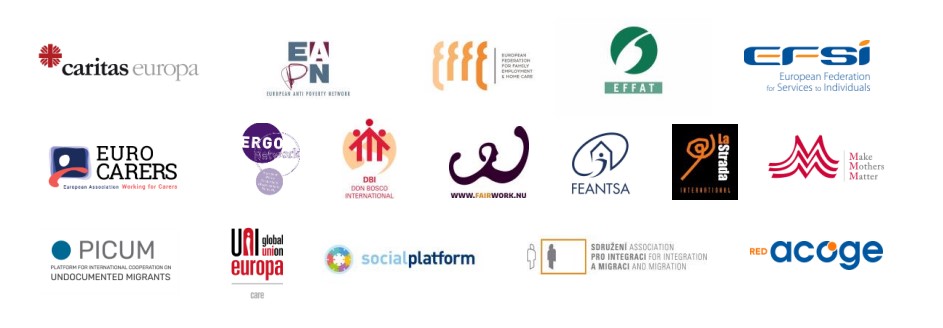
Together with other human rights organisations, ERGO endorsed Joint recommendations for the European Care Strategy regarding migrant care providers and service users.

This document sets out some joint recommendations for the inclusion of migrants in the forthcoming European Care Strategy and accompanying Council recommendations, both as workers and providers of care as well as care service users.

With a view to supporting the full inclusion of people who are non-nationals in every part of the strategy, the document is organised around key aspects that the strategy is expected to address, namely: access to care, affordability, sustainability, quality of care, workforce, and gender aspects of care.

 Contributors and endorsement

  • Caritas Europa
  • EAPN – European Anti-Poverty Network
  • EFFE – European Federation for Family, Employment & Home Care
  • EFFAT – European Federation of Food Agriculture and Tourism Trade Unions
  • EFSI – European Federation for Services to Individuals
  • Eurocarers
  • ERGO – European Roma Grassroots Organisations Network
  • Don Bosco International
  • FairWork (the Netherlands)
  • FEANTSA – European Federation of National Organisations Working with the Homeless
  • La Strada International
  • Make Mothers Matter
  • PICUM – Platform for International Cooperation on Undocumented Migrants
  • UNI Europa – UNICARE
  • SIMI (Czech Republic)
  • Social Platform and Red Acoge (Spain)

General principles and key messages

  • People who have non-EU nationality living in the EU must be fully considered and included in every part of the EU’s care strategy.
  • The availability, accessibility, affordability and quality of health, social and long-term care, as well as early childhood education and care, are essential for all, and especially those who, as non-nationals with various statuses living in the EU, may face particular barriers in accessing care, intersectional discrimination, marginalisation and in-work poverty.
  • The COVID-19 pandemic both reinforced the essential role of the care sector and exacerbated the precarity of migrant carers. Appropriate and effective measures are urgently needed.
  • The forthcoming European Care Strategy should:
    • Recognise the essential role and contributions of both intra-EU mobile workers and non-EU migrant workers, including undocumented workers, in providing care in the European Union.
    • Recognise that in many cases this care is being provided undeclared or under-declared, in exploitative conditions, impacting on the rights and well-being of workers and their families. This also impacts on care service users, and contributes to unfair and unsustainable social protection systems. Decent work should be integral to definitions and priorities around sustainable and quality care systems.
    • Commit and set concrete actions to promote decent work for all care workers, regardless of their migration or residence status, including through targeted measures.
    • Commit and set concrete actions to ensure that all people living in the EU have access to quality services on the basis of need, regardless of their migration or residence status.
    • Recognise and support informal carers, including young carers, regardless of their migration or residence status.
    • Meaningfully involve representatives of care workers, including migrant carers- as well as those in need of care – in the development, monitoring and evaluation of care policy-making and reform, and encourage member states to do likewise.
    • Encourage member states to evaluate the impacts of policies – in particular in the areas of employment, education, health and migration – on people in need of care, families, care workers and informal and formal care service provision, including through gender impact assessments.
    • Encourage the use of both EU and national funds, in particular ESF+ and the Child Guarantee national action plans, to improve access, affordability and quality of care services for marginalised and disadvantaged people and families, including mobile EU and non-EU migrants.
  • It is important for the European Care Strategy to address both the differences and overlap between care and non-care services needed by, and provided to, people with care needs in their homes. The strategy needs to recognise the different professional and skills profiles of care workers. This should reflect the types of care that require professional qualifications, as well as the reality that in many home care arrangements, people are providing a combination of care and housework-related personal household services.

Download the joint recommendations

Call for Expert in Local Budgeting

Roma equality, inclusion, and participation (EQUIP): Calls for applications for expert on Roma involvement in local budgeting

Call for expert in local budgeting

ERGO Network is contracting an independent expert to design manual for the Roma involvement in local budgeting under the project  “Roma equality, inclusion, and participation (EQUI)”. The project is funded by the European Union’s Citizens, Equality, Rights and Values Programme (CERV).  

ERGO Network

ERGO Network (www.ergonetwork.org) brings together over 30 members from across Europe and supports organisations with a common perspective on Roma grassroots empowerment and equal citizenship to challenge stereotypes and combat stigmatization. We mobilize and connect organisations and individuals that share and express our values – active citizenship, shared responsibility, and passion – to strengthen and empower Roma civil society involvement in decision-making at local, national, and European levels and to address existing shortcomings of policies targeted at Roma.

Local Budgeting

The importance of the implementation of the National Roma Strategic Frameworks lies at the local level. ERGO Network with its members will help grassroots organizations to get engaged in community organising and community development to ensure that the national frameworks are effectively implemented on the ground. The training and coaching series will start with a training of community-based NGOs and local action groups on getting involved in local budgeting. In the following years it will also cover other aspects of community organising and local planning and development processes.

As part of ERGO’s workshop series on supporting community organising and community development, the first year’s topic will be Roma involvement in local budgeting. The purpose is to ensure that local funds are well spent for Roma inclusion and empowerment.

Role of the expert

We are searching for an external expert to support local Roma civil society to engage in community organising and community development to directly improve the living situation of Roma on the ground.

The expert is expected to develop a manual for the involvement of the Roma community in the local budgeting, as well as design the training and coach a minimum of three ERGO Network members to use the manual.

Specifically, the expert is expected to:

  • Develop the local budgeting manual: Minimum 20 pages, in English language, digital format, targeting national and local Roma activists.
  • Conduct a workshop with ERGO Network members to train them to use the manual and coach them to implement it.

Profile:

  • Excellent knowledge of local Roma realities with a specific focus on the involvement in local budgeting
  • Expertise on Roma issues and policies on European Union and member state level
  • Experience working with civil society organisations in the fields of advocacy, capacity-building, and network building
  • Excellent writing skills
  • Ability to design manuals and trainings for CSOs activists
  • Excellent training skills
  • Ability to work independently
  • Additional language skills desirable

Conditions

The development of the manual and the training will be conducted throughout April-December 2022, with the final report expected in December 2022.

Times for training and coaching of ERGO Network members will be agreed upon with the selected expert and selected countries.

Contract and budget

The independent expert will be subcontracted to fulfil the part of the work in the project of ERGO Network, under the CERV. The expert has no rights vis-à-vis the European Commission.

The expert shall be paid for the execution of the activities and services a fee of a maximum of 6,000 EUR, all taxes and VAT included (must include all expert costs, travel, translation etc.).

Application procedure

Interested and qualified candidates should submit the following documents:

  • CV, highlighting past similar assignments
  • Proposed methodology, timeline, and budget, including the envisaged number of working days

We will select the expert according to the principle “Value for money”. Please send your application to info@staging.ergonetwork.org by March 31th 2022, 23:59 CET.

A detailed project summary can be provided upon request.

For further questions, please contact Gabriela Hrabanova at g.hrabanova@staging.ergonetwork.org

Call for Applications for an External Trainer

Call for applications for an external trainer to conduct Coaching on accountability and transparency criteria for civil society

The European Roma Grassroots Organizations (ERGO) Network is contracting an external trainer to deliver coaching visits to Bulgaria, Lithuania, and Romania to implement training with the grassroots organizations using the ERGO Network manual on accountability and transparency criteria.

ERGO Network

ERGO Network (www.ergonetwork.org) brings together over 30 members from across Europe and supports organizations with a common perspective on Roma grassroots empowerment and equal citizenship to challenge stereotypes and combat stigmatization. We mobilize and connect organizations and individuals that share and express our values – active citizenship, shared responsibility, and passion – to strengthen and empower Roma civil society involvement in decision-making at the local, national, and European levels and to address existing shortcomings of policies targeted at Roma.

Role of the consultant

Through the ”New solutions to old problems – exchange of new types of approaches in the field of Roma integration” project, funded by Iceland, Liechtenstein, and Norway through the EEA and Norway Grants Fund for Regional Cooperation, ERGO Network is contracting an external expert. The expert will conduct three two days trainings in Bulgaria, Lithuania, and Romania with our partner’s organizations. The trainings are to be delivered in the English language.

The expert is expected to help the civil society organisations to be role models of transparency and accountability, to promote positive values for other organizations in the field and also to support others with their expertise. The trainings are to support the organizations in their structures and their daily work.

From ERGO Network the expert will receive a transparency criteria manual with training materials in a form of a boardgame for organisations. He/she will also be consulted on using these materials, facilitating sessions with beginners and more advanced participants, and adapting the game to the local languages.

In addition to the training sessions in each of the countries, the expert will be expected to deliver a full report of the training and to map the strengths and weaknesses of the organizations. Together with the partner organisations, the expert will develop a system to keep a record of their governance and structure.

Conditions

The training will be conducted throughout April-December 2022, with the final report expected for December 2022 

Profile of the consultant*

  • Excellent training skills
  • Excellent writing skills and ability to design manuals, modules, and toolkits for CSOs
  • Experience working with civil society organizations in the fields of advocacy, capacity-building, and network building
  • Ability to work independently
  • Romanian, Bulgarian, or Lithuanian language skills desirable

*The consultant can be an individual, institution, or organization

Contract and budget

The independent consultant will be subcontracted by ERGO Network and has no rights vis-à-vis the EEA and Norway Grants for Regional Cooperation. He/She reports to ERGO Network.

The expert will be renumerated with 6000 €.

VAT and all costs (such as travel and accommodation) related to the three country visits are included in this amount.

The applicants should submit: 

  • An updated CV
  • And a motivation letter

The application package should be submitted by 15 April 2022 to info@staging.ergonetwork.org with the subject – “Coaching on accountability and transparency criteria for civil society”

Letters to EU and United Nations in support of Ukraine Roma

Letters to EU and United Nations in support of Ukraine Roma

To bring the attention of the international bodies to the dire situation of Ukrainian Roma refugees, ERGO Network has reached out to European Union and United Nations.

Letters were sent to

Letter to the European Union

President Ursula von der Leyen,  President of the European Council Charles Michel and High Representative of the European Union for Foreign Affairs and Security Policy Josep Borrell Fontelles

Letter to the United Nations

High Commissioner for Human Rights Michelle Bachelet

calling on their respective institutions to do their utmost to ensure that in the current war the border and other affected Member States do not further discriminate against Roma and other racialized and vulnerable minorities.

Joint Statement “End the war against Ukraine!” #StandWithUkraine

Together with the letters ERGO Network has sent Joint Statement “End the war against Ukraine!” #StandWithUkraine, signed by Members of the European Parliament, International and national organisations and individuals. The current number of signatures of this letter is over 400.

Please consider joining us by signing this Joint Statement. To do so follow this link.

For more information about ERGO Network’s advocacy in support of Ukrainian Roma and other vulnerable communities, please don’t hesitate to contact our Senior Policy Officer Isabela Mihalache at i.mihalache@staging.ergonetwork.org

`
Ana Rozanova – Page 30 – ERGO Network

By continuing to use the site, you agree to the use of cookies. more information

The cookie settings on this website are set to "allow cookies" to give you the best browsing experience possible. If you continue to use this website without changing your cookie settings or you click "Accept" below then you are consenting to this.

Close