New European Solidarity Corps volunteer in ERGO Network

Welcome, Annamária!

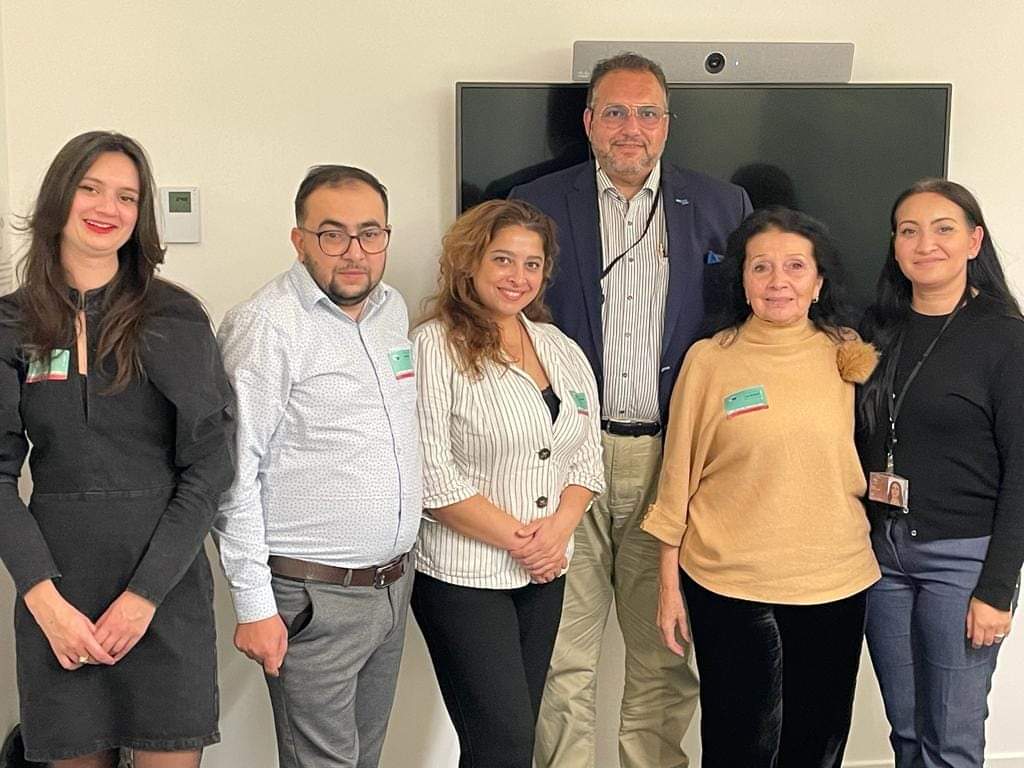
The ERGO Network Secretariat team is growing! Last week our new European Solidarity Corps volunteer Annamária Pšenková from Slovakia joined us in Brussels.

She will stay one year with us to learn more about how we work and support all our work areas.

Here is more about Annamária in her own words:

My name is Annamária Pšenková. I am from a small country which is situated in the middle of Europe called Slovakia. I am 23 years old. I finished my bachelor’s studies in political sciences in May and I decided to take a gap year. 

Firstly I would like to introduce my interests within the academic sphere. My undergraduate studies at BISLA gave me the opportunity to explore various fields of politics, economics, international relations, philosophy and most importantly human rights.

While studying all these fields, my primary interest was rooted in focusing on peace and conflict resolution within different social conflicts either on national or international dimensions. During my studies, I  notably centralized my papers on dealing with injustice and breaches of human rights. The course – Peace and conflict resolution, in which I have been enrolled taught me how cultural and collective trauma from past traumatic experiences is created.

Furthermore, the most significant and relevant part of that course was that it has given me sufficient knowledge about various means to reconcile the past and bring the conflict between two different parties into mutual understanding.

While analysing numerous genocides as the Armenian genocide, the Rwandan genocide, the Holocaust, the Romani Genocide, Congolese genocide, I have developed the ability to understand the impacts of political decisions (my main concern was the implementation of the policy of securitization), moreover, it led me to realize the importance of reconciliation process of such horrendous atrocities within our society. Lastly, my BA thesis focused on the whole process of the creation of cultural trauma and how collective trauma from past traumatic experiences can be effectively misused for current political goals. 

In my personal life, I’ve been dancing since I was a child. I started with the Latino style but slowly and gradually I was changing the dancing styles. Mainly I am focused on afro, dancehall, fusion and street Latino right now.  I have three brothers, who are the most important men in my life, so leaving them was a bit harder for me. I do love books a lot, mainly those philosophical ones now – I am captivated by Plato’s ideas the most. I am an outgoing person, I love to party a lot or just spend time with friends in bars with beers. 

Visit of Ukrainian Roma Delegation to ERGO Network

Visit of Ukrainian Roma Delegation to ERGO Network

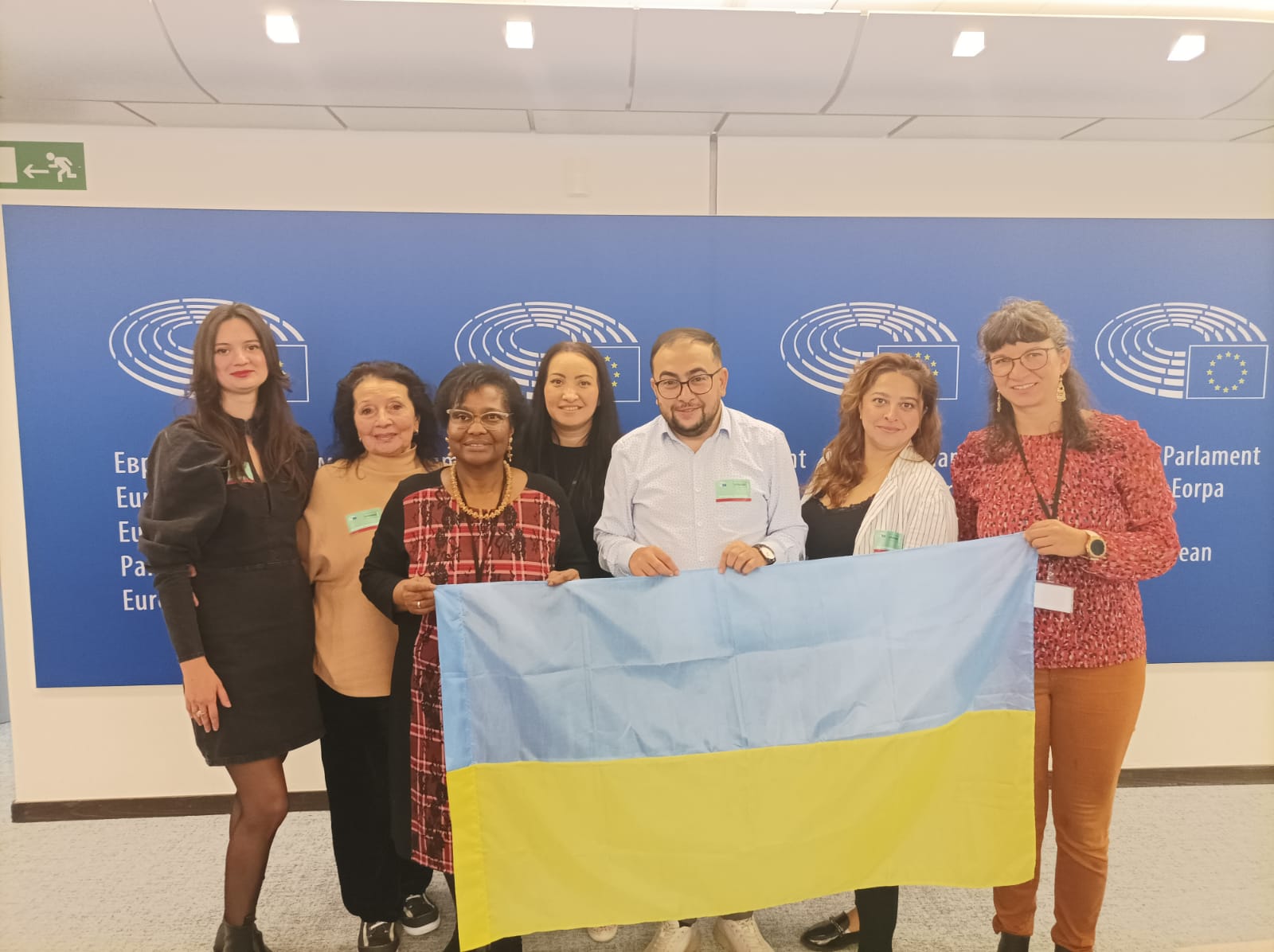
On 12-13 October 2022 ERGO Networked welcomed a delegation from our Ukrainian member organisation Roma Women Fund Chiricli and Roma mediators with the purpose to present the current situation of the Roma IDPs and refugees (access to housing, education, the particular situation of the Roma women, cases of discrimination, to gather feedback on possible solutions and partnerships to address the issues and propose immediate anti-discrimination measures for ensuring Roma equality during the current refugee crisis.

The delegation consisted of Director of Chiricli Yulia Kondur (currently working from France), organisation representative Viola Popenko (currently working from the United Kingdom) and mediators Mikhailo Biliavskyi and Marina Bublyk (now based and working with Ukrainian Roma refugees in Germany).

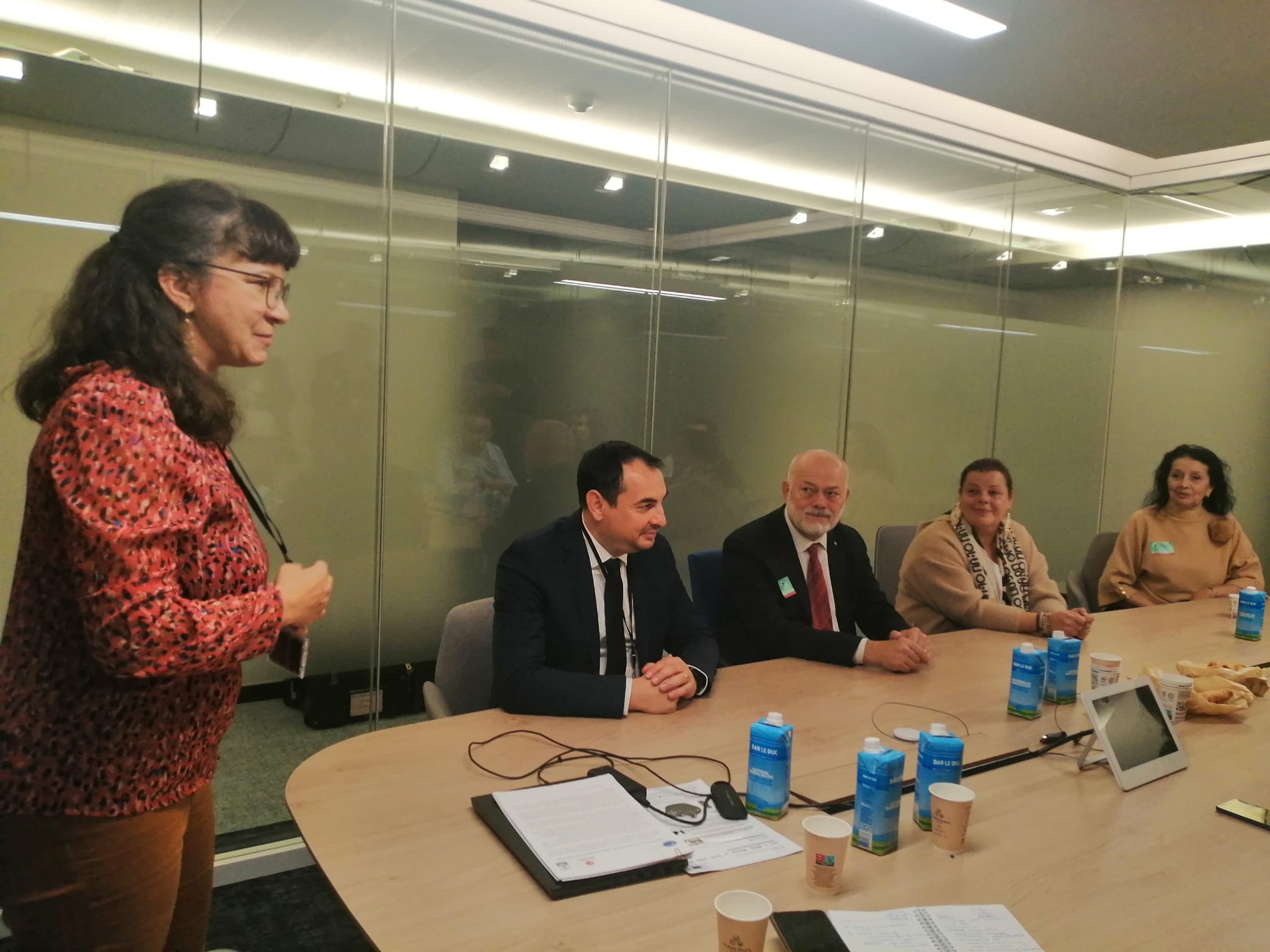
On the first day of their visit, our Ukrainian colleagues met with Members of the European Parliament Peter Pollak, Pierrette Herzberger-Fofana, Romeo Franz, Dietmar Kostner and the assistant of MEP Sergey Lagodinsky to present the research they have carried out during the summer, involving over 1000 Ukrainian Roma mediators working with IDPs and refugees on the ground.

Roma Women Fund Chiricli together with the mediators provided comprehensive data on the situation of the Roma in different regions, in order to find common points for cooperation.

On the second day the organisation spent time with ERGO Network to strategise on our future cooperation, as well as continuing with their meetings of the EU officials: this time meeting Marta Garcia Fidalgo, the Advisor on Roma Policy in the Directorate-General for Neighbourhood and Enlargement Negotiations (DG NEAR) of the European Commission..

Roma Women Fund Chiricli is the largest Roma-led organisation in Ukraine, involved in a wide variety of projects, among them on policy-making. Together with ERGO Network, Chiricli worked on the most recent Roma strategy for the Ukrainian Government.

Since the beginning of the war, we have been working closely together, assisting this organisation in their work on the ground with among other initiatives fundraising for the Ukrainian Roma refugees and also running the “Hot Meals for Ukraine” project (provision of hot meals in war-affected regions for all vulnerable groups who need those, including non-Roma). ERGO Network has also liaised with several donors for funding assistance for Roma IDPs in all areas of Ukraine and the provision of a special centre for the IDPs in Western Ukraine specifically.

ERGO response to EC call for evidence on strengthening social dialogue

ERGO Network responds to the European Commission call for evidence on strengthening social dialogue

As announced in the European Pillar of Social Rights Action Plan, the European Commission will present in 2022 an initiative to support social dialogue at EU and national level. As part of this initiative, the Commission will put forward a proposal for a Council Recommendation to promote and strengthen the conditions for social dialogue, including collective bargaining, at national level. In the context, the European Commission invited stakeholders to submit their views in the framework of a call for evidence, to which we responded.

Overall, we welcome the European Commission’s commitment to improving social dialogue and particularly to strengthening the role, coverage, and leverage of trade unions and collective bargaining. However, it is regrettable and inaccurate that the background document underpinning the call for action uses the word “companies” in an interchangeable way with “employers”, thus completely overlooking labour relations in the public and the third sector, where adequate social dialogue to protect workers’ rights is just as needed. The current choice of language displays an undue bias towards the private sector, which will hopefully not be reprised in the initiative itself.

Unfortunately, there is a striking lack of data regarding the degree of representation of Roma workers in trade union structures. Neither the main trade union umbrella organisations that ERGO Network reached out to (ETUC, EPSU, CESI, UNI Europa), nor Roma and (pro-)Roma civil society organisations are aware of such statistics. However, the consensus was that there seemed to be low coverage of trade union membership among Roma workers. The lack of Roma workers in trade union structures leads to less visibility of the specific issues Roma workers have, such as the ethnic pay gap or discrimination in the workplace.

This situation is even more serious when we consider that evidence from all countries shows that the Roma are over-represented in exploitative forms of employment (including the informal economy), because of a lack of knowledge of their rights. The Roma overwhelmingly work in jobs that are low paid, on zero-hours contracts, often in factory-based environments or others that require hard physical work.

The consequences for large numbers of the Roma community are inconsistent working hours and, therefore, unpredictable income. Insecure contracts lead to vulnerability and to abuse, as Roma in these working environments are often asked to work extra unpaid hours and are too scared to make complaints, even in cases of sexual harassment or unfair / unlawful dismissal. The Roma might be a desirable workforce at busy times, but in lulls they are also the first to be dropped off. The Roma working in the “grey” economy continue to be vulnerable – even invisible – workers, finding it very difficult to assert their employment rights.

The upcoming European initiative should:

  • Recommend sound public investment in specific provisions to protect the most vulnerable workers, such as seasonal, migrant, and minority workers, and those in the informal economy who are not covered by standard employment contracts.
  • Explicitly support the collection of disaggregated data in trade union membership, in order to have a clearer picture of how the different concerns of vulnerable workers, including but not limited to Roma workers, are taken up in collective bargaining.
  • Encourage and support, including financially, anti-bias and antidiscrimination trainings for social partners, to build better awareness of the specific issues faced by minority workers and other vulnerable groups on the labour market, so that these issues can become a part of social dialogue.
  • Support information campaigns for workers about their employment rights, including in the Romani language, and put in place specific outreach measures for Roma workers.
  • Ensure that Labour Inspectorates and the European Labour Authority protect and promote a work environment where recourse and appeal are available to all without prejudice or discrimination.


  • See ERGO Network’s full input here!

For more information about ERGO Network’s work on employment, as well as on the European Pillar of Social Rights, please contact Amana Ferro, Senior Policy Adviser in the ERGO Network Brussels team.

Integro Position Statement

Position Statement with Recommendations on the need to strengthen bottom-up approaches in the implementation of the National Policy of the Republic of Bulgaria for Equality, Inclusion and  participation of Roma for the period 2021-2030

By INTEGRO ASSOCIATION and Local Organisations-Members of the National “Intellect” Coalition

In recent years, Integro Association, as member of the ERGO Network, has been actively engaged in monitoring and supporting the implementation of the LEADER approach. This approach was transformed in 2014 into the Community Led Local Development – CLLD approach for addressing local issues of the Roma community in Bulgaria The importance of the Community-Led Local Development approach came on focus after the analyses of the Decade of Roma Inclusion and the European Union Framework for National Roma Integration Strategies 2011-2020.

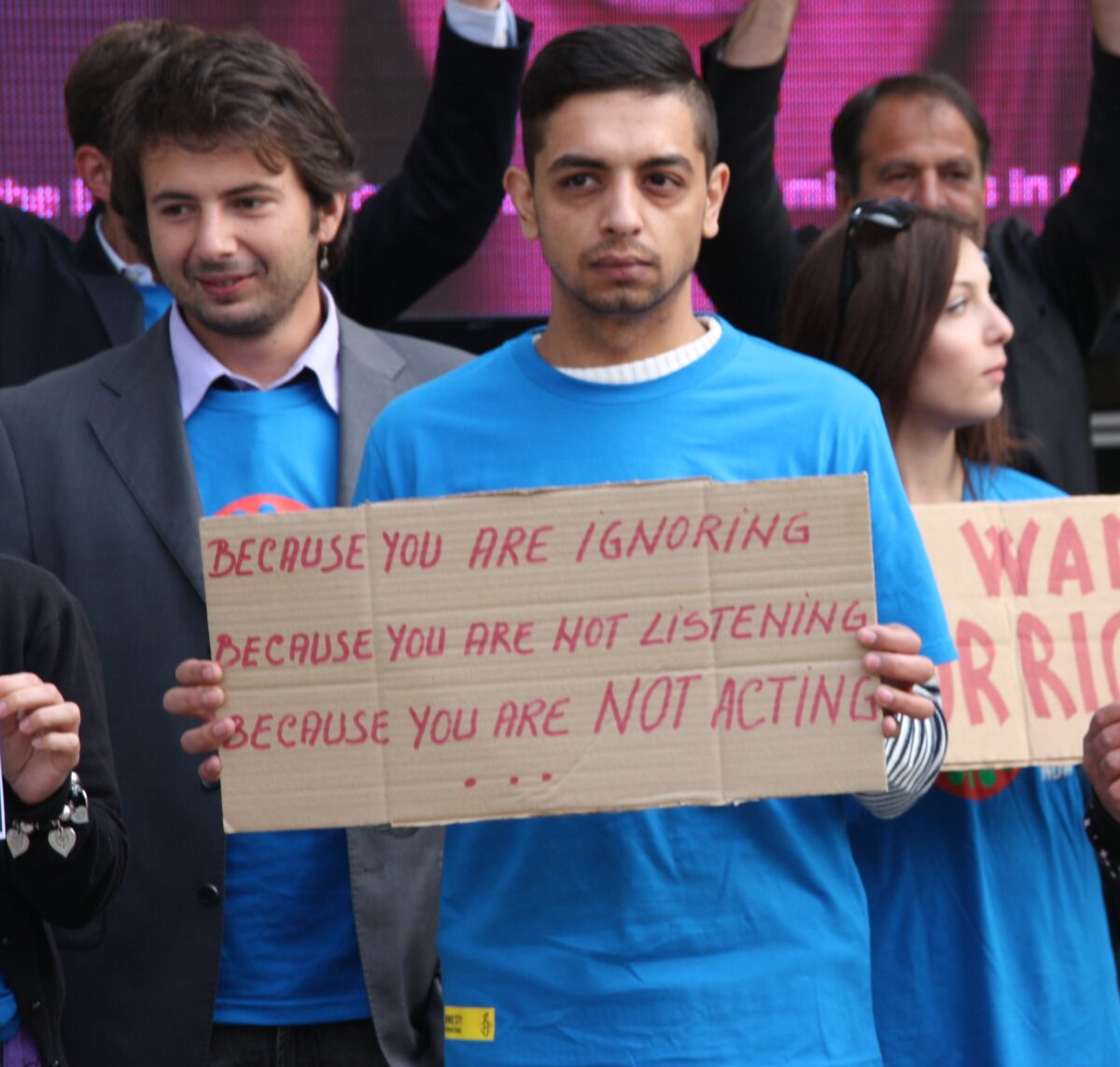
In short, these analyses identified a failure in both initiatives, mainly due to the lack of real Roma participation in policy-making and implementation, as well as due to the inadequate monitoring and evaluation system and weak political commitment. The failures of the two major Roma inclusion initiatives over the past two decades are a clear indication that paternalistic and top-down funding approaches to Roma inclusion require an essential review to achieve more positive results.

To download the full statement, please follow this link.

This statement has received financial support in the framework of the project “New solutions to old problems”. The project “New solutions to old problems – exchange of new type of approaches in the field of Roma integration” is funded by Iceland, Liechtenstein and Norway through the EEA and Norway Grants Fund for Regional Cooperation.

ERGO Network responds to the EC call for evidence on framework conditions for the social economy

ERGO Network responds to the European Commission call for evidence on framework conditions for the social economy

As announced in the Social Economy Action Plan published on 9 December 2021 by the European Commission, a Council Recommendation on framework conditions for social economy is planned to be released in 2023, aimed at supporting Member States to better adapt their policies and laws to the specific needs of the social economy and unlock its untapped potential. A call for evidence was launched, in order to gather stakeholder views, and ERGO Network responded to it based on our own position paper on social economy, as well as our original response to the Social Economy Action Plan.

We welcome the recognition of a holistic approach required for social economy, spanning social and employment policies, education, taxation, public procurement, competition, industry and SMEs, circular economy, and local development. However, while harnessing the potential of the social economy is deemed key to meeting a number of challenges, several elements are missing: combatting poverty, ensuring community-based services, providing goods and services in an affordable way, and contributing to active citizenship and stronger democracies. Social economy is a substantive, integral part of economic activity, not a charitable, short-term intervention. Sustainability is not the same as commercial viability, as it is connected instead to the wellbeing of beneficiaries and the positive social impact.

We further support the explicit objective of adapting policy, legal, and regulatory social economy frameworks. However, the positive social and societal objectives of social economy must be sufficiently emphasised when these frameworks are defined. It is imperative that the Council Recommendation also calls for the close involvement of beneficiaries and their civil society organisations.  A partnership approach needs to be embedded when legal, regulatory, and funding frameworks are built or revised, involving key stakeholders, including Roma communities and their representatives. The role and potential of these communities must be acknowledged and supported, through enshrining a broad bottom-up approach, based on real community needs and grassroot input, giving the Roma a voice in the process.

It is essential that non-Roma-led social enterprises work alongside Roma people or Roma organisations, to make use of the full pool of skills and talents already present in the communities. Correcting a staggering oversight in the Action Plan, we hope to see the Roma (and other minority-led social enterprises and racialised beneficiaries) explicitly catered for in the Council Recommendation. If Roma inclusion is not spelled out as an objective, mainstream approaches will leave them behind. Clear indicators that monitor Roma participation in social economy, the level of ownership, number of Roma staff etc are needed. Social economy actors (including the central and local authorities supporting them) must be mindful of deeply rooted discrimination and antigypsyism and make conscious efforts to combat any such tendencies.

Roma are drivers and beneficiaries of change, but more targeted support is needed to build the capacity of Roma to become social entrepreneurs themselves. The existence and potential of social enterprises need to be better promoted in Roma communities, alongside specific training and capacity-building, social enterprise hubs, mentoring, peer learning, financial and in-kind support. The Council Recommendation must also recognise that marginalised and racialised communities face additional barriers in accessing mainstream funding. Dedicated public funding schemes and private funding should support minority-led social enterprises regardless of their market performance, given their public utility. Other useful tools included soft loan conditions, state-provided guarantees for bank loans, free premises, free expert support, tax deductions, fiscal incentives.

Social economy offers great potential to address Roma poverty, employment, health, education, accommodation, nutrition, and to keep alive Roma culture and crafts. It is encouraging that contributions received in the run-up to the Social Economy Action Plan will be used in the elaboration of the Council Recommendation, as significant input was left out of the Action Plan. We hope the upcoming Council Recommendation tackles these oversights and creates fruitful synergies with the EU Roma Strategic Framework and with the European Pillar of Social Rights in a comprehensive way.

  • Read our full response to the consultation here!

For more information about ERGO Network’s work on social economy, please contact Amana Ferro, Senior Policy Adviser in the ERGO Network Brussels team.

`
Ana Rozanova – Page 24 – ERGO Network

By continuing to use the site, you agree to the use of cookies. more information

The cookie settings on this website are set to "allow cookies" to give you the best browsing experience possible. If you continue to use this website without changing your cookie settings or you click "Accept" below then you are consenting to this.

Close