CLLD Meeting with EC desk officers

ERGO Network members meet EC desk officers to discuss Community-Led Local Development

On 11 March 2021, the European Roma Grassroots Organisations (ERGO) Network facilitated an online exchange meeting between its national members in Bulgaria, Czech Republic, and Romania, and their counterparts in the country desks of DG Employment, Social Affairs and Inclusion (DG EMPL), DG Regional and Urban Policy (DG REGIO), and DG Agriculture and Rural Development (DG AGRI). Other European Commission staff responsible for related affairs was also in attendance.

The main topics covered in the meeting were:

  • Presentation of the main findings of the ERGO Network evaluation report of the CLLD cycle 2014-2020 in the three countries.
  • Updates on the possibility to introduce the Roma indicators in connecting the EU Roma Strategic Framework with EU funds.
  • Updates on how to best feed Roma realities and proposals (particularly with a view to the pandemic and recovery) in the current MFF negotiations.
  • Updates on the preparation of the National Roma Strategic Frameworks and National Recovery and Resilience Plans.

ERGO Network Director Jamen Gabriela Hrabaňová recalled that the organisation had been engaging extensively with CLLD processes since 2014, given the key role these processes can play in empowering Roma communities to identify bottom-up, beneficiary-led solutions that can tackle Roma poverty and social exclusion. Ms Hrabaňová pointed to the comprehensive synthesis report ERGO Network produced this year, evaluating the CLLD cycle for its entire duration (2014-2020) from a Roma perspective in three countries: Bulgaria, the Czech Republic, and Romania. She concluded by reassuring desk officers that ERGO Network national members and staff stood committed, willing, and able to provide all necessary input and feedback from their work directly at grassroots level, to make sure that the voice of the Roma was being heard.

  • Access here the ERGO Network publication “Community-Led Local Development (CLLD) for Roma inclusion. Evaluation Report 2014-2020”

Daniel Grebeldinger, ERGO Network CLLD expert (Nevo Parudimos, Romania) offered participants a comprehensive presentation of the main findings of the evaluation report. Roma involvement in CLLD and Local Action Group structures remained unequal, while more work needed to be done to build the capacity of all actors involved – local authorities, other LAG members, Roma NGOs, and community leaders – to engage with these processes. Cooperation with the Managing Authorities was not always smooth, and delays in launching the calls and the evaluations persisted, making planning and delivering projects a challenge. While more and more local development strategies had included Roma as priority beneficiaries, further efforts were needed to ensure that interventions genuinely reached the Roma and made a difference in their lives, with their full participation. The ERGO Network report presents concrete recommendations for the Managing Authorities, for the LAGs, and for Roma communities themselves.

The presentation was followed by an interactive Q&A session with the European Commission representatives in attendance, where specific points of the report were further elaborated upon. After the opening plenary, participants split into breakout rooms according to countries, in order to be able to exchange bilaterally in more detail about specific national concerns. ERGO Network will continue to engage closely with CLLD processes on the ground, with a view to ensure that Roma rights, inclusion, and participation were prioritized in this framework. The dialogue with the European Commission will continue through follow-up exchange meetings.


  • Access here the report of the online exchange meeting between ERGO Network national members and the European Commission (plenary only).
Member States step up commitment towards equality for Roma

Press statement

Member States step up commitment towards equality for Roma: The European Coalition of Roma and pro-Roma organisations welcomes the adoption of a Council Recommendation on Roma equality, inclusion and participation

Brussels 17 March 2021: A new Council Recommendation calls on EU Member States to consolidate efforts to adopt and implement measures to promote equality and effectively prevent and combat multiple and structural discrimination and antigypsyism as well as social and economic exclusion of Roma.

“We are happy to see such a strong EU Council Recommendation on Roma. It is now up to Member States to demonstrate a real commitment to tackling antigypsyism – as specific form of racism against Roma people – with a focus on non-discrimination, civil society participation and fighting poverty and social exclusion of Roma. This is a timely  political moment for governments to be bold and far-reaching in their policy and funding proposals on Roma”, said Gabriela Hrabanova,  Director of ERGO Network.

“With this Council Recommendation we expect Enlargement and Neighbourhood countries to follow the example and adopt national Roma strategic frameworks and targeted policies prioritising the fight against antigypsyism and improving the situation of Roma women and children, who are often the most vulnerable to discrimination and social marginalisation”, said Adriatik Hasantari, Director of Roma Active Albania.

“The renewed Council Recommendation on Roma addresses Roma youth under the objectives of equality, inclusion, participation and employment. It is high time that national governments and National Roma Contact Points follow these recommendations and prove their commitment to the inclusion of young Roma in the decision-making, implementation and monitoring of Roma-related policies up to 2030”, states Marietta Herfort, Executive Director of Phiren Amenca International Network.

“We very much welcome the renewal of the political will to Roma equality and inclusion. There is a clear message that inequality, racism and discrimination cannot continue to exist in Europe. We now have the best-ever policy instrument, but it needs to operate in the best-ever conditions by fully aligning it with mainstream policy frameworks and by taking the opportunities offered by the current financial instruments. We urge Member States and the European Commission not to miss another decade”, says Isidro Rodríguez, Director of the Fundación Secretariado Gitano.

“The Central Council of German Sinti and Roma welcomes the EU Council Recommendation on Roma. It sends a strong signal for the recognition of antigypsyism as the root cause for inequality, exclusion and discrimination of Sinti and Roma in Europe. Member States must now include Sinti and Roma in the development and implementation of effective national strategies. They should also improve  their legal anti-discrimination frameworks and institutional settings, including monitoring, to effectively fight antigypsyism”, explains Guillermo Ruiz, Policy Advisor of the Central Council of German Sinti and Roma.

“The European Public Health Alliance embraces the Recommendation of the Council of the European Union aiming to promote Roma equality, inclusion and participation. The organisation welcomes in particular the recommendations addressing healthcare and prevention, including vaccination services. Ensuring equal access to health and prevention services in line with the needs of different socio-economic groups among Roma is an indispensable step for achieving health equity and promoting equal participation in social and economic lives. Therefore, the European Public Health Alliance reiterates its calls for a stronger commitment at national and local levels, including the implementation of holistic and integrated policy measures to tackle systemic health inequalities affecting entire Roma communities and generations”. Radost Zaharieva, Policy coordinator for Health Inequalities and Roma Health

“In times when racism is on the rise, it is crucial that EU Member States recognize antigypsyism and take immediate actions to tackle it.  In order to improve the situation of Roma, ERIO encourages  all responsible national and local authorities to effectively implement the renewed  Council Recommendation as a necessary step to eradicate the dramatic levels of antigypsyism that Europe’s Roma are facing.  It is not enough to agree to the principle of equality for Roma. Adopting the Recommendation  will not make any difference to how Roma experience equality in their daily lives, unless followed up with concrete action that will translate commitment into policies, programmes, laws and budget lines.” said Ivan Ivanov, director of the European Roma Information Office.

“The European Roma and Travellers Forum welcomes the new Council Recommendation but is disappointed that it does not reflect the situation of nomadic and semi-nomadic Travellers and Romanies in Western European countries. We urge  Member States to address in their national Roma strategies the antigypsyism faced by nomadic and semi-nomadic Travellers and Romanies, particularly the lack of adapted schools systems, discriminatory administrative rules, neutral laws, domiciliation criteria, lack of legal status for mobile accommodations, anti-nomadic and repressive legislation and policies, criminalization of the nomadic way of life, forced sedentarisation and the lack of a comprehensive approach giving equal status and rights to the nomadic way of life. Anti-nomadism should be named as a specific form of antigypsyism, adequately condemned and prosecuted”, said Miranda Vuolasranta, President of the European Roma and Travellers Forum.

“This Council Recommendation is an important step towards recognising racial inequalities as a policy priority and ensuring meaningful measures to address these at national level. This way, the European Union strengthens its framework for racial equality and supports its new EU anti-racism action plan. However, implementation, participation and addressing structural forms of racism remain a challenge. We call on the EU institutions and Member States to implement intersectional and structural approach to racism which could ensure strong measures against antigypsyism,” said Julie Pascoet, Senior advocacy officer, European Network against Racism.

For further information, please contact ERGO Network’s Senior Policy Officer Isabela Mihalache.

Call for an external evaluator

Call for external evaluator

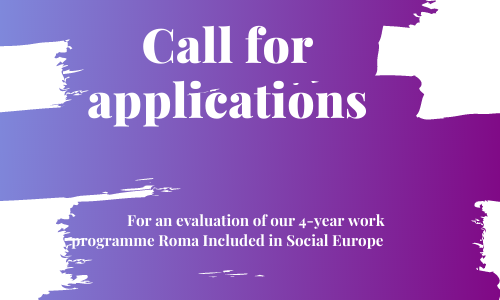
ERGO Network is contracting an independent expert to evaluate its 2018-2021 work programme Roma Included in Social Europe funded by DG Employment’s EaSI Programme.


ERGO Network (www.ergonetwork.org) brings together over 30 members from across Europe and supports organisations with a common perspective on Roma grassroots empowerment and equal citizenship to challenge stereotypes and combat stigmatization. We mobilize and connect organisations and individuals that share and express our values – active citizenship, shared responsibility, and passion – to strengthen and empower Roma civil society involvement in decision-making at local, national and European level and to address existing shortcomings of policies targeted at Roma.

For the second time, we are supported by DG Employment through a 4-year Partnership Framework Agreement that allows us to work closely with our members and to advocate for better policies for Roma through our work programme entitled “Roma Included in Social Europe”.

Role of the evaluator

We are searching for an external evaluator to assess the achievements and lessons learned of the Framework Partnership Agreement between ERGO Network and DG Employment (2018-2021) entitled “Roma Included in Social Europe”.

The evaluator is expected to assess the achievements of ERGO in implementing the FPA and reaching the objectives set and to give recommendations for future work.

Specifically, the evaluator is expected to:

  • Conduct evaluation interviews with ERGO members and national stakeholders involved in the FPA together with ERGO staff to evaluate achievements on national level in 5 countries.
  • Interview relevant EU policy-makers and civil society partners to assess the achievements on European level.
  • Conduct workshops with ERGO staff and members to jointly assess our achievements, lessons learnt and recommendations.
  • Draft a report describing outcomes and achievements, lessons learnt and recommendations for improvements, also taking into account the findings of internal evaluations done in the first three years of the FPA.

Profile:

  • Excellent knowledge of evaluation methodology and experience with programme evaluations
  • Expertise on Roma issues and policies on European Union and member state level
  • Experience working with civil society organisations in the fields of advocacy, capacity-building and network building
  • Excellent writing skills and ability to concisely summarise evaluation results for different audiences
  • Excellent research and analytical skills
  • Ability to work independently
  • Additional language skills desirable

Conditions

The evaluation will be conducted throughout 2021, with the final report expected for December 2021.

Times for interviews and workshops with ERGO staff, members and stakeholders will be agreed with the selected consultant.

Contract and budget: The independent evaluator will be subcontracted to fulfil part of the work programme in the Framework Partnership Agreement between ERGO Network and DG Employment. The expert has no rights vis-à-vis the European Commission.

The expert shall be paid for the execution of the activities and services a fee of maximum 5,000 EUR, all taxes and VAT included.

Application procedure

Interested and qualified candidates should submit the following documents:

  • CV, highlighting past similar assignments
  • Proposed methodology, timeline and budgetary proposal, including envisaged number of working days

We will select the expert according to the principle “Value for money”. Please send your application to info@staging.ergonetwork.org by April 15th 2021, 23:59 CET.

 A detailed project summary can be provided upon request.

For further questions, please contact Christine Sudbrock at c.sudbrock@staging.ergonetwork.org

Council reaffirms commitment to combat discrimination against Roma

Council reaffirms commitment to combat discrimination against Roma

Today the Council adopted a recommendation on Roma equality, inclusion and participation, stepping up the member states’ commitment to effectively fight discrimination against Roma people and to promote their inclusion in the key areas of education, employment, health and housing. The Recommendation also reflects the needs of specific groups and the diversity of the Roma population. It replaces the December 2013 Council recommendation on effective Roma integration measures and has an expanded scope, including measures to:

  • fight online and offline discrimination (including harassment, antigypsyism, stereotyping, anti-Roma rhetoric and hate speech)
  • combat multiple and structural discrimination against Roma, in particular women, children, LGBTI persons and persons with disabilities
  • promote multi-cultural awareness-raising activities and campaigns in schools.

The recommendation highlights the importance of the equal participation of Roma in society and of their role in policy-making. It outlines a comprehensive list of suggested measures in key areas ranging from access to education, the labour market and health to promoting active participation in civil society and partnerships. It also seeks to improve target setting, data collection, monitoring and reporting and to make mainstream policies more sensitive to Roma equality and inclusion. Moreover, the Recommendation highlights the importance of the gender perspective.

According to the recommendation, member states should adopt national Roma strategic frameworks within their broader social inclusion policies improving the situation of Roma, and communicate them to the European Commission, preferably by September 2021. Member states are also encouraged to include and promote rights of and equal opportunities for Roma in their national Recovery and Resilience plans.

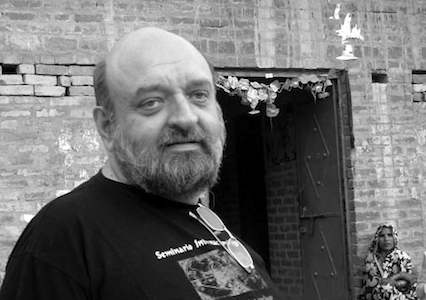
In memory of Marcel Courthiade

In memory of Marcel Courthiade

Written by Saimir Mile, La Voix des Rroms

Marcel Courthiade passed away unexpectedly on March 4, 2021 in Tirana at 67. With him, the Roma lose an exceptional resource. His work remains a treasure that several generations will be able to use for the benefit of the emancipation of the Roma.

Born on August 2, 1953, on the 9th anniversary of the liquidation of the Zigeunerfamilienlager in Birkenau, it is as if he were destined to live for the renaissance of this people who had suffered so much. This probably explains why, after an exemplary school career, he abandoned his medical studies in the fifth year to devote himself to the study of languages. He managed to master countless numbers of them, but he especially chose to place Romani at the center of his interest. He dedicated his life to its defense and development, and through it to the defense of the identity and rights of the Roma.

His work always demonstrated a very high level of scientific expertise, exceptional humility and accessibility, and an especially unfailing devotion to the Roma cause. He was the architect of the development of a real linguistic policy with the principles of the unification of the Romani language adopted in 1990 in Warsaw by the 4th Congress of the International Romani Union, then chaired by Rajko Đurić, another recently deceased great personality of the international Roma movement of the time. It is on the basis of these principles that Romani is taught at the universities of Paris and Bucharest. It is also on this basis that he coordinated the drafting of the first European dictionary of the Romani language, aptly titled “From our elders, to our daughters and to our sons.”

Marcel, like other intellectuals and activists of his generation, was too far in advance to be fully understood. On February 28, 2021, on Albanian public television, he answered a journalist’s question regarding whether the Romani language was “made official”:

“It has been formalized by the Romani authorities, by the Romani institutions, but not by the States. But that’s normal […] the Romani authorities, that is to say the International Romani Union, the Commissioner for Language and Linguistic Rights etc., have formalized the Romani language very well. But the others do not recognize this formalization because it is about Romani instances. In fact, logically we must say that it is normal for a language to be formalized when it is formalized by its own institutions, not by others. But this is where there is a manipulation […], the others do not accept the existence of the Romani language. Maybe there will come a day, I don’t know; but for now, in the name of “diversity”, they say that there are several Romani languages, several dialects etc., which is not true. Italian or German for example have more dialects than Romani, but nobody says that Italian or German don’t exist. This is where the discrimination is located: the denial of the history of the Roma, the denial of their language, their literature, the alphabet, the “Kris” … It is really discrimination, which leads to the denial of the Roma nation, and when a nation does not exist, what rights can it claim? It is a very deep running and very cunning mechanism. “

These words sound like a testament today. It is up to current and future generations to grasp their full meaning in order to continue the fight for the dignity of the Roma, and therefore for their rights. We owe it to Marcel, and to all those who preceded us, and more or less trained us.


`
General – Page 25 – ERGO Network

By continuing to use the site, you agree to the use of cookies. more information

The cookie settings on this website are set to "allow cookies" to give you the best browsing experience possible. If you continue to use this website without changing your cookie settings or you click "Accept" below then you are consenting to this.

Close