Roma Forum Romania

Roma Forum Romania

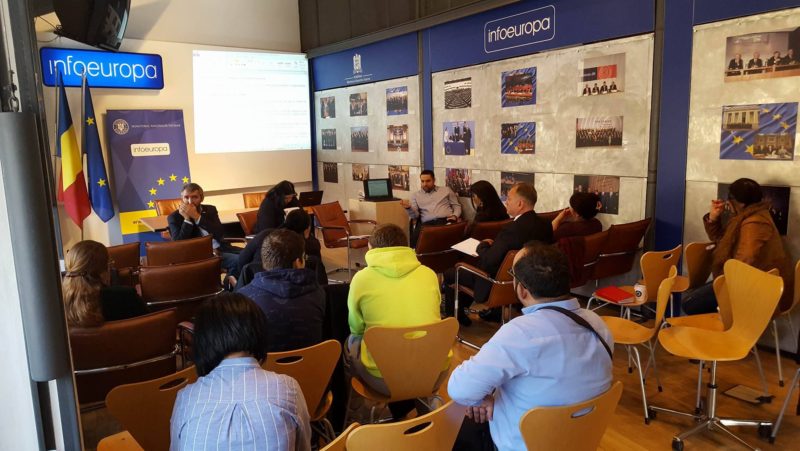
The Second National Meeting of Roma Forum in Romania took place on 18 November 2016 at the InfoEurope Center in Bucharest, organized by Nevo Parudimos, as member of ERGO Network, in partnership with Romani Criss.

The meeting focused on issues of Roma communities in order to increase the capacity-building of Roma grassroots organizations who are members in the Roma Forum, especially in the area of monitoring and advocacy work, together with experienced NGOs such as RomaniCriss and Sastipen;

The discussions focused on the list of proposals for the Romanian Presidency of the European Union in 2019 in order to be formalized in the public agenda during the Romanian presidency. These proposals refer to the following areas: school segregation, the mediation process for health and education and the forced eviction of the Roma.

Marian Mandache (Romani Criss), as an invited speaker of the 1st session, proposed ways of addressing the Roma issues to the future Romanian Government from 2017: bilateral meetings on the main social and economic fields that address Roma, such as sectorial meetings with public ministry representatives to include in their public agenda the Roma issues.

The Roma Forum had about 20 participants of Roma organizations from Romania and some new ones expressed their willingness to join.

As an ERGO member, Nevo Parudimos expresses its commitment to sustain the Roma Forum activities and to develop the capacity of Roma NGOs by exchanging information, solutions and models in order to overcome certain issues.

Also representatives of public authorities, namely the National Roma Agency and Mr. Alexandru Potor from the National Federation of LAGs, participated in the meeting.
Which steps towards European policies against antigypsyism

Which steps towards European policies against antigypsyism

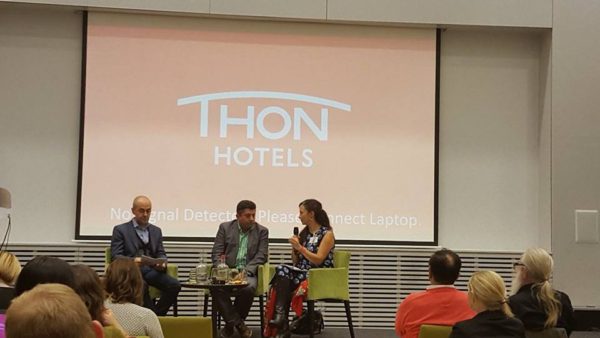
The aim of the seminar, organised by Open Society European Institute on 15 November 2016, was to explore how successful policy initiatives around education and reconciliation can be systematized and disseminated throughout Europe by fighting antigypsyism.

The event gathered representatives of governments, European institutions and Roma civil society to discuss in which direction policies designed for Roma are going and how they foresee to combat the negative rhetoric against Roma.

The Deputy Director of ERGO Network, Gabriela Hrabanova, highlighted the importance of the civil society’s role in monitoring hate speech and discrimination by having the tools to address and fight antigypsyism at the local level.  She stressed the importance of independent watchdogs organizations in Europe, which, when it comes to Roma discrimination, are missing. In support of those arguments, ERGO Network presented the reference paper against Antigypsyism of the Alliance Against Antigypsyism, written in cooperation with experts and endorsed by over 100 NGOs across Europe.

Find out more about the key aspects and dimension of antigypsism – a specific form of racism towards Roma at www.antigypsyim.eu.

The concluding remarks were done by Ethel Brooks – Associate Professor at Rutgers University, who stated “What do governments say about Anti-Gypsyism? What has been done? A lot has been said but now it is time for implementation”, “The time has come to deliver not just to talk”. Another remark made in the conclusions is that there is a need to strengthen the alliances among stakeholders and civil society and to start implementing the existing policies and legislation on human rights and hate speech and build a firm stand of political leaders against Anti-Gypsyism.

MESSAGES COMING FROM THE PUBLIC EVENT ‘COUNTERING SHRINKING SPACE FOR ROMA CIVIL SOCIETY’

MESSAGES COMING FROM THE PUBLIC EVENT
‘COUNTERING SHRINKING SPACE FOR ROMA CIVIL SOCIETY’

On 29 November 2016, ERGO network organised a public event to discuss
the ‘Shrinking space of Roma civil society’ which was co-hosted by MEPs
Terry Reintke (Greens/EFA) and Tomáš Zdechovský (EPP). Over 80 people
participated in the meeting. One of the conclusions is that there is a squeeze on available funding for work that is not strictly oriented to the provision of social services: advocacy, watchdog work, civil monitoring, community empowerment and activism. That shrinking space of civil society is a trend in Europe, but hits hard on Roma organisations, as they are scarcely equipped and often struggling for survival

You can download the recommendations here

High-Level Event on Roma Youth Empowerment in Bratislava

High-Level Event on Roma Youth Empowerment in Bratislava

The event was organized by the European Commission DG Justice and the Slovak Presidency of the Council of the European Union from 9-11 October 2016 in Bratislava.

The aim of the event was to bring together young Roma and relevant stakeholders to work together on how they can be a driving force for the Roma integration process. The event also included the first year of the European Roma Spirit Award 2016, which awards exceptional individuals, organizations, and projects who actively improve the situation of Roma in Europe every day.

The agenda of the event was very intense with panel discussions and workshops with high-level representatives such as Commissioner Jourova and representatives of the Ministries from Slovakia, Czech Republic, Romania, and Hungary.

Moreover, representatives of the Council of Europe, Members of the European Parliament and international and national stakeholders who work on Roma integration were present at the meeting.

ERGO Network took part in a workshop on access to social rights with a focus on education and employment. The outcome of the workshops was a common agreement that antigypsyism is one of the main reason why the integration process of Roma and Roma youth is still a major issue after so many measures were taken. The outcomes of the workshops were presented by young Roma rapporteurs and discussed in the panels.

In the panel discussion “Roma Youth as the Leaders of the Roma Integration Process” with the ministries and high level representatives, Valeriu Nicolae, Special Representative of the Secretary General for Roma Issues from the Council of Europe, said “Racism goes beyond the logic and destroys lives; we must take action and stop antigypsyism”.

Roma youth identified several issues that have been brought to the event mostly in the area of education and employment. The issues raised by the young people and international and national stakeholders will be reflected in the Council Conclusions on Roma  that will be adopted in the middle of December 2016

Czech NGOs meet with Czech Ministry of Education

Czech NGOs meet with Czech Ministry of Education

Czech Deputy Education Minister Václav Pícl met with representatives of a National Working Group that consists of 11 Romani non-profit organizations from all over the Czech Republic on 3 October in his office at the ministry. “The aim of the meeting is to establish a constructive collaboration between established Romani nonprofit organizations and the Education Ministry. The coalition works with as many as 8 000 Romani people around the country and can be a bridge between the Romani community and the state administration,” said Jelena Silajdži, director of ERGO member Slovo 21.

During the hour-long discussion the specific aims and the fulfilment of the Czech Government’s Romani Integration Strategy were touched upon, as was the insufficient representation of Romani people in advisory positions within the executive branch, the legislature and the state administration, as well as the planned changes to pre-school education next year and scholarship programs for Romani students. The ministry representative was invited to visit the IQ Roma Service organization in Brno to see examples of good practice in the area of preschool education and activation of Romani parents.

The NGOs will continue their discussions with the Education Ministry at their next meeting in December. Representatives of IQ Roma Service, Jekhetane, OSF Praha, ROMEA and Slovo 21 attended the meeting.

Slovo 21, ERGO Network’s member from Czech Republic, is coordinating the work of the coalition through the project “Roma Included”, which is part of ERGO’s Annual Work Program. The project is organized with the financial support of the European Commission’s EaSI program.

Source: Romea.cz

`
Ana Rozanova – Page 61 – ERGO Network

By continuing to use the site, you agree to the use of cookies. more information

The cookie settings on this website are set to "allow cookies" to give you the best browsing experience possible. If you continue to use this website without changing your cookie settings or you click "Accept" below then you are consenting to this.

Close