Joint letter to Helena Dalli

Coronavirus: NGOs warn against Roma exclusion from EU crisis response

ERGO Network together with 8 other (pro-)Roma civil society organisations have sent a letter to EU Commissioner for Equality Helena Dalli, calling on the Commission to do its utmost to ensure that in drawing down on crisis funds, Member States do not further discriminate against Roma and other racialized minorities.

Find the full letter here.

The Brussels Times reported about the letter here.

The letter was signed by the European Roma Rights Centre, ERGO Network, European Network against Racism, Roma Education Fund, European Roma Institute for Arts and Culture, Roma Active Albania, Roma Entrepreneurship Development Initiative, Central Council of German Sinti and Roma and Fundacion Secretariado Gitano.

Post-2020 European Roma Coalition

Post-2020 European Roma Coalition

In order to ensure a strong commitment and tangible results by European institutions to the post-2020 EU policy on Roma, a number of Roma and pro-Roma civil society organisations have come together and established a Post-2020 European Roma Coalition (working title). The aim of the Coalition is to achieve substantive equality, participation and social justice of Roma in all spheres of life by combating antigypsyism,  strengthening Roma and pro-Roma civil society and by fostering principles of good governance into the Roma policies at the EU and national levels, political will and institutional accountability.

The Coalition started being operational on 17 February 2020, on the occasion of the European Commission`s publication of the Roadmap-setting out the EU post 2020 Roma equality and inclusion policy.

The Post-2020 European Roma Coalition welcomes the commitment of the European Commission to develop a reinforced post-2020 European Strategic Framework and calls for an ambitious and binding “Post-2020 European Strategic Framework for Roma equality, social and economic justice, and  combating antigypsyism” aiming at achieving substantive equality and full participation of Roma as equal citizens across Europe to be created.

In addition, the joint statement addresses several aspects of the Roadmap that should be fully considered when designing the future EU Strategic Framework, such as:

  • Ensuring the fundamental-rights, anti-racism, and empowerment approach;
  • Improving governance, policy mainstreaming, and effective implementation;
  • Increasing investment of the EU and Member states to Roma communities.

The Coalition is also calling for seven main priority areas to be established under the EU Framework, including: (a) fighting antigypsyism and discrimination; (b) effective empowerment and participation in art, history and media; (c) quality and inclusive education; (d) quality and sustainable employment; (e) quality healthcare and universal health insurance; (f) adequate and desegregated housing and (g) eradicating poverty and social exclusion.

Furthermore, the Coalition asked the European Commission to expand the list of cross-cutting priorities within the EU Framework, including, but are not limited to: Environmental injustice/racism; Gender mainstreaming and intersectional and multiple discrimination with a focus on key priority groups: children, young people, women, LGBTQI+ persons, persons with disabilities, and elderly people; Intra-EU mobility and migration; and Diversity of Roma (Sinti, Travellers, Manush, Kale, and other related groups).

All signatory organisations underlined that Roma and civil society organisations should be an integral part in the design, implementation, and monitoring of the Framework. In addition, the Roadmap should transform Roma participation into a binding common quality standard for the future European Strategic Framework and National Strategies.

The full text of the statement is available here.

The Coalition members which have contributed to the letter include: Alliance against Antigypsyism, Central Council of German Sinti and Roma, Center for Policy Studies of the Central European University, European Network Against Racism (ENAR), European Roma Grassroots Organisations (ERGO) Network, European Roma and Travellers Forum (ERTF), European Roma Institute for Arts and Culture (ERIAC), European Roma Rights Centre (ERRC), Fundación Secretariado Gitano (FSG), Open Society European Policy Institute (OSEPI), Phiren Amenca International Network, Roma Active Albania (RAA), Roma Education Fund (REF), Roma Entrepreneurship Development Initiative (REDI), and ternYpe International Roma Youth Network.

A Place for All

A Place for All – ERGO Network’s employment campaign

ERGO Network is launching its new campaign ‘A Place for All’, shedding light on the important role that employers play in supporting the employment of Roma and other ethnic minorities, as well as on the benefits that an inclusive workforce.

Roma employment – it should be obvious – is important for Roma themselves, for the employers and for society as a whole.

  • Improving Roma access to quality employment breaks the cycle of poverty, discrimination and exclusion and gives people back their dignity.
  • Getting more Roma into employment helps counter widespread stereotypes based on antigypsyism.
  • Having more employed Roma creates positive role models for the inclusion of Roma communities.
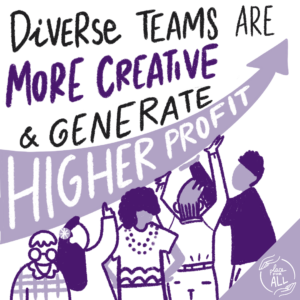
  • A diverse workforce increases emotional intelligence, creativity and productivity in any workplace.
  • A diverse workforce builds trust with minority customers and service users.
  • Hiring more Roma is a smart economic choice, improving growth and combatting demographic change.


Through the Place for All campaign, ERGO Network will therefore raise employers’ awareness of the benefits of an inclusive and diverse workplace as well as of the motivation and competencies of young Roma. It will also highlight employers’ good practices in diversity and inclusion and encourage others to follow their example.

How will the campaign work?

The main focus of the campaign will be on employers who have been approved by ERGO Network members as inclusive employers and who sign the Place for All pledge, reaffirming their commitment to making their workplace a place for all. These employers will be awarded a badge and will be promoted by the ERGO Network. This will include sharing of their good practices, providing further support and generally giving them visibility. In the future, once a group of employers in several countries has been awarded the badge, ERGO Network members can furthermore organize peer learning, networking and exchanges between these employers.

To not only highlight employers, but also Roma employees who overcame the huge hurdle of antigypsyism – manifesting itself in poverty, lack of education and discrimination by employers – we will at the same time feature inspiring stories of Roma employees from different countries.

Follow the campaign on its Facebook page and ERGO Network’s social media accounts to get to know the first awarded employers and inspiring stories!

Do you know an employer who fits our profile? Contact info@staging.ergonetwork.org or ask them to sign up for the badge directly on our website: www.ergonetwork.org/employment.


The campaign has been made possible thanks to the financial support of the European Commission’s EaSI Programme.

Covid-19 – extreme hardship and solidarity in these times of crisis

Covid-19 – extreme hardship and solidarity in these times of crisis

The Covid-19 crisis affects everyone, and the virus does not differentiate between people; anyone could catch it, no matter how rich or poor. Most people suffer under lockdowns, most people are scared and many will need income support in the coming weeks.  However, while many people are confined in their comfortable homes and can use their laptops to continue working or learning from home, marginalized communities such as the Roma are facing extreme hardship in this time of crisis.

Many Roma across Europe work in the informal sector, for example in street markets or digging in landfills. Now that they are not allowed to leave their homes, they are left without any income, have no savings and do not receive unemployment benefits, or any other form of social assistance. Today in Europe, hunger is a real. Thousands of people are left without food.

Many Roma live in poor housing in segregated communities, without running water in their homes or sufficient space to self-isolate. Roma are already statistically with poorer health, so more at risk in this crisis. And while other children continue their schooling through online classes, this is not possible for many Roma children simply due to a lack of internet access in their neighbourhoods, and of PCs in their homes.

And finally, adding to these devastating living conditions, comes widespread antigypsyism: Roma communities facing stricter restrictions than other neighbourhoods, Roma travelers being controlled more often and Roma even falsely blamed of carrying the virus. Governments are using the health threat to push forward racist policies, when they should do exactly the opposite and pay special attention to vulnerable groups.

ERGO Network together with its partners is asking governments to remain vigilant against racist acts and calls on the European Commission to ensure that the newly released EU Solidarity Fund to respond to the crisis fully takes into account the needs and rights of Roma and other marginalized communities.  Member States must guarantee that poor and marginalized communities have access to clean drinking water, food, health care and housing, as well as to reliable information. If these communities are not supported now, the social crisis that will follow the health-crisis will haunt Europe for a long time to come. (Read here our joint letter to EU Commissioner Helena Dalli with the ERRC and several other (pro-)Roma civil society organisations).

At the same time, ERGO Network members on the grassroots level are putting extraordinary levels of energy into supporting the people on the ground and show a spirit of solidarity that others can learn from! Here are just some examples of their great initiatives:
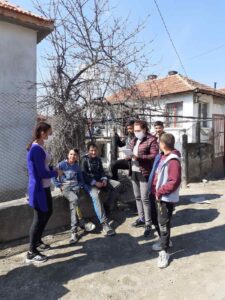
Integro Association, Bulgaria

Immediately after the outbreak Integro established a coordination group of NGOs and relevant government representatives. Through this group they can convey needs and difficulties identified on local level and propose solutions, with a direct contact to the National Headquarter for combating the Corona-virus infection.

All health and education mediators of Integro are visiting Roma neighbourhoods to provide information, monitor quarantine and refer people to specialists. They also distribute schooling materials for children who cannot take part in online learning. At Integro’s suggestion, many mediators are also included in municipal coronavirus teams and receive protective equipment. As the equipment is not sufficient, Integro is looking for suitable fabrics so that the women at the organisation’s Roma Mother Centres can sew masks for mediators and activists.  Integro also translated a brochure and video from the Roma Standing Conference on preventing the coronavirus infection from Bulgarian and Romanes into Turkish, the language of many Roma communities in Bulgaria. 15,000 brochures of the brochure have been printed!

In addition, the association proposed urgent measures to be taken by local authorities to support Roma communities, and many of them complied and provide for example food packages and water tanks. Integro also discusses with the Ministry of Education to provide internet access, and with IT companies to provide old computers to the  communities so that children can participate in online learning programmes. Last but not least, they closely monitor whether rights of the Roma are violated.
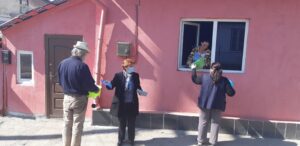
Nevo Parudimos, Romania

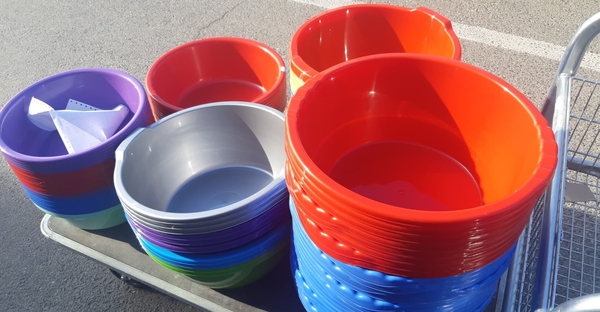
Our members from Resita in Romania convinced the municipality to distribute weekly food packages to poor families and have already distributed 160 wash basins, antibacterial soap and disinfectants to families in the marginalized neighbourhoods of Mociur, Dealu Mare and Câlnic, where many Roma live.

Nevo Parudimos has also agreed with a textile factory to produce 1000 face masks for people in need. Nevo Parudimos will provide the material and the factory will produce the masks free of charge. The European Solidarity Corps volunteers hosted by Nevo Parudimos are spending their days sewing masks in self-isolation. Nevo Parudimos is keeping their spirits up by daily group calls and online activities.

Upre Roma, Italy

In Northern Italy, where the situation is worse than anywhere else in the world, our member Upre Roma is putting all efforts into activating political contacts and lobbying all administrative and political levels to provide basic necessities for poor communities.  40,000 poor people, many of them Roma, are left without food. No NGO would have the means or would even be allowed to support all these people, so political action is needed. Upre Roma has also started a petition to demand access to clean water for Roma camps. At the same time, the activists are constantly on the phone, informing people about how to access their rights, how to get support etc.

Butterfly Development, Hungary

Pro Cseherat is running a successful community gardening programme with Roma communities for many years already. In times of confinement and lack of financial resources, self-reliance through gardening can take a great burden from poor families. Pro Cseherat is therefore developing a distant learning programme through Facebook that explains how to start one’s own vegetable garden.

Slovo 21, Czech Republic

In this exceptional situation Slovo 21 is intensively communicating with members of the Roma Women’s group Manushe, which organizes Roma women through sharing Facebook posts and events. Together they coordinate the sewing of facemasks, which are distributed for free within their localities and to hospitals. Face masks are obligatory to wear in Czech Republic when leaving the house, for example to buy food or seek medical attention.

Besides these concrete examples, all member organisations focus in particular on providing information and lobbying their governments. They explain new rules concerning self-isolation, inform where to get financial assistance, give mental health support and provide essential hygiene tips. They are lobbying their governments to provide extra support to Roma communities, to stop evictions and to end discrimination of marginalized groups who suffer disproportionally under the crisis. None of us could do anything to mitigate the crisis on our own. Coordination is needed, and Roma NGOs need to be included in crisis response teams to ensure Roma are not left out of any support measures.

Do you want to share what you are doing? You can send information about your activities to info@staging.ergonetwork.org and we will share it with other activists!

Do you observe rights violations against Roma in this crisis? Please provide information to the Fundamental Rights Agency, which is investigating the impact of Covid-19, by sending information to frp@fra.europa.eu.

Do young people in your organisation are organising solidarity actions? ERGO Network is partnering with FEMYSO for the campaign #OutbreakofGenerosity which offers a great guide for young people’s work during this crisis. http://outbreakofgenerosity.org/


ERGO Network feedback on Commission Roadmap

ERGO Network written feedback on the Roadmap published by DG Justice on 17 Feb 2020. An initiative setting out the EU post-2020 Roma equality and inclusion policy

ERGO strongly welcomes the Roadmap by the European Commission setting out the post-2020 EU Roma equality and inclusion policy, which builds on the previous EU Roma Framework for National Roma Integration Strategies (NRIS).

The major challenge of the previous EU Framework was its non-binding character, which gave the liberty to Member States to decide whether and how to design their NRIS. Therefore, in its written feedback, ERGO Network called for a comprehensive and binding EU Strategy for Roma inclusion and antigypsyism, which has concrete minimum standards and ambitious targets, including overall common indicators and measuring impact, as well as a joint monitoring process between Member States and the European Commission. The new Strategy should be fully integrated in the European Semester, and work in synergy with the successor of Europe 2020, the European Pillar of Social Rights, and the Sustainable Development Goals.

ERGO demanded for a post-2020 EU Roma Strategy and NRIS that put combating antigypsyism at their centre and ensure cross-cutting priorities within, such as antigypsyism, intersectional discrimination, poverty, material deprivation, housing evictions, discrimination, child protection, gender mainstreaming, LGBTQI+, environmental racism, diversity within Roma groups, Roma participation, Roma identity and cultural heritage.

Combating antigypsyism through the existing anti-discrimination legislation is not enough. The four key areas of NRIS should end any form of structural antigypsyism, including all forms of segregation, forced evictions, environmental injustice and other manifestations of prejudice, including in education, employment, health and housing and other relevant areas mentioned above. The next EU Roma Strategy must demand all Member States to formally recognise antigypsyism as a specific form of racism against Roma beyond the general ground already embedded in the EU and national legislation related to “race or ethnicity”.

ERGO Network calls for introducing EU and national measurable anti-discrimination indicators in the key areas of education, employment, housing and health, in addition to social inclusion programmes, including ambitious targets and concrete objectives, that must be monitored on an annual basis. Indicators should also be structural, showing legislative, policy and practical changes and their impact on institutions as a way to address structural and institutional racism and discrimination. In addition, indicators should meet the Sustainable Development Goals 2030, Social Pillar etc. The Strategy should also contain a clear methodology on how Member States can collect ethnic data on Roma, in line with Race Equality Directive and GDPR.

Finally, ERGO demanded that the Roadmap ensures Roma participation at all levels throughout the entire process, in line with Art 11 of the Treaty on European Union (TEU).

For more information, please contact Jamen Gabriela Hrabaňová, ERGO Network Director, at g.hrabanova@staging.ergonetwork.org.

`
Christine Sudbrock – Page 17 – ERGO Network

By continuing to use the site, you agree to the use of cookies. more information

The cookie settings on this website are set to "allow cookies" to give you the best browsing experience possible. If you continue to use this website without changing your cookie settings or you click "Accept" below then you are consenting to this.

Close