Amaro Drom: Jekhipe – Together

Jekhipe – Together

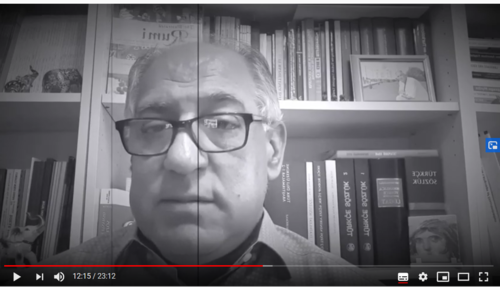
German ERGO Network member Amaro Drom produced two interesting online lectures by Prof. Dr. Hristo Kyuchukov that are dedicated to 8th April, the International Romani Day and 16th May, the Romani Resistance Day. These lectures were recorded within the framework of the project „Jekhipe – Together” in video format due to restrictions caused by COVID-19 epidemics. Both lectures are recorded in Romani language and subtitles in English and German are also provided in order to cover a wide audience.

Roma equality as part of the EU accession process

Civil society letter addressing Roma equality as part of the
EU accession process and the EU response to the Covid-19 pandemic to Olivér Várhelyi, European Commissioner for Neighbourhood and Enlargement

On behalf of a European coalition of Roma and pro-Roma organizations, we call upon you and the European Commission to prioritise the fundamental rights and equality of Roma and the protection of the most vulnerable when redefining the EU priorities and investment regarding the Enlargement and Neighbourhood policy in the context of the ongoing Covid-19 pandemic. The Covid-19 pandemic has dramatically exposed the structural exclusion, inequality and vulnerability of Roma communities.

The EU-Western Balkans Zagreb Summit on May 6, 2020 represents an important occasion to reaffirm the commitment with a strong political signal of the European Commission that Roma equality and inclusion constitutes an integral and unegotiationable part of the EU accession process. We urge the European Commission and all leaders of EU Member States and Enlargement and Neighbourhood countries to address the following three priorities in order to ensure the equal treatment, safety, well-being and equality of Roma communities – taking into account also their diversity – and thereby contribute to ameliorating the pandemic situation for all Europeans:

1. An immediate European humanitarian response should coordinate and allocate sufficient resources to all vulnerable groups, in particular marginalized Roma communities and all racialized minorities, making sure they are reached in the enlargement and neighbourhood countries.

2. The mid- and long-term EU Covid-19 response in the Western Balkans, Turkey and Neighbourhood countries should fully take into account the needs of vulnerable Roma communities, and define them as a priority group in all mainstream policies and measures, including in economic aid and recovery, housing and infrastructure, social protection, health care, education and employment.

3. A post-2020 “EU Strategic Framework for Roma Equality and Inclusion” – to be finalized and launched during the German EU Presidency – must constitute a top priority in the Covid-19 response. This EU Strategic Framework should fully involve the Enlargement and Neighbourhood countries, and it should be established on an anti-racism approach, by recognising the impact of antigypsyism as a decisive barrier for Roma inclusion. The fight against antigypsyism shall complement and not replace the inclusion approach.

Mr. Commissioner Várhelyi, your leadership is important to address the increased inequalities and the widening gap between Roma and non-Roma in the Enlargement and Neighbourhood countries, due to the Covid-19 pandemic.

We are currently witnessing a growing humanitarian crisis that affects Roma and other vulnerable minority communities. We recognize the current efforts of municipalities, national governments and international stakeholders to provide humanitarian assistance, and underline especially the important role and contribution of the Romani civil society in these countries; but much more remains to be done.
As such, the short-term humanitarian assistance will not be enough to overcome the deep structural problems. The Covid-19 pandemic especially exposed the structural manifestations of antigypsyism regarding the basic living conditions: the residential segregation, forced evictions, lack of access to clean water and sanitation, and the denial of basic services. The strong dependency of many Roma on insecure, precarious work, and the lack of access to the qualified labour market contributed profoundly to the current humanitarian crisis.

Therefore, we underline the urgency for an increased investment and political commitment to Roma equality, economic and social justice, and combating antigypsyism. Only with long-term investments in infrastructure, improved living conditions and smart and flexible economic solutions in employment and entrepreneurship, quality education, a clean environment, and fighting poverty and antigypsyism starting now and throughout mid-term measures we can viably contribute to solving the most stringent problems of the Roma communities.

The European Union has to ensure that both short-term as well as long-term measures include and specifically address the situation and position of Roma in the Enlargement and Neighbourhood countries and bring positive benefits to them.

Joint statement on behalf of
Roma Active Albania, Otaharin (Bosnia and Herzegovina), Voice of Roma, Ashkali and Egyptians (Kosovo), Advancing Together (Kosovo), Phiren Amenca (Montenegro), RROMA (North Macedonia), Romalitico (North Macedonia), Romaversitas (North Macedonia), Forum Roma Serbia (Serbia), Association of Coordinators for Roma Issues (Serbia), Zero Discrimination Association (Turkey), Central Council of German Sinti and Roma (Germany), ERGO Network (Belgium).

Download the letter as pdf.

Further information and specific recommendations:
Joint CSO statement of March 31, 2020: Alarming situation of Roma communities in the Western Balkans and Turkey through the COVID-19 pandemic
ERGO Network policy recommendations of April 30, 2020: The effects of Covid-19 on Roma communities in EU Member States and Enlargement and Neighbourhood Countries
Post-2020 Roma Policy Coalition statement of March 16, 2020: Towards a EU post-2020 Roma equality and inclusion policy; Civil Society response on the Roadmap of the European Commission


EU Recovery plan – the case of Roma

The effects of Covid-19 on Roma communities in EU Member States and Enlargement and Neighbourhood Countries

Throughout Europe, most governments have failed to design or implement specific measures to address the vulnerability of Roma during the coronavirus pandemic. With Commissioner’s Dalli statement on the importance of prioritising the protection of fundamental rights and racialised minorities during Covid-19, and the Coronavirus Response Investment Initiative Plus and EU Solidarity Fund, Member States were provided the needed support to address the impact of the pandemic crisis on the economy and society, including the most vulnerable.

Despite the massive lack of data on the situation of Roma during the pandemic, reports from our members and partner CSOs indicate a huge, disproportionately negative impact of both the pandemic and the security measures associated with it on Roma communities across Member States, Enlargement and Neighbourhood Countries, aggravated by long-term systemic discrimination and antigypsyism.

ERGO Network has issued two papers addressing this situation:

The first, “EU Recovery Plan: The case of Roma in the Member States, Enlargement and Neighbourhood Countries” offers a set of concrete policy measures both urgent and mid-term to the European Commission.

The second document provides insights into the situation of different Member, Enlargement and Neighbourhood States.

ERGO Network will continue to closely monitor the impact of the crisis.

Join our team! European Solidarity Corps in ERGO Network

Call for European Solidarity Corps placement in ERGO Network

ERGO Network is looking for an enthusiastic and active young Roma who would like to join our office team in Brussels for 12 months in the framework of the European Solidarity Corps.

  • When: September 2020 to August 2021
  • Where: ERGO Network office in Brussels, Belgium
  • Who: Young Roma professional between 18 and 30
  • Deadline for applications: 30 June 2020

During the 12 months in ERGO, you will learn about international advocacy, help us organise international meetings and events and get actively involved in Roma activism and international Roma networks in Brussels.

Your main tasks will be:

  • Communication and visibility: contribute to the update of the ERGO Network and RomaReact websites and social media channels; development of creative approaches and publicity work to promote our activities and mission and a positive image of Roma.
  • Researching and reporting: Assisting ERGO’s research work e.g. on cases of inequality and antigypsyism all over Europe.
  • Advocacy and policy: Support ERGO staff in EU advocacy work on poverty reduction, social inclusion and antigypsyism; attend debates, hearings and meetings with other stakeholders to challenge stereotypes and racism, build partnership with Roma and non-Roma organizations from Belgium and other European countries.
  • Meetings and seminars: Assist in the organisation of meetings, events and international seminars of ERGO Network and its partners, e.g. our Advocacy Academy, Annual Members Meeting etc.

Your profile:

  • Young Roma between 18 and 30 years living in an EU member state or Macedonia or Turkey
  • Good English language skills, both oral and written
  • Computer literacy (experience with Microsoft office package and social media)
  • High motivation to learn more about Roma activism and advocacy work and to contribute to a small but very active European NGO
  • Previous involvement in Roma or (pro) Roma NGOs will be considered an advantage
  • Reliable, well organised and with attention to detail

You will work not more than 38 hours per week, including your language course. Working hours will be from Monday to Friday between 9:00 – 17:00. However, working hours can be adapted to your needs and the activities you will be involved in.

We aim to support young people who are enthusiastic about our cause and want to gain experiences that can be later transferred to national or local NGOs. We especially welcome applications from people who are motivated to challenge stereotypes, antigypsyism and racism and who show an open attitude for a unique learning and life experience, as well as a volunteer spirit of creativity, initiative, responsibility and independence.

We offer:

  • An allowance of 1049 Euro that includes money for accommodation, meals, local transport, language course and pocket money
  • Travel costs to Brussels (a lump sum depending on the distance to Brussels)
  • Health insurance for the whole year
  • On-arrival training with other Solidarity Corps volunteers, and lots of learning and development opportunities with ERGO Network and our partners
  • An exciting and unforgettable experience, working for an international organisation in an international city!

How to apply:

Please send your motivation letter (1 page) and CV (max 2 pages) by 30th June 2020 to info@staging.ergonetwork.org.

Do not hesitate to contact us for more information.

Mustafa Jakupov: m.jakupov@staging.ergonetwork.org


Post 2020 EU Framework must be top priority in Covid-19 response

Appeal to the European Commission and the European Council to make the post-2020 EU Strategic Framework for Roma Equality and Inclusion a top priority in its Covid-19 response

Download the pdf version.


April 22, 2020

Honorable President of the European Commission, Ms Ursula von der Leyen

Honorable President of the European Council, Mr Charles Michel

On behalf of the European coalition of Roma and pro-Roma organizations, we call on the European Commission and the European Council to prioritise fundamental rights and the protection of the most vulnerable when redefining the EU agenda in light of the ongoing Covid-19 pandemic. In particular, we urge EU leaders to address the following three priorities in order to ensure the equal treatment, safety, well-being and equality of Roma communities and thereby contribute to ameliorating the pandemic situation for all Europeans:

  1. An immediate European humanitarian response should coordinate and allocate sufficient resources to all vulnerable groups, in particular marginalized Roma communities and all racialized minorities, making sure they are reached in all Member States and enlargement countries.
  2. The European Covid-19 Recovery Plan should fully take into account the needs of vulnerable Roma communities, and define them as a priority group in all mainstream policies and measures, including in economic aid and recovery, social protection, health care, housing, education and employment.
  3. A post-2020 “EU Strategic Framework for Roma Equality, Social and Economic Justice and Combating Antigypsyism” must constitute a top priority in the Covid-19 response of the EU, Member States and Enlargement countries in order to comprehensively address the structural exclusion, inequality and vulnerability of Roma communities, that was dramatically exposed by the Covid-19 pandemic.

The Post-2020 European Roma Coalition signals its concerns about the negative consequences of a possible delay of human and minority rights initiatives, including the post-2020 EU Roma Strategic Framework, due to COVID-19. Such a delay will have a tremendously negative effect on the human rights and protection of vulnerable groups such as Roma. The Coalition calls on the European Commission and Council not to risk the safety, well-being and equality of 12 million Roma in the European Union and Enlargement Countries in a hasty decision to save resources.

Since the outbreak of Covid-19, under the social distancing and public health measures, many Roma working in the informal sector lost their sources of daily income (such as working in private fields, collecting and selling scrap metal, small traders, market sellers; those working in the arts and culture, as musicians, cultural producers, artisans etc.). Rampant antigypsyism, including hate speech by the media and racist violence against Roma is increasing rapidly in many Member States and Enlargement Countries, particularly in Austria, Bulgaria, Hungary, North Macedonia, Romania, Serbia and Slovakia. In addition, measures of confinement are being applied disproportionately by some authorities, who argue that Roma communities are responsible for spreading the virus more rapidly,  (e.g., in Bulgaria and Romania mayors organised checkpoints to control the movement from and to Roma neighbourhoods, including by sealing checkpoints with concrete in Kazanluk, Bulgaria to make the neighbourhood accessible only through the checkpoints).

There is a real danger that, as we move globally deeper into an imminent economic and humanitarian crisis, the needs and concerns of minority groups will be overlooked by governments. European and international efforts to curb the spread of the coronavirus and mitigate its long-term economic and social consequences should start with addressing racial inequalities and achieve social justice for all.

Now more than ever, Europe needs a prompt, robust and binding post-2020 EU Roma Strategic Framework for Roma Equality, Inclusion and Combating Antigypsyism that prioritises minimum adequate standards, targets and indicators in the areas of education, employment, health, social protection, housing and fighting antigypsyism, and that includes equally Enlargement and Neighborhood Countries to guarantee a level playing field in the access to basic rights and services. A delay in the adoption of the EU Roma Strategy because of the Covid-19 pandemic is not justified, since social inequalities and racism against Roma to date are now impacting disproportionately on Roma who live in squalid conditions, without running water, without income and food supplies, and at a much higher risk of infection and spread of the coronavirus. Prioritising the EU Roma Strategy is not only a moral and human rights duty towards Roma, it is also the right way to contain and minimise the impact of the pandemic for millions more citizens and residents that need EU support to push their Member States and Enlargement Countries to take action. [Follow the CSO response on the Roadmap] Moreover, delaying the adoption of the EU Roma initiative creates a risk that the future European framework as well as the consequent national Roma inclusion strategies will not be adequately integrated into the designing and implementation of the new cohesion policy or the post-crisis recovery policy.

The post-2020 European Roma Coalition with the support of

Central Council of German Sinti and Roma

Center for Policy Studies, Central European University (CEU)

European Network Against Racism (ENAR)

European Roma and Travellers Forum (ERTF)

European Roma Grassroots Organisations (ERGO) Network

European Roma Information Office (ERIO)

European Roma Institute for Arts and Culture (ERIAC)

European Roma Rights Centre (ERRC)

Fundacion Secretariado Gitano (FSG)

International Roma Youth Network, TernYpe

Phiren Amenca International Network

Roma Active Albania (RAA)

Roma Entrepreneurship Development Initiative (REDI)

`
Christine Sudbrock – Page 16 – ERGO Network

By continuing to use the site, you agree to the use of cookies. more information

The cookie settings on this website are set to "allow cookies" to give you the best browsing experience possible. If you continue to use this website without changing your cookie settings or you click "Accept" below then you are consenting to this.

Close