Call for Consultant – Roma Inclusion, Participation & Equality Index (RIPE) 

Call for Consultant – Roma Inclusion, Participation & Equality Index (RIPE) 

ERGO Network is seeking a consultant to contribute to research and activities related to Roma Inclusion, Participation & Equality. The consultancy will run for approximately six months (from July 2025) and will require a comprehensive study and coordination across multiple thematic areas, covering several European countries. The work will combine desk research with grassroots-level data collection. 

ERGO Network 

ERGO Network (www.ergonetwork.org) brings together more than 30 members from across Europe and supports organisations with a common focus on Roma grassroots empowerment and equal citizenship to combat antigypsyism. We mobilise and connect organisations and individuals who share our values – active citizenship, shared responsibility, and passion – to strengthen Roma civil society involvement in decision-making at local, national, and European levels, and to address gaps in policies targeting Roma communities. 

Our office is based in Brussels. 

Background 

The Roma Inclusion, Participation & Equality Index (RIPE) is a new tool developed by ERGO Network to address systemic discrimination against Roma communities in various European states. RIPE offers a unified framework to assess and compare the situation of Roma populations across different political, social, and economic contexts. 

Inspired by established human rights mechanisms, the Index systematically assesses a broad range of rights and indicators, ensuring comprehensive coverage from human rights to socio-economic conditions. It uses empirical data to advocate for policies that prevent discrimination and promote Roma inclusion, equality, and participation, while investing in grassroots-level engagement. 

Historical Context and Ongoing Challenges 

The Roma are Europe’s largest ethnic minority and have faced severe persecution and marginalisation both historically and today. Despite various national and international frameworks, many Roma continue to live in poverty and lack access to basic services such as employment, education, healthcare, and housing. 

This discrimination must be understood within the scope of Antigypsyism — a specific, violent, and persistent form of racism rooted in ideologies of racial superiority. It manifests as dehumanisation, institutional racism, hate speech, violence, exploitation, stigmatisation, and structural exclusion. 

Recent surveys, such as those by the European Union Agency for Fundamental Rights (FRA), underscore the continued challenges Roma face in housing, employment, education, hate speech, and hate crimes, exacerbated by deeply entrenched antigypsyism. 

Importance of the ERGO Index 

The RIPE Index systematically captures and analyzes data on the social conditions of Roma, their experiences of discrimination, and their access to opportunities across European States. This tool: 

  • Standardised Measurement: Facilitates comparisons and tracking progress across countries. 
  • Shapes Policy: Provides detailed data to inform national and international policies. 
  • Promotes Inclusion and Rights: Identifies areas where Roma rights are inadequately protected and advocates for inclusive policies. 
  • Raises Awareness and Engagement: Enhances dialogue and cooperation among Roma communities, civil society, and governments. 
  • Directs Resource Allocation: Ensures investments in Roma inclusion projects are targeted effectively. 
  • Creates Policy Nexus: Correlates instances of discrimination with policy outcomes, refining strategies for future policies. 

Categories in the ERGO RIPE Index 

  • Legal Framework 
  • Policy Measures 
  • Funding 
  • Data Collection and Monitoring 
  • Civil, Political Participation & Decision-Making 
  • Access to Justice 
  • Hate Speech & Hate Crimes 
  • Truth & Reconciliation: Antigypsyism, transitional justice processes, memorialization, and  
  • historical recognition. 
  • Additional Considerations (eg, migration policies) 
  • Media and Public Perception 

The countries covered by the consultancy services requested are Croatia, France, Hungary, Ireland, Moldova, Montenegro, Poland, Serbia, Türkiye, and Ukraine. 

Key Tasks 

  • Conduct research and contribute to an analysis report based on the ERGO Network’s methodology. 
  • Oversee national-level data collection by Roma civil society representatives. 
  • Provide data and analysis related to antigypsyism and discrimination standards. 
  • Conduct desk research and synthesise findings with national input. 
  • Compile monitoring results into a comprehensive report. 

Consultant Profile 

  • Proven experience in research and methodology development. 
  • Strong analytical and report writing skills. 
  • Knowledge of relevant human rights standards for this call and awareness of Romani civil society. 
  • Fluency in English (speaking and writing) is essential. 

Timeframe and Budget 

  • Duration: July 2025 – December 2025 
  • Budget: Up to € 10,000 (including VAT) 

How to Apply 

Application Requirements 

  • Detailed CV demonstrating clearly that the tenderer has relevant experience. 
  • Sample of previous relevant work. 
  • Price offer for the total consultancy duration 

Send your application to i.mihalache@staging.ergonetwork.org by July 3, 2025, 23:59 CET. For further questions and more information on the methodology and deliverables, contact Isabela Mihalache at i.mihalache@staging.ergonetwork.org  
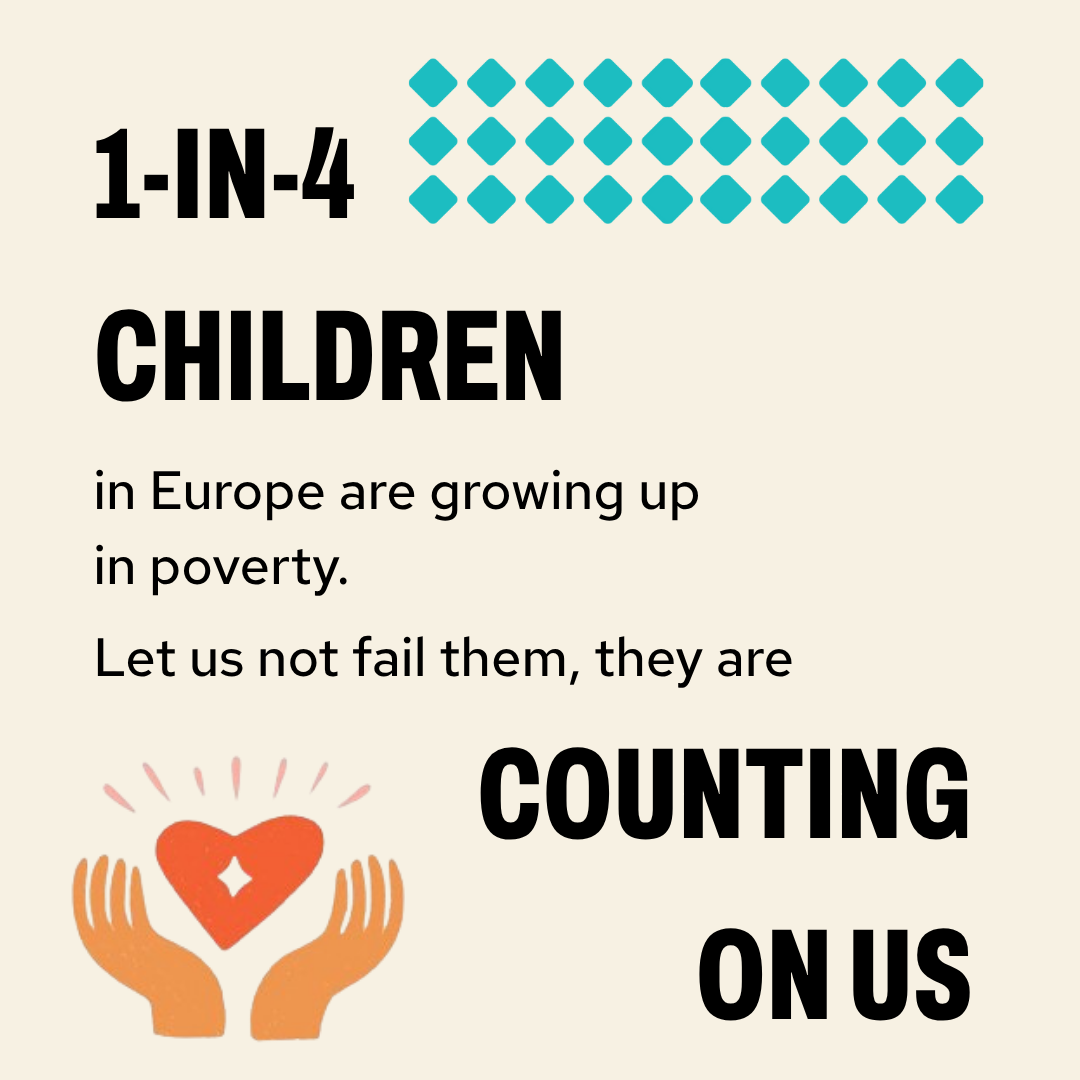
One in four children in the EU is at risk of poverty or social exclusion.

One in four children in the EU is at risk of poverty or social exclusion.

This reality affects over 20 million children across Europe and represents a serious social emergency and a threat to the EU’s long-term cohesion, prosperity, and democracy.

As the European Union enters a new political cycle and prepares the next Multiannual Financial Framework (MFF), civil society urges leaders to take necessary actions. Children must be placed at the core of Europe’s future agenda. 

Together with leading child rights and social justice organisations, we have issued a joint letter to EU leaders, calling on them to:

  • Reinforce the European Child Guarantee
  • Integrate child poverty into a stronger EU Social Agenda
  • Secure robust, long-term investment in the next MFF

Child poverty is widespread and systematic failure, affecting children in every EU Member State. While the context may differ across countries, the outcome is universally unjust. Their rights are not being fully respected, protected, and fulfilled.

As highlighted in the Draghi Report on EU competitiveness, Europe’s ability to compete globally must go hand in hand with equity and inclusion. A resilient and competitive Europe protects and empowers its children.

Investing in children is not just a moral responsibility. It is a strategic necessity. If the EU fails to act now, the costs—social, economic, and political — will be immeasurable and irreversible.

What does it say about the European Union when one of the most developed regions in the world cannot guarantee a life of dignity and opportunity to all its children? What future are we shaping if entire generations are left behind?

Childhood poverty violates rights. It restricts potential. It weakens democracy. Therefore, we need to protect children and invest in their futures. 

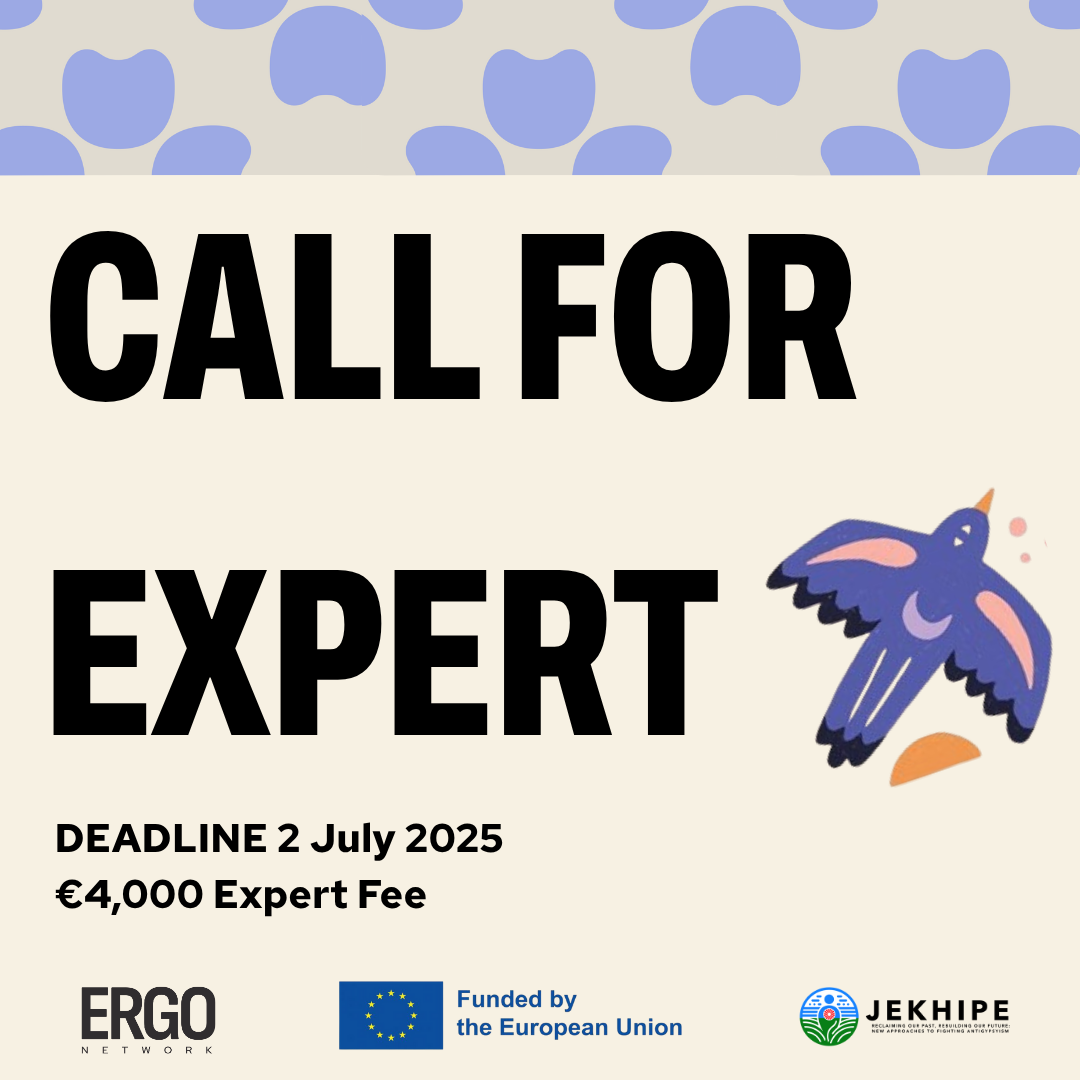
Call for Expert – Development of Civil Society Toolbox on Countering Antigypsyism 

Call for Expert – Development of Civil Society Toolbox on Countering Antigypsyism 

Deadline for Applications: 2 July 2025 

The European Roma Grassroots Organisations Network (ERGO), in cooperation with the European Roma Institute for Arts and Culture (ERIAC) and the Centre for European Policy Studies (CEPS), is seeking an experienced expert to develop a Civil Society Toolbox on Countering Antigypsyism, with a specific focus on: 

  • Promoting positive narratives about Roma 
  • Formulating counter-arguments to antigypsyist rhetoric
  • Raising awareness of Roma history as a tool to combat antigypsyism  

This publication is part of a broader effort to strengthen civil society’s capacity to counter antigypsyism and promote equality, dignity, and historical awareness. 

Objectives and Scope 

The purpose of this consultancy is to develop a comprehensive Civil Society Toolbox on Countering Antigypsyism, aimed at equipping Roma and pro-Roma civil society organisations, youth and educational initiatives, and human rights NGOs across Europe. 

The specific objectives of the publication are to: 

  • Promote positive narratives: Provide strategies for creating and amplifying authentic, affirmative, and counter-biased representations of Roma communities in public discourse, education, media, and advocacy work
  • Counter antigypsyist rhetoric: Develop clear, practical counter-arguments and framing techniques that civil society actors can use to challenge anti-Roma narratives in political, institutional, and public arenas. 
  • Offer accessible guidance on Roma history: Deliver well-researched, engaging content on key aspects of Roma history, emphasising its relevance in contemporary human rights education, commemoration efforts, and awareness campaigns. 

The Toolbox will be published in English and will include executive summaries translated into Romani and all project languages. It will be distributed digitally to at least 2,000 recipients—civil society partners, educational institutions, public authorities, and EU-level stakeholders—during the Jekhipe project implementation period. 

Scope of Work 

The expert will be responsible for drafting a 30 to 40-page digital publication that provides practical tools, approaches, and examples. The Toolbox should: 

  • Be practical and user-oriented, easily understood and applied by civil society organisations of various sizes and capacities 
  • Incorporate intersectional, rights-based, and community-informed approaches, reflecting the lived experiences and diverse identities within Roma communities 
  • Draw on existing resources, case studies, and best practices from across Europe to ensure contextual relevance and applicability 
  • Ensure the content is actionable and adaptable, enabling users to apply the tools in local, national, and European-level advocacy and education efforts 

Expected Deliverables 

  • Draft outline of the toolbox structure and content – by 11 July 2025 
  • Draft version of the toolbox – by 25 July 2025 
  • Final version incorporating feedback from ERIAC, ERGO, and CEPS – by 8 August 2025 

Budget 

A maximum of €4,000 is available as an expert fee. 

(Design and translation will be managed separately through a dedicated budget.) 

Candidate Profile 

We are seeking an expert with the following qualifications: 

  • Proven knowledge of Roma rights, antigypsyism, and Roma history 
  • Strong understanding of human rights education, narrative framing, and counter-discourse 
  • Experience in developing practical, engaging, and accessible tools or similar materials within a human and civil rights context 
  • Experience working with or within Roma civil society 
  • Excellent writing and research skills in English 

Application Process 

Interested candidates are invited to submit the following by 2 July 2025 to i.mihalache@staging.ergonetwork.org with the subject line: Call for Expert – Development of Civil Society Toolbox on Countering Antigypsyism: 
  • CV highlighting relevant experience 
  • Short motivation letter (max. 1 page) outlining your interest and proposed approach 
  • 1–2 samples of relevant publications or similar work (in English) 

Timeline 

  • Deadline for applications: 2 July 2025 
  • Selection and contracting: 7 July 2025 
  • Work period: 7 July – 8 August 2025 
  • Final deliverable due: 8 August 2025 

ERGO Network General Assembly 2025

ERGO Network General Assembly 2025

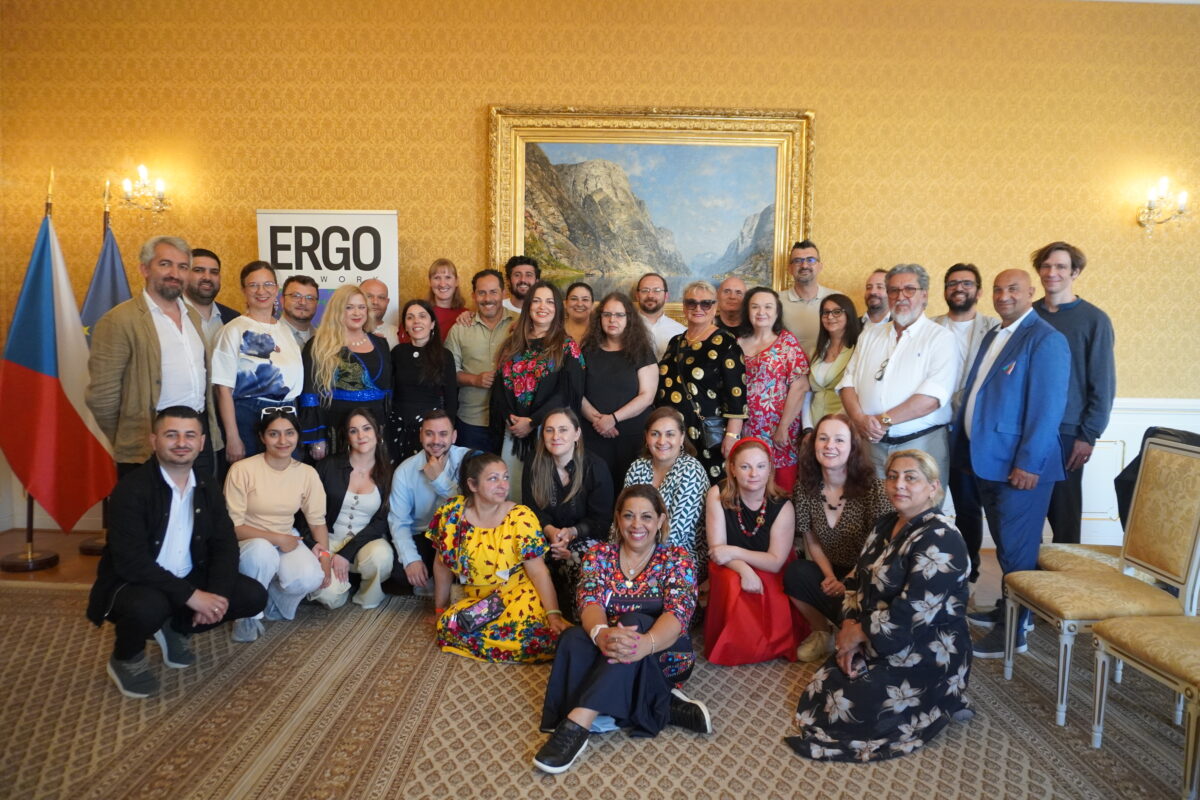
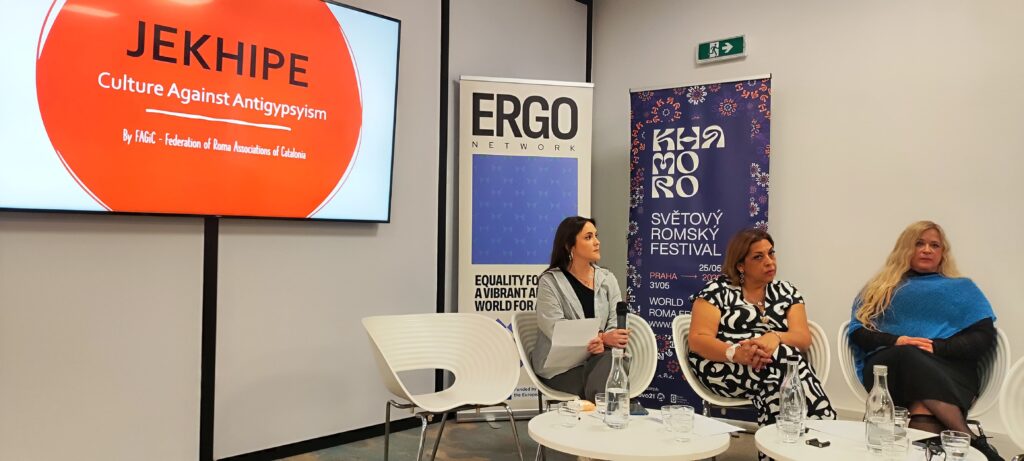
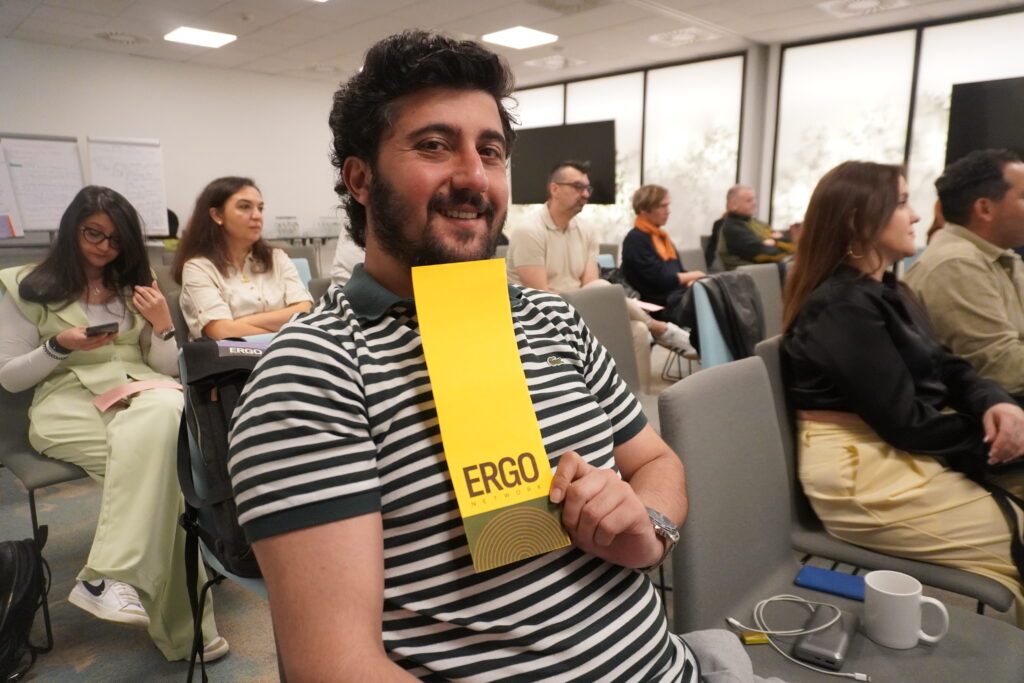
We held our annual General Assembly on 28-30 May 2025 in Prague, Czechia. This year’s Assembly, hosted by Slovo21 and RomanoNet, was particularly important for us as our members and staff gathered to explore ERGO Network’s new branding and experience Roma culture during the Khamoro Festival organised by Slovo21. 

The assembly brought together our members from 25 European countries. During the fully packed days, we engaged in discussions, shared the news, projects, and ups and downs. This General Assembly was a little different from the rest, because we also brought in some external meetings. In addition to Khamoro, we also met with the Czech Governmental Council for Roma Affairs, a branding agency, and new participants coming for the Jekhipe conference. All of this is below.

From Visual Identity to Cultural Activism

The first day of the General Assembly was dedicated to sharing members’ news and exploring ERGO Network’s new branding and visual identity. We were lucky to have Mirna Silajdzic, the founder of Love Your Mother consultancy, who was behind the rebranding process of ERGO Network, but also the branding of Roma Week and our new ROVA project. Mirna could share her firsthand expertise and motivated our members to think of visual identity as a tool to communicate their work in the best possible way. 

The day continued with the Jekhipe project “Using Culture to Fight Antigypsyism” in cooperation with Slovo 21. The official event began by focusing on the Czech context, where various activists from across the country shared their work and experiences. Later, the discussion shifted to the European context, where our members, Saska Jovanovic from Italy, Bianca Galusca from Spain, and Nina Trollvige from Sweden, spoke about the specifics of their work in their respective countries. And this is not all! To conclude our day with even more Roma culture, we attended the Khamoro festival at La Fabrika and enjoyed beautiful music performances by bands from Czechia, Greece, and Spain. 

Elections and New Members

The next day, the assembly continued with a statutory session, during which our members voted on the Strategy of the ERGO Network until 2030, as well as the Annual and Financial reports for 2024. Our Network grew bigger and stronger as we also elected the new associate members: Ara Art (Czechia) and 1Hungary (Hungary). We also welcomed the European Media People organisation to become our new Friend of ERGO. 

And our associate members from last year – Romni APS (Italy), Suomen Romaniyhdistys (Finland), and Trajosko Drom (Sweden) – were promoted to the full member status and finally could also participate in the voting.

Festival KHAMORO Parade

The definite highlight of our assembly was the Festival KHAMORO parade, which started at Wenceslas Square in the Old Town Square of Prague. It was unforgettable to see the Roma music and dancing from all across Europe filling the city of Prague, and we were so proud to get to be a part of it and share our identity with the world. You can see some more photos from the parade here

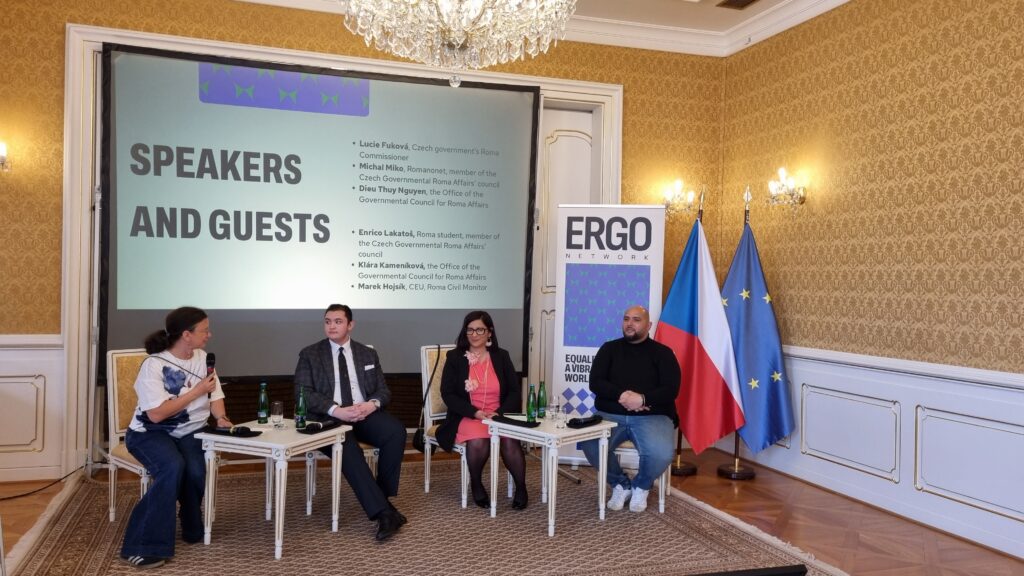
Our journey continued to the Liechtenstein Palace, where we met with Lucie Fukova, the Czech Commissioner for Roma Affairs; Mr. Enrico Lakatoš, a diplomacy student and member of the Roma Affairs’ Council; and Michal Miko from RomanoNet. Czechia. The Czech Governmental Council for Roma Affairs shared their insights into their impressive work done over the years. They shared both their achievements and their aspirations for the future in the Czech context, and we could draw inspiration from the progress that has been made in Czechia.

Conclusion

The 2025 General Assembly concluded with reflections on the shared experiences. Gabriela Hrabaňová, ERGO Network Director, closed the day expressing her gratitude to all participants and extended an invitation to the next General Assembly. We left the ERGO Network General Assembly 2025 in Prague with new inspirations, new friendships (and strengthened old ones), tools on how to fight against antigypsyism, and, most of all, with gratitude for the strong network that we have. 


Forced Evictions: SOS Zaharna Fabrika in Sofia 

Forced Evictions: SOS Zaharna Fabrika in Sofia 

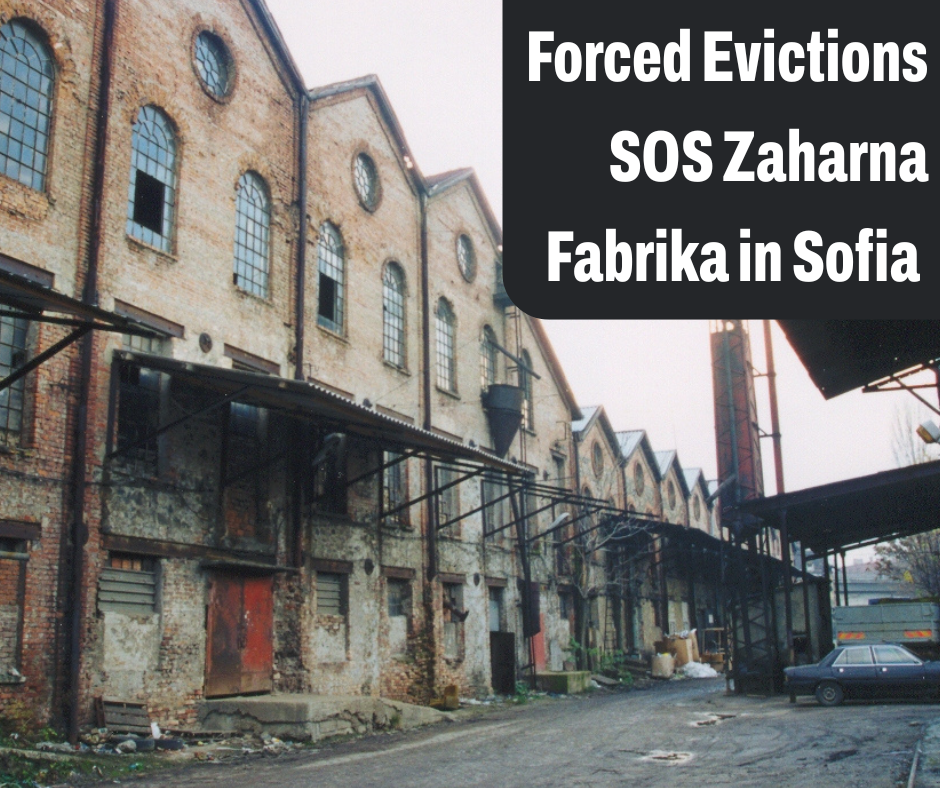
Zaharna Fabrika, or the Sugar Factory, is a district in Bulgaria’s capital Sofia, which has operated as an informal Roma settlement for over 80 years. Yet on 15 April 2025, the municipality proceeded at the demolition of multiple dwellings in the community, despite a ruling by the European Court of Human Rights, leaving over 200 Roma individuals homeless.  

This recent forced eviction of Roma families from their homes reveals a deeper systemic issue – the persistent housing insecurity faced by many Roma communities in Bulgaria, against the backdrop of historical and ongoing deep-seated antigypsyism. For centuries, Roma communities have been caught in a vicious cycle of exclusion, where systemic barriers to adequate housing are both a symptom and a cause of their marginalisation. 

Zaharna Fabrika’s plight reflects a broader pattern across the country, where over 70% of Roma neighbourhoods lack formal land ownership status, detailed spatial planning, or adequate infrastructure. This crisis is rooted in historical neglect, discriminatory policies, and legal obstacles that continue to undermine Roma housing rights. 

Today, the families evicted from Zaharna Fabrika are sleeping in tents near the ruins of their former homes, exposed to harsh weather and without access to basic sanitation or healthcare. This brutal displacement violates their fundamental rights and underscores a broader failure to address Roma housing insecurity. While some temporary support has come from grassroots organisations, the local and national governments have largely abandoned these families. 

Despite their vulnerable situation, these families face mounting institutional hostility. Chemical toilets that had been provided were removed without explanation, and attempts by residents to engage with local authorities have been met with legal threats. The response from political leaders remains muted, reflecting entrenched prejudice and a political environment that often prioritises economic interests over human rights. 

In response, organisations like our members, Integro Association, and partners from ATD Fourth World, Trust for Social Achievement, and Roma for Democracy have stepped up, providing immediate relief while advocating for systemic change. However, these efforts are hindered by a lack of political will and systemic racism.  

  • Read here the statement by Integro Association on the situation of the Roma families evicted from Zaharna Fabrika, and here is the petition to policy-makers that they initiated. 

As the families of Zaharna Fabrika struggle for survival, their situation should serve as a wake-up call to policymakers across Europe. True housing security for Roma requires not just emergency aid, but a deep, systemic overhaul to address decades of neglect and exclusion. 

It is time for the EU and national governments to commit to a fair and inclusive housing strategy – one that prioritizes human dignity over bureaucratic barriers. Only then can we hope to break the cycle of exclusion and build a future where every Roma family has a secure place to call home. 

ERGO Network urges European and national policymakers to act now – to invest in inclusive, affordable housing, to staunchly commit to combatting antigypsyism in housing and across the board, and to support the grassroots movements working tirelessly for Roma rights.  

Without this commitment, crises like the one Zaharna Fabrika will only proliferate, further entrenching inequalities and exclusion for Europe’s Roma. 

  • For more information about the ongoing efforts on the ground in Bulgaria, please contact Liliya Makaveeva (l.makaveeva@gmail.com), Director, Integro Association. 
  • For more information about ERGO Network’s work on Roma access to quality and affordable housing, please contact Amana Ferro (a.ferro@staging.ergonetwork.org), Senior Policy Adviser.  
  • For more information on Roma access to quality and affordable housing, please read our full research report here. 
`
Annamaria Psenkova – Page 3 – ERGO Network

By continuing to use the site, you agree to the use of cookies. more information

The cookie settings on this website are set to "allow cookies" to give you the best browsing experience possible. If you continue to use this website without changing your cookie settings or you click "Accept" below then you are consenting to this.

Close