Evaluating with your target group

Evaluating with your target group

Despite the large and sustained focus of policy efforts to Roma inclusion, results remain limited. Thorough evaluation of programmes and projects is crucial to identify reasons for weak performance and should ideally lead to stronger project design. The current practice however usually leaves out the perspective of the final beneficiaries, their opinions remain invisible. The experience of ERGO Network is that programme and project evaluations, if they are available at all, often lack depth, fail to address shortcomings and in many cases present an image that does not correspond to the reality of those the project or programme aimed to support. This represents a missed opportunity for achieving structural improvements in policy approaches to Roma inclusion.

In 2016, ERGO Network and its members in Hungary, Romania, Bulgaria and Czech Republic together with Fundacion Secretariado Gitanos (FSG) conducted a small-scale investigation based on beneficiary interviews and desk research to explore how better use could be made of the involvement of final beneficiaries in evaluation. The research presents a number of exploratory conclusions about the value of systematic inclusion of the perspective of final beneficiaries to better evaluate the quality of projects, strengthen project design and review and encourage project implementers to adopt a stronger focus towards achieving results for their target groups.

The conclusions are valid for all beneficiary groups of programmes and projects, but are of particular importance for Roma, who are often put into measures that are not thought through, do not fit to their particular needs and are characterised more by opportunism of project providers than by usefulness for beneficiaries. The research shows how external inclusive evaluation can contribute to combatting corruption, increasing the quality of programmes and highlighting the positive but intangible effects of programmes, for instance in benefitting community life or boosting self-confidence.

Read  here the synthesis report of ERGO Network’s research project.

The fact-finding work received financial support from the European Union Programme for Employment and Social Innovation “EaSi” (2014-2020).

ERGO Network asks for increased efforts to reach out to Roma in the European Pillar of Social Rights

ERGO Network asks for increased efforts to reach out to Roma in the European Pillar of Social Rights

On 28th February, Marianne Thyssen, Commissioner for Employment, Social Affairs, Skills and Labour Mobility met with civil society representatives to discuss the European Pillar of Social Rights and the 2030 Agenda for Sustainable Development and its goal to end poverty. With the European Pillar of Social Rights, the European Commission aims to tackle the aftermath of the financial crisis and strives for an upward convergence of welfare systems and fair labour markets across Europe. European Commission President Juncker aims to achieve a “social triple-A rating” for the European Union, giving more weight to social priorities alongside economic and financial issues.  In the consultation meeting, Commissioner Thyssen pointed out: “In the current political and economic context, delivering real benefits for people and strengthening their confidence should be our first goal: no one must be left behind. Indeed, in the European Union, with all its diversity, we share a belief that increased competitiveness should go hand-in-hand with social progress”.

As a network of grassroots (pro) Roma organisations working on a daily basis with the poorest minority in Europe, we welcome the efforts of the European Commission to renew and improve the European social agenda to achieve positive social change and to create better living conditions throughout the EU, and appreciate the dialogue with civil society.

ERGO Network asks the European Commission to increase the focus of the Social Pillar on Roma as the most marginalised European minority, disempowered through poverty and discrimination[1]. According to the Second European Union Minorities and Discrimination Survey (EU-MIDIS II), 80% of Roma are at risk of poverty compared with an EU average of 17% and only 30% are in paid work, compared with the average EU employment rate for 2015 of 70%.The European Pillar of Social Rights is a key opportunity to dedicate specific measures and indicators to decreasing this extreme inequality and combatting social exclusion of Roma. Jamen Gabriela Hrabanova, deputy director of ERGO network states: “Only when the most discriminated minority in Europe can claim their social rights and benefit equally from social protection systems, the European Union can obtain the so-called social triple-A rating. We would like to see a clear commitment to Roma inclusion in the final proposal of the European Commission”.

ERGO Network brings together over 25 (pro) Roma grassroots organisations from across Europe to empower communities, fight antigypsyism and achieve equal citizenship.

Contact: Jamen Gabriela Hrabanova (g.hrabanova@staging.ergonetwork.org, +32 2 893 1049), www.ergonetwork.org

MAINSTREAMING EMPOWERMENT OF ROMA GRASSROOTS WOMEN

MAINSTREAMING EMPOWERMENT OF ROMA GRASSROOTS WOMEN

The Roma movement is mainly male-dominated: the voice of women is not often heard. The reasons for this are multiple and interrelated. For instance: women’s status in their communities often does not allow them to speak out publicly and their level of education is lower than that of men. In fact, they face double discrimination: they are a marginalised group compared to both mainstream society and Roma men

Download the paper here

Roma Youth Advocacy Seminar 2017 in Brussels

Roma Youth Advocacy Seminar 2017 in Brussels

Join us in Brussels to learn about European policy-making and civil society advocacy, and to raise young voices in front of the European Parliament, European Commission and other stakeholders to combat antigypsyism and to advance important issues for Roma communities.

This six days lasting seminar (March 23 to 30, 2017, including travel days) is organized by ternYpe International Roma Youth Network, ERGO Network and the Documentation and Cultural Centre & Central Council of German Sinti and Roma. It will gather 40 young Roma and non-Roma activists in order to strengthen their capacity as young advocates and leaders to tackle antigypsyism. During the seminar, the group will run a youth campaign against antigypsyism targeting EU level actors, like Members of the European Parliament and European Commission. The advocacy seminar is part of the “EU Roma Week” ahead of the 8 April – International Roma Day.

AIMS AND OBJECTIVES
The seminar aims to strengthen the capacity of the participants to understand the structures and working mechanisms of the EU institutions, as well as the current EU policies concerning Roma and against racism, and to develop advocacy strategies and campaigns raising-awareness about antigypsyism on European level.

The objectives of the activity are to:

  • Get to know the European Union institutions and to understand their working mechanisms, and policies towards Roma, in particular of the European Parliament and European Commission;
  • Build a dialogue and bring a Roma youth perspective to DG Justice (responsible for Roma policies in the European Commission), to DG EAC (Education and Culture, includes the youth sector in the European Commission), as well as to Members of the European Parliament in particular of the ARDI Intergroup (Anti-Racism and Diversity Intergroup);
  • Learn about the work of the EU umbrella organizations and contribute to their work;
  • Raise awareness of the participants about antigypsyism, and the current anti-racism policies;
  • Raise awareness of the participants about the Brussels-based civil society structures and their strategies against antigypsyism and racism (in particular ERGO, ENAR (European Network against Racism) and the European Youth Forum);
  • Develop a youth campaign against antigypsyism and on Roma youth perspectives during the “Roma Week” of the European Parliament;
  • Raise awareness of Members of the European Parliament, European Commission staff and Brussels based advocates about the recognition of the Roma Holocaust and of antigypsyism, which was acknowledged in April 2015 by a European Parliament resolution.

“EU Roma Week” in the European Parliament
Roma Week 2017 takes places from 27th March to 3rd April 2017 in the European Parliament in Brussels and Strasbourg to mark the occasion of the International Roma Day on 8 April 2017.  Roma Week 2016 resulted in the Slovak Presidency having two Council Conclusions on Roma with reference to the European Parliament’s 2015 resolution on antigypsyism and for the recognition of the Roma Genocide.


Objectives of “Roma Week”
Roma week 2017 is designed with the aim of bringing together Roma activists from the European Union to engage with key stakeholders in order to participate at the mid-term review of the EU Framework for the National Roma Integration Strategies and to engage in the advocacy strategy for EU Roma Policy post 2020. The objectives of Roma week will be mainstreamed into that strategy. Rather than having a Roma week geared towards public awareness, Roma week 2017 focuses on facilitating capacity building, networking and advocacy for Roma activists around five thematic areas: Antigypsyism, Employment, Monitoring, Youth and Women.


PROFILE OF THE PARTICIPANTS
Present will be Roma and non-Roma youth leaders, activists, multipliers, and volunteers who are active in Roma communities and experienced in working with Roma communities and/or Roma youth.


Participants must also:

  • be able and committed to act as young advocates and multipliers in youth work on the themes of anti-discrimination, combating racism and antigypsyism and promotion of human rights with young Roma, for the benefit of Roma communities and Roma youth;
  • be motivated to develop their competences in advocacy, anti-discrimination work, human rights education and youth work and to share their experiences with other participants;
  • be actively committed and involved in a Roma (youth) initiative, advocacy group or organization;
  • be aged between 18 – 35 years;
  • be committed to attend for the full duration of the course;
  • be able to work in English, or check with the coordination that translation can be provided through other participants or team members;
  • be resident in one of the following countries: Belgium, France, Italy, Spain, Germany, Austria, Czech Republic, Slovakia, Poland, Hungary, Romania, Bulgaria, Macedonia 

DATES OF THE ACTIVITY
Arrival: March 23, 2017 (Thursday)
Program days: March 24 until March 29, 2017
Departure: March 30, 2017 (Thursday)

APPLICATION AND SELECTION
Complete Info Pack: download pdf
How to apply? 
Register in the online application form
Application deadline: February 26, 2017 (end of day)

Selection procedure: If you fit into the participants’ profile, you may submit an application until February 26 at midnight Central European Time. The preparatory team will select up the participants on the basis of the profile outlined above, ensuring also a balance between genders, geographical regions, different types of experiences and organizations. Within few days, we will inform the candidates whether their application has been accepted or rejected.


Joint statement: International Holocaust Remembrance Day: EU must tackle contemporary Antisemitism and Antigypsyism

Joint statement: International Holocaust Remembrance Day: EU must tackle contemporary Antisemitism and Antigypsyism

Brussels, 27 January 2017 – Today on International Holocaust Remembrance Day, anti-racism organisations across Europe urge European governments to make Antisemitism, Antigypsyism and all forms of racism a priority, in a context of increasing hate speech and security threats against minorities.

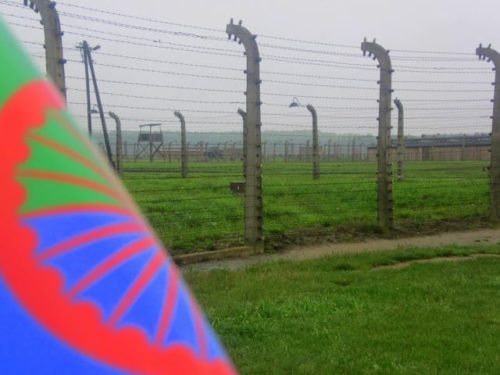
The International Holocaust Day is a vital opportunity to remember the tragic events of the Holocaust and to reaffirm our commitment to ensure that such injustices are never to reoccur. We must take the opportunity to commemorate those who were subject to mass extermination during the Holocaust – including Jewish people, Roma, homosexuals and people with disabilities – and also those otherwise persecuted under the Nazi regime, such as people of African descent. Only by remembering can we hope to ensure the equality and safety for Jewish communities in Europe alongside all other ethnic and religious communities. We must never forget that around 6 million Jews and at least 500 000 Roma were exterminated during the Holocaust, based on notions of racial inferiority.

There is, however, a very real risk that these lessons are being forgotten. Last week, Bjoern Hoecke of the Alternative for Germany (AfD) party, which promotes a xenophobic and racist agenda, criticised Berlin’s Holocaust memorial and questioned the need to dwell on the Holocaust as an aspect of German history. This is just one of many instances in previous months in which the growing tide of Europe’s political right wing have attempted to rally against minorities.

Since the Holocaust, harmful stereotypes and myths about Jewish people have persisted in Europe and these are increasingly materialising into deadly attacks, physical violence, hate speech (especially online), attacks against property, and the desecration of places of worship and cemeteries. Some European Jews feel forced to hide the fact that they are Jewish or have a Jewish background.

In Germany, official police statistics recorded some 1,300 antisemitic crimes nationwide in 2015. The Community Security Trust recorded 557 antisemitic incidents across the United Kingdom in the first six months of 2016, an 11% increase compared to the same period in 2015. 40% of 1,200 Jews surveyed in France said they avoided wearing symbols that identified them as Jews for fear of antisemitic attacks. In Poland, a study conducted by the Center for Research on Prejudice at the University of Warsaw finds a significant increase in negative attitudes toward Jews from 2014 to 2016.

Similarly, widespread Antigypsyism has persisted across Europe, and is deeply rooted in social and cultural attitudes and institutional practice. 80% of European Roma continue to live at risk of poverty.

In the current polarising context, we need to build strong coalitions and solidarity between communities and show a united front against hatred. We must actively work against insidious stereotypes, structural racism and expose groups and politicians that exploit them to pit communities against one another. In fighting for the rights and freedoms of Europe’s minorities, we must not forget the injustices that have taken place and be vigilant against similar acts of racism and hate.

EU institutions and Member States must take steps to prevent acts of hatred without stigmatising any community. This includes ensuring that States monitor, investigate and sanction hate crime and incitement to violence; developing detailed strategies to address specific forms of racism, including Antisemitism and Antigypsyism; and supporting cross-community initiatives by civil society.

For further information, contact:
Georgina Siklossy, ENAR Senior Communication and Press Officer
Tel: +32 (0)2 229 35 70 – Mobile: +32 (0)473 490 531 – E-mail: georgina@enar-eu.org – Web: 
www.enar-eu.org

Signatories:
European Network Against Racism (ENAR)
Association of African students in Europe (AASE)
Austrian Muslim Initiative
Black Activists Rising Against Cuts (BARAC UK)
Collectif Contre l’Islamophobie en Belgique (CCIB)
Community Security Trust (CST)
Central Council of German Sinti and Roma
CEJI – A Jewish Contribution to an Inclusive Europe
European Roma Grassroots Organisation (ERGO Network)
European Roma Information Office (ERIO)
European Roma Rights Centre (ERRC)
Federation of European Muslim Youth and Student Organisations (FEMYSO)
Open Republic Association against Anti-Semitism and Xenophobia – Otwarta Rzeczpospolita
Pan African Movement for Justice
Phiren Amenca

Joint statement: International Holocaust Remembrance Day: EU must tackle contemporary Antisemitism and Antigypsyism

`
Ana Rozanova – Page 59 – ERGO Network

By continuing to use the site, you agree to the use of cookies. more information

The cookie settings on this website are set to "allow cookies" to give you the best browsing experience possible. If you continue to use this website without changing your cookie settings or you click "Accept" below then you are consenting to this.

Close