Roma youth empowerment trough Rromani language

Roma youth empowerment trough Rromani language

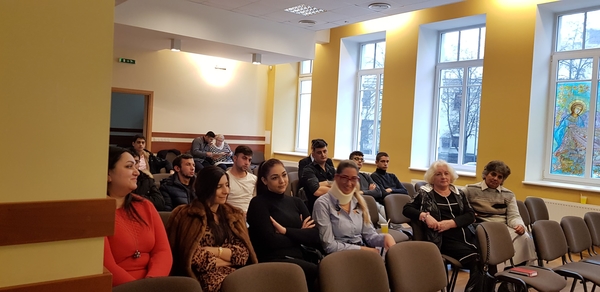
Our partners from Roma Community Centre in Vilinus, Lithuania for the first time ever gather a group of young Roma for 2 days seminar from 2-4 Of December, 2019 with a programme in rromanes on topics such as: discrimination, equality, access to the labor market and empowerment.

The event took part under the frame of Roma platform and was organized by the department of National minorities together with the Public institution Roma Community Center.

ERGO’s policy officer Carmen Tanasie and its member from France La Voix des Rroms, Samir Mile delivered the workshop in rromani language engaging in deconstructing the consequences of social exclusion and came together with the participants to a set of recommendations such as:

  • Roma youth should be consulted by the National Minorities department when issuing calls or implementing activities that includes Roma youth
  • Provide high-level jobs in the public sector for Roma
  • Improve cooperation between young Roma and labor offices
  • Tackle the discrimination in schools and include the Roma history in the school curricula

The young Roma got empowered by the fact that could freely express in their maternal language and asked the organizers to follow organizing seminars and meeting not just for young people but involving   more Roma communities in Lithuania.

Call for European Solidarity Corps placement in ERGO Network

Call for European Solidarity Corps placement in ERGO Network

ERGO Network is looking for an enthusiastic and active young Roma who would like to join our office team in Brussels for 11 months in the  framework of the European Solidarity Corps. This is a remunerated opportunity.

When: February (later date can be discussed) to December 2020

Where: ERGO Network office in Brussels, Belgium

Who: Young Roma between 18 and 30

Deadline for applications: 25 January 2020

During the 11 months with ERGO, you will learn about European policy and advocacy, help us organize international meetings and events, and get actively involved in Roma and human rights activism in Brussels and Europe.

Your main tasks will be:

  • Advocacy and policy: Support ERGO staff in EU advocacy work on poverty reduction, social inclusion and antigypsyism; attend debates, hearings and meetings with EU institutions and other stakeholders to challenge stereotypes and racism, and build partnership with Roma and non-Roma organizations from Belgium and other European countries.
  • Meetings and seminars: Support the organisation of meetings, events and international seminars of ERGO Network and its partners, e.g. our Advocacy Academy, Annual Members Meeting etc.
  • Communication and visibility: contribute to the updating of the ERGO Network and RomaReact websites and social media channels; develop creative approaches and publicity work to promote our activities and mission and a positive image of Roma.
  • Researching and reporting: Assisting ERGO’s research work e.g. on cases of inequality and antigypsyism all over Europe.

Your profile:

  • Young Roma between 18 and 30 years living in an EU Member State or Macedonia or Turkey
  • Good English language skills, both oral and written
  • Computer literacy (experience with Microsoft office package and social media)
  • High motivation to learn more about Roma activism and advocacy work
  • Previous involvement in Roma or (pro) Roma NGOs will be considered an advantage
  • Reliable, well organized and with attention to details

You will work about 38 hours per week, including the language course included in the package. Typical working hours are from Monday to Friday between 9:30 – 17:30, but can be adapted to your needs and the activities you will be involved in.

We aim to support young people who are enthusiastic about our cause and want to gain experiences that can be later transferred to national or local NGOs. We especially welcome applications from people who are motivated to challenge stereotypes, antigypsyism and racism and who show an open attitude for a unique learning and life experience, as well as a volunteer spirit of creativity, initiative, responsibility and independence.

We offer:

  • An allowance of 1049 Euro that includes money for accommodation, meals, local transport, language course and pocket money
  • Travel costs to Brussels (a lump sum depending on the distance to Brussels)
  • Health insurance for the whole year
  • On-arrival training with other Solidarity Corps volunteers, and lots of learning and development opportunities with ERGO Network and our partners
  • An exciting and unforgettable experience, working for an European organisation in an international city!

How to apply:

Please send your motivation letter (1 page) and CV (max 2 pages) by 25th January 2020 to info@staging.ergonetwork.org.


Welcome to our new volunteer

Welcome to our new volunteer

My name is Shannon MacDonald, I am a Scottish Gypsy/Traveller from Scotland in the UK, and I am the new volunteer for ERGO Network. I am very excited to begin this role as I have always felt very passionate about Antigypsyism and discrimination against people like me and my family. I have experienced racism first hand and would like to take this opportunity at ERGO Network to hear people’s experiences and also share mine.

As a keen photographer I have tried to tackle difficult issues for Travellers through my photography, my work has been exhibited multiple times now and it is encouraging to see my culture represented in places where everyone can see. Hopefully I have managed to change some people’s negative preconceived notions that they have about the Gypsy/Traveller community. In the past I have worked with NGO’s in the UK, such as Article 12 and MECOPP, I am also a founding member of the group Gypsy/Traveller Youth Assembly (GTYA). Through these groups I have helped change small things for my community. It is important to me as an activist for Roma/Gypsy/Traveller Rights to try to make things better for people who share my ethinicity. It is extremely hard to change things when it feels like everything is against you, but it is important to try.

ERGO is looking for a volunteer

DEADLINE EXTENDED: Call for Solidarity Corps volunteer in ERGO Network

ERGO Network is looking for an enthusiastic and active young Roma who would like to join our office team in Brussels for 11 months in the framework of the European Solidarity Corps.

When: February to December 2019

Where: ERGO Network office in Brussels, Belgium

Who: Young Roma professional between 18 and 30

EXTENDED Deadline for applications: 13 January 2019

During the 11 months in ERGO, you will learn about international advocacy, help us organise international meetings and events and get actively involved in Roma activism and international Roma networks in Brussels.

Your main tasks will be:
  • Communication and visibility: contribute to the update of the ERGO Network and RomaReact websites and social media channels; development of creative approaches and publicity work to promote our activities and mission and a positive image of Roma.
  • Researching and reporting: Assisting ERGO’s research work e.g. on cases of inequality and antigypsyism all over Europe.
  • Advocacy and policy: Support ERGO staff in EU advocacy work on poverty reduction, social inclusion and antigypsyism; attend debates, hearings and meetings with other stakeholders to challenge stereotypes and racism, build partnership with Roma and non-Roma organisations from Belgium and other European countries.
  • Meetings and seminars: Assist in the organisation of meetings, events and international seminars of ERGO Network and its partners, e.g. our Advocacy Academy, Annual Members Meeting etc.
Your profile:
  • Young Roma between 18 and 30 living in an EU member state or in Macedonia or Turkey
  • Good English language skills, both oral and written
  • Computer literacy (experience with Microsoft office package and social media)
  • High motivation to learn more about Roma activism and advocacy work and to contribute to a small but very active European NGO
  • Previous involvement in Roma or (pro) Roma NGOs will be considered an advantage
  • Reliable, well organised and with attention to detail

You will work about 38 hours per week, including your language course. Working hours will be from Monday to Friday between 9:00 – 17:00. However, working hours can be adapted to your needs and the activities you will be involved in.

We aim to support young people who are enthusiastic about our cause and want to gain experiences that can be later transferred to national or local NGOs. We especially welcome applications from people who are motivated to challenge stereotypes, antigypsyism and racism and who show an open attitude for a unique learning and life experience, as well as a volunteer spirit of creativity, initiative, responsibility and independence.

We offer:
  • An allowance of 1049 Euro that includes money for accommodation, meals, local transport, language course and pocket money
  • Travel costs to Brussels (a lump sum depending on the distance to Brussels)
  • Complementary health insurance
  • On-arrival training with other Solidarity Corps volunteers, and lots of learning and development opportunities with ERGO Network and our partners
  • An exciting and unforgettable experience, working for an international organisation in an international city!
How to apply:

Please send your motivation letter (1 page) and CV (max 2 pages) latest by 13th January 2019 to info@staging.ergonetwork.org.

Do not hesitate to contact us for more information.

You can download the call for applications here.

Christine Sudbrock t: +32 2 89 31 045 | e: info@staging.ergonetwork.org

Study Session ‘Knowledge is Power – Youth Understanding Antigypsyism’

Study Session ‘Knowledge is Power – Youth Understanding Antigypsyism’

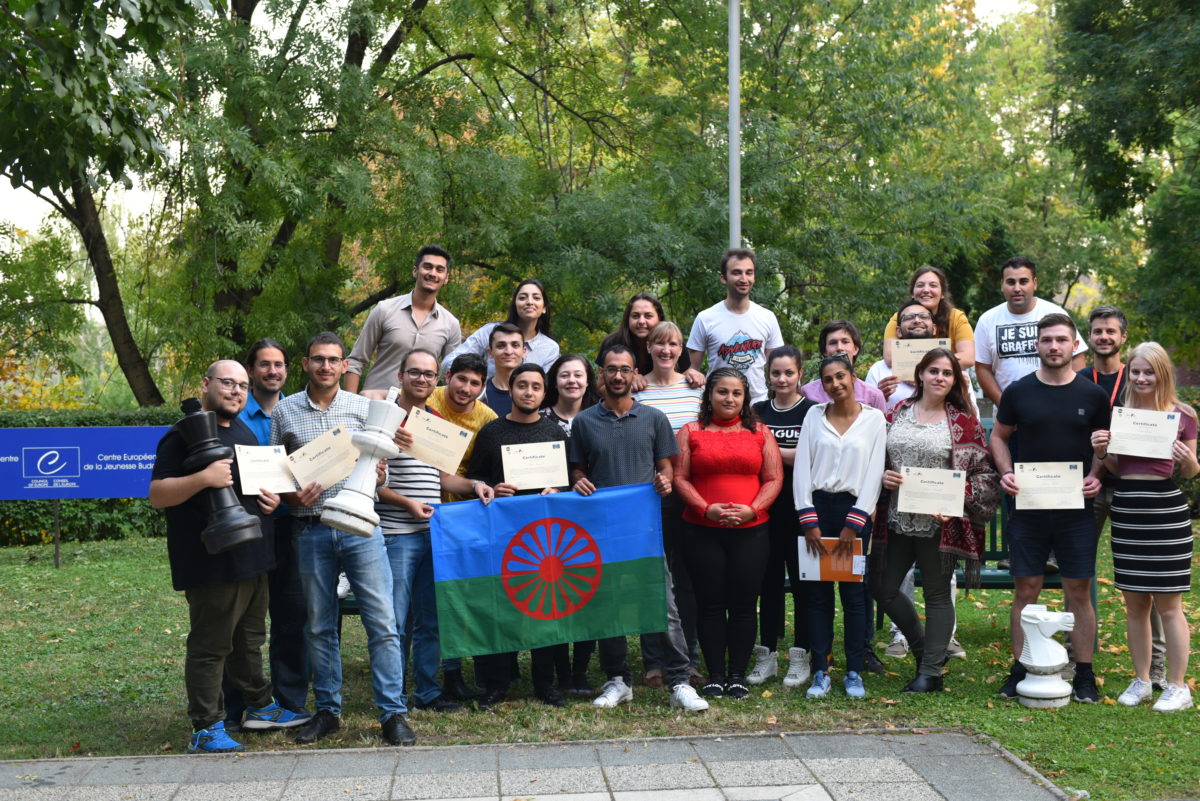
A study session “ Knowledge is Power  – Youth Understanding Antigypsyism” was organized by ERGO Network and TernYpe International Roma Youth Network in cooperation with the European Youth Center Budapest of the Council of Europe from 7  to 13 October 2018.  During this study session, 20 Romani and Non-Romani young people came together to gain a deeper understanding of what antigypsyism is through different means of portraying elements of antigypsyism. The aim of the study session was to contribute to the development of a youth-friendly version of the reference paper on antigypsyism that can be understood by all. The participants had the chance to be creative and work together to comprehend, interpret and shorten some parts of the aforementioned reference paper.  Afterwards they could present the outcomes and outputs of these working groups. What was really interesting and praiseworthy noticing was the eagerness of the group to participate in the production of this exciting publication, which will be available soon.

The study session started with getting to know each other in order to get comfortable with one another, since antigypsyism is a very sensitive theme and the youth group consisted of  a diverse group of young people such as the Roma youth, travelers and non – Roma participants. Some of these youngsters were students at universities and some were already working for an NGO or had just started to run their own NGO. One thing they had in common was their experience with discrimination and realizing that antigypsyism has several stages.

In the last two days, the working groups were divided according to different themes. There were four themes; case studies, counter strategies, visuals and non – formal education. The participants from the case studies group found cases related to antigypsyism from different countries (eg. sterilization of Romani women). The group on counter strategies prepared some strategies how to combat antigypsyism on the basis of what they have learnt throughout the week. The group on visuals prepared very interesting material on how the “youth-friendly” version on antigypsyism could look like. And the group for non – formal education prepared detailed workshops whereby youth could learn about this theme.


A great deal of work was done by all the participants of the study session. The inputs were of a great importance and will further be used for drafting the youth friendly version of the reference paper

`
Youth – Page 5 – ERGO Network

By continuing to use the site, you agree to the use of cookies. more information

The cookie settings on this website are set to "allow cookies" to give you the best browsing experience possible. If you continue to use this website without changing your cookie settings or you click "Accept" below then you are consenting to this.

Close