EU Child Guarantee: Don’t leave Roma children behind

Input to the European Commission consultation on the Roadmap for a Council Recommendation for a Child Guarantee

The European Commission will be proposing a Child Guarantee in 2021, an instrument specifically designed to tackle the situation of children in need.

The Child Guarantee is meant to ensure that all children in Europe who are at risk of poverty, social exclusion, or are otherwise disadvantaged, have access to essential services of good quality.

It will recommend that EU countries invest in and develop strategies and action plans to ensure that children in need have access to free or affordable services such as education, healthcare, nutrition & housing, culture and leisure activities.

ERGO Network strongly welcomes the initiative for an EU Child Guarantee and has given input into the Roadmap leading towards it (Download the full input). With Roma children especially hard hit by poverty, we appreciate the attention paid to this important topic.

The first years of a child’s life are the most important in their personal development, and yet Roma children have been left behind for centuries in what concerns a good start in life. While the Roadmap towards the Child Guarantee identifies several groups of “children in need”, Roma children are not one of them. This is unacceptable, where the Fundamental Rights Agency found that every third Roma child (30%) lives in households where someone went to bed hungry at least once in the previous month, and only about half (53%) of young Roma children are enrolled in early childhood education and care programmes. Unless they are explicitly mentioned as target group and specific measures put in place to deal with very specific needs, experience shows that Roma children will once again be left behind.

The Roadmap features an almost exclusive focus on services, where nothing is said about access to income. There are no poor children in rich families, and wrap-around support for parents must be part of the solution, including income support and pathway approaches towards sustainable, quality jobs. Currently, only 43% of Roma aged 20-64% are in paid work, and over 80% of Europe’s Roma are at risk of poverty and social exclusion, according to FRA. Poverty has a considerable impact on the children’s physical, mental, and emotional development, and increases the chances of lagging behind in all the aspects of their adult life.

The vicious circles of poverty,  spatial segregation, and discrimination act as powerful barriers, preventing Roma children from accessing education on equal footing with their non-Roma peers. While education, including early childhood education and care, is touted to be free in many countries, it is de facto not, and many poor Roma families can’t cope with the associated costs of clothing, nappies, transport, hygiene etc. Lack of majority languages skills, limited access to early childhood education and care, and a state of poverty which does not allow for proper studying at home mean that Roma children end up segregated and bullied by colleagues, their parents, and staff alike, and even sometimes placed in schooling for children with learning disabilities. During the Covid-19 pandemic and associated protection and prevention measures, many Roma children found themselves unable to access online education, due to absent infrastructure and equipment (the digital divide).

In what concerns housing, many Roma neighbourhoods are segregated or isolated, with no childcare or healthcare facilities nearby. Adequate housing is an urgent priority for Roma communities, as one in three Roma (32%) live in households with a leaking roof, damp walls, or rot, one in five Roma (20%) live in dwellings that are too dark, and 78% of Roma live in overcrowded households. These disastrous living conditions have a tremendously damaging impact on the health and wellbeing of Roma children, who experience significant health inequalities. The life expectancy of Roma across Europe is 10 to 15 years lower than of the majority population. In many countries, the public health infrastructure does not cover Roma communities, with the nearest clinic (not to mention hospital) often located far away. Additional complicating factors include the lack of identity papers, the lack a legal address, the lack of access to a bank account, the lack of information about registration processes and available services, as well as language barriers. Investing in children must mean, first and foremost, guaranteeing good health and wellbeing for all, particularly those suffering the most disadvantages, such as Roma children.

In order to ensure that Roma children develop and thrive while enjoying the same opportunities as their non-Roma peers, it is fundamental to tackle antigypsyism in all its forms, as well as intersectional discrimination. 41% of Roma feel they have been discriminated against in everyday situations such as looking for work, at work, or when trying to access housing, health, and education – and this is the environment that Roma children grow up in. This should be a de facto horizontal priority in the fields of education, employment, health, housing, and poverty reduction. Preventive and proactive measures are needed to alter public perceptions, prevalent misrepresentations, and misinformation about Roma, and to develop positive counter-narratives. The Child Guarantee should strive to ensure the teaching of Romani language and history in schools, including about the Holocaust and slavery of Roma across Member States, as well as for the necessary dedicated special pedagogical support, including trained Roma education mediators in communities.

The Covid-19 situation highlights the urgent need to invest in proper care services and income support to children and their families. In order to provide equal opportunities for every Roma child, we must guarantee that Roma children and families are not left behind in the Child Guarantee. Appropriate links must be made to the objectives of the EU Strategic Framework for Roma Equality and Inclusion, and interplay ensured between the implementation of the Child Guarantee multi-annual national strategies and the National Roma Integration Strategies. The EU Cohesion Policy and recovery funds will also have a key role to play.

The Child Guarantee will only be effective if it achieves wide ownership by beneficiaries, if it is rooted in direct evidence from the ground about what works and what is needed, and if its delivery and monitoring are underpinned by a comprehensive and meaningful partnership of all stakeholders, including civil society organisations. Tailored outreach measures need to be put in place to ensure the participation of Roma children and that of their parents, including through the civil society organisations representing them. Clear dialogue and cooperation protocols need to be put in place, to ensure that the voice of marginalised and racialised children is heard and taken into account, while necessary financial resources need to be made available to support Roma NGOs and build awareness, participation, and active citizenship, as well as more resilient democracies.

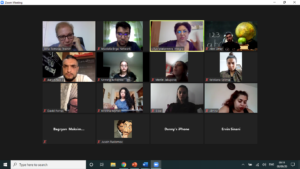
PECAO peer educators training online and offline

PECAO peer educators training online and offline

The Covid-19 pandemic has changed the work we usually do and the way we implement our projects. ERGO Network together with its partners in the framework of the “Peer education to counter antigypsyist hate speech” (PECAO) project adapted to this new situation and moved on with the project implementation.

Peer educators are the most crucial part of PECAO. They receive training to conduct peer education workshops and activities with other young people, as well as monitor and report hate speech online.

Due to the restrictions and health measures in place, ERGO Network and Integro Association combined an online and offline training for the group of 50 peer educators to make the best out of the situation for everyone.

Those who could not travel to Bulgaria had the opportunity to follow an online training course from to 13 August, and those able to travel to Bulgaria had their offline training course in Albena from 10 to 15 August 2020.

Our partner Integro took care of all necessary measures to ensure safety of the participants in the offline training by respecting all protocols when it comes to protection against Covid-19.

During both trainings, the participants could work with and be trained by professionals in the field of addressing hate speech. For example, with Prof. Tomova the participants received information about the impact of stereotypes and prejudices and how media constructs, reinforces and consolidates negative stereotypes and prejudices against Roma. They also worked on content analysis of media products that target Roma.

Throughout the training course, participants had the opportunity to share their experiences and knowledge on the topic, and experts such as lawyers Ms. Mihaylova and Mr. Kashamov introduced the international frameworks that protects against hate speech, as well as shared and made comparison with their national legislation.

The training ended with practical exercises of writing complaints and signal against hate speech, as well as understanding the standards of various social networks for countering hate speech online.

As next step, the peer educators and mentors of the PECAO project will start with their peer education and monitoring activities, which are going to last from October 2020 until September 2021. ERGO Network and its partners will keep you updated on the implementation.

For more information, please follow our Facebook page.

Training ambassadors to rise above antigypsyism in Kosovo

Training ambassadors to rise above antigypsyism in Kosovo

In the last couple of months, ERGO Network was contracted by VoRAE (Voice of Roma, Ashkali and Egyptians) to train various members of organizations working on the topic of antigypsyism. The purpose of the training course “Ambassadors rising above antigypsyism” (ARAA) was:

  • To raise awareness and deepen the recognition and understanding of antigypsyism and its implications in relation to empowering grassroots communities to stand up to discrimination
  • To support the exchange of experiences and good practices addressing issues of discrimination of Roma, Ashkali and Egyptians in Kosovo
  • To develop the competences of 10 participants in raising understanding and awareness about antigypsyism, its implication and advocacy to promote positive narratives and inclusive policies.
  • To support regional cooperation and networking among Roma and pro-Roma activists
  • To drive policy change in recognizing antigypsyism as a primarycourse of inequalities for Roma

The overall expected outcome of the course was to motivate participants to become ambassadors in fighting against antigypsyism by raising awareness and addressing the phenomena, as well as leading the policy change through proactive advocacy.

The training course included a combination of online methods, using Zoom for group meetings, emails and worksheets. It was conducted by ERGO Network staff Gabriela Hrabranova, Isabela Mihalache and Mustafa Jakupov.

The training modules introduced the theoretical background of antigypsyism, mapped antigypsyism in the region, discussed how to act and re-act against antigypsyism through a human rights framework, as well as on learning different methods and developing trainers skills that will be further used by the participants to conduct workshops for and working with governmental and local officials. As final product of the course, ERGO Network is developing a Training of Trainers manual that will be used further by the participants trained as ambassadors.

It is important to mention that this course was the first of its kind in Kosovo where not only capacities and knowledge were being developed, but participants were able to share and analyse the realities of RAE communities and understand the political context in which they will operate.

From the 29-30 September, VORAE furthermore organized a Summit on antigypsyism in Prishtina, bringing together important stakeholders from Kosovo and abroad, including ERGO Network Director Gabriela Hrabanova, representatives of UN offices, embassies and other civil society organisations. The summit explored ways to combat antigypsyism in Kosovo and at European level and put a special emphasis on the role of women.

Dream to Grow

Dream to grow: How to make Europe’s labor markets a place for all

Co-hosted by: European Roma Grassroots Organizations Network (ERGO) and the Romani Early Years Network (REYN), an initiative of ISSA – the International Step by Step Association

October 7th, 14:00 – 16:00 CET

  • Find the agenda and catalogue of human books here.
  • Sign up here to receive access to the online event.

Although almost ten years have passed since the adoption of the EU Framework for National Roma Integration Strategies, Roma remain widely exposed to antigypsyism, poverty and social exclusion without opportunities to access proper education, employment, or training. They keep facing unequal treatment and inequalities in health, education, employment, and living conditions, a gap which has continued to widen following the outbreak of the COVID-19 pandemic.

63% of Roma aged 16-24 are not employed, in education or training (55% of young Roma men and 72% of young Roma women) and 40% of Roma report feeling discriminated at work! Even if they manage to secure employment, they often continue to face lower wages, precarious and atypical contracts, a lack of career options, and direct discrimination and harassment of employers and colleagues.

Eliminating such inequalities and promoting positive models of inclusion and diversity starting from the very beginning of life must be a priority not only for EU and national policy makers, but also for every person in Europe. Diversity does not only benefit minorities, but also impacts greatly on the quality of services offered and on society.

Acknowledging that it is fundamental to rewrite the current narrative about Roma and restore their dignity and pride, this event aspires to share inspiring stories highlighting Roma professionals’ different pathways to become who they are today and showing the difference that enabling, inclusive and diverse educational and working environments can make for society.

Why should you join this event:

  • Get inspired by real-life stories of Roma professionals who have succeeded to break the wall of prejudices and stereotypes and realized their dreams by participating in the online Human Library.
  • Learn about the advocacy efforts civil society organizations are doing to ensure equity, inclusion and diversity in education and at work.
  • Reflect together about the multilayered challenges and unequal treatment young Roma are facing in Europe and the long-term consequences of political inaction.
  • Benefit from lessons learned in implementing inclusive policies and practices and discover how to become part of the solution.

This event receives funding from the European Union. The information contained reflects only the author’s view; and the Commission is not responsible for any use that may be made of the information it contains.

This event is co-funded by the Open Society Foundations Early Childhood Program. The program has been providing continous support to the Romani Early Years Network initiative since its start.

Digital High-Level Conference

Digital High-Level Conference on the new Strategic EU Framework for Equality, Inclusion and Participation of Roma until 2030

Instead of the traditional “EU Roma Platform”, the German EU Presidency and the European Commission will organize on the 12 October the “Digital High-Level Conference on the new Strategic EU Framework for Equality, Inclusion and Participation of Roma until 2030”, bringing together all relevant stakeholders from the EU member states and enlargement countries  to launch the new “EU Roma strategic framework for equality, inclusion and participation”.

The EU Coalition of Roma and pro-Roma organisations will participate at the event to bring the views of Roma civil society to the table, with ERGO Network being well represented with several speakers.

ERGO Network Director will represent civil society in the Opening Panel to ask questions to EU Commissioner for Equality Helena Dalli, who will launch the new Strategic Framework. The co-chair of ERGO Network’s board and former MEP Soraya Post will contribute to the panel on Roma participation, while ERGO Network vice-chair Adriatik Hasantari and Director of Roma Active Albania will talk about the impact of the Covid-19 pandemic on Roma.

The conference, which will be opened by German Minister of the Interior, Building and Community Horst Seehofer, will provide a forum for discussion of priorities for the next 10 years, such as combatting antigypsyism, equality, inclusion and participation, through dialogue and exchange of knowledge and experiences, at all levels. It will also highlight Member States’ perspectives and give stakeholders an opportunity to make their voices heard.

ERGO Network together with its partners has inputted into the development of the new Strategic Framework for Equality, Inclusion and Participation of Roma all along the way with recommendations.

ERGO Network also invested in the coordination of the Roma and pro-Roma Civil society under the banner of the EU Roma post-2020 Coalition. The coalition brought together its expertise to formulate questions for Commissioner Dalli and to create common messages. The partners in the coalition are furthermore preparing a reflection to the EC Communication on theStrategic EU Framework for Equality, Inclusion and Participation of Roma until 2030 that will be published on the 6 October 2020.

ERGO Network will provide regular updates before and during the event on its social media channels.

`
antigypsyism – Page 7 – ERGO Network

By continuing to use the site, you agree to the use of cookies. more information

The cookie settings on this website are set to "allow cookies" to give you the best browsing experience possible. If you continue to use this website without changing your cookie settings or you click "Accept" below then you are consenting to this.

Close