Quality Standards for the Youth Guarantee- #RomaYouth as focus

Quality Standards for the Youth Guarantee- #RomaYouth as focus

The European Youth Guarantee so far failed to provide quality offers to marginalized groups, including #RomaYouth.

Together with other civil society organizations, ERGO Network has contributed to a set of Quality Standards for the Youth Guarantee proposed by the European Youth Forum.

The recommendation paper is aimed to contribute to the communication issued by the European Commission and debated in the European Parliament and Council “Youth Employment Support: a bridge to jobs for the next generation” which will be adopted later this year.

ERGO stands for several standards to be included in the new strategy and make sure that Roma youth are not overlooked in the implementation process. Please read the publication here.

A Place for All

A Place for All – ERGO Network’s employment campaign

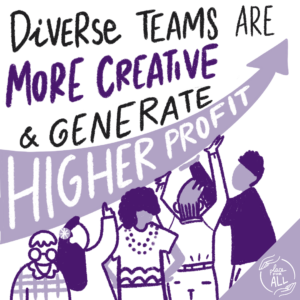
ERGO Network is launching its new campaign ‘A Place for All’, shedding light on the important role that employers play in supporting the employment of Roma and other ethnic minorities, as well as on the benefits that an inclusive workforce.

Roma employment – it should be obvious – is important for Roma themselves, for the employers and for society as a whole.

  • Improving Roma access to quality employment breaks the cycle of poverty, discrimination and exclusion and gives people back their dignity.
  • Getting more Roma into employment helps counter widespread stereotypes based on antigypsyism.
  • Having more employed Roma creates positive role models for the inclusion of Roma communities.
  • A diverse workforce increases emotional intelligence, creativity and productivity in any workplace.
  • A diverse workforce builds trust with minority customers and service users.
  • Hiring more Roma is a smart economic choice, improving growth and combatting demographic change.


Through the Place for All campaign, ERGO Network will therefore raise employers’ awareness of the benefits of an inclusive and diverse workplace as well as of the motivation and competencies of young Roma. It will also highlight employers’ good practices in diversity and inclusion and encourage others to follow their example.

How will the campaign work?

The main focus of the campaign will be on employers who have been approved by ERGO Network members as inclusive employers and who sign the Place for All pledge, reaffirming their commitment to making their workplace a place for all. These employers will be awarded a badge and will be promoted by the ERGO Network. This will include sharing of their good practices, providing further support and generally giving them visibility. In the future, once a group of employers in several countries has been awarded the badge, ERGO Network members can furthermore organize peer learning, networking and exchanges between these employers.

To not only highlight employers, but also Roma employees who overcame the huge hurdle of antigypsyism – manifesting itself in poverty, lack of education and discrimination by employers – we will at the same time feature inspiring stories of Roma employees from different countries.

Follow the campaign on its Facebook page and ERGO Network’s social media accounts to get to know the first awarded employers and inspiring stories!
Do you know an employer who fits our profile? Contact info@staging.ergonetwork.org or ask them to sign up for the badge directly on our website: www.ergonetwork.org/employment.


The campaign has been made possible thanks to the financial support of the European Commission’s EaSI Programme.

Railway assistants in Slovakia

Railway assistants – antigypsyism in employment programme

In October 2019, Slovak Railway Company announced the implementation of a new project called ‘Train Assistant’. This project created a new position in the railway company for people from marginalized Roma communities. Together with other organizations and activists, the Roma Advocacy and Research Centre (RARC) appealed to the railway company as well as to the Implementation agency of the Ministry of Labor, Social Affairs and Family to stop this project because it carries signs of antigypsism. As our attempts were not heard, we sent a letter to the European Commission’s DG Employment with a notice on this project. In February 2020, we received a response from DG Employment, which you can see below. We consider it important that DG Employment has requested an external interim impact assessment of the project (which will start in January 2020 and will continue for 24 months) within the first 6 months of its implementation. The interim external assesment shall focus in particular on the aspects which we raised in our complaint: risks of maintaining or worsening any form of discrimination, stigmatization of Roma and antigypsism, impact on employment perspective of participants including their career progression towards non-assistant type of jobs (train conductors), synergies and possible overlaps with the local civil order services and field social work.

We believe that such projects should not be presented as the only employment opportunities for marginalized groups, as their inclusive character is highly questionable.

Roma grassroots perspectives on poverty alleviation

New publication: Roma grassroots perspectives on poverty alleviation

In 2018 in the framework of ERGO’s Annual Work Programme ‘Roma Included in Social Europe’ (RIISE), ERGO Network members from Hungary, Romania, Bulgaria, Slovakia and the Czech Republic conducted seven comprehensive local case studies that contribute to a better understanding of the impact of National Roma Integration Strategies (NRISs) and relevant mainstream measures on local Roma communities. The topic of the case studies was how access to quality education and employment as well as antigypsyism affect Roma people’s economic situation.

We have now published a synthesis report that can serve as evidence concerning implementation of the EU Roma Framework and mainstream social policies on the grassroots level, which can support the EU institutions’ work on making the European Pillar of Social Rights a reality.

The main objective is to fill the gap and bring more perceptions of Roma into Roma-related discourses. Therefore ERGO members explored Roma people’s perspectives on the causes of poverty that can potentially say more about barriers to poverty reduction efforts and implementation of the National Roma Integration Strategies and social policies (if any). Fostering participation of Roma in voicing their needs and positions about what causes their economic situation is crucial for our work.

You can read the synthesis report here.

TRANSITION FROM EDUCATION TO EMPLOYMENT FOR ROMA YOUTH – A Key step in Roma Inclusion

TRANSITION FROM EDUCATION TO EMPLOYMENT FOR ROMA YOUTH – A Key step in Roma Inclusion


On 25-26 September, ERGO Network policy officer Carmen Tanasie took part in an international expert Seminar of the Council of Europe Ad hoc Committee of Experts on Roma and Traveller Issues (CAHROM), focusing on the transition from education to employment for Roma youth.

Despite the efforts to expand and improve education for Roma children over the years, as many as 50% of Roma children in Europe fail to complete primary education and only a quarter complete secondary education. Participation in education drops considerably after compulsory education where only 15% of young Roma adults have completed upper-secondary general or vocational education. Without compulsory education completion, many young Roma are unable to meet the basic requirements for vocational education programmes and therefore to find employment. On average 63% of Roma aged 16 to 24 are consequently not in work, education or further training, and 72% of Roma women.  

This year’s expert seminar under the Croatian Presidency of the Council of Europe followed up on the recommendations brought forward by the 4th meeting of the Council of Europe Dialogue with Roma and Traveller civil society of 2017, with a focus on vocational education and training. The different panels discussed, among others, second chance educational programmes for school drop-outs, social enterprises as an opportunity for young Roma and travellers, certification of professional skills and reach out of EU programmes for NEEET towards Roma.

Carmen Tanasie presented ERGO Network’s research on Roma youth employment ‘What work(s) for Roma, with a special focus on discussing the question: How successful is the “Youth Guarantee” programme in reaching and creating meaningful opportunities for young Roma? ERGO’s research has shown that most young Roma have never heard of the Youth Guarantee, and  are not offered meaningful options for further education or training by the Public Employment Services. She brought forward ERGO’s recommendations on better targeting of the Youth Guarantee towards those hardest to reach so that young Roma can also benefit from EU programmes.

More information on ERGO’s youth employment work: https://staging.ergonetwork.org/our-work/monitoring/youth-employment/

`
Employment – Page 3 – ERGO Network

By continuing to use the site, you agree to the use of cookies. more information

The cookie settings on this website are set to "allow cookies" to give you the best browsing experience possible. If you continue to use this website without changing your cookie settings or you click "Accept" below then you are consenting to this.

Close