ERGO Network is Looking for National Focal Points! 

ERGO Network is Looking for National Focal Points! 

Deadline for applications: 30 August 2025 (CET) 

Are you a committed Roma civil society representative with expertise on human rights and antigypsyism? ERGO Network is launching the second phase of the RIPE Index & Map and is seeking National Focal Points in: 
Croatia, France, Hungary, Ireland, Moldova, Montenegro, Poland, Serbia, Türkiye, and Ukraine. 

About the RIPE Index 

The Roma Inclusion, Participation & Equality Index (RIPE) is a comprehensive monitoring tool developed by ERGO Network to address systemic antigypsyism and discrimination. It aims to assess the situation of Roma communities across various dimensions—political, social, economic—using data-driven advocacy to push for change. 

The second phase will build on work done in 2024 in ten countries and will focus on consistency in methodology to enable comparative reporting across Europe. 

Your Role as a National Focal Point 

Selected National Focal Points will: 

  • Complete a tailored questionnaire provided by ERGO Network, offering reliable and comprehensive data at the national level. 
  • Communicate with the ERGO Secretariat if updates are needed after data submission. 
  • Ensure the accuracy and completeness of the information provided. 
  • Participate in a kick-off meeting and receive full methodological guidance and support throughout the process. 

Timeline: 1 September – 1 November 2025 
Compensation: 500 EUR per person 
Note: Up to two individuals/entities per country may be selected depending on the quality and volume of applications. 

Who Can Apply? 

We are looking for: 

  • Roma Civil Society representatives or independent experts. 
  • People with citizenship or extensive experience in one of the target countries. 
  • Individuals with strong knowledge of Human Rights standards, antigypsyism, and Roma inclusion. 
  • Experience in research, monitoring, or administering questionnaires is a plus. 
  • Independent applicants must be able to invoice with a VAT number or proof of VAT exemption. 

How to Apply 

Please send the following to i.mihalache@staging.ergonetwork.org by 30 August 2025: 

  1. A short (max 200 words) statement of qualifications and relevant experience. If you’re affiliated with an organisation, please include its name. 
  1. A brief motivation letter outlining your interest and suitability. 

For questions, contact: 
Ms. Isabela Mihalache – i.mihalache@staging.ergonetwork.org 

ERGO Network promotes diversity and participation from all Roma communities. We strongly encourage applications from Roma women, LGBTQI+ Roma, and other underrepresented groups. 

Roma in the Second Action Plan of the European Pillar of Social Rights  

Roma in the Second Action Plan of the European Pillar of Social Rights  

In 2017, the European Union made history by adopting the European Pillar of Social Rights (Social Pillar), comprising 20 core social policy principles and a Social Scoreboard of indicators, and aiming to guide the development of fair labour markets and resilient welfare systems across Europe. 

The European Commission has committed to making the Social Pillar “the compass for Europe’s recovery and our best tool to ensure no one is left behind,” working toward a more just and socially fair Union. 

To deliver on this commitment, the Commission launched the first Social Pillar Action Plan in 2021, translating the policy objectives into concrete actions and measurable targets. Now, in 2025, a Second Action Plan is being prepared to further operationalise the 20 principles and to deliver stronger social outcomes across Member States. 

In this context, ERGO Network developed a comprehensive analysis of the 20 policy principles of the Social Pillar principles, highlighting how their implementation must meaningfully include Roma rights, realities, and recommendations, as well as actively align with the EU Strategic Framework for Roma Equality, Inclusion, and Participation. 

We have shared this analysis series of reader-friendly, visually attractive “Snapshots”, released daily on ERGO Network’s social media platforms (Facebook, LinkedIn, Threads, Instagram, and BlueSky) from 9 to 25 July 2025. Each Snapshot combines the latest statistical data, a concise problem statement, and targeted policy recommendations. 

The Snapshots are: 

As the second Action Plan is being shaped, we urge policymakers to treat this process as a critical opportunity to embed Roma inclusion at the heart of Europe’s social agenda – ensuring no Roma is left behind in the EU’s social rights promise. 

For more information about ERGO Network’s work on the European Pillar of Social Rights, please contact Amana Ferro (a.ferro@staging.ergonetwork.org) Senior Policy Adviser with the ERGO Network staff team. 

Welcome to our new team member – our Finance Manager

Welcome to our new team member – our Finance Manager

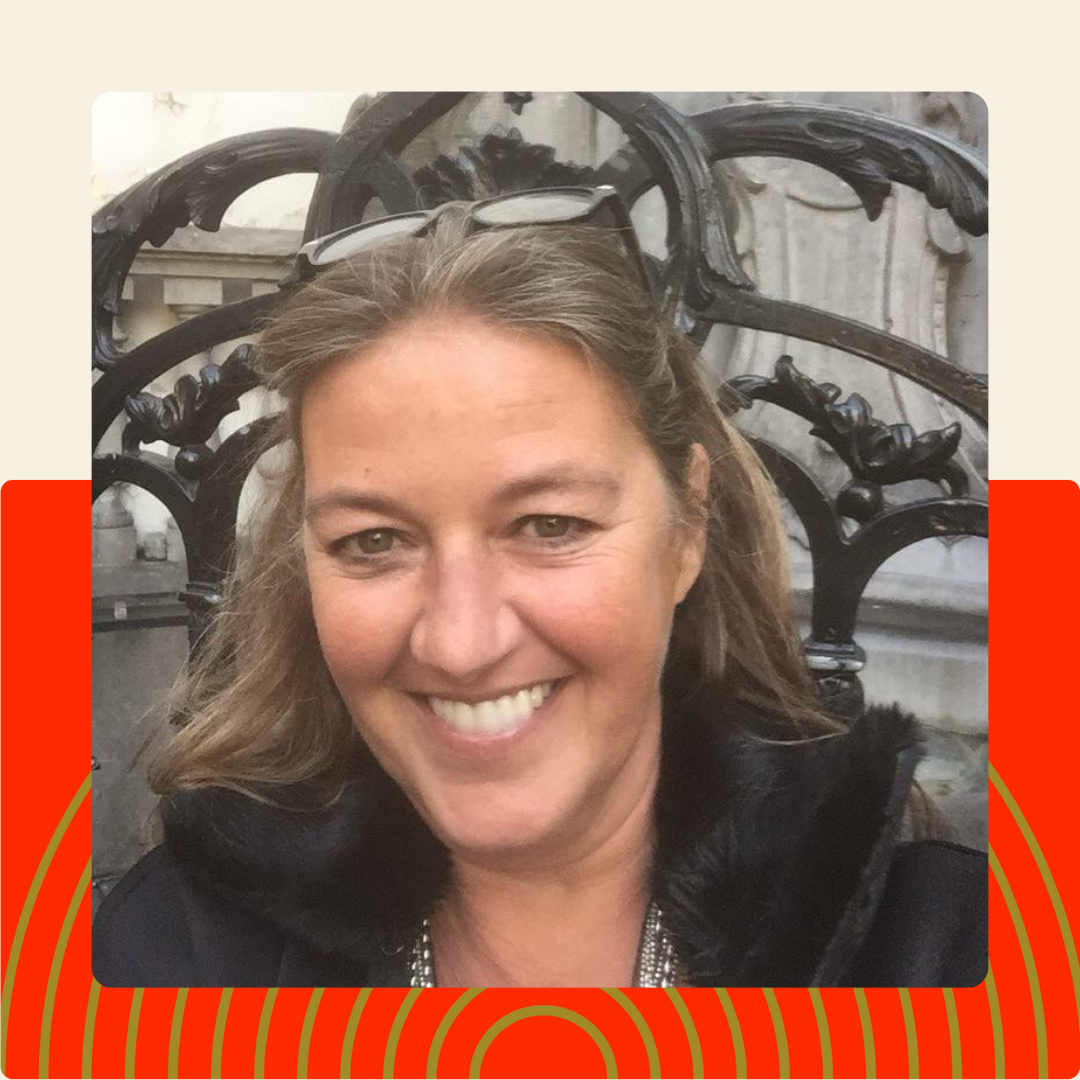
We’re happy to welcome a new colleague to the ERGO Network Secretariat in Brussels. Our new Finance Manager Anne-Françoise Massotte brings strong expertise to the team

Within the ERGO Secretariat, Anne-Françoise is responsible for:

Financial Administration: Checking and booking incoming and outgoing invoices, assigning analytical codes, arranging payments with the Director’s approval, managing the cashbox, preparing contracts and outgoing invoices, and following up on payments.

Budgeting and Reporting: Providing quarterly financial reports and forecasts, contributing to the annual budget, preparing financial documents for the Board, General Assembly and annual report, and supporting donor reporting in cooperation with the Senior Programme Manager.

Compliance and Audit: Ensuring VAT and tax compliance in Belgium, liaising with the bank (KBC Brussels), preparing for audits, and working closely with external auditors on both project and statutory audits.

Human Resources: Coordinating with the payroll provider (Partena), preparing employment contracts, submitting monthly presence reports, supporting onboarding and HR queries, preparing Dimona ID fiches, liaising with Mensura and insurance providers, ordering luncheon vouchers, and arranging work permits for non-EU staff.

Read more about her in her own words:

After graduating from the Université Libre de Bruxelles (Solvay Business School), I’m still proud that my highest grade was in management control! (Admittedly, I was less enthusiastic about some of the other courses.)

I’m Belgian, but throughout my career I’ve had the chance to travel across Europe. This experience has shaped me into an “all-terrain” financial manager, with a solid background in both commercial and non-commercial sectors.

Numbers may be part of my DNA, but I’m a curious person above all. These days, I’m also the proud mother of two grown-up children whose passions and ideas spark endless conversations in our house — often challenging old narratives and helping reimagine new futures.

I’m delighted to be joining ERGO Network and look forward to contributing to its mission.

Feel free to reach out to me: a.massotte@staging.ergonetwork.org

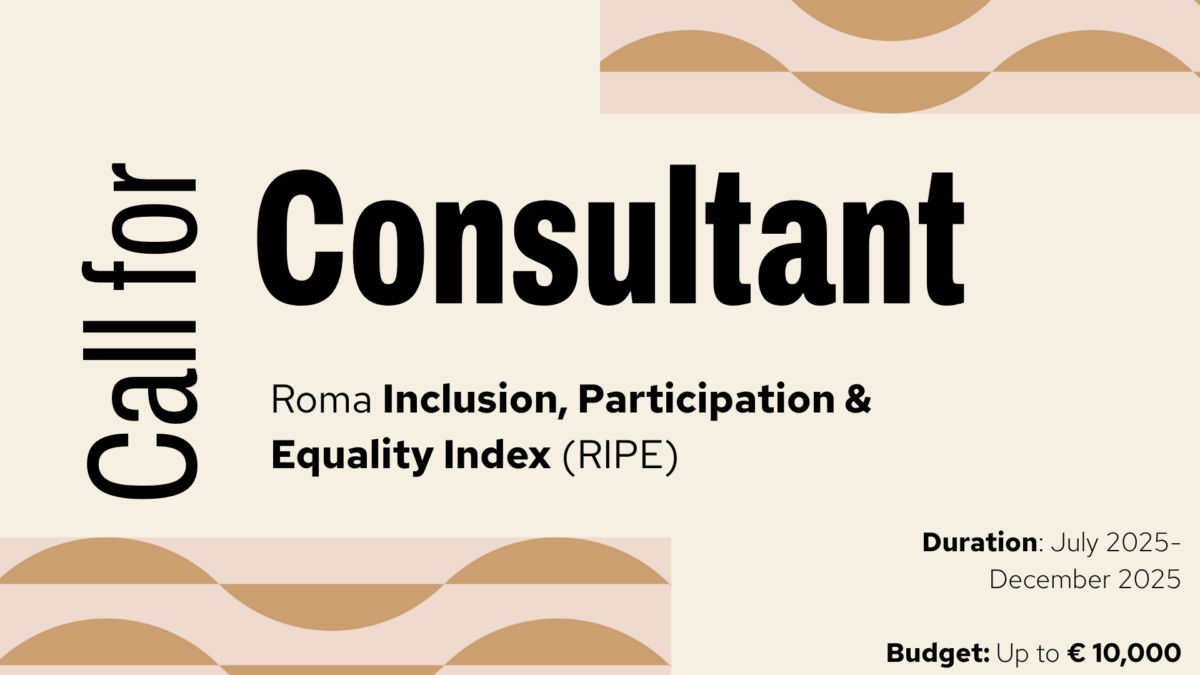
Call for Consultant – Roma Inclusion, Participation & Equality Index (RIPE) 

Call for Consultant – Roma Inclusion, Participation & Equality Index (RIPE) 

ERGO Network is seeking a consultant to contribute to research and activities related to Roma Inclusion, Participation & Equality. The consultancy will run for approximately six months (from July 2025) and will require a comprehensive study and coordination across multiple thematic areas, covering several European countries. The work will combine desk research with grassroots-level data collection. 

ERGO Network 

ERGO Network (www.ergonetwork.org) brings together more than 30 members from across Europe and supports organisations with a common focus on Roma grassroots empowerment and equal citizenship to combat antigypsyism. We mobilise and connect organisations and individuals who share our values – active citizenship, shared responsibility, and passion – to strengthen Roma civil society involvement in decision-making at local, national, and European levels, and to address gaps in policies targeting Roma communities. 

Our office is based in Brussels. 

Background 

The Roma Inclusion, Participation & Equality Index (RIPE) is a new tool developed by ERGO Network to address systemic discrimination against Roma communities in various European states. RIPE offers a unified framework to assess and compare the situation of Roma populations across different political, social, and economic contexts. 

Inspired by established human rights mechanisms, the Index systematically assesses a broad range of rights and indicators, ensuring comprehensive coverage from human rights to socio-economic conditions. It uses empirical data to advocate for policies that prevent discrimination and promote Roma inclusion, equality, and participation, while investing in grassroots-level engagement. 

Historical Context and Ongoing Challenges 

The Roma are Europe’s largest ethnic minority and have faced severe persecution and marginalisation both historically and today. Despite various national and international frameworks, many Roma continue to live in poverty and lack access to basic services such as employment, education, healthcare, and housing. 

This discrimination must be understood within the scope of Antigypsyism — a specific, violent, and persistent form of racism rooted in ideologies of racial superiority. It manifests as dehumanisation, institutional racism, hate speech, violence, exploitation, stigmatisation, and structural exclusion. 

Recent surveys, such as those by the European Union Agency for Fundamental Rights (FRA), underscore the continued challenges Roma face in housing, employment, education, hate speech, and hate crimes, exacerbated by deeply entrenched antigypsyism. 

Importance of the ERGO Index 

The RIPE Index systematically captures and analyzes data on the social conditions of Roma, their experiences of discrimination, and their access to opportunities across European States. This tool: 

  • Standardised Measurement: Facilitates comparisons and tracking progress across countries. 
  • Shapes Policy: Provides detailed data to inform national and international policies. 
  • Promotes Inclusion and Rights: Identifies areas where Roma rights are inadequately protected and advocates for inclusive policies. 
  • Raises Awareness and Engagement: Enhances dialogue and cooperation among Roma communities, civil society, and governments. 
  • Directs Resource Allocation: Ensures investments in Roma inclusion projects are targeted effectively. 
  • Creates Policy Nexus: Correlates instances of discrimination with policy outcomes, refining strategies for future policies. 

Categories in the ERGO RIPE Index 

  • Legal Framework 
  • Policy Measures 
  • Funding 
  • Data Collection and Monitoring 
  • Civil, Political Participation & Decision-Making 
  • Access to Justice 
  • Hate Speech & Hate Crimes 
  • Truth & Reconciliation: Antigypsyism, transitional justice processes, memorialization, and  
  • historical recognition. 
  • Additional Considerations (eg, migration policies) 
  • Media and Public Perception 

The countries covered by the consultancy services requested are Croatia, France, Hungary, Ireland, Moldova, Montenegro, Poland, Serbia, Türkiye, and Ukraine. 

Key Tasks 

  • Conduct research and contribute to an analysis report based on the ERGO Network’s methodology. 
  • Oversee national-level data collection by Roma civil society representatives. 
  • Provide data and analysis related to antigypsyism and discrimination standards. 
  • Conduct desk research and synthesise findings with national input. 
  • Compile monitoring results into a comprehensive report. 

Consultant Profile 

  • Proven experience in research and methodology development. 
  • Strong analytical and report writing skills. 
  • Knowledge of relevant human rights standards for this call and awareness of Romani civil society. 
  • Fluency in English (speaking and writing) is essential. 

Timeframe and Budget 

  • Duration: July 2025 – December 2025 
  • Budget: Up to € 10,000 (including VAT) 

How to Apply 

Application Requirements 

  • Detailed CV demonstrating clearly that the tenderer has relevant experience. 
  • Sample of previous relevant work. 
  • Price offer for the total consultancy duration 

Send your application to i.mihalache@staging.ergonetwork.org by July 3, 2025, 23:59 CET. For further questions and more information on the methodology and deliverables, contact Isabela Mihalache at i.mihalache@staging.ergonetwork.org  

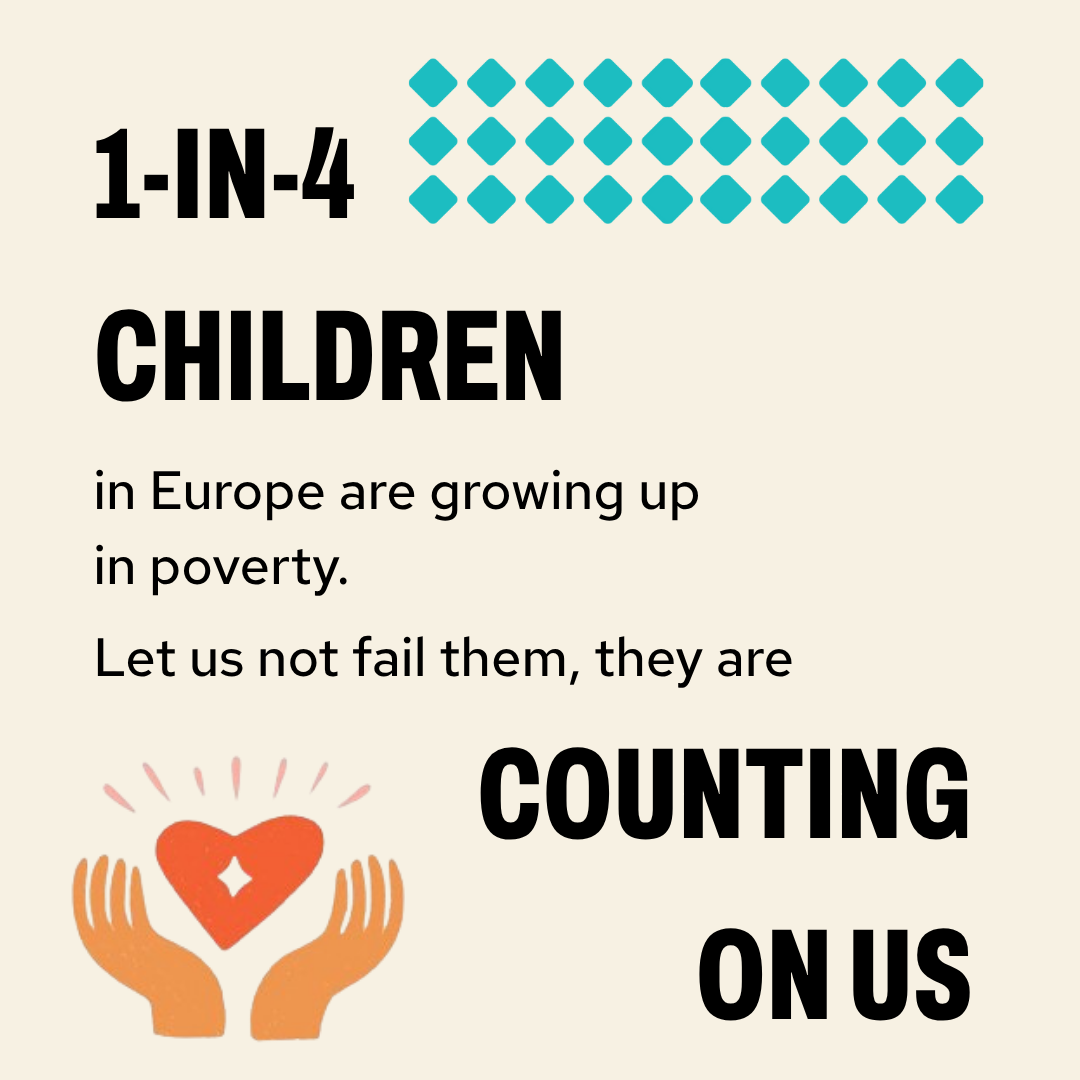
One in four children in the EU is at risk of poverty or social exclusion.

One in four children in the EU is at risk of poverty or social exclusion.

This reality affects over 20 million children across Europe and represents a serious social emergency and a threat to the EU’s long-term cohesion, prosperity, and democracy.

As the European Union enters a new political cycle and prepares the next Multiannual Financial Framework (MFF), civil society urges leaders to take necessary actions. Children must be placed at the core of Europe’s future agenda. 

Together with leading child rights and social justice organisations, we have issued a joint letter to EU leaders, calling on them to:

  • Reinforce the European Child Guarantee
  • Integrate child poverty into a stronger EU Social Agenda
  • Secure robust, long-term investment in the next MFF

Child poverty is widespread and systematic failure, affecting children in every EU Member State. While the context may differ across countries, the outcome is universally unjust. Their rights are not being fully respected, protected, and fulfilled.

As highlighted in the Draghi Report on EU competitiveness, Europe’s ability to compete globally must go hand in hand with equity and inclusion. A resilient and competitive Europe protects and empowers its children.

Investing in children is not just a moral responsibility. It is a strategic necessity. If the EU fails to act now, the costs—social, economic, and political — will be immeasurable and irreversible.

What does it say about the European Union when one of the most developed regions in the world cannot guarantee a life of dignity and opportunity to all its children? What future are we shaping if entire generations are left behind?

Childhood poverty violates rights. It restricts potential. It weakens democracy. Therefore, we need to protect children and invest in their futures. 

`
General – Page 3 – ERGO Network

By continuing to use the site, you agree to the use of cookies. more information

The cookie settings on this website are set to "allow cookies" to give you the best browsing experience possible. If you continue to use this website without changing your cookie settings or you click "Accept" below then you are consenting to this.

Close