STRENGTHENING ROMA NGOS AS TRANSPARENT AND INDEPENDENT WATCHDOG ORGANISATIONS

STRENGTHENING ROMA NGOS AS TRANSPARENT AND INDEPENDENT  WATCHDOG ORGANISATIONS

ERGO Network’s new transparency and accountability criteria give recommendations on how grassroots civil society organisations should be governed and managed in order to be reliable and accountable.  Fulfilling the criteria will bring attention to an organisation’s quality work. The set of criteria focuses on governance, financial management and performance.

ERGO Network together with its member organisations – Roma Advocacy and Research Centre (Slovakia), Roma Active Albania (Albania), Slovo 21 (Czech Republic), Autonomia Foundation (Hungary), OTAHARIN (Bosnia and Herzegovina), RROMA (Macedonia), Mladi Romi (Montenegro) and Zero Discrimination (Turkey) – developed a set of transparency and accountability criteria for grassroots organisations with the aim to strengthen civil society organisations. Using the criteria will give more legitimacy, better fundraising opportunities and more trust from both the grassroots level and institutions and ultimately reinforce the power of civil society organizations. Being transparent and accountable are important prerequisites for the effectiveness of civil society that is taken seriously by its institutional counterparts and other partners.

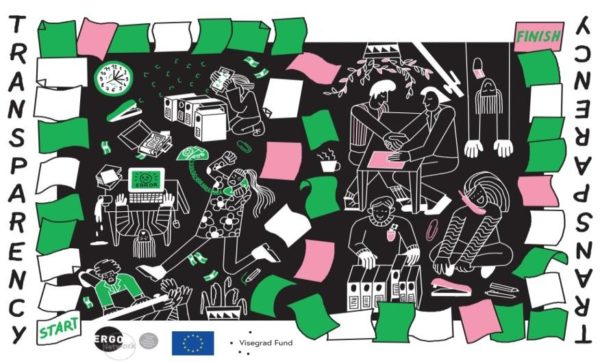
Furthermore, the members of ERGO Network agreed on joining their efforts and putting their thorough expertise together to empower Roma and pro-Roma civil society in their countries in implementing the transparency criteria. For this aim, ERGO Network has developed a board game that leads the players through different steps necessary to become more transparent and accountable. Anyone can download the game and play it by themselves, or invite an ERGO Network facilitator to support them through the process. Besides the offline game, there is also an online self-audit that you can go through to discover how far you are in applying the criteria in your organisation.

Fulfilling the transparency criteria means not only being able to show that Roma and pro-Roma civil society takes these very seriously, but also having the right to demand the same from other stakeholders.

Find out more about the transparency and accountability criteria and download them in several languages: https://staging.ergonetwork.org/transparency/

Do the online audit and know how well your organisation fulfils the transparency and accountability criteria https://staging.ergonetwork.org/transparency/transparency-audit/
12th European Platform for Roma Inclusion Health and housing inequalities

12th European Platform for Roma Inclusion Health and housing inequalities

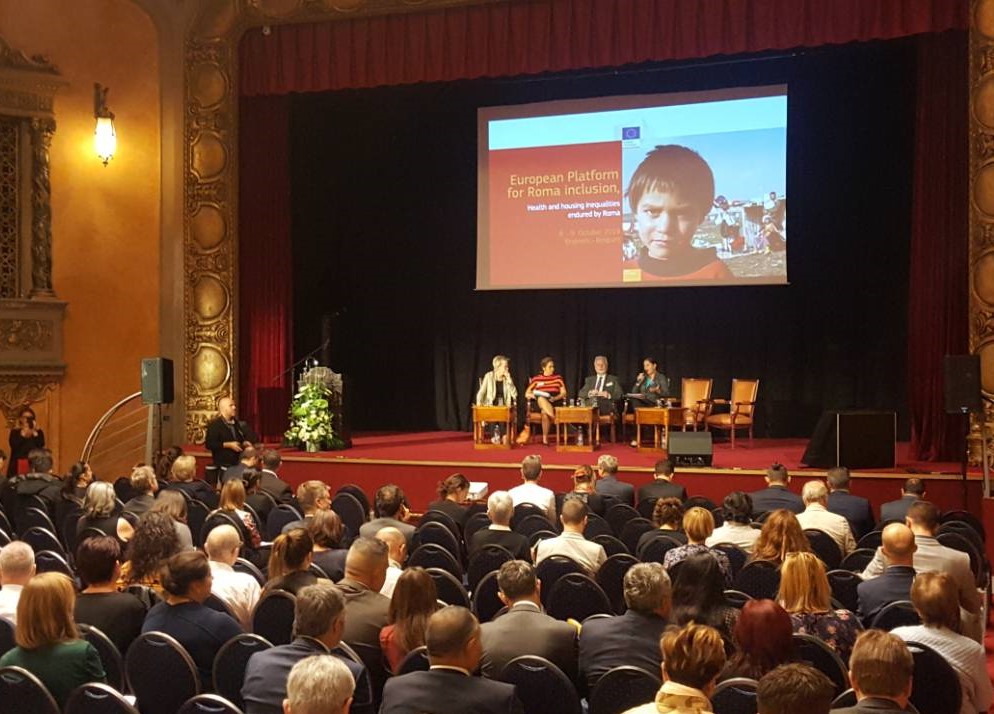
From 8-9 October 2018 the 12th European Platform for Roma inclusion took place in Brussels with a special focus on health and housing inequalities faced by Roma people. The annual platform is organised by the Roma coordination unit of the European Commission Directorate General for Justice and Consumers, in consultation with Roma and pro-Roma civil society. It brings together civil society, experts, national governments, European institutions and Roma people from local level who are experts in the field of health and housing.

Health and housing are two out of the four key priorities of the EU Framework for National Roma Integration Strategies.

The event started on 8 October with the opening panel, followed by a theatre performance given by Ara Art “And Again we slept Pindral”. The play took the audience through the history of Roma culture and music through storytelling.  

On the second day two political panels and two workshops on housing inequalities and health focused on identifying challenges that are drivers of social exclusion.  ERGO Network’s Director Jamen Gabriela Hrabanova facilitated the workshop on social housing and ERGO’s policy and research coordinator Jelena Jovanovic was the rapporteur that brought the key messages from the workshop to the political panel.

In the political panel Vera Jourova, Commissioner for Fundamental Justice, stated: “I want to evaluate in depth the EU Framework for National Integration Strategies and to focus on smart EU funding for the next programming period”. Equal treatment of Roma and mainstreaming of Roma inclusion are the key priorities of the European Agenda and post 2020 programs.

The general messages that were pointed out by the participants:

Health

    • The EU and Member States should use human rights approaches when developing health policies, and Roma health policies in particular.
    • European Commission should consider earmarking funding for EU-wide advocacy coalitions and strategic/impact litigation that aims at identifying structural deficiencies and discrimination potential of member states’ legislation, when it comes to Roma.
  • Developing and reinforcing measures effectively targeting antigypsyism and discrimination against Roma.

Housing

  • Poor data: Mapping of the situation of Roma in housing; demolitions are often ongoing and nobody knows how many people are affected by the situation.
  • Antigypsyism: should be tackled with mainstream and targeted approaches with reinforced measures.
  • Harmful initiatives/bad investments: political will has to be increased and the knowledge of the responsible actors improved.
  • Lack of awareness of ‘mainstream’ measures: Relevant EU policies have not been yet mainstreamed at the national level. One of the needs identified during the workshop is raising awareness  and implementation at national level of the European Pillar of Social Rights and specifically of Principle 19 (that includes three relevant issues – social housing, forced evictions and homelessness)

The participants repeated their call from the Platform 2017 for the importance of empowerment and involvement of Roma in decision-making by ensuring Roma participation in every phase of the policy cycle (design, implementation, coordination, monitoring and evaluation, review), including at local level.

Fighting antigypsyism in the spotlight of the 2018 Fundamental Rights Forum in Vienna

Fighting antigypsyism in the spotlight of the 2018 Fundamental Rights Forum in Vienna

At this year’s Fundamental Rights Forum of the Fundamental Rights Agency on 26 September in Vienna, ERGO Network together with its partners in the Alliance against Antigypsyism and the European Parliament Anti-Racism and Diversity Intergroup (ARDI) held a session “Addressing antigypsyism: new strategies to ensure fundamental rights of Roma in Europe”.

The session explored new strategies to address persistent antigypsyism in our societies and raised awareness of the need to change the discourse on Roma inclusion and ensure fundamental rights for Roma in Europe. Through inputs of Mirjam Karoly (Romano Centro) and presentations of Adriatik Hasantari (Roma Active Albania), Jamen Gabriela Hrabanova (ERGO Network), Michael Privot (European Network against Racism), Jonathan Mack (Central Council of German Sinti and Roma), Rita Fober (assistant MEP Soraya Post) and many others, three key messages were communicated with the participants:

  1. Antigypsyism is the main cause of Roma exclusion. It is a specific form of racism towards Roma, Sinti and other groups that the majority society perceive as ‘gypsies’ and there is a high level of acceptance of this phenomenon.
  2. Recognition of antigypsyism is partial, even though it manifests itself frequently and takes many shapes: hate-speech in public, media and political narratives, hate-crime, discrimination in schools, by employers and employment services, health institutions, housing authorities, etc.
  3. Antigypsyism is also present in the EU enlargement region, where it is neither recognized nor properly addressed. Roma integration strategies in this region tend to remain ‘paper oriented’ and are not systematically implemented.

One of the conclusions of the session was that for the fundamental rights of Roma to be achieved, it is important to 1) change the public and political discourse on Roma: from Roma inclusion to combatting antigypsyism; 2) strengthen alliances and 3) have concrete targeted measures in place as well as committed institutions, political will and funding to mainstream the fight against antigypsyism into relevant policies, such as National Action Plans against Racism.

Moreover, recognition of antigypsyism by relevant stakeholders as well as the public is urgent and it should be reflected in functional responsible institutions as well as in creating new structures, such as Truth and Reconciliation Commissions for combatting antigypsyism at both EU and Member States level. Institutions need to monitor, record and report acts on antigypsyism; make sure that budgets are not discriminatory; that Roma are employed, including Roma youth; that Roma participate in public and political life; enjoy access to justice; that there is no segregation, etc.

Finally, fighting antigypsyism should go beyond the EU. Work has to be done in the enlargement region as well, focusing on recognizing, preventing, monitoring, reporting, and responding properly to acts of antigypsyism by implementing relevant policies and legislation.

The Director of ENAR, Michael Privot sent a strong message to participants that “we have to be specific in our fight” and to call the problem by its name so it can be properly tackled and explained that Roma participation is an important element of an organization’s strategy.

The Alliance against Antigypsyism has been confirmed as a strong group of advocates coming from different backgrounds. In addition, this year’s Fundamental Rights Forum invited Roma youth representatives from Austria, Hungary, France, Romania, Spain and Slovakia, who attended different sessions of the Forum and enriched the knowledge of a wide range of participants regarding the topics such as housing, education and pop culture narratives.

Members of National Parliaments and of the European Parliament join forces to fight antigypsyism in Europe


PRESS RELEASE

Brussels, 19 October 2018

 Members of National Parliaments and of the European Parliament join forces to fight antigypsyism in Europe

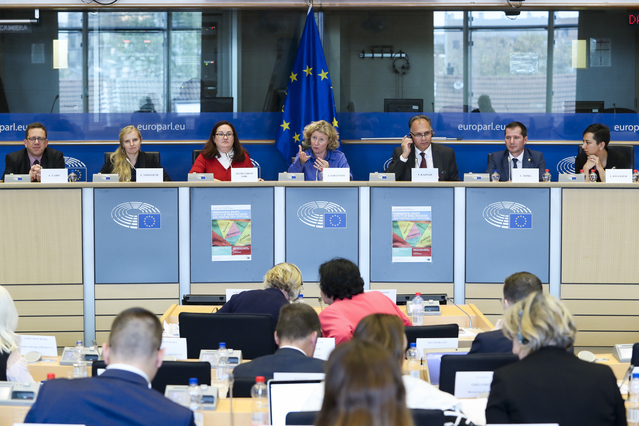
Brussels, 18 October 2018 – For the first time, Members of National Parliaments were invited by the European Parliament to discuss the fundamental rights of Roma and fighting antigypsyism. The Alliance against Antigypsyism urged Members of National Parliaments from across the European Union and the Western Balkans to work on increasing political will in their countries to combat antigypsyism and contribute to building a racism-free society.

Soraya Post, Member of the European Parliament who initiated this meeting, expressed a strong appeal to participants: “One year ago the European Parliament adopted my report on the Fundamental rights aspects in Roma integration in the EU: fighting antigypsyism that gives concrete recommendations and legislative demands for how we can fight antigypsyism. I hope that today’s inter-parliamentary committee meeting will support Member States to start taking their responsibilities seriously.”

Jelena Jovanovic, Policy and Research Coordinator of the ERGO Network, said: “The lack of explicit recognition of antigypsyism makes it impossible to develop specific indicators and to commit resources to fight the phenomenon. It also results in institutions’ inability to properly monitor acts of antigypsyism and evaluate the impact of relevant policies. The EU must put the fight against antigypsyism at the core of future Roma inclusion policies and include a meaningful gender perspective in policy-making and implementation.”

Romani Rose, chair of the Central Council of German Sinti and Roma, said: “Antigypsyism, like antisemitism, is aimed primarily at the Sinti and Roma or at the Jews, but in fact, they are an attack on democracy, on the rule of law and our common European values. Above all, therefore, antigypsyism in Europe must finally be banned, sanctioned and consistently fought. An important contribution will be the establishment of an ‘Independent Expert Commission on Antigypsyism’ in Germany following a resolution of the German Bundestag, which shall be established by the federal government in 2019.”

Establishing truth and reconciliation commissions at national and EU levels is indeed key to analyse the causes and manifestations of antigypsyism, as well as to develop appropriate strategies to combat it.

Michaël Privot, Director of the European Network Against Racism, said: “Members of national parliaments are key actors in making the fight against antigypsyism a reality for Roma and improving their lives. They can play a role in reinforcing social cohesion in the face of a worrying increase of xenophobic voices in Europe. We need to build unity across groups affected by racism and implement efficient national and local policies. National plans against racism can complement and reinforce strategies for Roma inclusion, ensuring that all forms of racism are recognised and given equal attention.”

For further information, contact:

ERGO Network: Jamen Gabriela Hrabanova, Executive Director,

g.hrabanova@staging.ergonetwork.org

Tel: +32(0)2 893 10 49

Central Council of German Sinti and Roma: Jonathan Mack, Policy Officer, jonathan.mack@sintiundroma.de

Tel: +49 (0) 6221 981101

European Network Against Racism (ENAR): Georgina Siklossy, Senior Communication and Press Officer, georgina@enar-eu.org

Tel: +32 (0)2 229 35 70 – Mobile: +32 (0)473 490 531

Notes to the editor:

  • The report of the LIBE Committee “Fundamental rights aspects in Roma integration in the EU: fighting anti-Gypsyism” of 25 October 2017 is available here.
  • The announcement and background documents of the Interparliamentary Committee meeting of the European Parliament LIBE Committee are available online.

Photo Copyright : © European Union 2018 – Source : EP

‘Dikh he na bister’ presentation at Pavee Point Traveller and Roma Centre


‘Dikh he na bister’ presentation at Pavee Point Traveller and Roma Centre

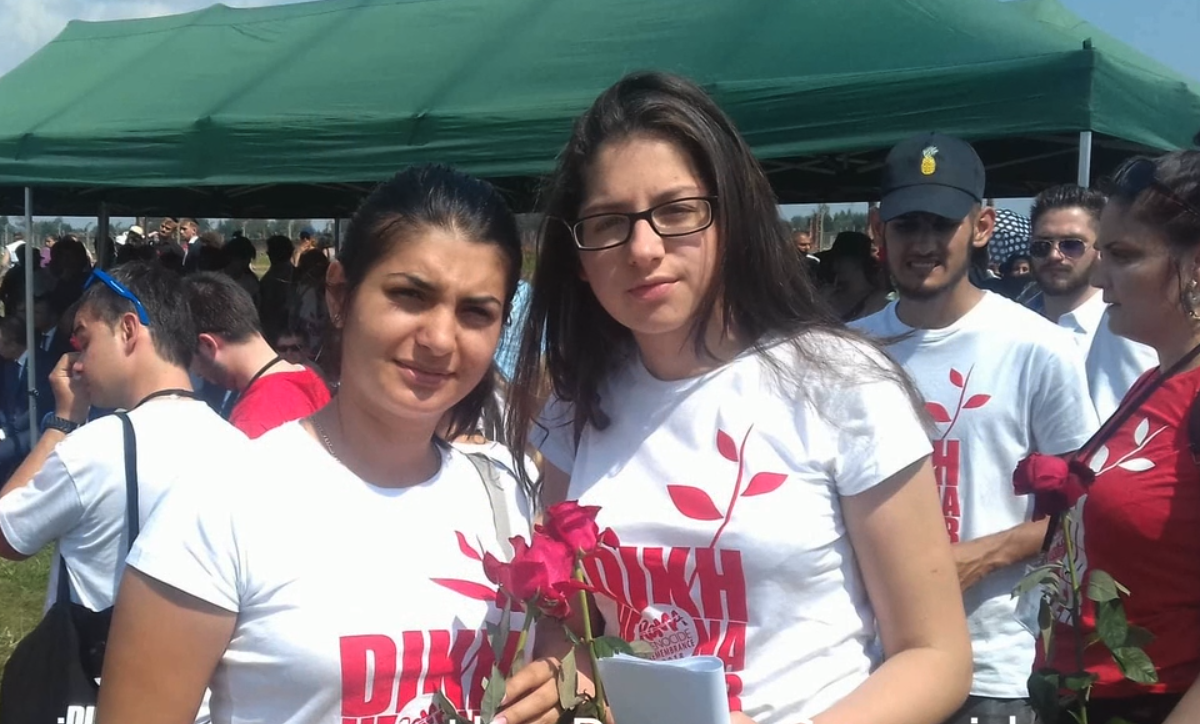
On the 5th of September, over 30 invited guests gathered at Pavee Point to hear the experiences of 10 young Irish Travellers and Roma who participated in the Roma Genocide Remembrance Initiative.

This is the first time an Irish delegation had attended the Roma Genocide Remembrance Initiative, which involved a visit to Auschwitz and meeting Holocaust survivors. The trip also gave the participants the opportunity to meet other young Travellers and Roma, and work together in sessions on history, racism, and remembrance.

The participants described their visit to Auschwitz as difficult, and emotional. Bianca Paun, a participant from Kildare said: “When you’re walking there, where people took their last steps and try to feel what they feel – it’s very hard”.

During their time in Poland the participants also heard from two Roma survivors, including Raymond Gureme, who hadn’t spoken about his experience in Auschwitz for 70 years. On August 2nd, the Irish group attended a special Roma Genocide memorial, lighting candles and presenting roses to remember the victims.

The presentation in Pavee Point also involved a question and answer session, and audience members were eager to share their thoughts on the topic, and to ask participants about Auschwitz. Jason Sherlock, a participant from Galway, said that he found the rooms of shoes and glasses at the Auschwitz museum to be the most powerful exhibits. By sharing photos and stories, the group succeeded in raising awareness of the Roma Genocide in Ireland, and inspired the audience to stand up for the human rights of minority groups.

`
Christine Sudbrock – Page 32 – ERGO Network

By continuing to use the site, you agree to the use of cookies. more information

The cookie settings on this website are set to "allow cookies" to give you the best browsing experience possible. If you continue to use this website without changing your cookie settings or you click "Accept" below then you are consenting to this.

Close