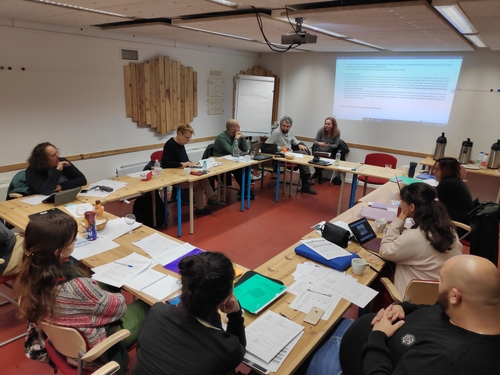
RIISE Coordination Meeting

RIISE Coordination Meeting

Several ERGO Network members and also new partners met in February for our annual ‘Roma Included in Social Europe’ (RIISE) coordination meeting.

ERGO Network is implementing a four-year work programme funded by the EaSI Programme of the European Commission’s DG Employment in order to support the social inclusion and poverty reduction of Roma in EU member states and provide a bridge between the grassroots and the EU level concerning Roma-related policies and funding programmes.

An important part of the work programme is implemented on national level in the ‘Big 5’, the EU member states with the highest Roma population. With the financial support of the European Commission through the RIISE work programme, ERGO Network members coordinate national Roma civil society coalitions, support Roma activists to engage in and benefit from Community-Led Local Development (CLLD), conduct research and inform Roma activists about relevant EU developments.

During the coordination meeting held in Brussels, representatives of the ERGO Network members Integro Association (Bulgaria), Nevo Parudimos (Romania), Slovo 21 (Czech Republic), Autonomia Foundation and Pro Cseherat (Hungary) as well as our partners RomanoNet (Czech Republic) and Idetartozunk (Hungary) came together for two days to discuss their work.

Among other things they shared updates on the development of national Roma Inclusion Strategies and Operational Programs and strategized together how best to influence them. They learned more about how to engage in the EU’s European Semester process and discussed common work on Social Economy. The partners will work together closely during the year and meet again in November.
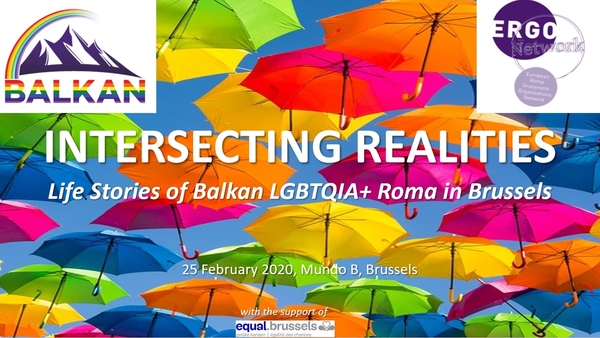
Invitation: Intersecting Realities

Intersecting Realities

Life Stories of Balkan LGBTQIA+ Roma in Brussels

25 February 2020, 9am-2pm, Mundo B, Rue d’Edimbourg 26, Conference Room

Join us and make your voice heard! Register here and find the agenda here.

Balkan LBGTQIA VZW brings together representatives of LGBTQIA+ communities from the Balkan countries, based in Brussels. The role of the organisation is to fight any form of discrimination, addressing particularly the issues of gender identity and sexual orientation, including through providing direct support to migrants, such as legal and administrative. The aim is to break down the barriers often faced by members of the LGBTQIA+ community, and also the boundaries between different Balkan communities themselves. Most volunteers belong to ethnic, religious and other groups, so the organisation also highlights the problems of intersectional discrimination and of belonging to different social groups at the same time: LGBTQIA+, Roma, Muslims, sex workers, refugees etc.

The European Roma Grassroots Organisations (ERGO) Network aims, through the work of its 30 member organisations all over Europe, to convince national and European policy makers that positive change for Roma is possible when antigypsyism is recognized and tackled as the root cause for inequality, and when Roma can take part in civic life as equal stakeholders. Founded on the philosophy of active citizenship, shared responsibility and grassroots empowerment, ERGO Network advocates for better policies and policy implementation on national and European level, rooted in evidence-based research. The organisations creates narratives in which Roma people are equally respected. We aim to show the rich diversity among Roma, challenging stereotypical views.

The two organisations come together in this event to shine a light on the experiences of LGBTQIA persons from the Balkans, most of Roma ethnicity, who are confronted with discrimination based on their gender, sexual orientation, religion and ethnic background in their life.

The event will serve as the launch of the book My Story, which features eight life stories about the experiences of LGBTQIA migrants from the Balkan countries, many of them Roma. It also intends to create a space for debate about intersectionality and multiple discrimination in a Brussels context, with an aim to contribute to policy making based on a rights-based approach and on equal opportunities, by bringing the focus on a target group that has always remained in the shadow of the majority, considering their voice has not been heard so far.

Press release: Meeting with EU Commissioner for Equality Helena Dalli

ERGO Network meets European Commissioner for Equality Helena Dalli to commemorate the Holocaust Remembrance Day and discuss the future of Roma inclusion post 2020

Brussels, 30 January 2020

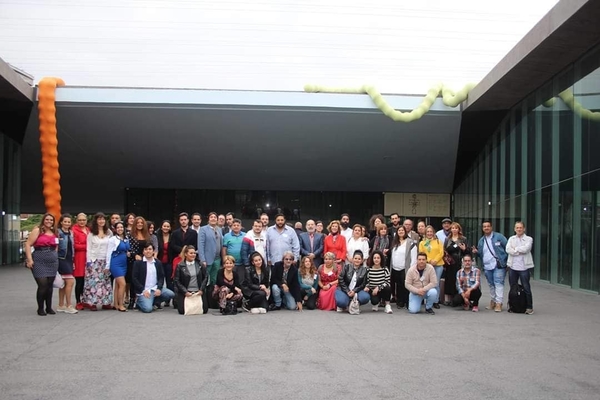
On 28 January 2020, a delegation of European Roma Grassroots Organisations (ERGO) Network members from EU member states and enlargement countries met with the new European Commissioner for Equality Helena Dalli to commemorate the Holocaust Remembrance Day, as well as to discuss about the challenges faced by Roma civil society organisations in fighting antigypsyism and advocating for Roma rights and inclusion, and a meaningful and participatory post-2020 Roma Strategy.

Helena Dalli“Roma people have been living in Europe for more than 700 years and have massively contributed to the richness of the European heritage. Yet, for centuries, European societies have turned a blind eye to racism and widespread discrimination of Roma people. We have to change that”, Commissioner Dalli committed to the ERGO Network members during this first meeting with Roma civil society representatives of her mandate.
In light of commemorating 27 January 1945, when the Red Army liberated the Nazi concentration camps at Auschwitz, and in the context of rising right-wing extremism, fighting antigypsyism today in Europe is not an easy task. “We need the European Commission to provide a strong and robust post-2020 Roma equality and inclusion strategy that goes beyond the EU, with antigypsyism at its core. It should include minimum standards, be backed by strong Roma and civil society engagement and by funding prioritising Roma rights and wellbeing, to ensure a true and meaningful change of paradigm“, ERGO Network Director Jamen Gabriela Hrabaňová said.

ERGO Network members and Commissioner Dalli discussed future approaches to Roma rights and inclusion, structured around four key dimensions:

  • combating antigypsyism as horizontal and stand-alone priority, in all its forms and manifestations, including through strong legislative measures;
  • a comprehensive, binding, EU Strategy for Roma inclusion that includes enlargement countries on equal footing, with concrete minimum standards and ambitious targets, as well as common monitoring at the EU level;
  • capacity-building, support and channels for Roma civil society to keep their watchdog role, and to meaningfully engage in the design, implementation, and monitoring of public policies that affect them;
  • prioritising Roma inclusion in the next MFF programming period, ensuring that Roma communities are involved in the delivery of European funds at the national and local level.

The Poznan Declaration of Western Balkans Partners on Roma Integration within the EU Enlargement Process , which was signed on highest level by the Prime Ministers of the Enlargement countries, can inspire EU Member States in this regard.

For more information, please contact Jamen Gabriela Hrabaňová, ERGO Network Director, at g.hrabanova@staging.ergonetwork.org.


Strategies against antigypsyism

Strategies against antigypsyism

The international conference „Strategies against antigypyism“ took place in Tenerife on 12 and 13 December 2019. It was organized by the Karipen association in cooperation with the Ministry for Health, Consumers Affairs and Social Welfare of the Canary Island Government, Cabildo of Tenerife and Khetane Platform. At the invitation of FAGIC ERGO member, Gabriela Hrabanova, ERGO Network director presented strategies against antigypsyism from grassroots to EU level and vice versa.

The conference brought together political and public representatives from European, national and local, Roma leaders and activists countering antigypsyism.  Among them Soraya Post, ERGO Network co-chair, Romeo Franz, Member of the European Parliament for the Greens/EFA group and Juan Fernardo Lopez Aguilar, Chair of the LIBE Committee in the European Parliament. It also gathered many local and national Roma politicians from Spain, including Ismael Cortes, a Member of the Spanish parliament.

The conference focused on three topics: 1) the concept of antigypsyism throughout history up to present; 2) institutional antigypsyism and ways to combat it through politics and 3) antigypsyism and gender issues.

The historical aspect was covered by Iulius Rostas, visiting professor at the Central European University and the Spanish academic of Romani origin, Helios Fernandez. The main message was that over the centuries, but also in recent years, institutions have been perpetuating a paternalistic approach under the pretence of making Roma better, by changing the names of programs and policies aiming at including Roma in societies, but very often achieving only their assimilation. The important next step is to introduce the policy of reconciliation, to narrow the centuries of hardship of Roma.

It was also discussed that often Roma might not know how to describe and what antigypsyism is, however many experiences it on the daily basis. For example, school segregation is a reality in Spain, while Roma surnames or home addresses can lead to discriminatory practices when accessing jobs or advancing in the career.

On a positive note, the regional and local government of Canary Islands and Tenerife have shown interest in working together with the local association Karipen, not only by hosting this event, but also by allocating a budget line for Roma inclusion.

Roma access to mainstream education

ERGO NETWORK ANNUAL PUBLIC EVENT: Roma Access to Mainstream Education

This past 19 November, ERGO Network organised its annual public event, dedicated this year to debating how to ensure that Roma pupils and students can access mainstream education on equal footing and how to make education systems and establishments more inclusive, by combating segregation and discrimination in education settings. The event was co-organised with the generous support and participation of Hon. Romeo Franz MEP (Greens/EFA, Germany) and Hon. Peter Pollák MEP (EPP, Slovakia), and hosted at the premises of the Representation of the State of Baden-Württemberg to the European Union.

The event was very well attended with over 80 participants, and it brought together ERGO members from the grassroots level in 14 European countries, European civil society organisations and other Brussels-level stakeholders, as well as EU policy-makers from across the institutional spectrum, including the European Parliament, the European Commission, the Council of Europe, and the Government of Croatia, who will hold the upcoming Presidency of the Council of the EU.

Education is an increasingly important topic in the European public and political discourse, as an explicit objective of the Europe 2020 Strategy, the European Pillar of Social Rights, the Sustainable Development Goals, and the EU Framework for National Roma Integration Strategies. The latest communication issued by the European Commission on the Evaluation of the EU Roma Integration Strategies 2019, and its previous evaluations, clearly underline the need to prioritise education and training in policy initiatives. Several countries (BG, HU, RO, SK) received a Country-Specific Recommendation in 2019 regarding improving Roma access to quality education, as well as better integrating them into mainstream education.

However, this positive rhetoric still lacks the desired implementation, and the Roma are still too often left behind when it comes to accessing educational opportunities on equal footing with majority groups, due to structural antigypsyism and its manifestations in education, such as segregation. Existing legal and policy tools, including targeted actions on Roma education, as well as infringement procedures, are not as effective as they could be in challenging ingrained patterns of Roma exclusion and discrimination. From early childhood education and care to second-chance schools and informal education and to training and upskilling for the labour market, every person deserves the right to improve their competences and pursue their personal development.

The event included thought-provoking interventions which fostered a debate aimed at identifying positive solutions and policy proposals based on best practices, in order feed into the post-2020 policy and funding European frameworks relevant for Roma inclusion.

See more:

For more information about this event, or about ERGO Network’s work on inclusive education, please contact Senior Policy Adviser Amana Ferro.


This conference was kindly supported by a grant from the Foreign Office of the Federal Republic of Germany.


ERGO Network receives financial support from the European Union Programme for Employment and Social Innovation EaSI (2014-2020). For further information please consult: http://ec.europa.eu/social/easi

`
Past events – Page 8 – ERGO Network

By continuing to use the site, you agree to the use of cookies. more information

The cookie settings on this website are set to "allow cookies" to give you the best browsing experience possible. If you continue to use this website without changing your cookie settings or you click "Accept" below then you are consenting to this.

Close